Gold's rebound stalls as attacks on Saudi refineries push crude oil prices higher.
2026-10-28 21:40:25
Gold and silver prices fell in early U.S. trading on Wednesday (October 28). Renewed tensions with Iran and its regional allies pushed oil prices higher, and concerns about persistently high inflation intensified ahead of the Federal Reserve's interest rate decision. Gold gave back some of Tuesday's gains as traders assessed the possibility of further monetary tightening in December; meanwhile, silver continued to be pressured by concerns about industrial demand and high borrowing costs. Spot gold traded around $4,048.68 per ounce, down $12.22, or 0.30%; silver was trading around $53.974, down $0.435, or 0.80%.  Market positioning is primarily betting that the Federal Reserve will pause rate hikes on Wednesday. Traders estimate that there is an approximately 84% probability of the Fed raising rates at least once more before December. Despite geopolitical uncertainties, high US Treasury yields, a strong dollar, and widespread market expectations that the Fed will continue tightening policy are all factors that continue to suppress sustained buying of gold. The two-day Federal Open Market Committee (FOMC) meeting will conclude on Wednesday. The interest rate decision will be announced at 2:00 PM Eastern Time, followed by a press conference by Fed Chairman Kevin Warsh at 2:30 PM. The market widely expects policymakers to maintain the target range for the federal funds rate at 3.75%-4.00%, and market focus will shift to the meeting statement and the Chairman's comments on inflation, employment, and whether there will be another rate hike in December. Remaining economic data on Wednesday: The US Energy Information Administration's weekly oil inventory report will be released at 10:30 AM Eastern Time. On Thursday morning at 8:30 AM, preliminary estimates of third-quarter GDP, September personal consumption expenditure inflation data, and initial jobless claims will be released. If inflation data cools or the Federal Reserve signals a more accommodative policy stance, it will lower US Treasury yields and weaken the dollar, thereby reducing expectations of a December rate hike and providing support for gold. Conversely, if inflationary pressures persist while the Fed releases hawkish signals, it will strengthen expectations of further monetary tightening, continuing to put downward pressure on precious metals. The Strait of Hormuz and the US-Iran situation remain important triggers for significant volatility in the global energy market. The Houthi rebels, supported by Iran, have launched a series of attacks, jeopardizing the nascent signs of easing regional security tensions. On Tuesday, the Houthis claimed responsibility for a ballistic missile attack on Saudi Arabia's Rastanura oil refinery. This refinery is a core oil processing and export hub in Saudi Arabia, with a daily refining capacity of approximately 550,000 barrels. Saudi officials have not yet immediately confirmed the attack or the extent of the damage to the facility, and the impact on actual operations remains unclear. Just before this attack, representatives from Saudi Arabia, Turkey, and Pakistan held diplomatic consultations in Tehran, and the market had hoped for a de-escalation of regional tensions, which also pushed crude oil prices down by nearly $2 per barrel on Tuesday. However, a clear reconciliation agreement has not yet been reached between the US and Iran; meanwhile, shipping lanes and energy infrastructure continue to be threatened, and the restoration of normal operation in the Strait of Hormuz remains fraught with obstacles. Stimulated by a new round of security crises, crude oil prices rose on Wednesday, recovering most of the previous trading day's losses. Despite various regional diplomatic efforts, the conflict remains unresolved, with Houthi attacks continuing and the prospects for US-Iran negotiations uncertain, thus labeling the energy market with a high geopolitical risk premium. For gold, escalating military conflict will bring safe-haven buying to support prices; however, a surge in crude oil prices will exacerbate inflation concerns and strengthen market expectations for further interest rate hikes by the Federal Reserve. These two forces pull against each other, resulting in limited gold price reactions to the Middle East turmoil. Silver also faces headwinds from monetary policy, coupled with its industrial attributes; high energy costs and concerns about a manufacturing slowdown will impact silver prices. Global stock markets showed mixed performance, with investors awaiting the Federal Reserve's decision and quarterly earnings reports from tech giants. The Nasdaq and S&P 500 rose on Tuesday, reflecting renewed buying of AI-related stocks, but the risks of corporate financing needs and overvaluation remain. Asian stock markets were mixed; European markets focused on corporate earnings reports, rising energy prices, and upcoming central bank policy decisions. The European Central Bank and the Bank of Japan will also announce their interest rate decisions this week. Investors will be closely watching whether the central bank statements confirm a prolonged period of tight monetary policy, especially given persistently high oil prices, which continue to squeeze corporate profits and weaken consumer purchasing power. Gold Technical Analysis
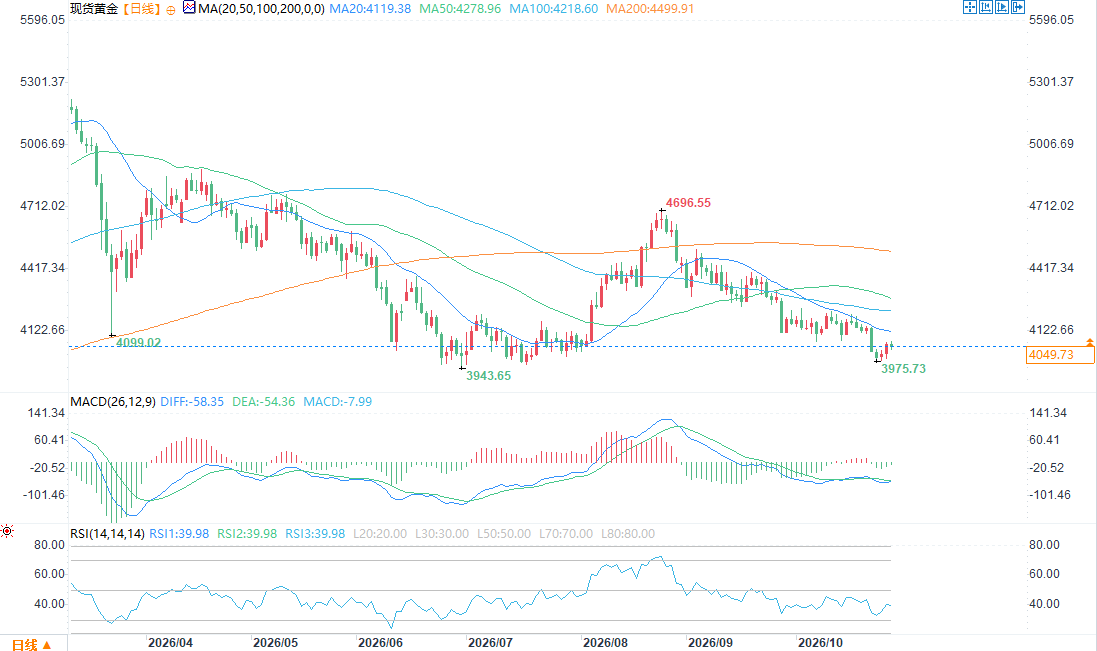 (Spot Gold Daily Chart Source: FX678) The next upside target for spot gold bulls: to push the price above the $4059.00-$4079.00 resistance zone; a successful break above this level would target $4088.00, followed by $4200.00. The short-term downside target for bears: a break below $4015.00; deeper support is seen at $3975.00, followed by $3936.00. First resistance level: $4059.00, then $4079.00; first support level: $4039.00, then $4015.00. Silver Technical Analysis The next upside target for spot silver bulls: to push the price above the $54.460-$55.770 resistance zone; a break above this level would target $60.000, followed by $63.000. Downside targets: A break below $52.410; a deeper target of $51.390, followed by a test of $50.000. First resistance level: $54.460, then $55.770; first support level: $52.410, then $51.390.
Market positioning is primarily betting that the Federal Reserve will pause rate hikes on Wednesday. Traders estimate that there is an approximately 84% probability of the Fed raising rates at least once more before December. Despite geopolitical uncertainties, high US Treasury yields, a strong dollar, and widespread market expectations that the Fed will continue tightening policy are all factors that continue to suppress sustained buying of gold. The two-day Federal Open Market Committee (FOMC) meeting will conclude on Wednesday. The interest rate decision will be announced at 2:00 PM Eastern Time, followed by a press conference by Fed Chairman Kevin Warsh at 2:30 PM. The market widely expects policymakers to maintain the target range for the federal funds rate at 3.75%-4.00%, and market focus will shift to the meeting statement and the Chairman's comments on inflation, employment, and whether there will be another rate hike in December. Remaining economic data on Wednesday: The US Energy Information Administration's weekly oil inventory report will be released at 10:30 AM Eastern Time. On Thursday morning at 8:30 AM, preliminary estimates of third-quarter GDP, September personal consumption expenditure inflation data, and initial jobless claims will be released. If inflation data cools or the Federal Reserve signals a more accommodative policy stance, it will lower US Treasury yields and weaken the dollar, thereby reducing expectations of a December rate hike and providing support for gold. Conversely, if inflationary pressures persist while the Fed releases hawkish signals, it will strengthen expectations of further monetary tightening, continuing to put downward pressure on precious metals. The Strait of Hormuz and the US-Iran situation remain important triggers for significant volatility in the global energy market. The Houthi rebels, supported by Iran, have launched a series of attacks, jeopardizing the nascent signs of easing regional security tensions. On Tuesday, the Houthis claimed responsibility for a ballistic missile attack on Saudi Arabia's Rastanura oil refinery. This refinery is a core oil processing and export hub in Saudi Arabia, with a daily refining capacity of approximately 550,000 barrels. Saudi officials have not yet immediately confirmed the attack or the extent of the damage to the facility, and the impact on actual operations remains unclear. Just before this attack, representatives from Saudi Arabia, Turkey, and Pakistan held diplomatic consultations in Tehran, and the market had hoped for a de-escalation of regional tensions, which also pushed crude oil prices down by nearly $2 per barrel on Tuesday. However, a clear reconciliation agreement has not yet been reached between the US and Iran; meanwhile, shipping lanes and energy infrastructure continue to be threatened, and the restoration of normal operation in the Strait of Hormuz remains fraught with obstacles. Stimulated by a new round of security crises, crude oil prices rose on Wednesday, recovering most of the previous trading day's losses. Despite various regional diplomatic efforts, the conflict remains unresolved, with Houthi attacks continuing and the prospects for US-Iran negotiations uncertain, thus labeling the energy market with a high geopolitical risk premium. For gold, escalating military conflict will bring safe-haven buying to support prices; however, a surge in crude oil prices will exacerbate inflation concerns and strengthen market expectations for further interest rate hikes by the Federal Reserve. These two forces pull against each other, resulting in limited gold price reactions to the Middle East turmoil. Silver also faces headwinds from monetary policy, coupled with its industrial attributes; high energy costs and concerns about a manufacturing slowdown will impact silver prices. Global stock markets showed mixed performance, with investors awaiting the Federal Reserve's decision and quarterly earnings reports from tech giants. The Nasdaq and S&P 500 rose on Tuesday, reflecting renewed buying of AI-related stocks, but the risks of corporate financing needs and overvaluation remain. Asian stock markets were mixed; European markets focused on corporate earnings reports, rising energy prices, and upcoming central bank policy decisions. The European Central Bank and the Bank of Japan will also announce their interest rate decisions this week. Investors will be closely watching whether the central bank statements confirm a prolonged period of tight monetary policy, especially given persistently high oil prices, which continue to squeeze corporate profits and weaken consumer purchasing power. Gold Technical Analysis (Spot Gold Daily Chart Source: FX678) The next upside target for spot gold bulls: to push the price above the $4059.00-$4079.00 resistance zone; a successful break above this level would target $4088.00, followed by $4200.00. The short-term downside target for bears: a break below $4015.00; deeper support is seen at $3975.00, followed by $3936.00. First resistance level: $4059.00, then $4079.00; first support level: $4039.00, then $4015.00. Silver Technical Analysis The next upside target for spot silver bulls: to push the price above the $54.460-$55.770 resistance zone; a break above this level would target $60.000, followed by $63.000. Downside targets: A break below $52.410; a deeper target of $51.390, followed by a test of $50.000. First resistance level: $54.460, then $55.770; first support level: $52.410, then $51.390.
- Risk Warning and Disclaimer
- The market involves risk, and trading may not be suitable for all investors. This article is for reference only and does not constitute personal investment advice, nor does it take into account certain users’ specific investment objectives, financial situation, or other needs. Any investment decisions made based on this information are at your own risk.