After the European Central Bank held rates steady: Why is Deutsche Bank still insisting on a final rate hike in December?
2026-10-30 08:10:25
On Friday (October 30) during the Asian session, the euro traded in a narrow range against the US dollar, currently hovering around 1.1180. The European Central Bank (ECB) announced on Thursday that its Governing Council decided to maintain its three key interest rates unchanged: the deposit facility rate, the main refinancing rate, and the marginal lending rate at 2.50%, 2.65%, and 2.90%, respectively. Deutsche Bank expects the December rate hike to be the last in this cycle; Lagarde's early departure makes the path more unpredictable, but does not necessarily change the policy direction; energy prices are the biggest variable, and the leadership change adds a policy risk premium to 2027. Deutsche Bank believes the ECB has room for one more rate hike, and the upcoming personnel changes are less important than energy prices. 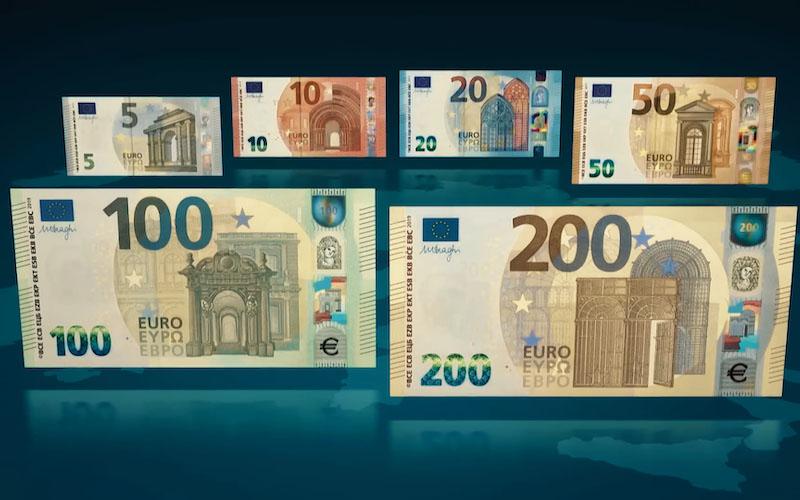
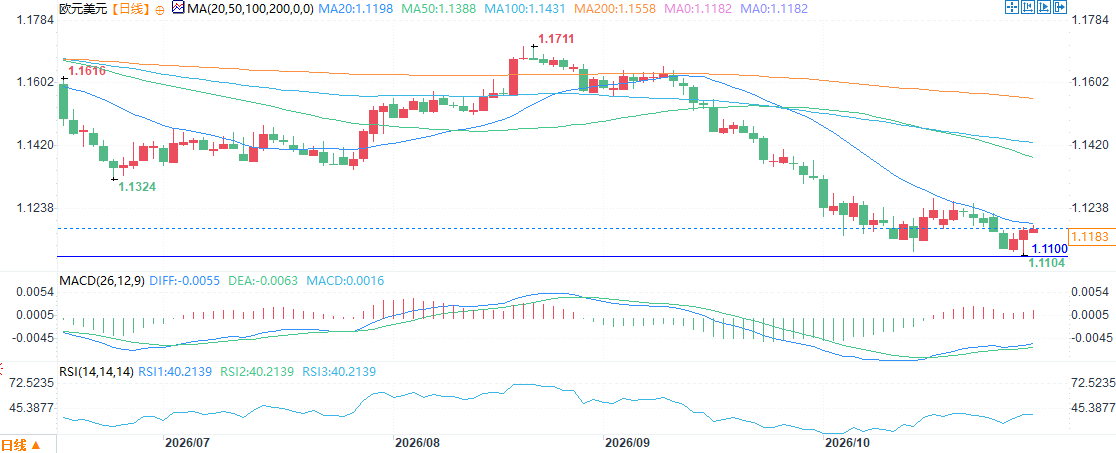 (Euro/USD daily chart, source: FX678) At 8:06 Beijing time, the euro/dollar exchange rate was 1.1180/81.
Key Takeaway: December's "Final Addition," Energy is the Key Variable
Deutsche Bank expects the European Central Bank (ECB) to raise interest rates again in December, which could very well be the last of this tightening cycle. Their argument is that if energy prices continue to rise, the rate hikes implemented so far, along with the tightening of financial conditions, may still be insufficient to curb inflation. This assessment follows Thursday's ECB meeting, where policymakers kept all three key interest rates unchanged, with the deposit rate remaining at 2.5%. Deutsche Bank had previously anticipated this pause, describing it as a prudent response to the energy price shock. Following the decision, the euro and eurozone bond yields fell. Mark Wall, Deutsche Bank's chief European economist for research, stated that if energy costs continue to be passed on to consumer prices, even with the tightening of financial conditions since September, the rate hikes implemented so far are unlikely to be sufficient. Therefore, the bank still believes there will be a final rate hike in December, viewing it as a possible end to the current tightening cycle.Personnel changes: the path is more difficult to predict, but policies do not change automatically.
Wall also acknowledged that predicting the ECB's path has become more difficult, partly due to a wave of leadership changes. President Christine Lagarde will step down in February, about nine months earlier than her original eight-year term was scheduled to end in October 2027. She is the second ECB president to leave early. Executive board member Isabelle Schnabel will also leave a year early in January to take a senior position at the International Monetary Fund. Chief Economist Philipp Lane's term expires in May. The race to succeed Lagarde has begun. The Dutch government supports former Dutch central bank governor Klaas Knot, while Spain supports Pablo Hernández de Cos, general manager of the Bank for International Settlements and former governor of the Bank of Spain. Wall questioned whether the leadership changes would alter policy decisions. He argued that the ECB, as an institution, is greater than any single president, and a new president does not automatically imply a different interest rate path.Market impact: Short-term pricing is constrained, and the policy risk premium will increase in 2027.
If Deutsche Bank's assessment is correct, the December action will set a ceiling on near-term interest rate expectations and shift the debate from "how high to raise rates" to "how long to maintain those high levels." The tone of the new leadership in 2027 will then be a key issue for the market. The "last hike" view in December primarily affects the short end of the euro, with the Euro Interbank Offered Rate (Euribor), STR futures, and one- to two-year government bond yields being most sensitive to pricing changes. Suppressing expectations could reduce volatility at the far end of the curve, while short-duration contracts remain sensitive to every inflation data point. Energy is a swing factor: further increases in oil and gas prices will strengthen the tightening case and could support the euro. Leadership uncertainty adds a policy risk premium to 2027, and a politicized succession struggle could weigh on the single currency.in conclusion
Deutsche Bank maintains its view that a December rate hike will be the last in this cycle, arguing that the transmission of energy inflation may render existing tightening insufficient. Leadership changes make path prediction more difficult, but do not necessarily alter the policy direction. For the market, short-term pricing will be constrained by the December action, with the tone of the new leadership in 2027 and energy price trends becoming key variables. (Euro/USD daily chart, source: FX678) At 8:06 Beijing time, the euro/dollar exchange rate was 1.1180/81.
- Risk Warning and Disclaimer
- The market involves risk, and trading may not be suitable for all investors. This article is for reference only and does not constitute personal investment advice, nor does it take into account certain users’ specific investment objectives, financial situation, or other needs. Any investment decisions made based on this information are at your own risk.