The US dollar/Canadian dollar exchange rate remained range-bound at low levels, influenced by both the US-Canada interest rate differential and oil prices.
2026-11-02 11:44:24
The USD/CAD pair opened lower in Asian trading on Monday, then filled the gap and traded around 1.3970, essentially unchanged from Friday's close of 1.3973. After a brief period of volatility, the pair returned to a range-bound trading pattern, reflecting the current balancing act between bullish and bearish factors – the US dollar is supported by interest rate differentials but safe-haven demand is cooling, while the Canadian dollar is supported by oil prices but lacks further upward momentum. 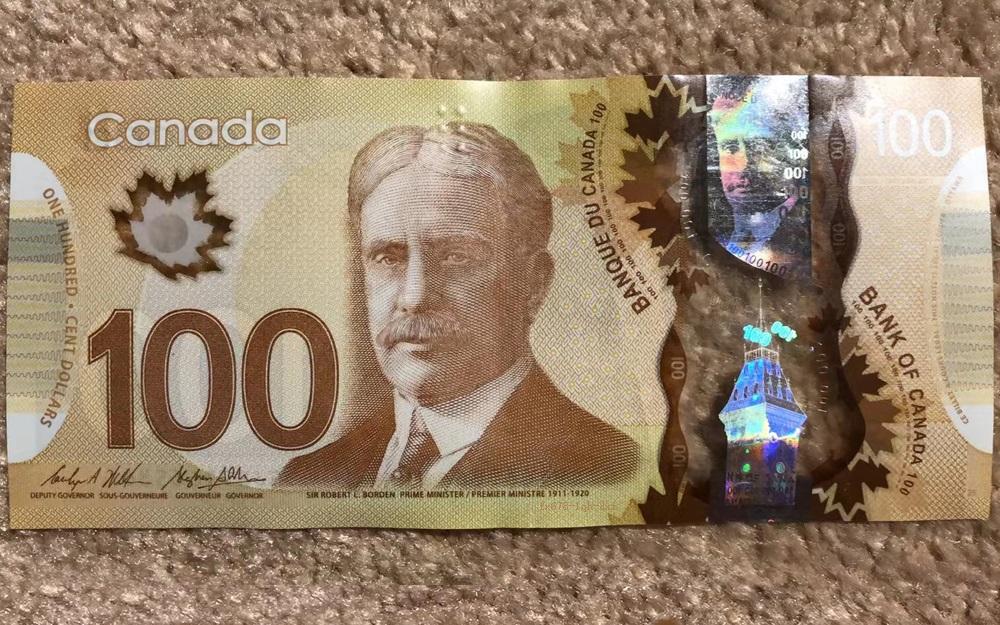 The main reason for the dollar's weakness was a marginal decline in safe-haven demand. Iranian negotiators held talks with Qatari mediators in Doha for the third consecutive day, and Iran also proposed a 48-hour plan to reopen the Strait of Hormuz if the US meets its conditions. US President Trump stated that negotiations were progressing well, but he also emphasized that further military action after the November 3rd midterm elections was not ruled out. The reopening of diplomatic channels significantly reduced immediate market concerns about pre-election military escalation, leading to a reduction in safe-haven dollar buying. However, the downside for the dollar was also limited. The combination of a 3.1% year-on-year increase in US core PCE in September and a 3.4% annualized GDP growth rate in the third quarter reinforced the logic of maintaining high interest rates for a longer period. According to the CME FedWatch tool, the market is pricing in a 25 basis point rate hike by the Federal Reserve in December at approximately 72%-75%. Brown Brothers Harriman (BBH) strategists pointed out that the latest PCE data "confirms that inflationary progress has stalled," with overall PCE rising 0.5% month-on-month (previous value 0.3%) and 3.6% year-on-year (previous value 3.4%), while core PCE rose 0.3% month-on-month and 3.1% year-on-year, indicating that the de-inflationary trend has lost momentum. This combination provides structural support for the US dollar. Regarding the Canadian dollar, OPEC+ confirmed on Sunday that its December production targets remain unchanged, with Saudi Arabia's quota at 10.478 million barrels per day, Russia's at 9.949 million barrels per day, and Iraq's at 4.431 million barrels per day. This decision eliminated the downside risk of further production increases in the short term, but failed to push oil prices significantly higher. WTI crude oil fell back to around $101.78 per barrel in Asian trading on Monday, down about 2.2% from Friday's close of $104.12 per barrel. As a major oil exporter, Canada benefited from high oil prices, but the decline in oil prices weakened the commodity-like support for the Canadian dollar. This week is packed with key events: the US October ISM Manufacturing PMI will be released today (expected 54.6), the US midterm elections will be held tomorrow, and the October non-farm payroll data will be released on Friday. These events could provide new directional guidance for the USD/CAD pair. On the daily chart, USD/CAD is trading around 1.3970, with an overall bearish bias. The price is trading below the 9-day EMA (around 1.4027) and the 50-day EMA (around 1.4057), indicating that both short-term and medium-term moving averages are providing resistance, limiting upside potential. The RSI is around 36, in the weak momentum zone but not yet oversold, suggesting downward pressure exists but the slope may be slowing. Key resistance levels to watch are 1.4027, 1.4057, and 1.4184. The first support level to watch is 1.3930, followed by 1.3898 and 1.3732. On the 4-hour chart, the price is moving down along the short-term moving average, and the MACD histogram is close to the zero line, indicating bearish momentum but no acceleration has been confirmed yet; the current price is fluctuating narrowly between 1.3960 and 1.4000.
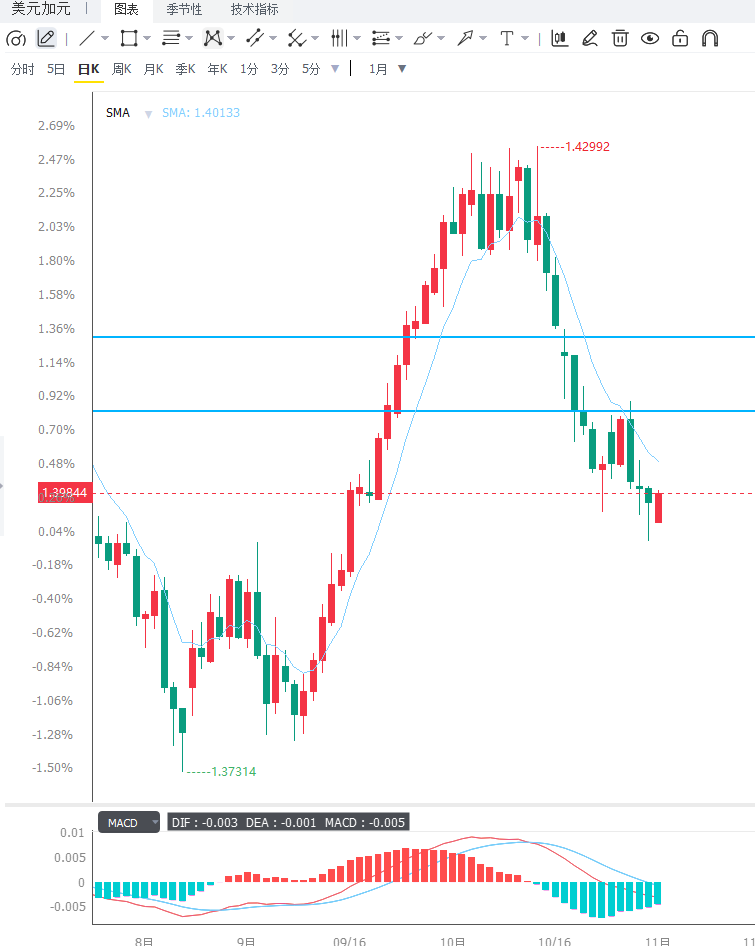 Editor's Summary: The core contradiction in the USD/CAD exchange rate pair lies in the tug-of-war between "Fed rate hike expectations supporting the US dollar" and "high oil prices + hawkish stance from the Bank of Canada supporting the Canadian dollar." This two-way dynamic makes the exchange rate more likely to fluctuate within the 1.3930-1.4057 range, consolidating and awaiting a breakout from this week's data and events. Three key variables to watch go forward: first, whether WTI crude oil can hold above $100/barrel, which is the primary indicator of whether the commodity-like support for the Canadian dollar continues; second, whether the USD/CAD pair can effectively break through and hold the 1.4027-1.4057 resistance zone, which is the primary technical indicator of whether the bearish trend has reversed; and third, this week's ISM Manufacturing PMI, the US midterm election results, and Friday's non-farm payroll data. If the data is strong and geopolitical risks escalate after the election, the US dollar may strengthen again and push the exchange rate above the resistance zone.
The main reason for the dollar's weakness was a marginal decline in safe-haven demand. Iranian negotiators held talks with Qatari mediators in Doha for the third consecutive day, and Iran also proposed a 48-hour plan to reopen the Strait of Hormuz if the US meets its conditions. US President Trump stated that negotiations were progressing well, but he also emphasized that further military action after the November 3rd midterm elections was not ruled out. The reopening of diplomatic channels significantly reduced immediate market concerns about pre-election military escalation, leading to a reduction in safe-haven dollar buying. However, the downside for the dollar was also limited. The combination of a 3.1% year-on-year increase in US core PCE in September and a 3.4% annualized GDP growth rate in the third quarter reinforced the logic of maintaining high interest rates for a longer period. According to the CME FedWatch tool, the market is pricing in a 25 basis point rate hike by the Federal Reserve in December at approximately 72%-75%. Brown Brothers Harriman (BBH) strategists pointed out that the latest PCE data "confirms that inflationary progress has stalled," with overall PCE rising 0.5% month-on-month (previous value 0.3%) and 3.6% year-on-year (previous value 3.4%), while core PCE rose 0.3% month-on-month and 3.1% year-on-year, indicating that the de-inflationary trend has lost momentum. This combination provides structural support for the US dollar. Regarding the Canadian dollar, OPEC+ confirmed on Sunday that its December production targets remain unchanged, with Saudi Arabia's quota at 10.478 million barrels per day, Russia's at 9.949 million barrels per day, and Iraq's at 4.431 million barrels per day. This decision eliminated the downside risk of further production increases in the short term, but failed to push oil prices significantly higher. WTI crude oil fell back to around $101.78 per barrel in Asian trading on Monday, down about 2.2% from Friday's close of $104.12 per barrel. As a major oil exporter, Canada benefited from high oil prices, but the decline in oil prices weakened the commodity-like support for the Canadian dollar. This week is packed with key events: the US October ISM Manufacturing PMI will be released today (expected 54.6), the US midterm elections will be held tomorrow, and the October non-farm payroll data will be released on Friday. These events could provide new directional guidance for the USD/CAD pair. On the daily chart, USD/CAD is trading around 1.3970, with an overall bearish bias. The price is trading below the 9-day EMA (around 1.4027) and the 50-day EMA (around 1.4057), indicating that both short-term and medium-term moving averages are providing resistance, limiting upside potential. The RSI is around 36, in the weak momentum zone but not yet oversold, suggesting downward pressure exists but the slope may be slowing. Key resistance levels to watch are 1.4027, 1.4057, and 1.4184. The first support level to watch is 1.3930, followed by 1.3898 and 1.3732. On the 4-hour chart, the price is moving down along the short-term moving average, and the MACD histogram is close to the zero line, indicating bearish momentum but no acceleration has been confirmed yet; the current price is fluctuating narrowly between 1.3960 and 1.4000. Editor's Summary: The core contradiction in the USD/CAD exchange rate pair lies in the tug-of-war between "Fed rate hike expectations supporting the US dollar" and "high oil prices + hawkish stance from the Bank of Canada supporting the Canadian dollar." This two-way dynamic makes the exchange rate more likely to fluctuate within the 1.3930-1.4057 range, consolidating and awaiting a breakout from this week's data and events. Three key variables to watch go forward: first, whether WTI crude oil can hold above $100/barrel, which is the primary indicator of whether the commodity-like support for the Canadian dollar continues; second, whether the USD/CAD pair can effectively break through and hold the 1.4027-1.4057 resistance zone, which is the primary technical indicator of whether the bearish trend has reversed; and third, this week's ISM Manufacturing PMI, the US midterm election results, and Friday's non-farm payroll data. If the data is strong and geopolitical risks escalate after the election, the US dollar may strengthen again and push the exchange rate above the resistance zone.
- Risk Warning and Disclaimer
- The market involves risk, and trading may not be suitable for all investors. This article is for reference only and does not constitute personal investment advice, nor does it take into account certain users’ specific investment objectives, financial situation, or other needs. Any investment decisions made based on this information are at your own risk.