The Bank of England is highly likely to raise interest rates to 4% this week, but the real suspense lies not in the rate hike itself.
2026-11-02 11:22:25
The Bank of England is heading towards a near-certain interest rate hike, but a clear rift is widening between the Monetary Policy Committee (MPC) and financial markets regarding "what happens after the hike." Economists expect the Bank of England to raise its benchmark interest rate from 3.75% to 4.0% on Thursday, November 5th, marking the first rate hike since August 2023. Economists also predict that the MPC will approve the decision by a 7-2 vote, with external members Alan Taylor and Swati Dingela most likely to remain on the side of holding rates steady. However, more noteworthy than the question of whether or not to raise rates is the extent to which the central bank will tolerate aggressive market bets on its subsequent rate hike path. 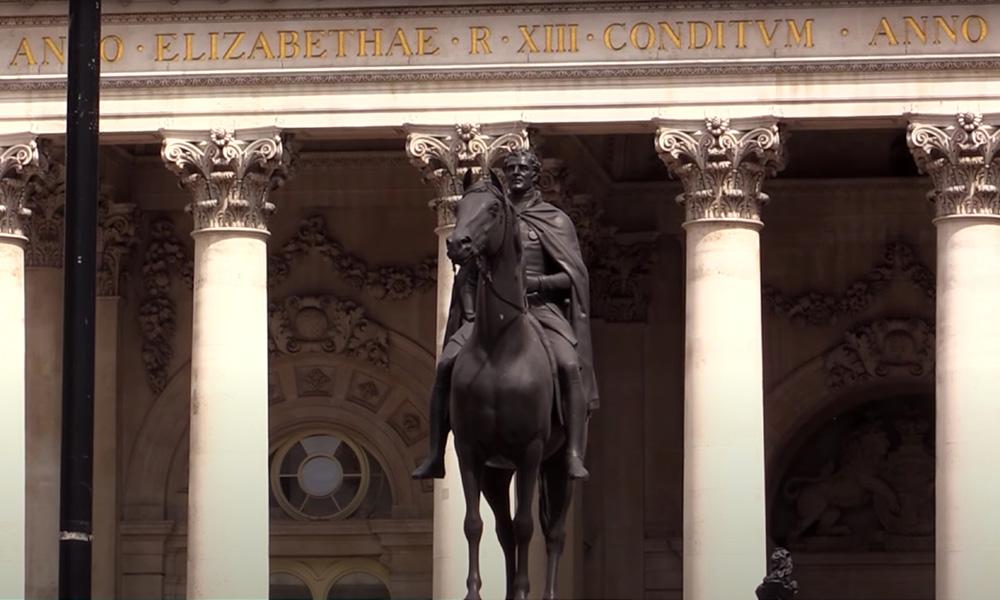
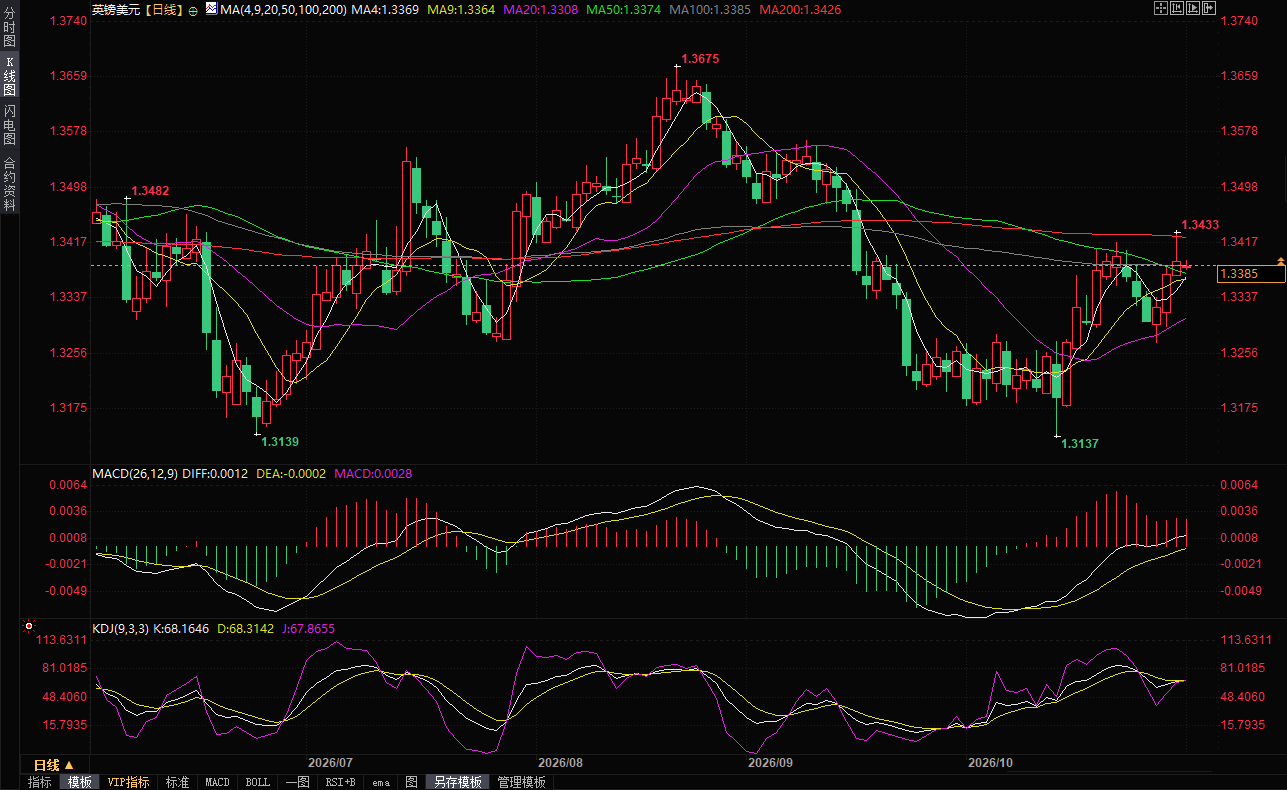 (GBP/USD daily chart)
The interest rate hike is a foregone conclusion, but the inflationary backdrop is more challenging than it appears.
The direct driver of this round of interest rate hikes is energy prices. In the 12 months ending in September, the UK Consumer Price Index (CPI) rose 3.5% year-on-year, higher than August's 3.1% and exceeding economists' general expectation of 3.4%; core CPI rose to 2.8% in tandem, while the services inflation rate rose to 3.7%. This reading significantly deviates from the Bank of England's July forecast of 3.0%, meaning the decline in inflation is shallower than policymakers had previously anticipated. The Bank of England had already warned in September that inflation would break through 4% by early next year, and that the jump in energy prices since July was highly similar to its "adverse scenario"—a scenario where inflation risks solidification. The lack of substantial easing in the Middle East situation further reinforces this assessment. Stefan Koopman, senior macro strategist at Rabobank, commented quite bluntly: "They are increasingly being pushed around, whether they like it or not."The market is betting on four interest rate hikes, but the central bank itself is not buying into it.
Current interest rate futures pricing has far outpaced central bank statements. The money market has almost fully priced in the expectation of a 25 basis point rate hike on November 5th and is betting on at least three more rate hikes before July 2027, bringing the total to 4.75%–5.0%. Derivatives market data shows a 57.7% probability of another rate hike at the December 17th meeting. However, this bet is facing increasing skepticism from within the central bank. Chief Economist Hugh Peele, while consistently voting in favor of rate hikes, has explicitly expressed skepticism about the market pricing in four rate hikes in the coming year. Even hawkish economist Catherine Mann may not endorse the full path of rate hikes expected by the market. Alexander Harvey, a UK economist at Oxford Economics, believes that the meeting minutes or Bailey's statements "may suggest that bank rates are unlikely to reach the levels expected by the financial markets." Economists in recent surveys generally only anticipate two actions: in November and February 2027, a stark contrast to the market's "four-times bet." After UBS revised its forecast in September to 25 basis point rate hikes in November and February next year, with a peak interest rate of 4.25%, it also pointed out that the market's pricing of a cumulative rate hike of about 100 basis points over the next 12 months was "far more hawkish than the bank's own expectations."There are three things that really deserve close attention: the splitting of the vote, the revision of predictions, and Pele's wording.
The substantive information from Thursday's decision will focus on three aspects. First, the voting ratio . If it passes 7-2, the identities of the dissenters will reveal the weight of the MPC's assessment of "slack capacity in the economy." Taylor and Dingell had previously advocated a wait-and-see approach based on the existence of slack capacity in the economy, but recent unexpectedly strong growth data has put their stance under scrutiny. Second, the revision of the inflation path in the economic forecast . The Bank of England already included a warning in September that inflation would exceed 4% by early next year; the new forecast will indicate whether policymakers believe inflation will remain significantly above the target in 2027. This directly determines the boundary between "a single adjustment rate hike" and "a tightening cycle." Third, Bailey's wording at the press conference . Bailey stated last month that the businesses he contacted seemed better able to absorb rising costs than in 2022; if this assessment is reiterated at the press conference, it will be interpreted by the market as a "soft cooling" of the pace of subsequent rate hikes. At the same time, he also faces a delicate balance: he must avoid being accused of repeating the mistake of underestimating the persistence of inflation in 2022, while also preventing the market from over-linearly extrapolating a preventative action into continuous tightening.Fiscal variables: Budget unlikely to alter inflation trajectory
Chancellor Healy's budget, announced last week, provided modest support for households and car owners impacted by energy costs, with some funding coming from taxes levied on banks. However, economists generally assess that these measures will only slightly mitigate expected inflation increases and are insufficient to substantially alter the Bank of England's policy path. The pound remained above 1.34 against the dollar after the budget announcement, a high since mid-September, while the yield on 10-year UK government bonds hovered around 5.4%-5.46%, near its highest level since 2007, reflecting a combination of "imminent interest rate hikes but unresolved long-term fiscal and inflationary pressures."Editor's Summary
The essence of the Bank of England's latest rate hike is a forced readjustment between an energy shock and credibility repair. During the 2023 rate hike cycle, the central bank faced widespread criticism for underestimating the persistence of inflation; now, facing a similar external supply shock, the political and credibility costs of waiting for "conclusive evidence of a second-round effect" are prohibitively high. However, there is a key difference between forced action and proactive tightening: the expected 7-2 vote, the significant divergence between economists and the market regarding the subsequent path, and Bailey's observations on corporate cost-absorbing capacity all point to a more likely scenario—November is a "threshold rate hike," not the start of a new round of continuous tightening. For investors, the real signal on Thursday is not the 4.0% figure itself, but the extent to which the central bank "cools down" market pricing in four rate hikes in 2027. The core issue for the pound is that the November rate hike itself cannot provide new upward momentum; what truly affects the exchange rate is the gap between the central bank's wording on the subsequent path and the market's aggressive bets. The pound was flat against the dollar in Asian trading on Monday (November 2), hovering around 1.3385, with the market having almost fully priced in the expected rate hike to 4.0%. OCBC Bank explicitly stated that the November rate hike was already significantly discounted, and the tightening until 2027 was also priced in, adding that "the threshold for the next round of pound appreciation is becoming increasingly high." (GBP/USD daily chart)Frequently Asked Questions
Q: Why is it that the market has almost fully priced in a November rate hike, yet says "the real suspense isn't the rate hike"? A: Because a rate hike to 4.0% is already a highly consensus event. Economists, interest rate futures pricing, and major institutional forecasts all point to a 25 basis point move, and the expected 7-2 vote has been widely discussed. The real uncertainty lies in the central bank's stance on "how many more times." The market is betting on four rate hikes by July 2027, while the median forecast from economists surveyed by Bloomberg is only for two: November and February next year; Peel himself has publicly expressed skepticism about pricing in four rate hikes. The decision itself is "known," but the subsequent guidance is "unknown," and the latter's impact on the pricing of the pound, the yield curve of government bonds, and interest rate-sensitive assets is far greater than a single 25 basis point move. Q: Why is the 0.5 percentage point deviation between the September CPI of 3.5% and the central bank's July forecast of 3.0% enough to trigger a rate hike? A: The key lies in the direction and composition of the deviation. 0.5 percentage points is not astronomical in itself, but it occurred just after the central bank warned that "inflation may break 4% early next year," and with core CPI and service sector inflation rising in tandem, it indicates that price pressures are not limited to the energy component but show signs of spreading to a broader basket. For the central bank, which has just been criticized for underestimating the persistence of inflation in 2022-2023, the credibility cost of being "out of sync" with the curve for the second consecutive time far outweighs the potential drag on growth from a 25 basis point rate hike. Koopman's phrase "being pushed by the hand" perfectly describes the decision-making logic resulting from the superposition of forecasting errors and institutional pressures. Q: In the 7-2 vote within the MPC regarding expected rate hikes, what were the reasons for Taylor and Dingela's opposition? Why has their position become more difficult to maintain in the face of recent data? A: Taylor and Dingela's core argument was that there is still spare capacity in the UK economy, and premature tightening could cause unnecessary damage to already weak demand. This judgment is theoretically valid: if the supply shock is temporary and demand is not strong, the central bank does have the option to wait. However, recent data has put this argument under attack from two sides. On the one hand, the unemployment rate unexpectedly fell by 0.2 percentage points to 4.7% in August, and the preliminary composite PMI rose to 53.1 in October, with both employment and activity indicators showing signs of improvement, weakening the persuasiveness of the claim that "there is a lot of slack in the economy." On the other hand, inflation readings have continued to deviate from forecasts, changing the cost of "waiting" from "potentially unnecessary tightening" to "potentially falling behind the curve again." Their objections still have value, but in a 7-2 voting structure, they are insufficient to change the policy direction. Q: What does Bailey's statement that "businesses are better able to absorb costs than in 2022" mean for the interest rate outlook? A: The weight of this statement lies in the fact that it touches on the Bank of England's most core concern—the second-round effect. If businesses can absorb energy costs by compressing profit margins and improving efficiency, rather than passing those costs on to consumers, then the risk of a wage-price spiral will be significantly reduced, and the necessity for subsequent interest rate hikes will also decrease. Bailey's observation last month was actually laying the economic groundwork for a "November rate hike, but not necessarily a continuous follow-up." The problem is that this judgment is still anecdotal evidence and has not yet been consistently confirmed by macroeconomic wage and pricing data: private sector regular wage growth was 3.0%, in line with expectations but without a significant slowdown, while Green warned that the wage slowdown has stalled. Bailey needs to carefully manage the tone of his press conference in this context of "dovish observations and incomplete data confirmation." Q: What is the single signal that ordinary investors or those focused on UK assets should be watching closely on Thursday? A: If only one can be chosen, it is whether Bailey makes a clear rebuttal to the market's pricing of the subsequent interest rate hike path at the press conference. While voting ratios and forecast revisions are important, they have largely been priced in by the market; the clearest dividing line between "one adjustment rate hike" and "the restart of a tightening cycle" is whether Bailey, as the central bank governor, is willing to directly "cool down" bets on four rate hikes. If he repeats the wording suggested by Oxford Economics—that bank interest rates are unlikely to reach the levels expected by the financial markets—short-term interest rates and 2027 forward SONIA contracts will face repricing, and the supporting logic for the pound will shift from "widening interest rate differentials" to the narrative of "the interest rate hike cycle nearing its end." Conversely, if he remains open to further action or even hawkish in his silence, market bets on 4.75%–5.0% will solidify further. Question: How will this affect the pound's trajectory? The Bank of England's interest rate hikes themselves have largely exhausted their driving force on the pound. The November rate hike to 4.0% has been almost fully priced in by the market, and OCBC Bank has explicitly stated that "the threshold for the next round of pound appreciation is becoming increasingly high." The impact of the decision on the exchange rate will primarily be transmitted through the gap between subsequent guidance and aggressive market bets: if Bailey "cools down" market pricing in three to four rate hikes in 2027 at the press conference, the pound may retrace to the support level of 1.3350 or even 1.3311; if the wording is hawkish and remains open to further action, it is expected to test the resistance zone of 1.3403-1.3417. Mitsubishi UFJ has previously warned that market expectations for rate hikes "seem too high," and the pound faces the risk of depreciation due to a "sell the fact" scenario. In short, the rate hike provides a floor for the pound, but the real directional signal comes from the central bank's statement on the length of the tightening cycle, rather than the 25 basis points themselves. At 11:19 Beijing time, the pound was trading at 1.3383/84 against the dollar.- Risk Warning and Disclaimer
- The market involves risk, and trading may not be suitable for all investors. This article is for reference only and does not constitute personal investment advice, nor does it take into account certain users’ specific investment objectives, financial situation, or other needs. Any investment decisions made based on this information are at your own risk.