Expectations of a Bank of England interest rate hike are rising, and the pound continues its volatile rebound against the dollar.
2026-11-02 14:20:25
This week, the global foreign exchange market is focused on the monetary policies and employment data of the two largest economies, the US and the UK. The pound traded around 1.3390 against the dollar during Monday's Asian trading session, with most traders adopting a wait-and-see approach, awaiting further major events. The Bank of England's interest rate decision on Thursday will be the primary focus of the market, followed by the US October jobs report on Friday. These two events will jointly determine the short-term direction of this major currency pair. Institutional economists generally predict that the Bank of England will raise its benchmark interest rate from 3.75% to 4.00% , which would be the first rate hike since August 2023, when UK inflation will still be significantly higher than the central bank's 2% target. This hawkish policy expectation provides temporary support for the pound.  Economists at Oxford Economics stated that the Bank of England's Monetary Policy Committee is not expected to provide clear guidance on the number of subsequent interest rate hikes, but the meeting minutes or Bailey's remarks may signal that the market's pricing of high interest rates is at risk of overestimation. Besides the Bank of England's decision, the US midterm elections and non-farm payroll report this week will also influence the market. The market estimates that non-farm payrolls will increase by approximately 65,000, and the unemployment rate will likely remain unchanged at 4.2% . If the US labor force data shows resilience, it will boost the US dollar index, thereby directly suppressing the pound against the dollar. Analysts point out that the pound has performed better than previously expected in the face of fiscal pressure from energy costs. The latest UK budget has played a significant stabilizing role, adhering to fiscal rules and retaining approximately £15 billion in policy buffer space, mitigating the impact of geopolitical conflicts. The UK economy has shown some resilience, with the Official Budget Responsibility Office raising its 2026 economic growth forecast to 1.2% . A stable political environment and fiscal discipline are relatively favorable for the pound, and the deepening economic ties between the UK and the EU are also seen as a medium-term positive factor. However, the market also points out that the previous positive factors have already been fully priced in, the November rate hike has been largely priced in, and the expectation of further tightening in 2027 has also been reflected in prices. For the pound to embark on a new round of upward movement, stronger conditions are needed. Bank of England policymaker Green's public speech maintained a hawkish stance, receiving a score of 7.4. He warned that the process of wage inflation reduction has stalled, wage levels are still far from the 2% inflation target, and the risk of a second wave of inflation is higher than previously assessed. Even though forward-looking data shows wage growth close to 3.5%, the overall economy is resilient, and short-term policy easing space is limited. The labor market slack may have peaked, and the risk of further wage increases cannot be ignored. This statement limited market expectations for rate cuts, providing marginal support for the pound. Trade concerns are secondary; currently, the US-UK interest rate differential and central bank policy statements are the core variables driving market movements. On the daily chart, GBP/USD maintains a mildly bullish short-term trend, with the price holding above the 100-day simple moving average and the Bollinger Band middle line. Currently trading below the upper Bollinger Band, it still has room for further upward movement. The 14-period Relative Strength Index (RSI) is close to 56 , within a healthy range and not yet overbought. Immediate resistance is located near the upper Bollinger Band at 1.3450 , where strong selling pressure exists. The first support level is the 100-day moving average at 1.3385 , followed by the Bollinger Band middle line at 1.3310 . If the pullback intensifies, the lower Bollinger Band at 1.3175 will become a crucial support level. From a 4-hour chart perspective, the short-term trend remains slightly bullish with fluctuations. Prices are trading near the medium-term moving average, and the RSI indicator is oscillating within the neutral range without showing extreme overbought or oversold conditions. There is a possibility of testing resistance upwards in the short term, but if fundamentals fall short of expectations, a price pullback could be triggered. Only a decisive break above 1.3450 can open up further upside potential. A breach of the 1.3385 support level would initiate a deeper correction. The overall technical structure lacks a clear direction, and the market awaits fundamental news to break through this consolidation.
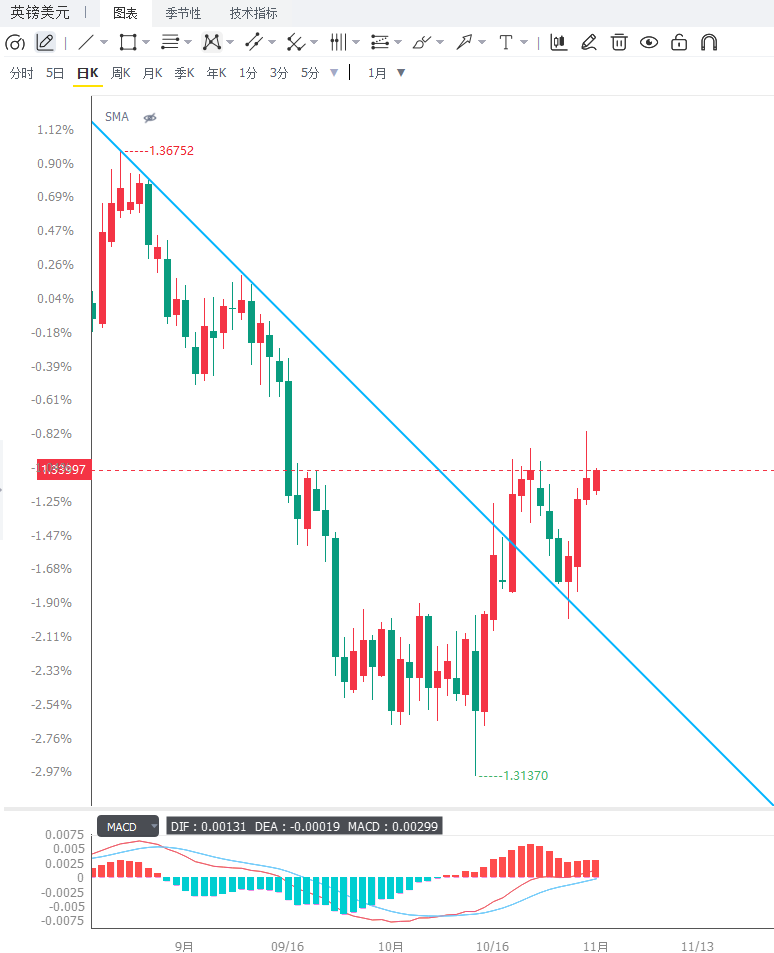 Editor's Summary: The GBP/USD pair is currently in a window of expectation-driven speculation. The anticipated Bank of England rate hike is providing support for the exchange rate, but this hike has already been fully priced in by the market. The actual implementation of the rate hike is unlikely to drive a significant surge in the pound. More important is the Bank of England's stance on the future path of interest rates. Short-term risks come from two aspects: first, a dovish signal from the Bank of England, dampening bullish sentiment in the pound; second, stronger-than-expected US employment data, pushing the dollar higher and putting downward pressure on it. On the opportunity side, if the Bank of England signals continued tightening coupled with weaker US employment data, the exchange rate may test the upper resistance level.
Economists at Oxford Economics stated that the Bank of England's Monetary Policy Committee is not expected to provide clear guidance on the number of subsequent interest rate hikes, but the meeting minutes or Bailey's remarks may signal that the market's pricing of high interest rates is at risk of overestimation. Besides the Bank of England's decision, the US midterm elections and non-farm payroll report this week will also influence the market. The market estimates that non-farm payrolls will increase by approximately 65,000, and the unemployment rate will likely remain unchanged at 4.2% . If the US labor force data shows resilience, it will boost the US dollar index, thereby directly suppressing the pound against the dollar. Analysts point out that the pound has performed better than previously expected in the face of fiscal pressure from energy costs. The latest UK budget has played a significant stabilizing role, adhering to fiscal rules and retaining approximately £15 billion in policy buffer space, mitigating the impact of geopolitical conflicts. The UK economy has shown some resilience, with the Official Budget Responsibility Office raising its 2026 economic growth forecast to 1.2% . A stable political environment and fiscal discipline are relatively favorable for the pound, and the deepening economic ties between the UK and the EU are also seen as a medium-term positive factor. However, the market also points out that the previous positive factors have already been fully priced in, the November rate hike has been largely priced in, and the expectation of further tightening in 2027 has also been reflected in prices. For the pound to embark on a new round of upward movement, stronger conditions are needed. Bank of England policymaker Green's public speech maintained a hawkish stance, receiving a score of 7.4. He warned that the process of wage inflation reduction has stalled, wage levels are still far from the 2% inflation target, and the risk of a second wave of inflation is higher than previously assessed. Even though forward-looking data shows wage growth close to 3.5%, the overall economy is resilient, and short-term policy easing space is limited. The labor market slack may have peaked, and the risk of further wage increases cannot be ignored. This statement limited market expectations for rate cuts, providing marginal support for the pound. Trade concerns are secondary; currently, the US-UK interest rate differential and central bank policy statements are the core variables driving market movements. On the daily chart, GBP/USD maintains a mildly bullish short-term trend, with the price holding above the 100-day simple moving average and the Bollinger Band middle line. Currently trading below the upper Bollinger Band, it still has room for further upward movement. The 14-period Relative Strength Index (RSI) is close to 56 , within a healthy range and not yet overbought. Immediate resistance is located near the upper Bollinger Band at 1.3450 , where strong selling pressure exists. The first support level is the 100-day moving average at 1.3385 , followed by the Bollinger Band middle line at 1.3310 . If the pullback intensifies, the lower Bollinger Band at 1.3175 will become a crucial support level. From a 4-hour chart perspective, the short-term trend remains slightly bullish with fluctuations. Prices are trading near the medium-term moving average, and the RSI indicator is oscillating within the neutral range without showing extreme overbought or oversold conditions. There is a possibility of testing resistance upwards in the short term, but if fundamentals fall short of expectations, a price pullback could be triggered. Only a decisive break above 1.3450 can open up further upside potential. A breach of the 1.3385 support level would initiate a deeper correction. The overall technical structure lacks a clear direction, and the market awaits fundamental news to break through this consolidation. Editor's Summary: The GBP/USD pair is currently in a window of expectation-driven speculation. The anticipated Bank of England rate hike is providing support for the exchange rate, but this hike has already been fully priced in by the market. The actual implementation of the rate hike is unlikely to drive a significant surge in the pound. More important is the Bank of England's stance on the future path of interest rates. Short-term risks come from two aspects: first, a dovish signal from the Bank of England, dampening bullish sentiment in the pound; second, stronger-than-expected US employment data, pushing the dollar higher and putting downward pressure on it. On the opportunity side, if the Bank of England signals continued tightening coupled with weaker US employment data, the exchange rate may test the upper resistance level.
- Risk Warning and Disclaimer
- The market involves risk, and trading may not be suitable for all investors. This article is for reference only and does not constitute personal investment advice, nor does it take into account certain users’ specific investment objectives, financial situation, or other needs. Any investment decisions made based on this information are at your own risk.