Germany's gas storage shortage sounds the alarm: How a natural gas shortage affects the entire energy and foreign exchange markets.
2026-11-02 20:36:25
On Thursday (November 2), the European natural gas market remained tight. Benchmark TTF futures prices had previously broken through the psychological barrier of €100/MWh for the first time since the 2022 energy crisis. Germany's gas storage level on November 1 was only about 61.2%, below the statutory target of 70% and far below the 15-year seasonal average of about 91%. Meanwhile, Iranian officials again warned on Monday of a potential shortage of residential gas during the winter, calling for reduced consumption. These two signals from the supply side are fueling market concerns about the winter energy balance. 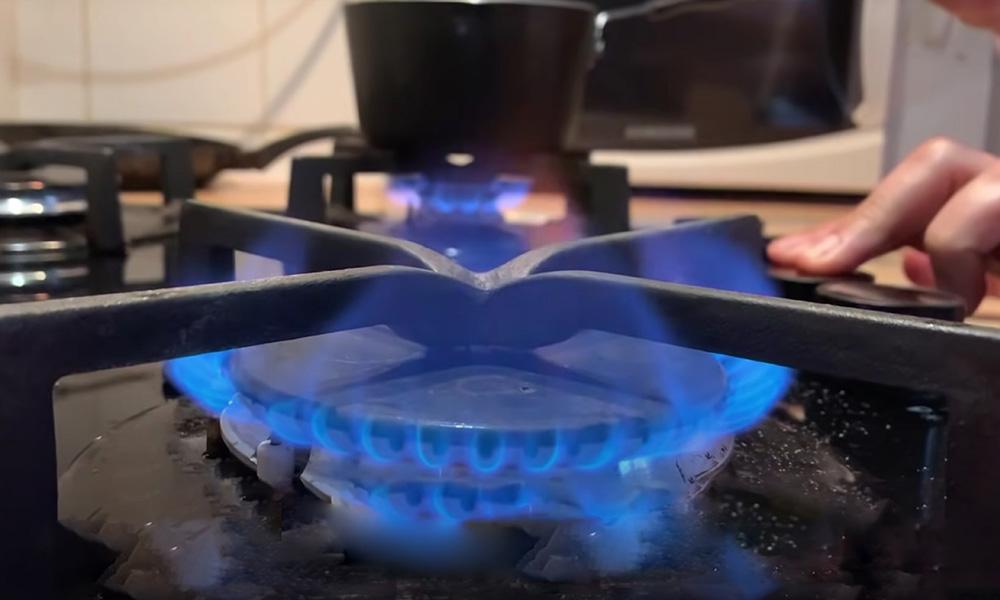
Germany's inventory shortage: Official composure coexists with industry warnings
Data shows that German gas storage facilities were at approximately 61.2% full on Saturday, falling short of the 70% average target set for Sunday. This target was calculated using two rules: the Federal Network Agency set an 80% threshold for all sites by November 1st, and a 45% threshold for six specific sites, resulting in a combined total of approximately 70%. A spokesperson for the Ministry of Economic Affairs stated that even with current inventory levels, gas supply security this winter remains assured; the Federal Network Agency also considers the risk of supply shortages low. However, the gas storage industry is noticeably more cautious. The head of the industry organization INES called the failure to meet the target a "serious warning," noting that Germany is entering the heating season with a thinner safety net, increasing its vulnerability to unusually low temperatures. This discrepancy between official and industry assessments constitutes a source of uncertainty in market pricing.Cold Wave and LNG Competition: Two Paths to Widening Gap
Logic suggests that below-average inventory levels do not necessarily lead to a crisis; the key lies in the speed of gas production and restocking capacity during the winter. If the cold snap continues, gas withdrawals will accelerate, increasing Germany's reliance on high-priced international LNG spot prices. Europe will need to compete with Asian buyers for cargoes in the open market, and the resulting increase in marginal costs will directly impact the TTF curve. Currently, European gas prices are approximately 11 times higher than US prices. This price difference stimulates arbitrage opportunities in US LNG exports, but also means that Europe lacks a cost advantage in bidding. Sudden stratospheric warming events tracked by meteorological agencies may weaken the polar vortex; if this translates into sustained low temperatures, the inventory gap will widen rapidly.Spillover effects: Energy costs are transmitted to the macroeconomy and exchange rates.
High gas prices firstly increase electricity and industrial energy costs in Europe, squeezing profits in energy-intensive industries such as chemicals and metals, and influencing monetary policy through inflation expectations. Secondly, expanding energy import bills put pressure on the Eurozone's current account; historically, periods of soaring natural gas prices have often been accompanied by pressure on the euro. Thirdly, shortage warnings from Iran indicate a tightening balance in the Middle East during the winter; if Iran reduces industrial gas consumption or affects related export chains, regional energy trade flows will be readjusted. These combined factors mean that natural gas is no longer just a local commodity issue, but has become a variable in the macroeconomic and foreign exchange markets.Future Outlook
In the short term, market pricing will revolve around temperature forecasts, inventory withdrawal rates, and LNG arrival schedules; any unexpected tightening of any of these factors will amplify price volatility. In the medium term, it's necessary to observe the actual evolution of the stratospheric warming event and whether Europe can attract sufficient shipments under price incentives. If the winter passes smoothly, the inventory gap can be absorbed through mild weather and reduced demand; if a cold winter occurs, restocking costs and time windows will become more strained. For the energy market, the risk lies in the destructive effect of high prices on demand; for the foreign exchange market, attention should be paid to the cumulative impact of changes in energy trade terms on the Eurozone's external balance. Current data is insufficient to conclude that a crisis will recur, but the buffer has thinned, and the market's sensitivity to weather and supply has clearly increased.[Further Reading]
Q: What does the gap between Germany's 61.2% gas storage rate and the 70% target mean? A: The gap is about 9 percentage points, corresponding to a reduction in the available buffer. The target is not a hard safety line, but a reference value calculated based on comprehensive site rules. The gap itself does not directly equate to a supply disruption risk, but it means that under the same cold wave scenario, Germany will reach the point where it needs to replenish its stock at higher prices earlier, increasing its price sensitivity. Q: Why does the official assessment state supply security while the industry calls it a "serious warning"? A: The official assessment is based on a comprehensive scenario of contracted supply, pipeline flow, and LNG receiving capacity, while the industry focuses on the thickness of the inventory buffer and the tail risks of extreme low temperatures. The time scales are different: the official assessment looks at the baseline scenario, while the industry looks at the stress scenario. The discrepancy reflects a difference in risk appetite, not a contradiction in facts. Q: European gas prices are about 11 times that of the US. How does this price difference affect the market? A: The price difference incentivizes US LNG exporters to shift cargoes to Europe for arbitrage, increasing marginal supply in Europe, but transportation and liquefaction capacity constraints prevent complete arbitrage. The price difference also raises European industrial costs, compresses profits in energy-intensive industries, and affects interest rate expectations through inflation. Q: What is the connection between Iran's shortage warning and the situation in Europe? A: The tightening winter balance in the Middle East may reduce its exportable gas volume or industrial demand, altering regional trade flows. If Iran reduces its domestic gas consumption, related petrochemical and industrial chains will be affected, indirectly impacting the marginal supply and demand of global LNG and alternative energy. Q: Why is the stratospheric warming event attracting market attention? A: This event may weaken the polar vortex, increasing the probability of cold air moving southward. If this manifests as sustained low temperatures in Europe, gas extraction will accelerate, the restocking window will shorten, and upward price pressure will be significant. Weather forecasts are uncertain, and the market's pricing of them reflects increased volatility rather than a unidirectional trend.- Risk Warning and Disclaimer
- The market involves risk, and trading may not be suitable for all investors. This article is for reference only and does not constitute personal investment advice, nor does it take into account certain users’ specific investment objectives, financial situation, or other needs. Any investment decisions made based on this information are at your own risk.