November 3rd Financial Breakfast: Talks between Iran and Qatar ease inflation concerns; gold prices rebound from a one-year low; US oil falls over 6%, awaiting the midterm elections.
2026-11-03 07:36:26
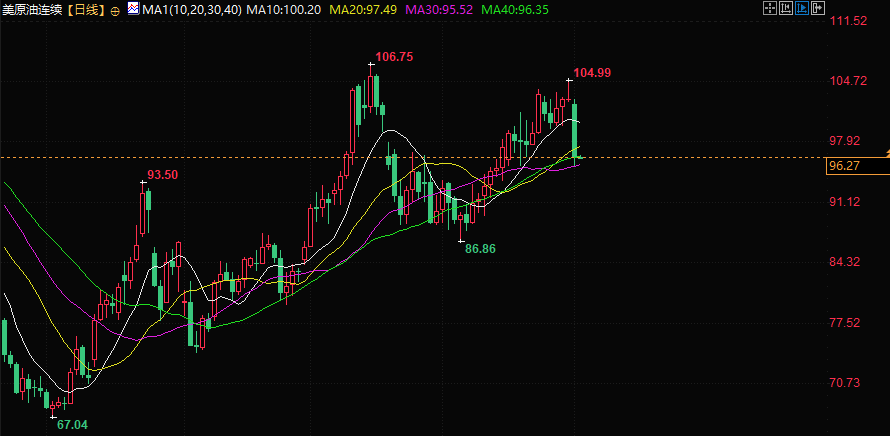
On Tuesday (November 3, Beijing time) in early Asian trading, spot gold was trading around $3,945.34 per ounce. Gold prices rebounded from a one-year low on Monday as falling oil prices eased inflation concerns, providing support for gold, while investors awaited the US midterm elections. Oil prices fell more than 6% on Monday as talks between Iranian and Qatari officials fueled hopes for an end to the US-Israel war against Iran, raising expectations of a more stable supply of Middle Eastern crude oil. US crude oil fell back below the $100 per barrel mark and is currently trading around $96.40 per barrel. 
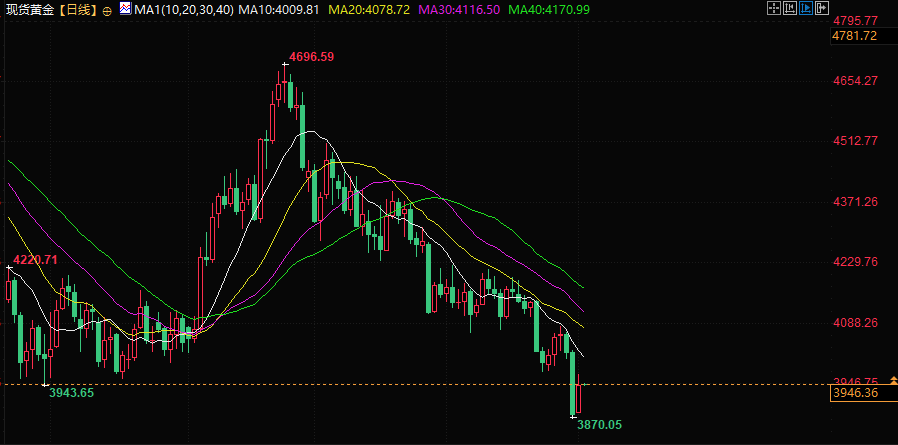 Iran and Qatar held talks for the third consecutive day aimed at ending the US-Israel war against Iran. Peter Grant, Vice President and Senior Metals Strategist at Zaner Metals, stated that weaker oil prices are beneficial in easing inflation concerns, but the market still expects a Fed rate hike in December. CME FedWatch data shows traders believe there is a 77% probability of a December rate hike, down from 80% a week ago. The dollar also provided some support for gold prices. Analysts said that the sell-off in tech and AI-related stocks on Friday affected other markets, and margin calls prompted investors to sell safe-haven assets such as gold. The gold relative strength index rose from below 30 on Friday to around 37, indicating it has moved out of technically oversold territory. Market focus has shifted to the US midterm elections on November 3rd to assess their impact on fiscal policy, geopolitics, and overall market sentiment.
 Analysts say the market is hoping for a diplomatic breakthrough after Iranian President Peshizian stated that Supreme Leader Mojtaba Khamenei had granted the government "certain powers" to conduct peace talks, and that Tehran "will strive to resolve the issue through dialogue" without elaborating. Iranian negotiators held several days of talks with Qatari mediators, and US President Trump stated on Monday that Iran wants an agreement to end the war and that such an agreement is "possible." On Monday evening, Qatari mediators traveled to Tehran to meet with Iranian Foreign Minister Araghchi to discuss a potential US-Iran deal. Raymond James analyst Pavel Molchanov said that signs of progress in US-Iran negotiations pushed oil prices down, but given the market's repeated disappointments over the past few months, skepticism is justified. The talks are preceded by an increase in tanker attacks in the Strait of Hormuz, although there are also signs that oil exports from some major exporting countries are rising. Abu Dhabi National Oil Company CEO Sultan Al Jaber stated that since the outbreak of the Iranian war in late February, which disrupted shipping in the Strait of Hormuz, nearly 1 billion barrels of oil have been depleted globally.
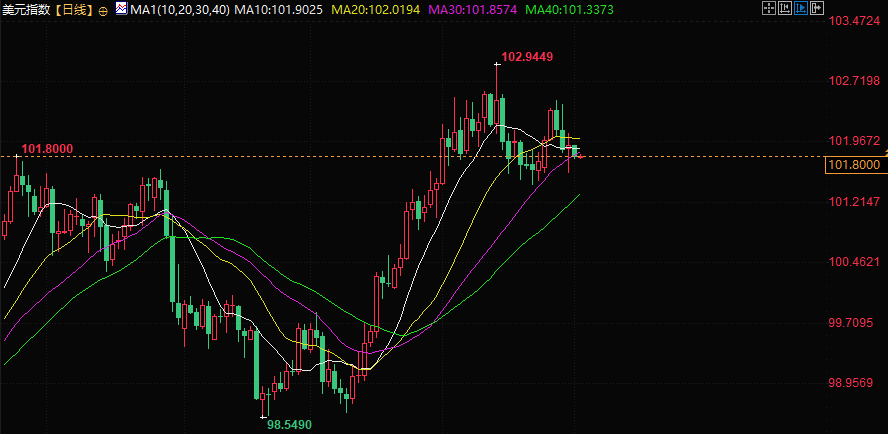 The Institute for Supply Management (ISM) reported that its manufacturing PMI rose to 55.5 in October from 54.5 in September, with input prices remaining high. This week will also see a flurry of labor market data releases, culminating in the highly anticipated US government's October non-farm payrolls report on Friday. Iranian and Qatari officials continued talks on ending the war between the US and Israel and Iran, raising market expectations for an easing of Middle East oil supply disruptions. The euro rose 0.3% against the dollar to $1.1192, despite Fitch downgrading France's rating outlook from "stable" to "negative" later on Friday due to deteriorating debt conditions. The S&P Global Eurozone Manufacturing PMI showed that manufacturing activity in the region remained robust in October, but growth slowed as new orders growth slowed and energy and supply chain disruptions led to rising costs and squeezed profit margins. Several central banks, including the central banks of the UK, Australia, Norway, and Sweden, will announce their monetary policy decisions this week. US voters will head to the polls Tuesday to decide whether Democrats can wrest control of Congress from President Trump's Republicans. The economy and high prices are key issues for voters, with the Democratic Party widely predicted to win the House of Representatives, but gaining control of the Senate may be more difficult. The pound rose 0.1% against the dollar to 1.3406, as PMI data showed British manufacturers recorded their strongest output growth in more than two years at the start of the fourth quarter of 2026. However, rapidly rising costs may worry the Bank of England, which appears poised to raise interest rates this week. The dollar rose 0.26% against the yen to 157.93, after the Bank of Japan stated in its full quarterly outlook report on Monday that Japanese real interest rates have recently risen, particularly in the long-term and ultra-long-term interest rate range.
Key Focus Today
stock market
U.S. stocks closed mixed on Monday. The S&P 500 fell 0.51% to 7,541.40, the Nasdaq Composite dropped 1.07% to 25,164.32, and the Dow Jones Industrial Average rose 0.41% to 51,983.98. Market optimism over a potential peace deal between the U.S. and Iran caused oil prices to plummet, while investors awaited Tuesday's U.S. midterm elections. Apple shares fell 1.5% ahead of its quarterly earnings report, but better-than-expected results in after-hours trading, with initial demand for the iPhone 18 Pro and price increases offsetting rising memory chip costs, leaving the stock nearly flat. Amazon rose 2.2%, and Tesla rose 1%. AI-related investment sentiment remained fragile, with the Nasdaq falling 5.3% in October. Oracle fell nearly 9% due to plans to raise $20 billion through debt and stock offerings. Marvell Technology plunged 13% after announcing its approximately $115 billion all-stock acquisition of Lumentum, Lumentum fell 18.6%, and Intel fell 8.8%, extending its 29% drop from last Friday. Seven of the 11 sectors in the S&P 500 rose, with the consumer discretionary sector leading the gains at 2.25%, followed by materials at 1.83%, and energy at 4%.Gold Market
Gold prices rebounded from a one-year low on Monday, with spot gold rising 1.8% to settle at $3,946.47 an ounce. A decline in oil prices eased inflation concerns, providing support for gold, while investors awaited the US midterm elections. Iran and Qatar held talks for the third consecutive day aimed at ending the US-Israel war against Iran. Peter Grant, Vice President and Senior Metals Strategist at Zaner Metals, stated that weaker oil prices are beneficial in easing inflation concerns, but the market still expects a Fed rate hike in December. CME FedWatch data shows traders believe there is a 77% probability of a December rate hike, down from 80% a week ago. The dollar also provided some support for gold prices. Analysts said that the sell-off in tech and AI-related stocks on Friday affected other markets, and margin calls prompted investors to sell safe-haven assets such as gold. The gold relative strength index rose from below 30 on Friday to around 37, indicating it has moved out of technically oversold territory. Market focus has shifted to the US midterm elections on November 3rd to assess their impact on fiscal policy, geopolitics, and overall market sentiment.oil market
Oil prices fell on Monday, with WTI crude down 6.5% to settle at $96.26 a barrel and Brent crude down 7.26% to settle at $104.19 a barrel. Talks between Iranian and Qatari officials fueled hopes for an end to the US-Israel war against Iran and raised expectations of a more stable oil supply in the Middle East. Analysts say the market is hoping for a diplomatic breakthrough after Iranian President Peshizian stated that Supreme Leader Mojtaba Khamenei had granted the government "certain powers" to conduct peace talks, and that Tehran "will strive to resolve the issue through dialogue" without elaborating. Iranian negotiators held several days of talks with Qatari mediators, and US President Trump stated on Monday that Iran wants an agreement to end the war and that such an agreement is "possible." On Monday evening, Qatari mediators traveled to Tehran to meet with Iranian Foreign Minister Araghchi to discuss a potential US-Iran deal. Raymond James analyst Pavel Molchanov said that signs of progress in US-Iran negotiations pushed oil prices down, but given the market's repeated disappointments over the past few months, skepticism is justified. The talks are preceded by an increase in tanker attacks in the Strait of Hormuz, although there are also signs that oil exports from some major exporting countries are rising. Abu Dhabi National Oil Company CEO Sultan Al Jaber stated that since the outbreak of the Iranian war in late February, which disrupted shipping in the Strait of Hormuz, nearly 1 billion barrels of oil have been depleted globally.Foreign exchange market
The dollar index fell 0.15% on Monday to close at 101.79, after earlier dropping to 101.42, its lowest level since September 30. Recent market concerns about massive corporate investments in emerging AI technologies weighed on stocks and fueled safe-haven buying, supporting the dollar. Marc Chandler, chief market strategist at Bannockburn Capital Markets in New York, said the market was generally resilient. Regarding oil prices, U.S. crude futures for December delivery tested $105 on Friday and have now fallen below $100. Everything looked bad over the weekend, but everyone breathed a sigh of relief afterward. The Institute for Supply Management (ISM) reported that its manufacturing PMI rose to 55.5 in October from 54.5 in September, with input prices remaining high. This week will also see a flurry of labor market data releases, culminating in the highly anticipated US government's October non-farm payrolls report on Friday. Iranian and Qatari officials continued talks on ending the war between the US and Israel and Iran, raising market expectations for an easing of Middle East oil supply disruptions. The euro rose 0.3% against the dollar to $1.1192, despite Fitch downgrading France's rating outlook from "stable" to "negative" later on Friday due to deteriorating debt conditions. The S&P Global Eurozone Manufacturing PMI showed that manufacturing activity in the region remained robust in October, but growth slowed as new orders growth slowed and energy and supply chain disruptions led to rising costs and squeezed profit margins. Several central banks, including the central banks of the UK, Australia, Norway, and Sweden, will announce their monetary policy decisions this week. US voters will head to the polls Tuesday to decide whether Democrats can wrest control of Congress from President Trump's Republicans. The economy and high prices are key issues for voters, with the Democratic Party widely predicted to win the House of Representatives, but gaining control of the Senate may be more difficult. The pound rose 0.1% against the dollar to 1.3406, as PMI data showed British manufacturers recorded their strongest output growth in more than two years at the start of the fourth quarter of 2026. However, rapidly rising costs may worry the Bank of England, which appears poised to raise interest rates this week. The dollar rose 0.26% against the yen to 157.93, after the Bank of Japan stated in its full quarterly outlook report on Monday that Japanese real interest rates have recently risen, particularly in the long-term and ultra-long-term interest rate range.International News
No New Developments in Information Exchange Between Iran and the United States Sources indicate that Iran and the United States are conducting "routine" information exchanges through intermediaries, and "there has been no new progress in this regard." Iran will not take any new actions or steps until the United States meets its conditions. International Maritime Organization: Still Does Not Recommend Navigation in the Strait of Hormuz International Maritime Organization Secretary General Dominguez stated in London on the 2nd that the organization cannot confirm whether mines in the Strait of Hormuz's traffic separation zone have been cleared, and that the safety of ship passage is not guaranteed. Therefore, it still does not recommend navigation in the strait. Recently, Iran has repeatedly claimed that ships have struck mines by entering "unauthorized" routes. The US Central Command has publicly denied these mine-struck claims and stated that it has cleared mines from the international shipping lanes of the Strait of Hormuz. In response to a Xinhua News Agency reporter's question about the mine threat at a press conference held at the International Maritime Organization (IMO) headquarters on October 2, Dominguez said, "I have not received any confirmation that mines in the separation of navigation areas have been cleared... This is also why we do not recommend anyone attempt to transit the Strait of Hormuz. I have consistently urged ships to avoid that area." Dominguez also said that there have been several recent incidents of ships being hit, but due to the difficulty in conducting investigations during the conflict, it is still unclear whether some incidents were caused by mines, drones, or missiles. He warned that navigation in the Strait of Hormuz is "not safe." Dominguez said that the IMO recorded approximately 30 ship attacks in the Strait of Hormuz and surrounding waters in October, making it one of the months with the most recorded ship attacks, some of which also caused oil spills or other pollution. Currently, nearly 400 ships and approximately 6,000 seafarers are stranded in the Gulf region. The IMO is coordinating with regional countries and the International Transport Workers' Federation to provide seafarers with support in terms of supplies, medical care, and contact with their families. (Xinhua) Iranian Foreign Minister: Indirect Consultations with the US "Very Intensive" According to a report by the Islamic Republic News Agency (IRNA) on the 2nd, Iranian Foreign Minister Araqchi said in an interview that indirect consultations between Iran and the US, conducted through mediators Qatar and Pakistan, are "very intensive," and Iran has put forward its conditions. Araqchi said that the reopening of the Strait of Hormuz is contingent on accepting Iran's conditions; otherwise, the current situation will continue. "If the US chooses sincere diplomacy, Iran is willing to participate; if the US attempts deception or launches military action, it will face a more severe and heavier response than ever before." (Xinhua) US Strategic Petroleum Reserve Crude Oil Inventories Fall to Lowest Level Since 1982 According to data from the US Department of Energy, crude oil inventories in the US Strategic Petroleum Reserve fell to 282.2 million barrels last week, the lowest level since October 1982. The recent inventory decline is part of a US agreement to release 172 million barrels of crude oil. The US government said last week that oil companies had agreed to borrow about 40 million barrels of crude oil from the Strategic Petroleum Reserve, the final batch of the US's share in a global agreement aimed at controlling fuel prices. The agreement was reached after the US and Israel went to war against Iran. Iranian President: Supreme Leader Has Granted Government Certain Powers in Negotiations On November 2nd local time, Iranian President Pezechzian stated that the government is striving to resolve issues through dialogue, and in this regard, the Supreme Leader has granted the government certain powers. Pezechzian emphasized that the enemy cannot force Iran to surrender through war, “We will resolutely resist their lies and exaggerations; therefore, we must strive to enhance the resilience of the people and address their concerns and anxieties.” Pezechzian stated that the challenges and crises posed by the enemy to Iran must be overcome with the support and cooperation of the Iranian people. The government is striving to resolve issues through dialogue, and in this regard, the Supreme Leader has granted the government certain powers. (CCTV News) The US midterm elections are today; the future of US-Iran talks versus war remains uncertain . On November 2nd local time, indirect consultations between the US and Iran continued. Qatari mediators returned to Tehran. Iranian Foreign Minister Araghchi stated that indirect consultations with the US are “very intensive,” but emphasized that the reopening of the Strait of Hormuz is contingent on the US accepting Iran's conditions. US President Trump stated that a deal between the US and Iran is "possible" and that he is "in no hurry" to decide whether to resume hostilities with Iran. US Vice President Vance also indicated that some progress has been made and expressed optimism about the prospects of an agreement. While the US is sending positive signals, Iran is insisting on its own negotiating conditions. Meanwhile, the US midterm elections will begin on September 3rd local time, and the post-election developments in the US-Iran situation are attracting significant attention. (CCTV)Domestic News
The People's Bank of China, the State Financial Regulatory Commission, and the China Securities Regulatory Commission held a symposium on two tools to support the capital market. The meeting proposed that, in order to maintain the stability of the capital market and enhance market resilience and confidence, the People's Bank of China, the State Financial Regulatory Commission, and the China Securities Regulatory Commission will continue to strengthen policy support, further optimize policy elements and implementation details, and encourage financial institutions to make full use of policy tools. The meeting also proposed to conduct securities, fund, and insurance company swap facilities operations as appropriate, further increase the number of participating institutions, appropriately reduce swap rates, and optimize pledging and operational models. The policy of relending for stock repurchase and shareholding increases will be transformed from a phased arrangement to a long-term institutional arrangement, and the relending rate will be reduced from 1.25% to 1%. Financial institutions will adhere to the principle of market-based pricing, reasonably add points to the relending rate, and increase loan issuance. (People's Bank of China)- Risk Warning and Disclaimer
- The market involves risk, and trading may not be suitable for all investors. This article is for reference only and does not constitute personal investment advice, nor does it take into account certain users’ specific investment objectives, financial situation, or other needs. Any investment decisions made based on this information are at your own risk.