The Reserve Bank of Australia is expected to raise interest rates to 4.85%. Can the Australian dollar recover thanks to the Bullock press conference?
2026-11-03 11:02:30
The Australian dollar traded in a narrow range against the US dollar during Asian trading hours on Tuesday (November 3), currently hovering around 0.7000. This movement reflects the wait-and-see sentiment ahead of the policy decision announcement: the Reserve Bank of Australia (RBA) will announce its monetary policy decision on Tuesday, with the market widely expecting it to raise the official cash rate by 25 basis points, from 4.6% to 4.85%. If the rate hike occurs as expected, it will be the fifth rate increase in 2026, and the official cash rate will reach its highest level in 18 years. The decision will be announced at 11:30 AM Beijing time, along with a monetary policy statement, followed by a press conference by Governor Michelle Bullock at 12:30 PM. 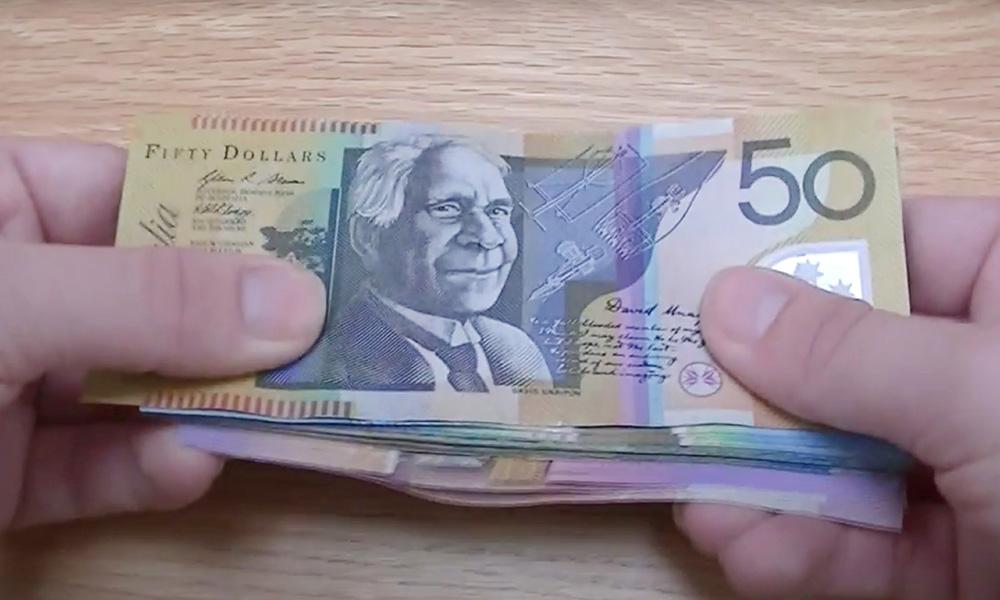
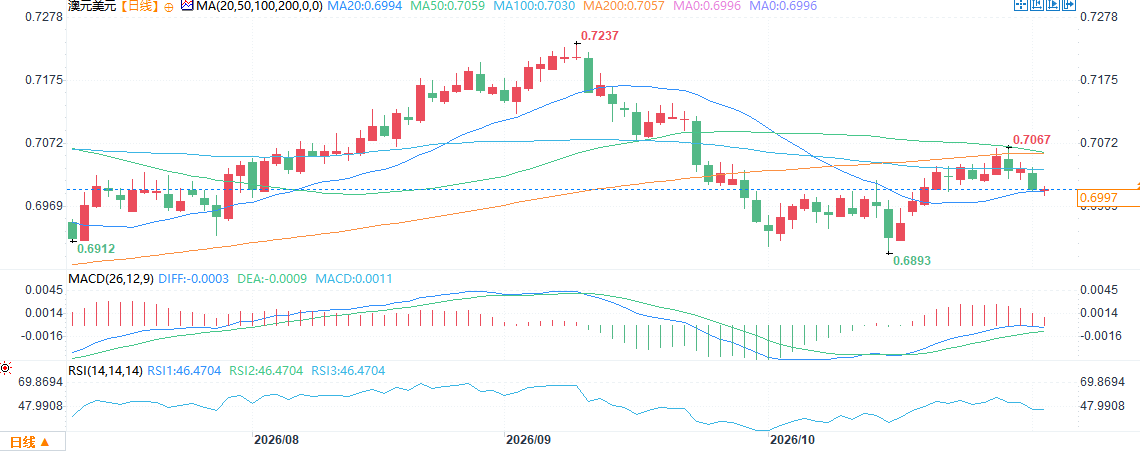 (Australian dollar against US dollar daily chart, source: EasyForex) At 11:01 Beijing time, the Australian dollar was trading at 0.6997/98 against the US dollar.
Inflation background: Q3 CPI was 3.9%, with core indicators accelerating to 3.7%.
Persistent inflationary pressures are the driving force behind interest rate hikes in various countries in 2026, and Australia is no exception. The Reserve Bank of Australia (RBA) first raised interest rates in February, before the Middle East conflict had driven up global energy prices. The central bank has since raised rates four times, but the latest data shows that Australia's annual inflation rate in the third quarter was 3.9%, far exceeding the central bank's target of 2% to 3%. Furthermore, the RBA's preferred core indicator—the revised average consumer price index—accelerated to 3.7% year-on-year, up from 3.6% in the second quarter. Recently, President Bullock stated in Parliament, "Some international and domestic upside risks to inflation have emerged or are emerging." She added, "For the economy, inflation cannot deviate from the target for an extended period, as this could embed it into inflation expectations, thereby affecting price and wage-setting decisions." The high inflation coupled with Bullock's remarks almost clearly points to an interest rate hike at this meeting.Policy Path: Interest Rate Hikes Already Fully Priced In; Focus Shifts to Press Conference Wording
With interest rate hike expectations largely priced in by the market, focus will shift to the press conference hosted by Block and any hints she may give regarding future monetary policy. Block is likely to maintain a hawkish tone and leave room for further rate hikes, thus pushing up the Australian dollar. A larger-than-expected rate hike could trigger a short-term rise in the Australian dollar, especially given improved risk appetite and a weaker US dollar ahead of the decision. Maintaining the current interest rate is unlikely, but if this occurs, the Australian dollar will likely fall sharply.Institutional Views
JPMorgan believes that the Reserve Bank of Australia (RBA) is highly likely to raise interest rates this week after stronger-than-expected third-quarter CPI, maintaining a hawkish stance and suggesting further rate hikes are possible. From a macroeconomic perspective, the Australian dollar is attractive in cross-currency pairs, benefiting from favorable trade terms and interest rate differentials. JPMorgan expects AUD/USD to rebound moderately to 0.71 by the end of the year and remain within a range for the second half of 2026. The short-term focus is on RBA forward guidance, rather than the rate hike itself. If subsequent inflation data remains strong, the Australian dollar could see further upside potential, but volatility in global risk appetite should be monitored. Rabobank expects the RBA to raise rates at this week's meeting, citing recent stronger-than-expected inflation data and hawkish comments from officials. However, the RBA governor may emphasize concerns about economic growth, which could limit the Australian dollar's gains. Rabobank maintained its 3-month target at 0.71 but lowered its 9-month and 12-month targets from 0.73 to 0.72, reflecting a relatively strong view on the US dollar. If market focus shifts to the drag on household demand from high interest rates, or if the Federal Reserve raises rates further in December, the upside potential for AUD/USD will be limited. Overall, the outlook remains positive for the Australian dollar, given the risk of further tightening, but a sustained and significant upward trend is unlikely.in conclusion
The Reserve Bank of Australia (RBA) is expected to raise interest rates by 25 basis points to 4.85% on Tuesday, marking the fifth rate hike until 2026 and the highest rate in 18 years. Third-quarter annual inflation of 3.9% and a cutoff average CPI of 3.7% provide ample justification for the rate hike. Since the rate hike is already priced in by the market, the short-term direction of the Australian dollar will depend on the hawkishness of the Bullock press conference and the hints in the monetary policy statement regarding the subsequent path. Given the improved risk appetite and weakening US dollar ahead of the decision, a rate hike with hawkish wording could lead to a short-term rebound in the Australian dollar, but its sustainability will depend on subsequent inflation data and the RBA's policy pace. (Australian dollar against US dollar daily chart, source: EasyForex) At 11:01 Beijing time, the Australian dollar was trading at 0.6997/98 against the US dollar.
- Risk Warning and Disclaimer
- The market involves risk, and trading may not be suitable for all investors. This article is for reference only and does not constitute personal investment advice, nor does it take into account certain users’ specific investment objectives, financial situation, or other needs. Any investment decisions made based on this information are at your own risk.