A review of the 2018 divided Congress: The midterm election results will reshape expectations for AI regulation and fiscal policy.
2026-11-03 20:40:25
In the 2018 midterm elections during Trump's first term, Democrats won the House of Representatives while Republicans retained the Senate, plunging Congress into a state of division. Following this election, the White House's policy agenda faced significant obstacles: large-scale tax cuts and radical new policies struggled to be implemented; Democratic-led House hearings and investigations led to a 35-day federal government shutdown over border wall funding, culminating in impeachment proceedings. Although Senate Republicans secured enough votes to prevent removal, the ongoing political noise continued to disrupt market expectations. The bond market lowered its pricing of continued fiscal expansion, easing upward pressure on long-term yields; US stocks rebounded in the short term after the initial shock, but experienced a deep correction at the end of the year due to the combined impact of Fed rate hikes, trade frictions, and budget disputes. This history serves as a key reference point for investors assessing the 2026 midterm elections. 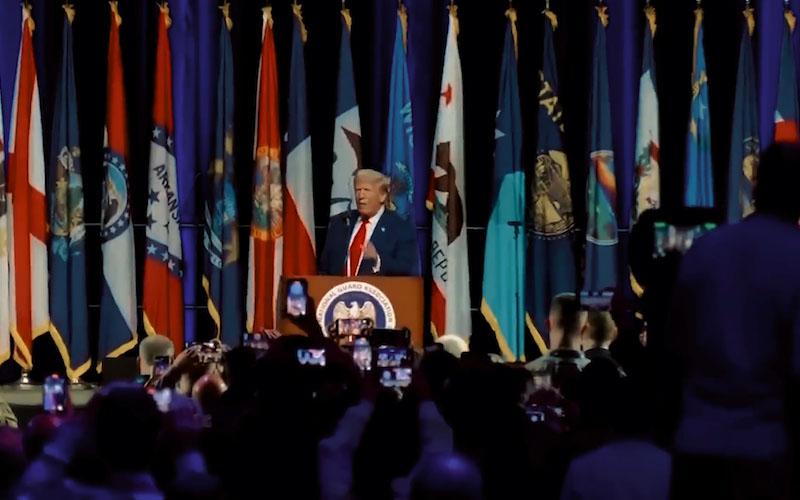
Trump may suffer a major setback as his public support continues to weaken.
Former White House Communications Director and Skybridge Capital founder Anthony Scaramucci has offered his latest assessment: Trump may suffer a major setback in Tuesday's midterm elections, and Trump himself is aware of this risk. In his view, the United States is currently in a phase of intertwined economic and cultural contradictions, with the two parties presenting voters with two completely different paths to national development. Recent polls show Trump's economic approval rating has plummeted to a historic low, with 65% of respondents disapproving of his economic governance and 80% rating the current economic situation as merely average or poor. Trump has failed to deliver on his campaign promises of price stability, ending endless overseas wars, and releasing documents related to the Epstein case, leading many voters who initially supported the MAGA campaign to turn away from him. Scaramucci only briefly served as White House Communications Director during Trump's first term. According to market prediction data, the probability of the Democrats gaining control of the Senate is about 75%, but the statistical logic of such odds products is not the same as traditional polls; they should only be used as a reference from a trading perspective and not as a guarantee of the final election results.Additional geopolitical risk question: Difficulty in finding a diplomatic breakthrough in the situation in Iran.
Beyond the domestic election situation, Scaramucci holds a pessimistic view on the diplomatic prospects of the Iranian situation. He believes that there is currently no basis for negotiation among Iran, Israel, and the United States to reach a consensus. Even if the United States follows Israel in further escalating military strikes, it will be difficult to bring about positive changes in the regional situation. It is worth noting that US officials confirmed that the United States carried out strikes against Iran overnight, while Trump had previously stated that he would not launch an attack on Iran before the midterm elections. Scaramucci pointed out that war would damage the business environment and stock market. Although he hopes that all parties will move towards negotiation and reconciliation, the three parties have limited common ground, and there is no feasible compromise solution in sight.Post-election political repercussions: a wave of investigations and the struggle over Republican lines.
Scaramucci noted that long-standing divisions within the Democratic Party have indirectly helped Trump during this period. Once the Democrats gain full control of both the House and Senate, Congress will launch numerous investigations into the White House administration, with hearings, subpoenas, and inquiries becoming the main focus in Washington, continuously creating policy uncertainty. It's important to clarify that even with Democratic control of both houses, while the House can initiate impeachment, the Senate requires a two-thirds majority to convict and remove the president, which is difficult to achieve in reality and is more of a tool for political pressure. Deeper changes will occur within the Republican Party. Scaramucci predicts that if Trump loses this election, a profound ideological civil war will erupt within the Republican Party. Today's Republican Party is no longer the traditional conservative party of the Reagan and Bush era; the party must answer a core question: after Trump leaves the stage, will the Republican Party continue the MAGA path? The MAGA imprint will not disappear quickly; Republican candidates in the 2028 election will still be influenced by Trump himself and the massive funds of his political action committees, making it difficult to completely sever ties with this path. Therefore, MAGA's propositions will remain in the Republican Party platform for a long time, but the struggle between moderates and the MAGA faction will continue, profoundly affecting the intra-party competition in the next presidential election.Market Perspective: Three Election Scenarios and Corresponding Asset Pricing Logics
From an asset pricing perspective, the core impact of the midterm elections is the repricing of policy expectations, rather than directly determining the long-term trends of the stock and bond markets. If the Republicans retain control of both houses: Trump's policy space for tax cuts, defense expansion, and deregulation will be preserved, supporting expectations for AI capital expenditures and infrastructure investment. However, the fiscal deficit and the pressure on US Treasury supply will also increase. If a split Congress emerges, with Democrats controlling the House and Republicans retaining the Senate: budget and debt ceiling negotiations are highly likely to become protracted, increasing the tail risk of a government shutdown, making it difficult for new major bills to be passed, replicating the stalemate after 2018. If the Democrats achieve a majority in both houses: expectations for AI regulation and data center control will significantly increase, the pace of fiscal expansion will be slowed, long-term bond yields will have room to decline, and highly valued AI and military sectors will likely face valuation pressure.In conclusion: Elections are just a variable; the core theme remains unchanged.
Regardless of the final election outcome, the geopolitical conflict led by the US and Iran, AI regulatory rules, US fiscal sustainability, and future debt ceiling negotiations will remain the core themes influencing the medium-term trends of US stocks, US bonds, and the US dollar. Elections bring about changes in policy boundaries, but interest rate cycles, corporate profits, and geopolitical conflicts are the underlying forces determining major asset trends.- Risk Warning and Disclaimer
- The market involves risk, and trading may not be suitable for all investors. This article is for reference only and does not constitute personal investment advice, nor does it take into account certain users’ specific investment objectives, financial situation, or other needs. Any investment decisions made based on this information are at your own risk.