The US dollar weakened significantly, and the British pound surged against the dollar, reaching a new high since September 16.
2026-11-04 13:56:27
On Wednesday during Asian trading hours, the British pound saw strong buying interest against the US dollar, surging higher and holding above 1.34, reaching a new high since September 16. The US dollar index fell to a more than one-month low as preliminary results from the US midterm elections showed an increased probability of a Democratic victory. Market expectations of a policy deadlock in Washington led to a flow of funds into safe-haven US Treasuries, causing yields to fall and directly pressuring the dollar's performance.  In addition, expectations of progress in US-Iran diplomatic negotiations have weakened the safe-haven appeal of the US dollar, further benefiting the pound against the dollar. Trump's public statement that the US has no immediate plans to strike Iran has led the market to price in the receding geopolitical risk premium. The pound's own fundamentals have also been supported. The latest UK budget eased market concerns about domestic finances, while market expectations for a Bank of England rate hike at Thursday's meeting continued to rise. US Department of Labor's JOLTS job openings data showed that job openings rose from 7.2 million to 7.5 million in September, indicating robust hiring. Rising energy prices also pose an inflationary risk, theoretically supporting further tightening by the Federal Reserve. However, this data did not significantly boost the dollar, suggesting that the pound's upward resistance against the dollar is relatively limited in the short term. Entering the North American trading session, the market will focus on US ADP private sector employment data and the ISM services PMI. The real core events this week are the Bank of England's interest rate decision on Thursday and the non-farm payroll report on Friday. The current overall fundamental environment is bullish, and the market tends to buy the pound on dips; pullbacks are likely to be met with buying support. On the daily chart, GBP/USD has shifted to a short-term bullish pattern, with the price breaking above the 200-day simple moving average at 1.3424. Currently, the price is holding slightly above the 61.8% Fibonacci retracement level at 1.3467, recovering the middle of the previous downtrend. Buyers are defending this key support level. The first resistance level is the 78.6% Fibonacci retracement at 1.3556, with further resistance at the recent high of 1.3670. Immediate support is at the 200-day moving average at 1.3424 and the 50.0% Fibonacci retracement at 1.3404; deeper support lies at the 38.2% retracement at 1.3341, the 23.6% retracement at 1.3264, and the key structural support at 1.3138. On the 4-hour chart, the moving average system is in a bullish alignment, the price continues to rise, and indicators remain in a neutral-to-strong range, not yet severely overbought. As long as the 1.3424 level holds, the short-term bullish trend will continue; however, a decisive break below this level would signal the failure of this breakout and a return to a range-bound market. The market will likely follow the Bank of England's decision to choose its next direction.
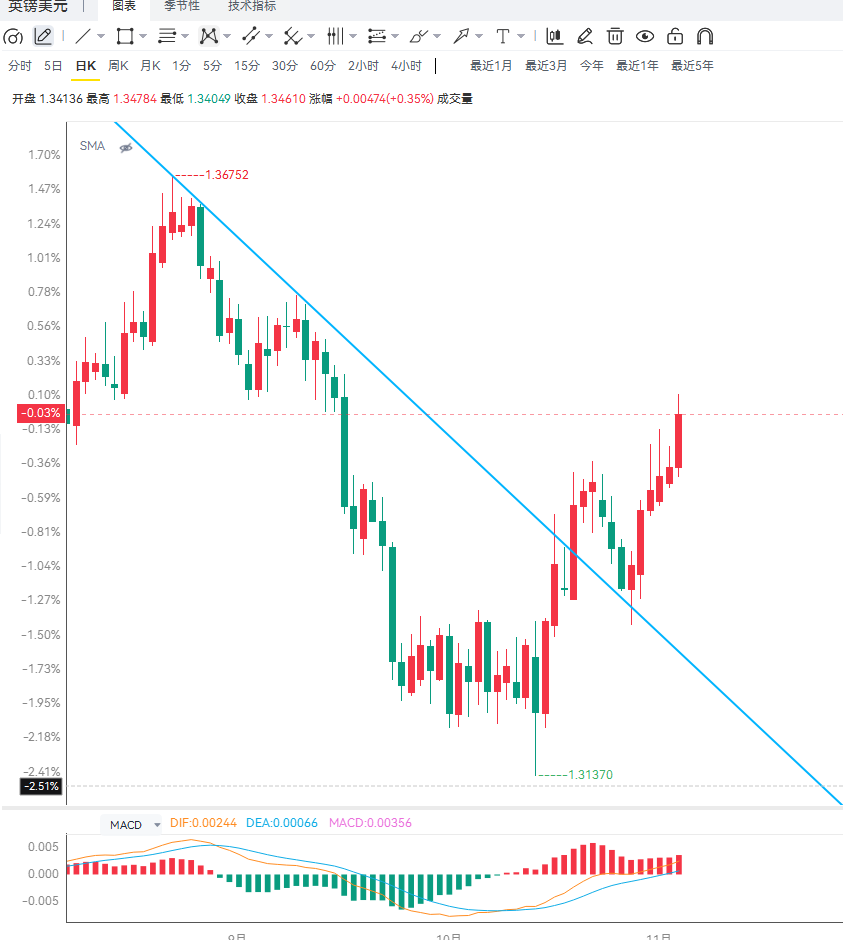 Editor's Summary: Multiple factors combined to propel the British pound against the US dollar higher. The dollar was weighed down by midterm election expectations and declining US Treasury yields, while rising expectations of a Bank of England rate hike further drove the exchange rate above key moving average resistance. However, caution is warranted against a dovish signal from the Bank of England, which could trigger a "buy the rumor, sell the fact" correction. Simultaneously, significantly stronger-than-expected US employment data could also lead to a dollar rebound, putting downward pressure on the pound. The 1.3424 level is a key support level to watch, as volatility is expected to increase during this event window.
In addition, expectations of progress in US-Iran diplomatic negotiations have weakened the safe-haven appeal of the US dollar, further benefiting the pound against the dollar. Trump's public statement that the US has no immediate plans to strike Iran has led the market to price in the receding geopolitical risk premium. The pound's own fundamentals have also been supported. The latest UK budget eased market concerns about domestic finances, while market expectations for a Bank of England rate hike at Thursday's meeting continued to rise. US Department of Labor's JOLTS job openings data showed that job openings rose from 7.2 million to 7.5 million in September, indicating robust hiring. Rising energy prices also pose an inflationary risk, theoretically supporting further tightening by the Federal Reserve. However, this data did not significantly boost the dollar, suggesting that the pound's upward resistance against the dollar is relatively limited in the short term. Entering the North American trading session, the market will focus on US ADP private sector employment data and the ISM services PMI. The real core events this week are the Bank of England's interest rate decision on Thursday and the non-farm payroll report on Friday. The current overall fundamental environment is bullish, and the market tends to buy the pound on dips; pullbacks are likely to be met with buying support. On the daily chart, GBP/USD has shifted to a short-term bullish pattern, with the price breaking above the 200-day simple moving average at 1.3424. Currently, the price is holding slightly above the 61.8% Fibonacci retracement level at 1.3467, recovering the middle of the previous downtrend. Buyers are defending this key support level. The first resistance level is the 78.6% Fibonacci retracement at 1.3556, with further resistance at the recent high of 1.3670. Immediate support is at the 200-day moving average at 1.3424 and the 50.0% Fibonacci retracement at 1.3404; deeper support lies at the 38.2% retracement at 1.3341, the 23.6% retracement at 1.3264, and the key structural support at 1.3138. On the 4-hour chart, the moving average system is in a bullish alignment, the price continues to rise, and indicators remain in a neutral-to-strong range, not yet severely overbought. As long as the 1.3424 level holds, the short-term bullish trend will continue; however, a decisive break below this level would signal the failure of this breakout and a return to a range-bound market. The market will likely follow the Bank of England's decision to choose its next direction. Editor's Summary: Multiple factors combined to propel the British pound against the US dollar higher. The dollar was weighed down by midterm election expectations and declining US Treasury yields, while rising expectations of a Bank of England rate hike further drove the exchange rate above key moving average resistance. However, caution is warranted against a dovish signal from the Bank of England, which could trigger a "buy the rumor, sell the fact" correction. Simultaneously, significantly stronger-than-expected US employment data could also lead to a dollar rebound, putting downward pressure on the pound. The 1.3424 level is a key support level to watch, as volatility is expected to increase during this event window.
- Risk Warning and Disclaimer
- The market involves risk, and trading may not be suitable for all investors. This article is for reference only and does not constitute personal investment advice, nor does it take into account certain users’ specific investment objectives, financial situation, or other needs. Any investment decisions made based on this information are at your own risk.