Institutions: Gold price plunge stemmed from passive selling; it is expected to strengthen again after the correction ends, making it a worthwhile investment.
2026-11-05 12:28:26
Peter Boockvar, chief investment officer at OnePointBFG Wealth Partners, pointed out that the previous drop in spot gold prices below $4,000 was not due to deteriorating fundamentals, but rather to passive liquidation and selling. After the midterm elections, gold prices rebounded above $4,100. He also cautioned that investors should not rely on the Federal Reserve to intervene and prop up AI trading, and that long-term opportunities in precious metals remain worth noting.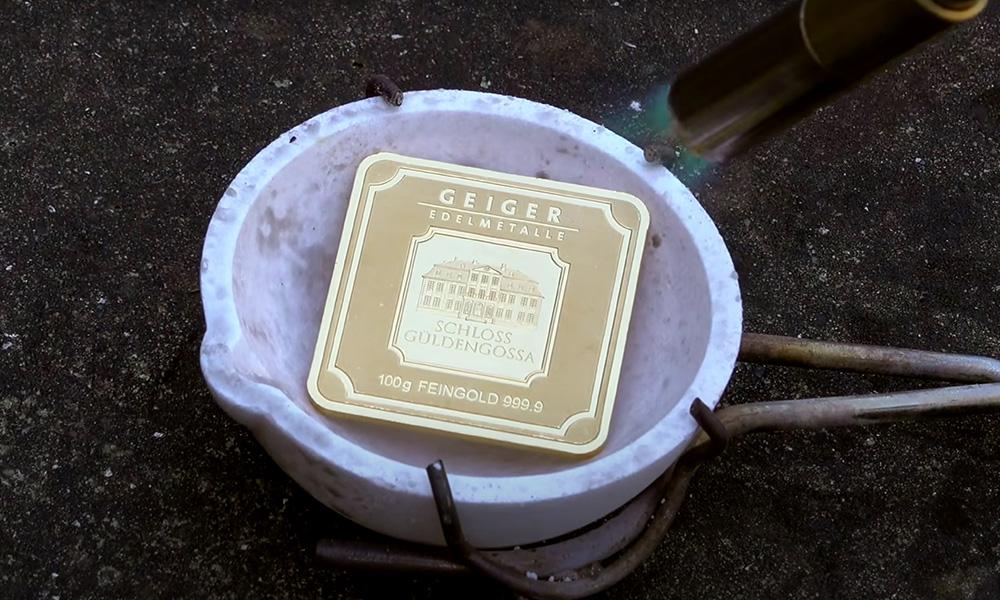
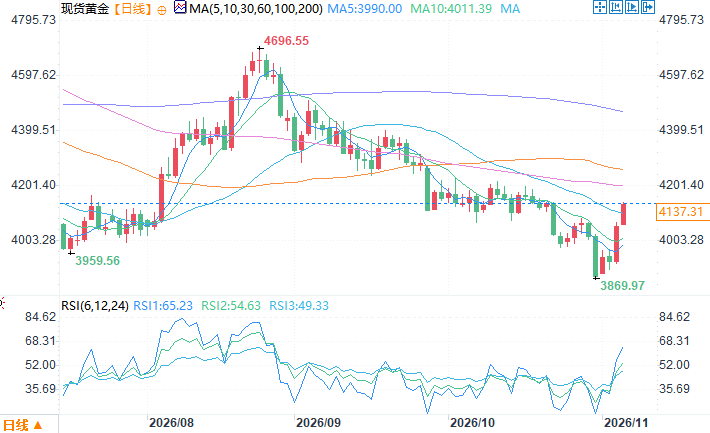 Spot gold daily chart source: FX678. At 12:25 Beijing time on November 5th, spot gold was trading at $4134.31 per ounce.
Gold price fluctuations stemmed from passive selling pressure, while central bank gold purchases provided support.
At the New Orleans investment conference, Bukwal stated that the sharp drop in spot gold prices by over $140 on October 30th, falling below $4,000, deviated from gold's fundamentals and was a passive sell-off triggered by margin calls. The recent unusually close correlation between gold and the S&P 500, leading the market to trade them as AI-like assets, is unreasonable. In his view, for investors with a cycle exceeding one week, this decline presented a good entry window. Subsequently, driven by the decline in the dollar and US Treasury yields after the midterm elections, gold prices rebounded to above $4,100. He focused on central bank gold purchase data; the World Gold Council disclosed that central banks made net purchases of 321 tons of gold in the third quarter, demonstrating strong buying power. Central banks increased their holdings on dips, and coupled with record-high gold ETF holdings, the two major factors suppressing gold prices—real interest rates and the dollar—have begun to shift.The Federal Reserve's policy considerations regarding AI have led to an overestimation of expectations for a rate hike cycle.
While Bukwal is generally considered an inflation hawk, he believes the AI sector has profoundly influenced the Federal Reserve's policy decisions. The AI industry is a core driver of current US economic growth and stock market gains, and stock market fluctuations affect consumption by high-income groups. The Fed chairman will have to consider AI sector volatility during the December policy meeting. He emphasizes that the September rate hike was merely a minor adjustment, and a new round of sustained rate hikes is not imminent. The market's sell-off of gold due to concerns about continued rate hikes is illogical . While employment data remains strong, the AI sector has entered a correction phase, and coupled with election factors, the Fed will likely be more cautious in its rate hike pace.AI trading carries significant risks; do not bet on the Federal Reserve to bail you out.
Bukwal cautioned the market that AI has become the sole theme in the US stock market, with a few tech giants contributing the majority of the S&P 500's returns, essentially betting a large portion of retirement funds in the same direction. Many tech companies continue to invest in computing power, leading to a significant contraction in free cash flow, with some relying on debt for expansion. Meanwhile, data center restrictions in various regions further increase uncertainty. Reviewing historical market trends, he noted that even Fed rate cuts during bear markets may not stabilize the stock market. Investors should not rely on the Fed's market intervention for trading decisions; currently, they can consider allocating to assets unrelated to the AI theme, such as energy and consumer staples.The pressures of US debt and deficits persist, and gold mining companies follow gold price fluctuations.
The US fiscal deficit remains high, and if the AI market collapses or the economy slows down, the deficit will expand further, increasing the supply pressure of US Treasury bonds. The proportion of US Treasury bonds held overseas is gradually decreasing, with domestic funds primarily absorbing the burden. He believes that long-term interest rates are more likely to rise than fall, and holding maturing US Treasury bonds to earn stable interest is a more pragmatic choice than chasing bond price differences. Mining companies showed great enthusiasm at this investment conference, indicating that the bullish trend in precious metals has not ended, but is merely in a correction phase. In the short term, gold mining stocks will fluctuate in tandem with gold prices. Once gold prices stabilize, well-managed mining companies that can withstand rising diesel costs will see a valuation recovery. He prioritizes large gold producers and is optimistic that gold will strengthen again after the correction.Conclusion
In Peter Bokwal's framework, the recent gold price decline is a short-term speculative move, with fundamental support remaining intact. However, the risk of a bubble in the highly hyped AI trading market is accumulating, and the Federal Reserve's limited policy space makes it difficult to act as a market safety net. Given the environment of high deficits and volatile interest rates, gold remains a worthwhile asset to allocate to. Spot gold daily chart source: FX678. At 12:25 Beijing time on November 5th, spot gold was trading at $4134.31 per ounce.
- Risk Warning and Disclaimer
- The market involves risk, and trading may not be suitable for all investors. This article is for reference only and does not constitute personal investment advice, nor does it take into account certain users’ specific investment objectives, financial situation, or other needs. Any investment decisions made based on this information are at your own risk.