Veteran investment manager's strategy: liquidate tech stocks, increase holdings in short-term bonds, hold only physical gold and reduce holdings in mining companies.
2026-11-06 12:28:26
On November 5th, tech stocks suffered a sharp decline, with the Nasdaq 100 index falling 5.52%, and the chip sector experiencing a significant pullback. Ted Oakley, a veteran investment manager with experience spanning multiple market cycles since the 1970s, had already taken steps to reduce his holdings. He is bearish on tech stocks, adjusting his commodity holdings, shifting funds towards short-term US Treasury bonds, and offering differentiated allocation strategies for gold and silver assets.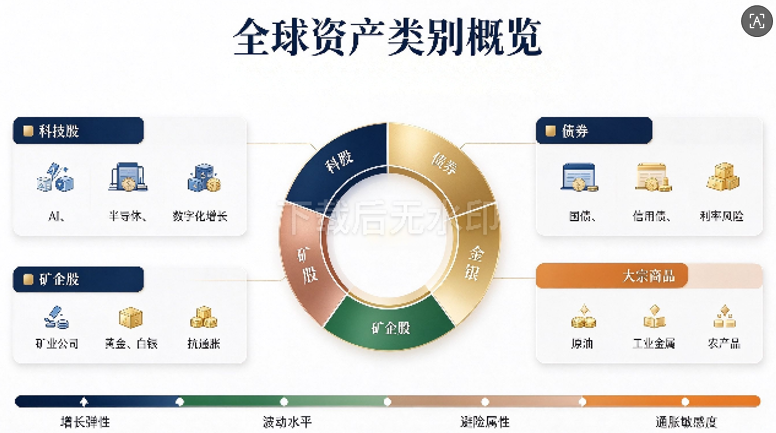
High-level selling of leading tech stocks serves as a warning of potential profitability risks in AI financing.
Oakley is the founder and managing partner of OxbowAdvisors, an firm based in Austin, Texas. The day before the tech stock crash, he revealed that his company had sold its holdings in Google and Microsoft, advising retail investors against further accumulation of large-cap tech stocks. He compared this tech stock rally to the market conditions of 2000, believing the rise was merely a bull trap. He argued that many tech companies have recently raised significant amounts of capital through bond issuances for AI infrastructure investment, which will erode free cash flow, and next year's earnings are likely to fall short of market expectations. Therefore, the strategy of buying and holding tech stocks for a long-term bull run may become ineffective.Precious metals portfolios diverge: long-term holdings of physical gold, reductions in mining company holdings, and liquidation of silver positions.
Regarding precious metals allocation, Oakley maintains a long-term holding strategy of physical gold and will not sell his core holdings, but he has already reduced his position in gold mining stocks over the past two months. He explained that gold will also decline during a general market downturn, and the volatility of mining companies is far greater than that of gold prices. In 2008, gold fell by more than 20%, while gold mining companies fell by more than 60%. He is optimistic that the interest rate cut cycle will benefit gold prices, but does not recommend investors chase the price at the current level. He has completely liquidated his positions in silver and silver-related assets. Silver had seen a huge increase in the previous year, and after such a surge, it often takes a long time to digest the valuation.Anticipating a weakening economy in 2027, we will gradually reduce our holdings of energy and industrial commodities.
Oakley believes the current economic cycle is nearing its end, with the economy likely to weaken significantly in the first half of 2027. This economic slowdown will suppress inflation, and the Federal Reserve is highly likely to begin cutting interest rates by the middle of next year. He has already realized some profits in the energy sector, selling off some energy stocks that have risen too much, while retaining oil and gas producers, high-dividend stocks, and pipeline assets. He remains bullish on crude oil in the long term but believes short-term prices will be under pressure. He has also reduced or liquidated his positions in commodities such as copper, iron ore, and uranium, as the weakening of commodities is a signal of economic slowdown. He also expressed concern about the US debt problem, noting that both major political parties are struggling to control fiscal spending.Funds are shifting towards medium-term US Treasury bonds, prioritizing the preservation of principal.
The funds recovered from the reduction of various assets are mainly allocated to 3- to 5-year US Treasury bonds, as he predicts that bond prices will rise after the interest rate cut cycle begins. Currently, US Treasury bonds account for 40% to 42% of his equity strategy portfolio and 58% of his high-yield strategy. The institution avoids long-term 30-year Treasury bonds, having suffered losses in the past. For new investors with millions of dollars, he suggests that the equity position should not exceed 20%, with more than half allocated to US Treasury bonds. He reminds elderly investors that many retirees hold too high a proportion of their portfolios in stocks, exposing them to concentrated stock market risks; protecting principal should be the first principle of investment.Conclusion
At a time when tech stocks have experienced a significant correction, Ted Oakley's portfolio adjustment strategy prioritizes defense. He is bearish on tech stocks, cautious about commodities, relies on US Treasury bonds to await interest rate cuts, and only maintains a core position in physical gold. This strategy is based on his assessment of a weakening economy in 2027.- Risk Warning and Disclaimer
- The market involves risk, and trading may not be suitable for all investors. This article is for reference only and does not constitute personal investment advice, nor does it take into account certain users’ specific investment objectives, financial situation, or other needs. Any investment decisions made based on this information are at your own risk.