The market remains volatile, digesting the Democratic Congress under Trump 2.0.
2026-11-06 18:18:26
With the 2026 US midterm elections concluded, the Democratic Party swept both houses of Congress, creating a split between a Republican White House and a Democratic Congress. The market did not experience widespread panic on the day of the election; overall, US stocks rebounded significantly. Subsequently, pressure focused on AI-related sectors. The "clarity" brought by the election briefly boosted risk appetite, but deeper structural issues—AI capital expenditure returns, fiscal sustainability, and Middle East conflicts—are repricing assets. 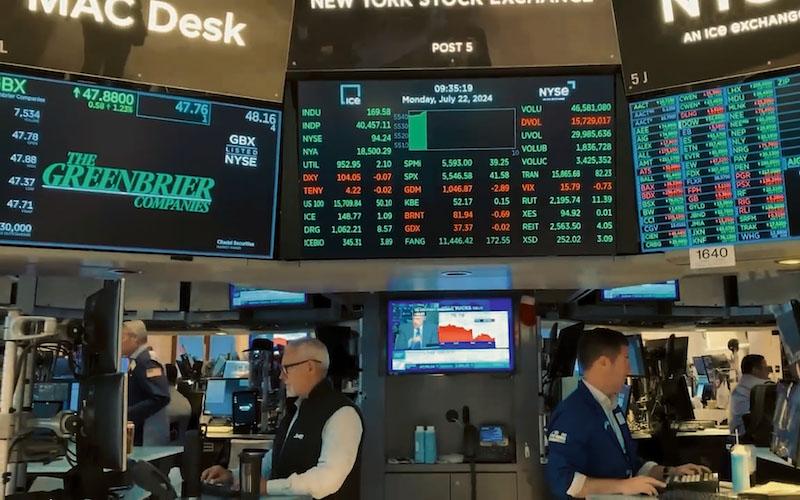 US Stocks: AI Faces Dual Impact of Policy Shift and Valuation Bubble The election results reinforced investor expectations of tighter AI regulations under Democratic leadership. Democratic lawmakers have clearly outlined a framework for legislation to "pause advanced AI development," halt data center construction, and ban superintelligence, including Bernie Sanders' data center pause bill and the "day one agenda" emphasized by figures like Yassamin Ansari. The victory of data center opponents in key states (such as Texas and Georgia) further exacerbated market concerns about a slowdown in AI infrastructure development. Congress may pass legislation or committee investigations to impose stricter energy, environmental, and security reviews on hyperscale data centers, directly impacting capital expenditure expectations across the AI supply chain. Semiconductor stocks like Nvidia fell more than 3%, and some data center-related companies saw declines of 7%-10%. The Nasdaq lost approximately $2.5 trillion in market capitalization in a single day, with significant liquidation in AI-related trades. Meanwhile, Anthropic's proposed IPO valuation faces heavy pressure. The company initially targeted a valuation of approximately $1.5 trillion (or even higher), but major investors now generally believe a downward revision is necessary, with some suggesting a valuation closer to $1 trillion, and even the possibility of delaying or reducing the fundraising scale. Previous analyses have pointed out that its valuation was too aggressive, and the current market sell-off has reinforced this consensus. Valuation expert Aswath Damodaran previously estimated Anthropic's equity value at approximately $1.475 trillion, lower than the market's highest expectations, and warned that regulation could further compress profit margins. The market is shifting from "unconditional frenzy" to "constrained growth." A divided government may limit the implementation of extreme policies (Trump still has veto power), and the regulatory risk premium has risen significantly. Yields Fall: From Previous Rise to Testing Key Moving Averages Before the midterm elections, the market saw yields rise due to fiscal and inflation expectations. After the elections, a sharp drop in oil prices eased inflationary pressures, and a divided government reduced expectations of large-scale stimulus, pushing the 10-year US Treasury yield back to the approximately 4.84%-4.90% range (down from around 4.95% before the election). This level is approaching the 100-day moving average in some technical analyses. If panic sets in further (especially with the AI sell-off mirroring global stock markets), yields could test the lower 200-day moving average area.
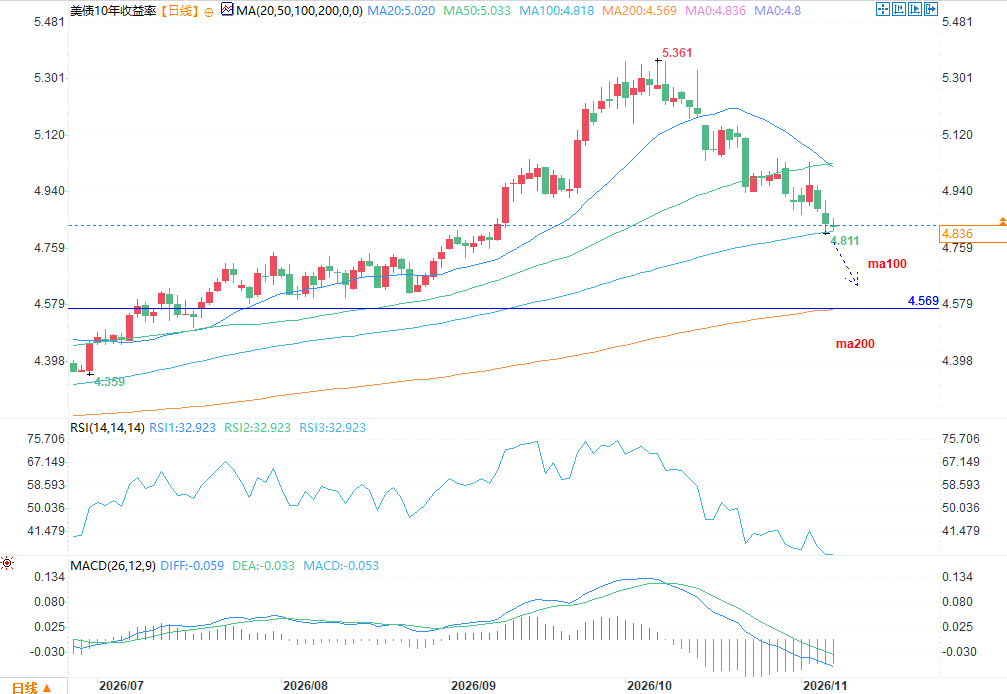 George Saravellos, global head of FX research at Deutsche Bank, pointed out that a large Democratic majority coupled with Trump's willingness to cooperate with the opposition helps to curb extreme policy outcomes and reduce risk premiums. The current pullback reduces the opportunity cost of holding non-interest-bearing assets like gold, providing support, but if increased stock market volatility triggers a safe-haven influx of funds into Treasury bonds, further downside is possible. Investors need to closely monitor subsequent employment data and the Fed's statements. At a deeper level, the decline in yields is not solely driven by safe-haven demand, but rather a partial correction of market expectations for "higher and longer" interest rates. A divided government reduces the likelihood of large-scale fiscal expansion, thereby weakening long-term inflation premiums. Technically, if the 10-year yield effectively breaks below the 100-day moving average and continues to approach the 200-day moving average, it will strengthen bullish sentiment in the bond market. Gold: A slight rebound lacks momentum; Goldman Sachs' downward revision of expectations highlights a lack of confidence. The oil price crash should have been beneficial for gold (through lower inflation expectations and a weaker dollar), and gold did indeed rebound, but the strength was limited and quickly dried up. Spot gold prices are currently fluctuating around $4050-$4100 per ounce, with investor confidence clearly weak. In a report dated November 5th, Goldman Sachs analysts Lena Thomas and Daan Struvin lowered their year-end 2026 gold price forecast from $4650 to $4150, and their year-end 2027 forecast from $5400 to $4800. Reasons cited included the Federal Reserve's more hawkish stance weakening buying interest from private investors (especially leveraged funds), although continued central bank gold purchases still provide structural support. Goldman Sachs emphasized that its long-term bullish logic remains unchanged, but in the short term, "now is not the time."
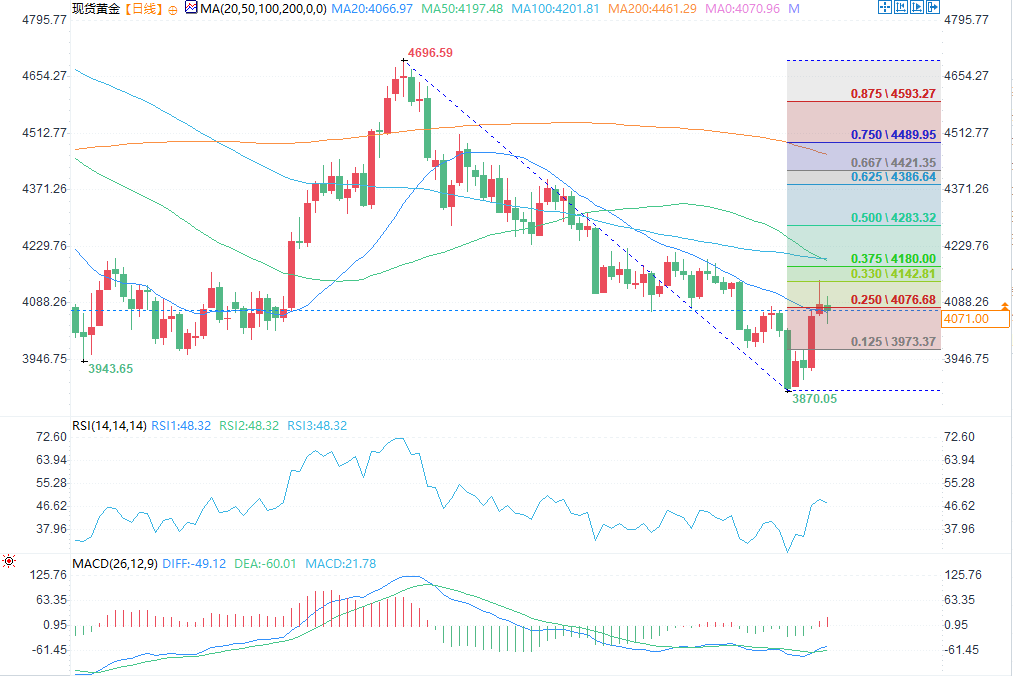 Other institutions hold similar cautious views: some banks have lowered their year-end 2026 targets to around $4,600, but maintain an optimistic outlook of over $5,000 for 2027. The core logic remains central bank gold purchases (approximately 90 tons per month, far exceeding pre-2022 levels) and concerns about fiscal sustainability. Declining yields have indeed eased the pressure to hold gold, providing support. Overall, gold remains supported by central bank gold purchases and concerns about fiscal sustainability, but lacks a sufficiently strong catalyst to drive a breakout. In the short term, it is more likely to remain volatile, awaiting further yield declines or geopolitical escalation. Crude Oil: Geopolitical risks are far from over, volatility will become the new normal Crude oil has been the most volatile commodity since the election. Brent crude fell nearly 9% in a single day, breaking below $100 (once reaching around $94), while WTI fell to around $88, potentially marking the largest weekly decline since 2020. The direct catalyst was Vice President JD Vance's public statement that "the reason we lost the election was the war," and Trump's admission that high oil prices were a major factor. The market quickly priced in the possibility of an early end to the war, significantly reducing the geopolitical premium. However, the risks have not disappeared. Trump is still weighing whether to restart military action against Iran, with both diplomatic and military options remaining. While the news of a "full-scale war deployment" last night remains questionable, any escalation signal could quickly push up oil prices. Given the previous sharp decline and the continued high uncertainty surrounding geopolitical information, oil prices are more likely to experience weak rebounds and significant volatility rather than a one-sided downward trend. Analysts such as the Atlantic Council point out that the market is shifting from "battlefield risk" to "Washington political constraints," but the Iranian nuclear issue and the Strait of Hormuz remain a sword of Damocles hanging over the market. A deeper scenario analysis shows that oil prices are currently caught in a tug-of-war between "political pricing" and "military reality." If the Democratic Congress successfully restricts war-related funding, or if a breakthrough is achieved through diplomatic channels, oil prices may further test below $90; conversely, if Iran refuses substantial nuclear concessions or launches a new attack, oil prices could return to above $100 within days. Investors should prepare two scenarios: weak rebounds for trading within a range, and large fluctuations for hedging with options. In terms of current positioning, the pullback in energy stocks has partially reflected peace expectations, but if the conflict continues, they may become the preferred choice for a rebound after overselling. Overall Outlook The midterm elections brought policy clarity but also opened up new divisions. The AI sector faces dual challenges of regulation and valuation, but the long-term logic remains; declining yields support gold but cannot mask insufficient investor confidence; the sharp drop in oil prices reflects peace expectations, but geopolitical tensions can still create significant volatility at any time. The foreign exchange market reacted in tandem—the dollar index fell to a near one-month low, benefiting emerging market currencies, which indirectly supported dollar-denominated commodities. A divided government may curb extreme policies but also means legislative gridlock and uncertainty. The market is digesting the new normal of a "Democratic Congress under Trump 2.0," and volatility may be the main theme for some time to come. Closely monitoring congressional legislative progress, Fed actions, and the Middle East situation will be crucial. Short-term sentiment may continue to dominate, but the medium to long term still depends on whether fundamentals can support a coexistence of high valuations and high interest rates.
US Stocks: AI Faces Dual Impact of Policy Shift and Valuation Bubble The election results reinforced investor expectations of tighter AI regulations under Democratic leadership. Democratic lawmakers have clearly outlined a framework for legislation to "pause advanced AI development," halt data center construction, and ban superintelligence, including Bernie Sanders' data center pause bill and the "day one agenda" emphasized by figures like Yassamin Ansari. The victory of data center opponents in key states (such as Texas and Georgia) further exacerbated market concerns about a slowdown in AI infrastructure development. Congress may pass legislation or committee investigations to impose stricter energy, environmental, and security reviews on hyperscale data centers, directly impacting capital expenditure expectations across the AI supply chain. Semiconductor stocks like Nvidia fell more than 3%, and some data center-related companies saw declines of 7%-10%. The Nasdaq lost approximately $2.5 trillion in market capitalization in a single day, with significant liquidation in AI-related trades. Meanwhile, Anthropic's proposed IPO valuation faces heavy pressure. The company initially targeted a valuation of approximately $1.5 trillion (or even higher), but major investors now generally believe a downward revision is necessary, with some suggesting a valuation closer to $1 trillion, and even the possibility of delaying or reducing the fundraising scale. Previous analyses have pointed out that its valuation was too aggressive, and the current market sell-off has reinforced this consensus. Valuation expert Aswath Damodaran previously estimated Anthropic's equity value at approximately $1.475 trillion, lower than the market's highest expectations, and warned that regulation could further compress profit margins. The market is shifting from "unconditional frenzy" to "constrained growth." A divided government may limit the implementation of extreme policies (Trump still has veto power), and the regulatory risk premium has risen significantly. Yields Fall: From Previous Rise to Testing Key Moving Averages Before the midterm elections, the market saw yields rise due to fiscal and inflation expectations. After the elections, a sharp drop in oil prices eased inflationary pressures, and a divided government reduced expectations of large-scale stimulus, pushing the 10-year US Treasury yield back to the approximately 4.84%-4.90% range (down from around 4.95% before the election). This level is approaching the 100-day moving average in some technical analyses. If panic sets in further (especially with the AI sell-off mirroring global stock markets), yields could test the lower 200-day moving average area. George Saravellos, global head of FX research at Deutsche Bank, pointed out that a large Democratic majority coupled with Trump's willingness to cooperate with the opposition helps to curb extreme policy outcomes and reduce risk premiums. The current pullback reduces the opportunity cost of holding non-interest-bearing assets like gold, providing support, but if increased stock market volatility triggers a safe-haven influx of funds into Treasury bonds, further downside is possible. Investors need to closely monitor subsequent employment data and the Fed's statements. At a deeper level, the decline in yields is not solely driven by safe-haven demand, but rather a partial correction of market expectations for "higher and longer" interest rates. A divided government reduces the likelihood of large-scale fiscal expansion, thereby weakening long-term inflation premiums. Technically, if the 10-year yield effectively breaks below the 100-day moving average and continues to approach the 200-day moving average, it will strengthen bullish sentiment in the bond market. Gold: A slight rebound lacks momentum; Goldman Sachs' downward revision of expectations highlights a lack of confidence. The oil price crash should have been beneficial for gold (through lower inflation expectations and a weaker dollar), and gold did indeed rebound, but the strength was limited and quickly dried up. Spot gold prices are currently fluctuating around $4050-$4100 per ounce, with investor confidence clearly weak. In a report dated November 5th, Goldman Sachs analysts Lena Thomas and Daan Struvin lowered their year-end 2026 gold price forecast from $4650 to $4150, and their year-end 2027 forecast from $5400 to $4800. Reasons cited included the Federal Reserve's more hawkish stance weakening buying interest from private investors (especially leveraged funds), although continued central bank gold purchases still provide structural support. Goldman Sachs emphasized that its long-term bullish logic remains unchanged, but in the short term, "now is not the time." Other institutions hold similar cautious views: some banks have lowered their year-end 2026 targets to around $4,600, but maintain an optimistic outlook of over $5,000 for 2027. The core logic remains central bank gold purchases (approximately 90 tons per month, far exceeding pre-2022 levels) and concerns about fiscal sustainability. Declining yields have indeed eased the pressure to hold gold, providing support. Overall, gold remains supported by central bank gold purchases and concerns about fiscal sustainability, but lacks a sufficiently strong catalyst to drive a breakout. In the short term, it is more likely to remain volatile, awaiting further yield declines or geopolitical escalation. Crude Oil: Geopolitical risks are far from over, volatility will become the new normal Crude oil has been the most volatile commodity since the election. Brent crude fell nearly 9% in a single day, breaking below $100 (once reaching around $94), while WTI fell to around $88, potentially marking the largest weekly decline since 2020. The direct catalyst was Vice President JD Vance's public statement that "the reason we lost the election was the war," and Trump's admission that high oil prices were a major factor. The market quickly priced in the possibility of an early end to the war, significantly reducing the geopolitical premium. However, the risks have not disappeared. Trump is still weighing whether to restart military action against Iran, with both diplomatic and military options remaining. While the news of a "full-scale war deployment" last night remains questionable, any escalation signal could quickly push up oil prices. Given the previous sharp decline and the continued high uncertainty surrounding geopolitical information, oil prices are more likely to experience weak rebounds and significant volatility rather than a one-sided downward trend. Analysts such as the Atlantic Council point out that the market is shifting from "battlefield risk" to "Washington political constraints," but the Iranian nuclear issue and the Strait of Hormuz remain a sword of Damocles hanging over the market. A deeper scenario analysis shows that oil prices are currently caught in a tug-of-war between "political pricing" and "military reality." If the Democratic Congress successfully restricts war-related funding, or if a breakthrough is achieved through diplomatic channels, oil prices may further test below $90; conversely, if Iran refuses substantial nuclear concessions or launches a new attack, oil prices could return to above $100 within days. Investors should prepare two scenarios: weak rebounds for trading within a range, and large fluctuations for hedging with options. In terms of current positioning, the pullback in energy stocks has partially reflected peace expectations, but if the conflict continues, they may become the preferred choice for a rebound after overselling. Overall Outlook The midterm elections brought policy clarity but also opened up new divisions. The AI sector faces dual challenges of regulation and valuation, but the long-term logic remains; declining yields support gold but cannot mask insufficient investor confidence; the sharp drop in oil prices reflects peace expectations, but geopolitical tensions can still create significant volatility at any time. The foreign exchange market reacted in tandem—the dollar index fell to a near one-month low, benefiting emerging market currencies, which indirectly supported dollar-denominated commodities. A divided government may curb extreme policies but also means legislative gridlock and uncertainty. The market is digesting the new normal of a "Democratic Congress under Trump 2.0," and volatility may be the main theme for some time to come. Closely monitoring congressional legislative progress, Fed actions, and the Middle East situation will be crucial. Short-term sentiment may continue to dominate, but the medium to long term still depends on whether fundamentals can support a coexistence of high valuations and high interest rates.
- Risk Warning and Disclaimer
- The market involves risk, and trading may not be suitable for all investors. This article is for reference only and does not constitute personal investment advice, nor does it take into account certain users’ specific investment objectives, financial situation, or other needs. Any investment decisions made based on this information are at your own risk.