Why did Peel hint at a possible shift in interest rates after the Bank of England raised rates?
2026-11-06 21:26:27
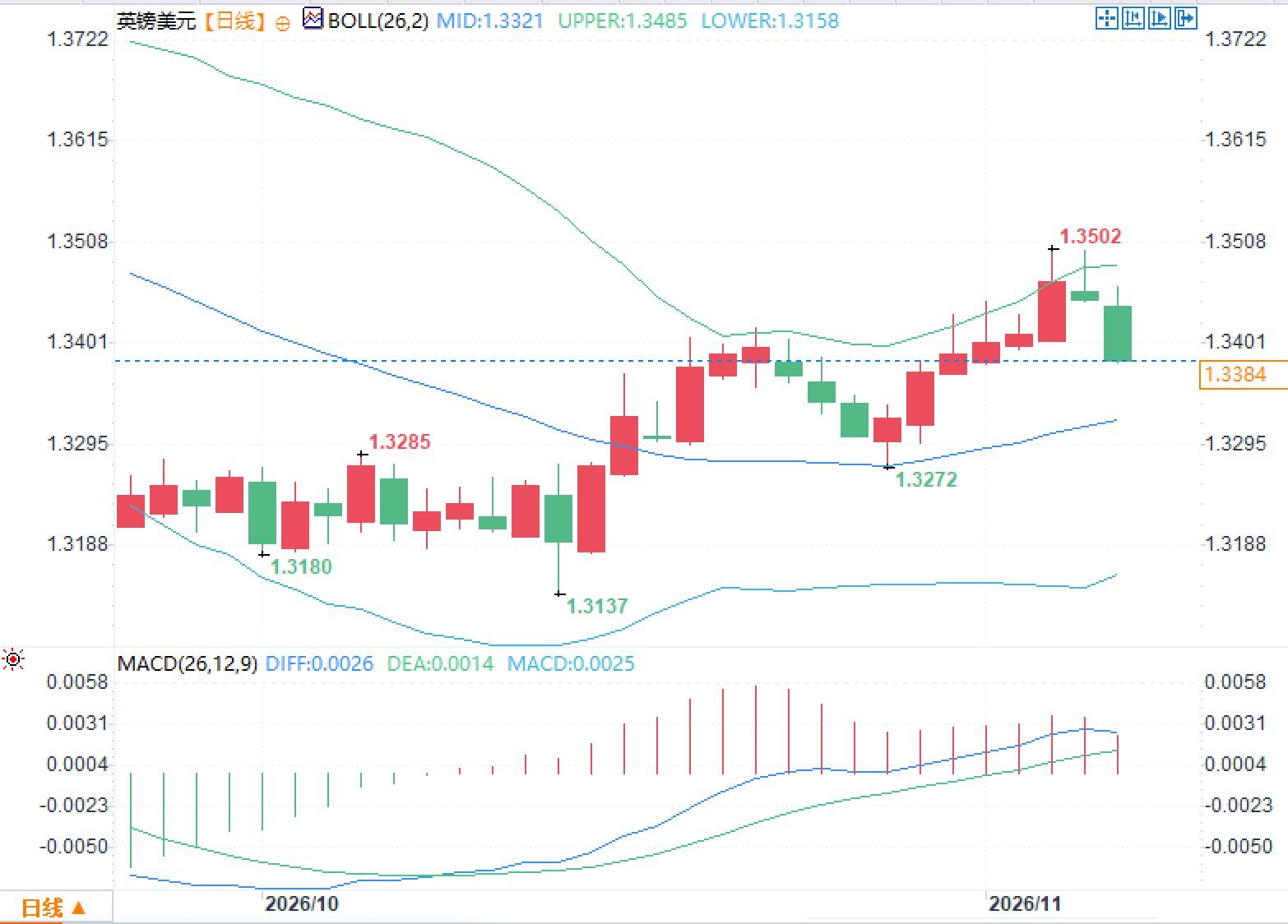
On Friday, November 6th, the pound sterling adjusted against the dollar following a recent speech by Hugh Peele, the Bank of England's chief economist. The previous day, the Bank of England's Monetary Policy Committee voted 8-1 to raise the benchmark interest rate by 25 basis points to 4%, the first rate hike since 2023. This decision primarily responded to the continued conflict in the Middle East pushing up global energy prices. The UK's consumer price index rose to 3.5% year-on-year in September, accelerating from 3.1% in August, with core inflation rising to 2.8% and services inflation to 3.7%. Official forecasts indicate that inflation is expected to peak at around 5% by mid-2027, driven by energy cost transmission. Peele emphasized that the rate hike was preventative and explicitly stated that there would be no repeat of the aggressive rate hike cycle of 2022. He also pointed out that if growth stagnates, interest rates may remain unchanged or even decline next year, prompting the market to reassess the future policy path. 
The fundamental background of the Bank of England's interest rate hike decision
The Bank of England's increase of its benchmark interest rate from 3.75% to 4% reflects the significant pipeline pressure that energy price shocks have created in the economy. With the Middle East conflict entering its ninth month, Brent crude futures prices have recently averaged around $108 per barrel, and natural gas futures prices are also significantly higher than pre-conflict levels. This has directly driven up UK petrol and diesel prices by nearly 30% year-on-year, becoming a major contributor to the acceleration of inflation in September. A majority of the Monetary Policy Committee members believe that although evidence of a second-round effect is still limited, it is necessary to act sooner rather than later to prevent energy-driven inflation from turning into more persistent price pressures. Activity and employment data continue to marginally increase demand, further supporting the necessity of the rate hike. There is disagreement within the Committee, with one member supporting a 50 basis point increase to 4.25%, indicating differing levels of concern about the persistence of inflation. Overall, this adjustment aims to maintain price stability while avoiding an overreaction that could create additional drag on growth.The core meaning and policy framework of Peel's statement
Hugh Peale, as the Bank of England's chief economist, further refined the committee's policy thinking. He reiterated that evidence of a second-round effect from energy prices remains limited, and that this rate hike is a precautionary measure aimed at curbing inflationary pressures before they solidify. Peale explicitly stated that the Bank of England has no intention of repeating the aggressive rate-hiking cycle of 2022, noting that the path of interest rates next year is not predetermined and the outlook will be more uncertain from spring onwards. He particularly emphasized that if economic growth stagnates next year, the benchmark interest rate could remain unchanged or even decline. This statement, coming from a member typically considered hawkish, was interpreted by the market as a relatively dovish signal. Peale further pointed out that the extent to which corporate profit margins are squeezed and how companies respond will be key determinants. Policymakers are placing weight on wage negotiations, cost transmission, and pricing behavior to determine whether inflation will spread from the energy sector to broader goods and services prices. This framework, emphasizing data dependence rather than a pre-committed path, reflects a cautious approach given the uncertainty surrounding the duration of the energy shock.Limited evidence on energy shock transmission and second-round effects
The current rise in UK inflation is primarily driven by the direct effects of energy prices, rather than a widespread second-round transmission. September data shows that energy-related items contributed the majority of the excess inflation, while service inflation, though rising, has not yet shown signs of spiraling out of control. Peel points out that activity and employment are still marginally supporting demand, but pipeline pressures from energy prices need continued monitoring. The second-round effect could be amplified if businesses are forced to raise prices for non-energy goods due to squeezed profit margins, or if workers seek wage compensation to offset rising living costs. So far, such evidence remains limited, providing policy flexibility. The Bank of England's latest forecasts indicate that inflation, after peaking at around 5%, will decline as the impact of energy prices on the 12-month year-on-year base diminishes and restrictive policies take effect. However, the speed of the decline depends on the duration of the energy shock, the ability of businesses to transmit it, and the demand environment. If the conflict continues to push up energy costs, pipeline pressures could accumulate further; conversely, if supply recovers, inflationary pressures are expected to ease more quickly. This dynamic requires policy to strike a balance between containing risks and avoiding excessive tightening.Market pricing and uncertainty about future paths
The market currently prices in a roughly 50% probability of a rate hike at the December meeting, anticipating a cumulative increase of approximately 68 basis points by the end of 2027. This pricing was adjusted after Pierre's remarks, reflecting his reaction to his statement that rates "may remain unchanged or even decline next year." The pound fell against the dollar after the speech, with the day's trading range reflecting the impact of policy uncertainty on exchange rates. Pierre emphasized that there is no predetermined path for interest rates next year, and the outlook will become more ambiguous from spring onwards. The key lies in how businesses respond to profit margin squeezes and whether there are lasting changes in wage and pricing behavior. This stance contrasts with previous hints from some members regarding continued rate hikes, highlighting differing assessments within the committee regarding the nature and persistence of the shocks. Future data, including subsequent inflation readings, wage growth, and corporate profit margin indicators, will be the main basis for determining whether policy will be further adjusted. Energy price volatility and the evolving situation in the Middle East will also continue to influence market expectations of the Bank of England's reaction function. Overall, the policy path remains data-dependent rather than linear in terms of rate hike expectations.Frequently Asked Questions
Question 1: Why did Pierre emphasize that this rate hike was preventative rather than the start of a sustained cycle? Answer: Pierre pointed out that there is currently limited evidence of a second-round effect. The rate hike aims to curb potential persistent inflationary pressures from energy prices in advance, while explicitly ruling out a repeat of the aggressive rate hikes of 2022 to maintain policy flexibility. Question 2: What are the main drivers of the current rise in UK inflation? Answer: The Consumer Price Index (CPI) rose to 3.5% year-on-year in September, mainly due to energy prices driven up by the Middle East conflict. Petrol and diesel prices rose sharply year-on-year, directly contributing a large share of the accelerated inflation. Question 3: What does Pierre's statement mean for the interest rate path next year? Answer: Pierre stated that there is no predetermined path for interest rates next year, and the outlook from spring onwards is even more uncertain. If growth stagnates, rates may remain unchanged or even decline. This emphasizes the crucial role of squeezed corporate profit margins and corporate responses.- Risk Warning and Disclaimer
- The market involves risk, and trading may not be suitable for all investors. This article is for reference only and does not constitute personal investment advice, nor does it take into account certain users’ specific investment objectives, financial situation, or other needs. Any investment decisions made based on this information are at your own risk.