Non-farm payrolls surge by 165,000! Gold plunges $30 in an instant as the dollar stagees a strong comeback.
2026-11-06 21:42:33
The U.S. Labor Department's October non-farm payrolls report, released at 9:30 PM on Friday, far exceeded market expectations, with 165,000 new jobs added, significantly higher than the estimated 65,000. The unemployment rate fell to 4.1%, lower than the expected 4.2%. September's data was also revised upwards to 60,000. The report strengthened expectations of a December rate hike by the Federal Reserve, causing the dollar index to surge briefly, U.S. Treasury yields to rise, and spot gold to fall by more than $20 instantly. In the foreign exchange market, the dollar strengthened against most major currencies. There was a significant discrepancy between institutional and retail investors' expectations before and after the data release, and the market quickly digested the strong employment signal. This article summarizes the key points of the report, the immediate market reaction, and the logical impact on gold and dollar-related commodities. 
 Prior to the release, some institutions and analysts emphasized that stable employment was sufficient to support interest rate hikes, but retail investors generally worried about weak data, expecting gold to rise and the dollar to be under pressure. After the release, institutional perspectives quickly shifted: strong employment and a declining unemployment rate strengthened policy space, supporting yields and the dollar, making the logic for gold's downward pressure clear. Retail investor discussions shifted from "potentially weaker" to "stronger than expected," with some lamenting that rumors of layoffs were not reflected in the data and paying attention to the risk of subsequent corrections. The expectation deviation was mainly reflected in the fact that both employment figures and the unemployment rate were better than consensus expectations, leading to a rapid adjustment in interest rate pricing. From an extrapolation perspective, strong employment data increased the relative attractiveness of the dollar, putting direct pressure on gold; the dollar strengthened against dollar-sensitive currency pairs such as the Canadian dollar, reflecting the immediate pricing of interest rate hike expectations in the foreign exchange market. The report did not change the overall stable tone of the labor market, but significantly revised the previously weak market assumptions.
Market Background
This week, market attention significantly increased towards the October non-farm payroll report. Previously, September's preliminary figure of 29,000 non-farm payrolls was far weaker than expected. Coupled with the recent stock market correction, traders have lowered their estimate of the probability of a December Fed rate hike from around 95% a few weeks ago to around 70%. Economists generally expect 65,000 new jobs in October, with the unemployment rate remaining stable at 4.2%. Institutions such as the Chicago Fed predict the unemployment rate may fall to 4.1%, citing reduced layoffs and a rebound in hiring. ADP private sector employment data showed an increase of 86,000 in October, and the ISM services employment indicator also improved, indicating an overall stable labor market. Before the data release, the US dollar index consolidated around 102, and spot gold fluctuated between $4050 and $4060. US Treasury yields rose slightly, and market sentiment was cautious. Prominent institutions such as Barron's pointed out that if employment remains robust, it will provide more room for a December rate hike; Reuters and other media emphasized the coexistence of low layoffs and moderate hiring. In discussions on the X platform, most retail investors expect data to remain weak, with some believing the labor market has shown signs of slowing down, which could support gold while putting pressure on the US dollar.In-depth analysis: Data shocks and expectation deviations
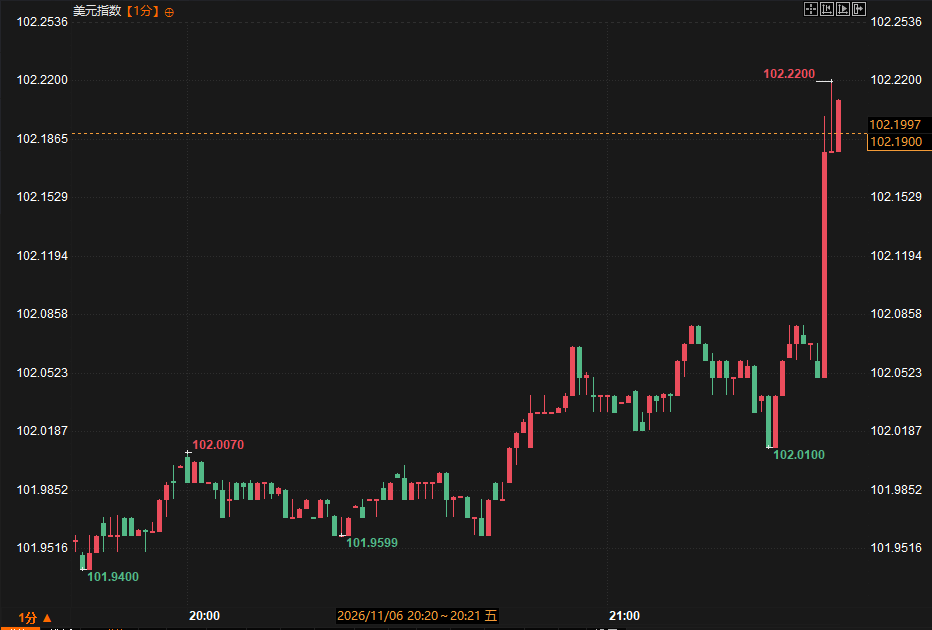
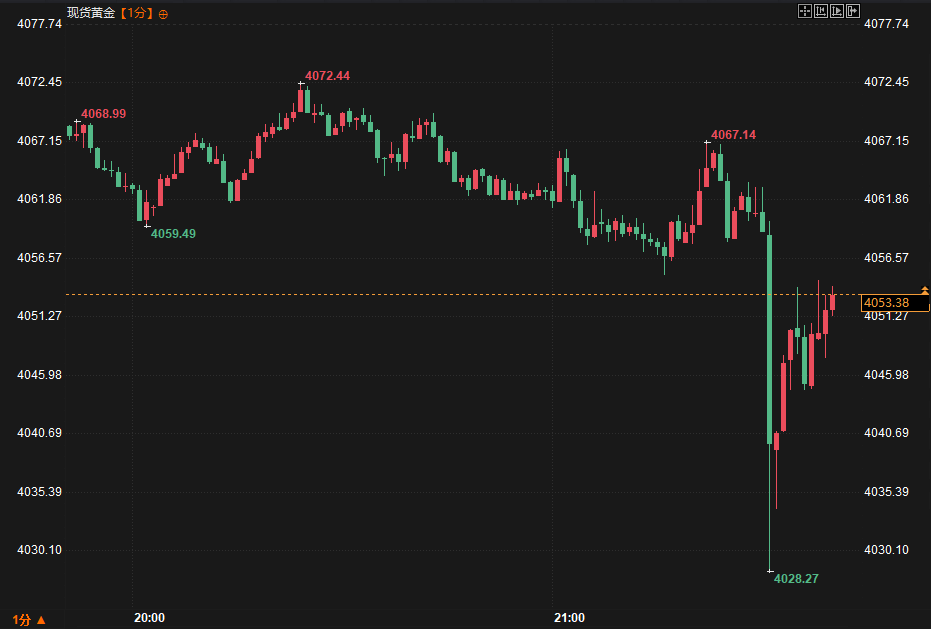
At 21:30 sharp, the report was released: October non-farm payrolls increased by 165,000, significantly exceeding the forecast of 65,000; the unemployment rate fell to 4.1%, better than expected; September non-farm payrolls were revised upward to 60,000, with upward revisions in the private sector and other sub-items. Average hourly earnings monthly and annual rates were also adjusted. This result far exceeded market pricing, directly boosting bets on a December rate hike by the Federal Reserve. The market reacted quickly. The US dollar index rose by about 15 points in the short term, reaching a high of 102.20; the 10-year US Treasury yield rose 6.3 basis points to 4.898%; the US dollar rose by about 45 points against the Canadian dollar, reaching 1.4100. Spot gold fell by $24 from around 4059 to 4035, widening its intraday decline. Stock index futures showed mixed performance, with S&P 500 futures narrowing their gains. Short-term interest rate futures fell, indicating that traders increased their expectations for a rate hike. Prior to the release, some institutions and analysts emphasized that stable employment was sufficient to support interest rate hikes, but retail investors generally worried about weak data, expecting gold to rise and the dollar to be under pressure. After the release, institutional perspectives quickly shifted: strong employment and a declining unemployment rate strengthened policy space, supporting yields and the dollar, making the logic for gold's downward pressure clear. Retail investor discussions shifted from "potentially weaker" to "stronger than expected," with some lamenting that rumors of layoffs were not reflected in the data and paying attention to the risk of subsequent corrections. The expectation deviation was mainly reflected in the fact that both employment figures and the unemployment rate were better than consensus expectations, leading to a rapid adjustment in interest rate pricing. From an extrapolation perspective, strong employment data increased the relative attractiveness of the dollar, putting direct pressure on gold; the dollar strengthened against dollar-sensitive currency pairs such as the Canadian dollar, reflecting the immediate pricing of interest rate hike expectations in the foreign exchange market. The report did not change the overall stable tone of the labor market, but significantly revised the previously weak market assumptions.Trend Outlook
The much stronger-than-expected non-farm payrolls report further solidified the policy options available to the Federal Reserve at its December meeting. The short-term strengthening of US Treasury yields and the US dollar index reflects a market reassessment of employment resilience. Gold, under the dual influence of rising interest rates and a stronger dollar, is showing clear short-term pressure; in the foreign exchange market, the dollar tends to find support against major currency pairs. Going forward, attention should be paid to inflation data and statements from Federal Reserve officials to verify whether the strong employment situation continues to translate into further adjustments to the policy path. The market has quickly digested the better-than-expected signals, and subsequent fluctuations will depend more on confirmation from other macroeconomic clues. Overall, the October non-farm payrolls report was released with significantly better-than-expected results, and the discrepancy between institutional and retail investor expectations quickly converged after the data release towards the main theme of "stronger employment supporting the dollar and yields." The short-term logic for gold and dollar-related commodities has thus clearly shifted.- Risk Warning and Disclaimer
- The market involves risk, and trading may not be suitable for all investors. This article is for reference only and does not constitute personal investment advice, nor does it take into account certain users’ specific investment objectives, financial situation, or other needs. Any investment decisions made based on this information are at your own risk.