The US dollar index closed strongly! The euro, pound, and Australian dollar all fell; keep an eye on these three key levels.
2026-11-07 11:24:27
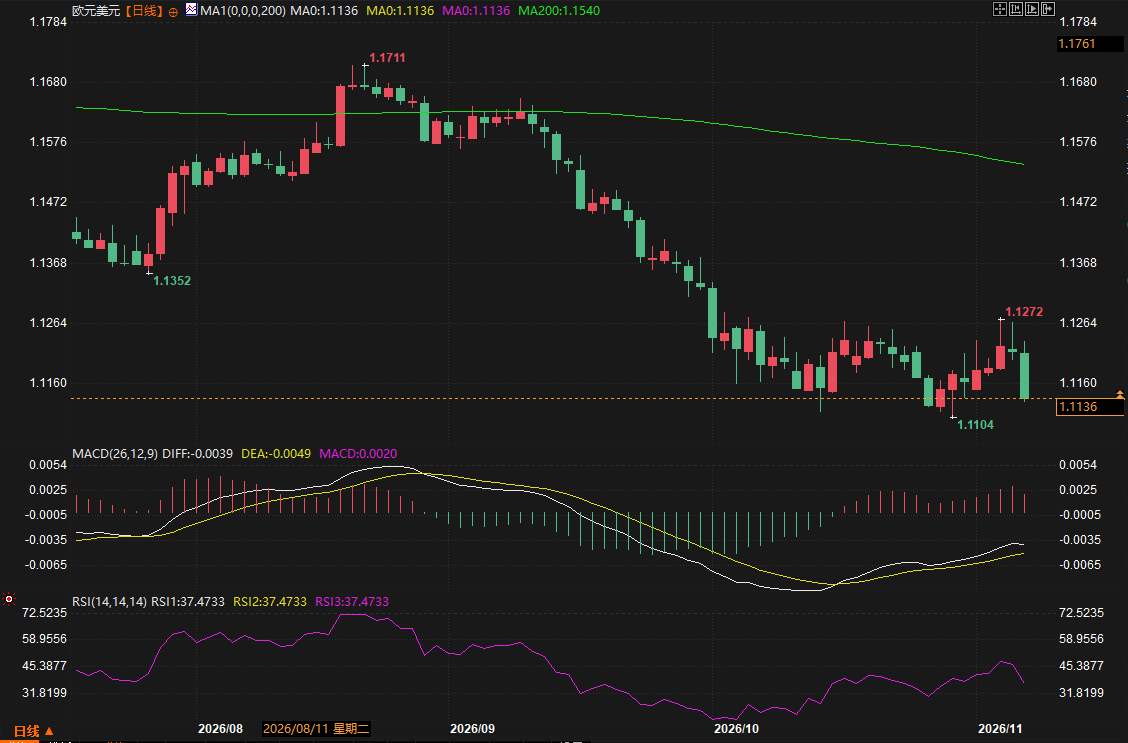
This week (November 2-7), the global foreign exchange market experienced increased volatility due to the combined impact of the midterm elections and non-farm payroll data. The US dollar index rose 0.33% for the week, closing near 102.28; the euro fell 0.14% to close at 1.1136; the pound fell 0.27% to close at 1.3346; the dollar rose 0.69% to close at 158.53; the Australian dollar fell sharply by 2.32%; and the US dollar rose strongly by 1.23% to close at 1.4129.  Market sentiment in the first half of the week was influenced by the Democratic Party's landslide victory in the midterm elections, putting pressure on the US dollar. Safe-haven demand and expectations of a policy stalemate provided some respite for non-US currencies. Thursday's plunge in tech stocks (the Nasdaq experiencing its biggest single-day drop in 19 months) further strengthened safe-haven demand, briefly boosting the dollar. The turning point came on Friday: US non-farm payrolls increased by 165,000 in October (far exceeding the expected 65,000), and the unemployment rate fell to 4.1%. Following the data release, the dollar index surged 0.77% to 102.26, its biggest single-day gain in nearly five months; the euro fell 0.67%, and the pound fell 0.71% (its biggest single-day drop since September 23). Technical analysis confirms this: The US dollar index surged from around 101.86 with a large bullish candle, recovering most of its pullback losses and approaching its previous high of 102.94; the euro/dollar pair rose to 1.1272 before retreating, leaving a long upper shadow and remaining below the 200-day moving average (1.1540); the US dollar/Japanese yen pair climbed moderately to 158.53, closely following the 200-day moving average; the US dollar/Canadian dollar pair saw a large bullish candle that engulfed its previous losses and broke above the 200-day moving average. MACD and RSI indicators mostly show strengthening momentum in dollar-related currency pairs, while non-US currencies are struggling to rebound.
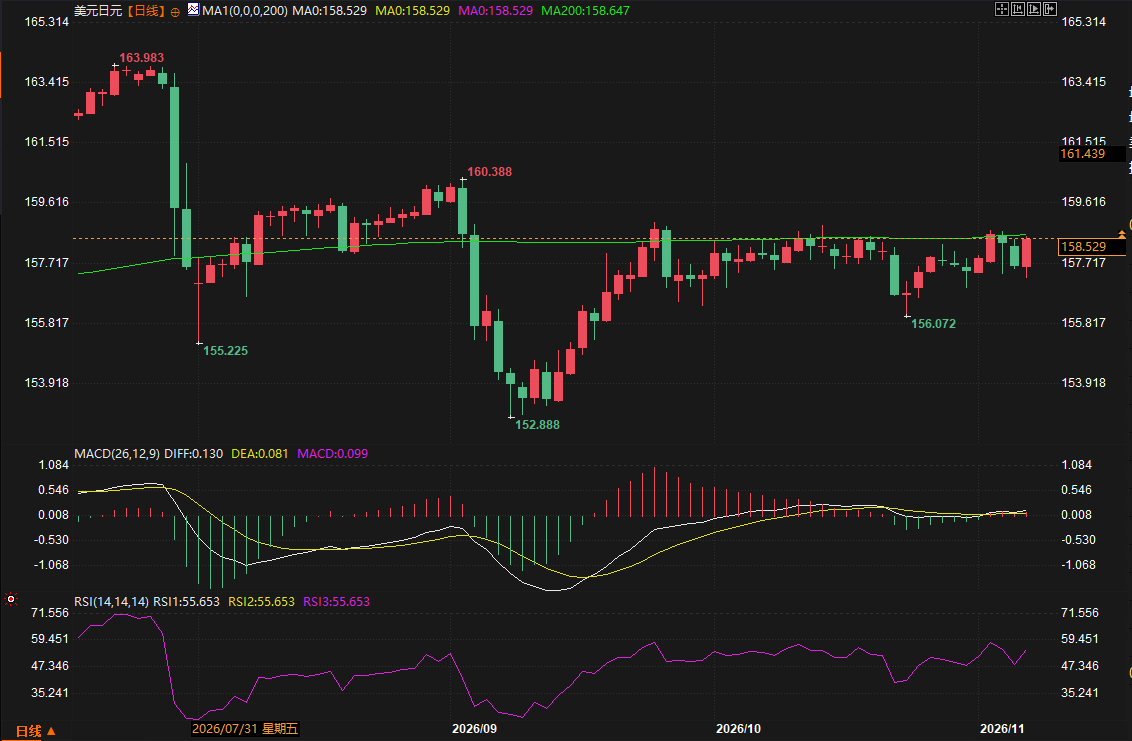
 USD/JPY: The pair has moderately recovered from a low of 156.07 to 158.53. The MACD shows a golden cross above the zero line with expanding red bars, and the RSI is around 55.7, neutral to slightly bullish. Technically, it's closely following the 200-day moving average (MA200), and a break above this level could open up upside potential to 160. Bank of Japan Governor Kazuo Ueda acknowledged upside risks to inflation, but stated that the pace of policy normalization is still slower than the Federal Reserve, and the interest rate differential continues to support USD/JPY.
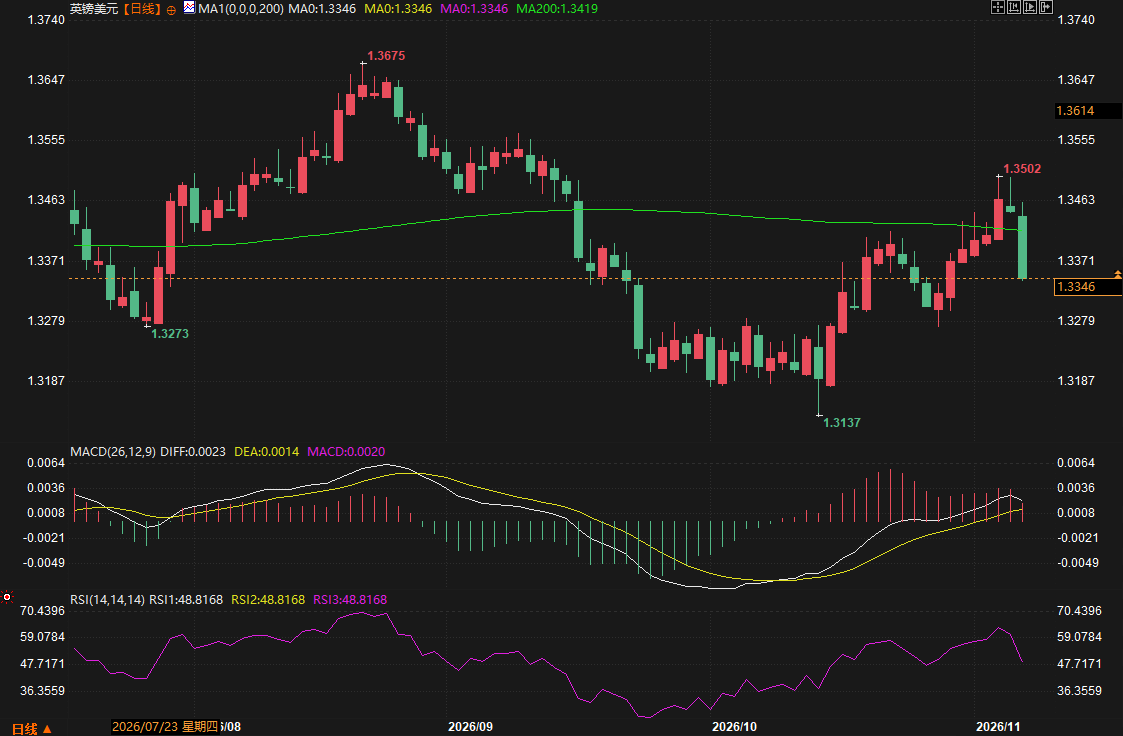
 GBP/USD: After hitting a low of 1.3137, it rebounded to a high of 1.3502, but failed to hold above the 200-day moving average (MA200) (1.3419), closing at 1.3346. The MACD formed a golden cross below the zero line, and the RSI rose to a neutral level of 48.8. The Bank of England's interest rate hike provided temporary support, but the strength of the US dollar and global risk sentiment made it difficult for the pound to sustain its strength.
 This week, the foreign exchange market shifted from "election hedging" to "employment-driven interest rate hike expectations," with the US dollar closing strongly on Friday and non-US currencies generally under pressure. The probability of a Fed rate hike in December has risen to nearly 80%, and the interest rate differential logic has once again dominated the foreign exchange market.
Market sentiment in the first half of the week was influenced by the Democratic Party's landslide victory in the midterm elections, putting pressure on the US dollar. Safe-haven demand and expectations of a policy stalemate provided some respite for non-US currencies. Thursday's plunge in tech stocks (the Nasdaq experiencing its biggest single-day drop in 19 months) further strengthened safe-haven demand, briefly boosting the dollar. The turning point came on Friday: US non-farm payrolls increased by 165,000 in October (far exceeding the expected 65,000), and the unemployment rate fell to 4.1%. Following the data release, the dollar index surged 0.77% to 102.26, its biggest single-day gain in nearly five months; the euro fell 0.67%, and the pound fell 0.71% (its biggest single-day drop since September 23). Technical analysis confirms this: The US dollar index surged from around 101.86 with a large bullish candle, recovering most of its pullback losses and approaching its previous high of 102.94; the euro/dollar pair rose to 1.1272 before retreating, leaving a long upper shadow and remaining below the 200-day moving average (1.1540); the US dollar/Japanese yen pair climbed moderately to 158.53, closely following the 200-day moving average; the US dollar/Canadian dollar pair saw a large bullish candle that engulfed its previous losses and broke above the 200-day moving average. MACD and RSI indicators mostly show strengthening momentum in dollar-related currency pairs, while non-US currencies are struggling to rebound.Key drivers: Strong employment data reignites expectations of interest rate hikes, and interest rate differentials regain dominance.
This week, the core logic of the currency market quickly shifted from "election politics" to "the Fed's policy path." CME Group's FedWatch tool showed that after the non-farm payrolls data release, the market's probability of a Fed rate hike of at least 25 basis points in December rose from about 67% on Thursday to nearly 80%. The 2-year Treasury yield rose 4.1 basis points to 4.52%, and the 10-year yield rose 1.6 basis points to 4.85%, with the widening interest rate differential between the US and Europe, and between the US and Japan, directly supporting the dollar. Comments from Fed officials further reinforced hawkish expectations. New York Fed President Williams emphasized the resilience of the economy and that inflation remains high, necessitating that inflation be brought back to 2%; St. Louis Fed President Musaleem stated that inflation remains a top concern for businesses; and San Francisco Fed President Daly indicated that even with a "painful" sell-off in tech stocks, the Fed may still need to raise rates further. Eugene Epstein, Head of Trading and Structured Products at Moneycorp, pointed out that the dollar's movement has been switching between safe-haven demand and interest rate differentials, and once the current situation stabilizes, the correlation is expected to become reasonable again. Post-election market concerns about potential increased Democratic regulation of AI initially weighed on risk assets, but employment data ultimately proved the resilience of the US economy, and interest rate expectations once again dominated exchange rates. Regarding other currencies, the pound briefly surged to a seven-week high on Thursday following the Bank of England's first rate hike in over three years, before retreating across the board due to a strong dollar. The yen fell 0.69% for the week, its biggest weekly drop since mid-September, influenced by the Japanese prime minister's plan to use funds from central bank ETF sales to support investment projects and the potential for AI stock plunges to weaken tax revenue. The Australian dollar was under the heaviest pressure due to risk sentiment and its correlation with commodities.Technical and Institutional Perspectives on Major Currency Pairs
EUR/USD: After reaching a high of 1.1711 in September, the euro has been declining steadily. It rebounded to a low of 1.1104 this week before encountering resistance at 1.1272 and falling back to close at 1.1136. The MACD has formed a golden cross below the zero line, but the red bars are extremely small. The RSI is around 37.5 and starting to rise from a low level, indicating limited upward momentum. Analysts generally believe that if next week's CPI data is not weak, the euro will struggle to escape downward pressure, with support levels to watch at 1.1100-1.1050. USD/JPY: The pair has moderately recovered from a low of 156.07 to 158.53. The MACD shows a golden cross above the zero line with expanding red bars, and the RSI is around 55.7, neutral to slightly bullish. Technically, it's closely following the 200-day moving average (MA200), and a break above this level could open up upside potential to 160. Bank of Japan Governor Kazuo Ueda acknowledged upside risks to inflation, but stated that the pace of policy normalization is still slower than the Federal Reserve, and the interest rate differential continues to support USD/JPY. GBP/USD: After hitting a low of 1.3137, it rebounded to a high of 1.3502, but failed to hold above the 200-day moving average (MA200) (1.3419), closing at 1.3346. The MACD formed a golden cross below the zero line, and the RSI rose to a neutral level of 48.8. The Bank of England's interest rate hike provided temporary support, but the strength of the US dollar and global risk sentiment made it difficult for the pound to sustain its strength. This week, the foreign exchange market shifted from "election hedging" to "employment-driven interest rate hike expectations," with the US dollar closing strongly on Friday and non-US currencies generally under pressure. The probability of a Fed rate hike in December has risen to nearly 80%, and the interest rate differential logic has once again dominated the foreign exchange market.- Risk Warning and Disclaimer
- The market involves risk, and trading may not be suitable for all investors. This article is for reference only and does not constitute personal investment advice, nor does it take into account certain users’ specific investment objectives, financial situation, or other needs. Any investment decisions made based on this information are at your own risk.