Democratic landslide victory in midterm elections may not stop the flames of war: alarm bells continue to ring for escalating US-Iran conflict, and oil prices could explode at any moment?
2026-11-09 10:40:28
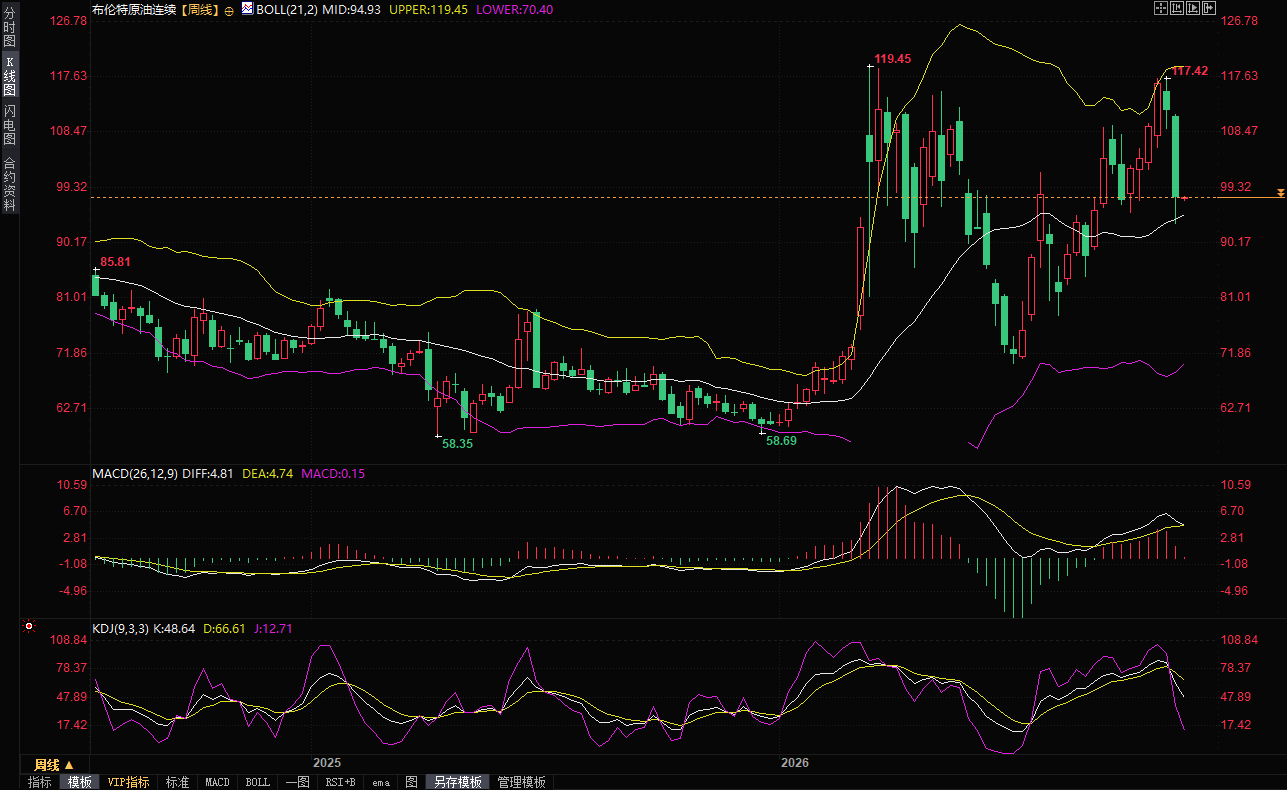
Despite the Democratic Party's landslide victory in the recently concluded midterm elections, which initially raised market optimism about a potential easing of tensions between the US and Iran, the reality is far more complex than post-election sentiment suggests. As of last Saturday (November 7th), military tensions in the Middle East have not cooled down but rather continued to escalate. Crude oil prices have fallen sharply by over 12% in the past five trading days, with the market attributing this decline partly to expectations of a possible end to the conflict and political anxieties stemming from Vice President JD Vance's public linking of the Republican defeat to the conflict. However, analysts clearly point out that the core differences between the Trump administration and Iran have not been resolved by the election results, and the risk of a new round of large-scale conflict remains high. 
The stark contrast between the election results and the reality on the battlefield
Following last week's election results, markets were initially buoyed by optimism that the conflict might be ending. Democrats planned to leverage their comfortable majority in both houses of Congress to push for a war powers resolution, attempting to force President Trump to end military action against Iran as soon as possible. However, this political path faces a clear time constraint: the Democrats won't be officially sworn in and take power until January. Until then, the Trump administration still has considerable room for maneuver. Helima Croft, global head of commodities strategy at RBC Capital Markets, stated in a report to investors last Friday that she was struck by two starkly contrasting sentiments throughout the week: on one hand, escalating concerns about the Gulf region, and on the other hand, "exit optimism" driven by headlines among market participants thousands of miles away. This contrast itself illustrates a significant disconnect between post-election market pricing and actual geopolitical risks.Attacks continue and military deployments escalate
Military tensions continued into the weekend. According to media reports, the U.S. Central Command stated on Saturday evening that a ship flying the St. Kitts flag attempted to leave the area after ignoring repeated warnings following a visit to an Iranian port, and the U.S. military launched a paralysis strike. Iranian state media reported explosions on Qeshm Island near the Strait of Hormuz, and multiple explosions in the port of Jask. While these reports have not been independently verified, they are sufficient to demonstrate that regional tensions have not eased due to the election results. Meanwhile, several oil tankers were attacked near Oman, resulting in the death of one crew member. Iran's Houthi allies in Yemen continued to launch missiles at Saudi Arabia. On the U.S. side, a third carrier strike group is reinforcing the region. Consulting firm Rapidan Energy assesses that, given the diplomatic deadlock, there is an 80% probability of a large-scale renewed conflict. Trump himself publicly stated last Thursday that he would soon decide whether to launch another strike against Iran, emphasizing that "if we have to finish off the rest of Iran, we've completely locked onto our targets."Oil price risks and core disagreements remain unresolved.
If the conflict escalates again, crude oil prices could surge back above $100 a barrel. Last Friday, Brent crude closed at $97.99, and U.S. crude closed near $90.34. Bob McNally, president of Rapidan and former energy advisor to the Bush administration, pointed out that Trump has almost made preventing Iran from acquiring nuclear weapons and forcing it to relinquish its nuclear capabilities his political legacy. The Iranian regime, however, is clearly unwilling to compromise. As long as this core disagreement persists, the inherent momentum for escalation will not disappear. Amos Hochstein, former energy advisor to the Biden administration, also believes that the risk of war remains real, especially since Trump is no longer facing re-election pressure. He warned that if the conflict expands, gasoline, diesel, and jet fuel prices will rise significantly, creating a new round of shocks to the global energy market.Iran's hardline stance and limited leverage in parliament
Following the election results, Tehran displayed a clear sense of sarcasm. Iranian Supreme Leader Mojtaba Khamenei's social media account stated that the midterm election results meant "the process of American collapse has accelerated." Meanwhile, the likelihood of Congress passing a war powers resolution before the Democrats officially take power is low; even if it does, Trump can veto it. Croft points out that Congress's real leverage lies in its "purse strings"—government funding expires on December 11th, and subsequent temporary funding negotiations are likely to drag into next year, giving the Democrats greater leverage after they take power in January. However, delaying funding will not immediately limit Trump's ability to conduct military operations; it will only change the government's long-term funding prospects. Some signals have also emerged on the diplomatic front. According to the Qatar News Agency, Trump spoke with the Emir of Qatar last Friday to discuss efforts to ease regional tensions. An unnamed senior Iranian official stated that Tehran has submitted a nuclear proposal to the United States through Qatar, but substantive discussions will only begin after the United States meets its demands. Trump seemed unconvinced, stating clearly last Thursday that "Iran will never have nuclear weapons" and emphasizing that Iran "can do nothing" without US approval. On Sunday (November 8th), US President Trump said that as long as negotiations continued, the likelihood of him ordering a new attack on Iran was low. However, over the weekend, both the US and Iran claimed that ships had been attacked in or near the Strait of Hormuz. In summary, while the midterm election results changed the domestic political landscape in the US, they have not eliminated the structural contradictions between the US and Iran. From military deployments and attacks to public statements from both sides, the risk of escalation has not substantially decreased in the initial days following the election. If the market underestimates the possibility of a renewed conflict based solely on headlines of a "Democratic landslide victory," it may be sowing the seeds of future volatility.Frequently Asked Questions
Q: After the Democratic Party's landslide victory in the midterm elections, why did the market initially believe that the US-Iran conflict might be ending? A: The market interpreted the Democratic victory as a signal of increased political constraints. The Democrats planned to use their majority in both houses of Congress to push for a war powers resolution demanding that Trump end military operations. Meanwhile, Vice President Vance publicly linked the Republican defeat to the war, reinforcing the narrative that "political support is waning." The more than 16% drop in oil prices over five trading days directly reflected this expectation. However, this optimism ignored the time lag—the Democrats won't officially take office until January, and Trump, as the incumbent president, still retains considerable military autonomy for the remainder of his term. Q: Has the situation in the Middle East truly eased after the election? What specific signs indicate that risks are still rising? A: There has been no substantial easing. On Saturday evening, the US military launched a crippling strike on a ship attempting to leave after visiting an Iranian port; Iranian media reported explosions on Qeshm Island and the port of Jask; an oil tanker was attacked near Oman, resulting in deaths; and the Houthi rebels continued to launch missiles at Saudi Arabia. At the same time, the US third carrier strike group is reinforcing the region. These events combined indicate that military friction has not ceased due to the election results. Q: How will crude oil prices react if the conflict escalates again on a large scale? A: Analysts generally believe that Brent crude oil is likely to break through $100 per barrel again if the fighting escalates. Current prices are around $97, not far from that level. An expansion of the conflict will directly impact shipping safety near the Strait of Hormuz and push up gasoline, diesel, and jet fuel prices, creating a new round of supply shocks to the global energy market. Q: What is the core contradiction between Trump and Iran? Why is it difficult to resolve through diplomacy? A: The core issue is Iran's nuclear capabilities. Trump considers preventing Iran from acquiring nuclear weapons and forcing it to relinquish its nuclear capabilities a key political legacy, while the Iranian regime has explicitly refused to compromise. Although the two sides have had contact through channels such as Qatar, and Iran has submitted a nuclear proposal, Tehran insists that substantive discussions will only begin after the US meets its demands, while Trump has publicly stated that "Iran will never have nuclear weapons." This fundamental opposition makes diplomatic space extremely limited. Q: Can the Democratic majority in Congress effectively restrain Trump from continuing military action against Iran? A: Limited restraint in the short term. The Democrats only officially took power in January, making it difficult to pass a war powers resolution, and even if passed, it would face presidential veto. The truly powerful tool is the appropriations power—after government funding expires on December 11th, subsequent negotiations may drag into next year, thus creating stronger leverage once the Democrats are in power. However, experts point out that delaying appropriations will not immediately deprive Trump of his military operational capabilities, but will only change his long-term funding prospects. Therefore, in the coming weeks and months, the risk of military escalation will remain primarily driven by the administration. At 10:38 Beijing time, Brent crude oil was trading at $97.83 per barrel.- Risk Warning and Disclaimer
- The market involves risk, and trading may not be suitable for all investors. This article is for reference only and does not constitute personal investment advice, nor does it take into account certain users’ specific investment objectives, financial situation, or other needs. Any investment decisions made based on this information are at your own risk.