November 10th Financial Breakfast: Easing inflation concerns push gold prices up nearly 2%, Trump downplays the possibility of another attack on Iran, and oil prices hit a three-month low.
2026-11-10 07:32:32
On Tuesday (November 10, Beijing time) in early Asian trading, spot gold was trading around $4,144 per ounce. Gold prices rose nearly 2% on Monday as a weaker dollar and lower oil prices eased inflation concerns. The market awaited US inflation data to be released later this week for clues about the Federal Reserve's interest rate outlook. Oil prices plunged nearly 6% on Monday, hitting a three-month low, benefiting from US President Trump downplaying the possibility of another strike against Iran. 
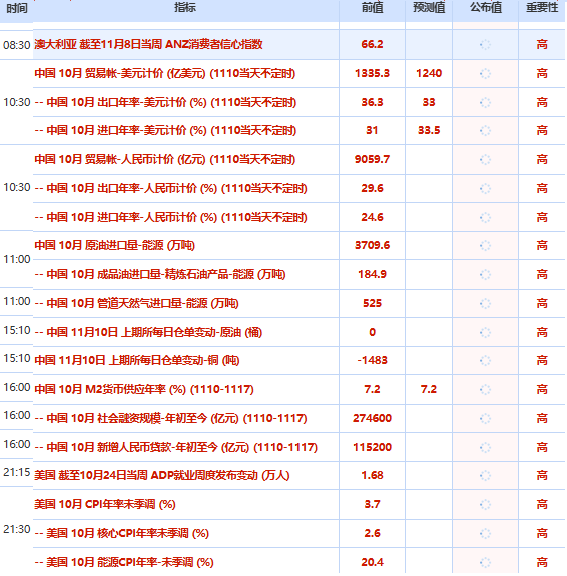
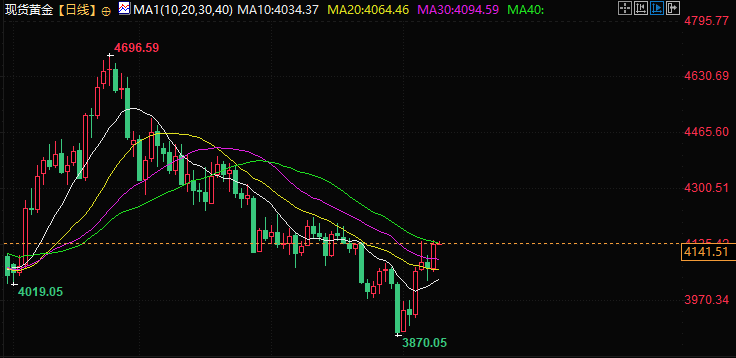 Jim Wyckoff, a market analyst at the Gold Exchange, said that a weaker dollar and lower oil prices indicate that inflation concerns are fading, which is beneficial for gold and silver. Easing inflation concerns may lead central banks to adopt a more accommodative monetary policy stance, while a weaker dollar makes dollar-denominated gold cheaper for overseas buyers. Oil prices fell sharply after Trump downplayed the possibility of another strike on Iran, but attacks on ships near the Strait of Hormuz still raised supply concerns. The Democratic Party's victory in the midterm elections, which boosted hopes for an end to the Iran war, pushed gold prices up by about 5% last week. However, stronger-than-expected US non-farm payroll data on Friday reinforced expectations that the Federal Reserve may maintain higher interest rates for longer, causing gold prices to subsequently fall. The CME FedWatch tool shows that traders expect an 82.2% probability of a Fed rate hike in December, with the market awaiting Tuesday's CPI and Friday's PPI. Data from the World Gold Council shows that the People's Bank of China increased its gold reserves by about 25.8 tons in October, the largest monthly increase in three years.
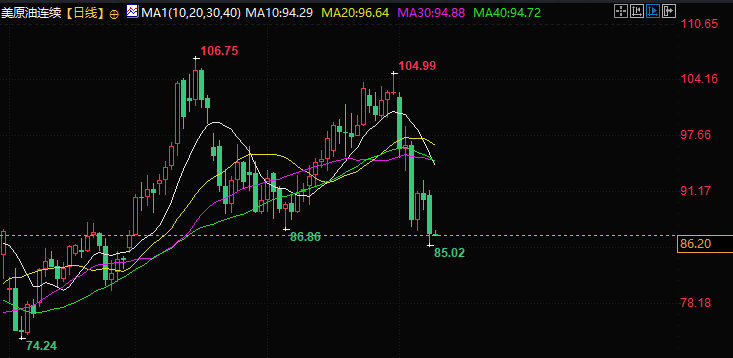 Trump said on Sunday that he was unlikely to order a new attack on Iran should negotiations aimed at ending the conflict make progress, but both countries reported attacks on ships in or near the Strait of Hormuz. TACenergy reported that while actual fighting has not subsided, the prospect of peace seems to have encouraged sellers. Last week, Trump hinted at restarting attacks on Iran, and Tehran vowed to retaliate, but there are currently no signs of a large-scale US military operation. A senior Iranian security official said Tehran has no intention of negotiating unless Washington takes concrete steps to meet the seven conditions set forth in the interim agreement in June. Trump will meet with the Qatari prime minister on Monday, although senior US and Gulf officials have expressed doubt about the possibility of a near-term agreement. A US official also said that Russia and Ukraine are participating in US-brokered negotiations to end the Moscow-Ukraine war in good faith, and indicated ahead of Tuesday's talks in Abu Dhabi that both sides have privately shown some flexibility on the territorial issue. A Morgan Stanley report states that the spot Brent crude oil price, which serves as the global benchmark for crude oil spot pricing, has turned to a discount to the near-month Brent futures price, highlighting the weakness in the spot market. Some analysts say that high oil prices have led to decreased demand, and the global oil market is showing signs of returning to oversupply. JPMorgan Chase estimates the global oil surplus in October at approximately 1.4 million barrels per day. Surveys show that despite continued export restrictions, OPEC crude oil production increased by 1.38 million barrels per day to 22.87 million barrels per day in October, driven by increased production in Saudi Arabia, Kuwait, and Iraq. Preliminary surveys indicate that U.S. crude oil and refined product inventories declined last week. Data from the U.S. Department of Energy shows that U.S. Strategic Petroleum Reserve crude oil inventories fell to 279.5 million barrels last week, the lowest level since October 1982.
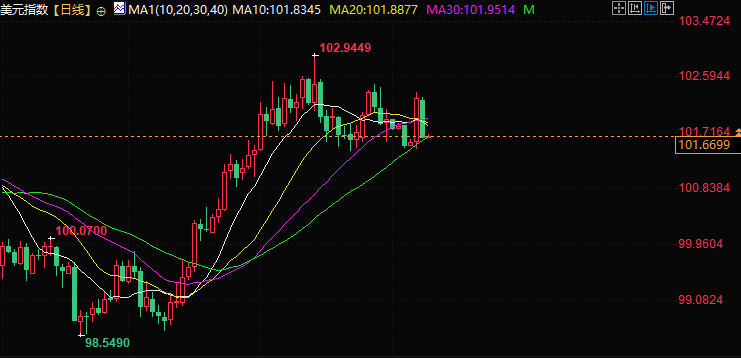 US President Trump said on Sunday that the likelihood of him ordering a new attack on Iran was low as long as diplomatic efforts continued, and he was scheduled to meet with Qatari Prime Minister and Foreign Minister Mohammed bin Salman on Monday. Improved market risk sentiment also put pressure on the safe-haven dollar. Ebury's chief economist, Enrique Diaz-Alvarez, said a major issue currently facing dollar trading is market positioning. Actively participating funds in trading and speculation already hold large long positions in the dollar, making further gains difficult. He expects the euro to rebound in the medium term because the market may be underestimating the strength of the eurozone's economic recovery. The euro was last up 0.78% against the dollar, closing at 1.1223. He also stated that the market has somewhat underestimated the impact of the midterm elections on the US economy. Artificial intelligence investment has been a significant component of US economic performance, and this major political shift in the US will have a marginal negative impact on such investments. Investors will be closely watching Tuesday's U.S. Consumer Price Index (CPI), with surveys predicting a 0.3% month-on-month increase. The CME FedWatch tool shows the futures market anticipates an 82% probability of a Federal Reserve rate hike at its December 8-9 meeting, up from a week ago. The yield on the benchmark 10-year U.S. Treasury note rose 1.07 basis points to 4.87%. Risk-sensitive Australian and New Zealand dollars also rose, with the Australian dollar gaining 0.95% to US$0.6922 and the New Zealand dollar jumping 1.54% to US$0.56301, as traders assessed the potential impact of a close New Zealand election this weekend.
Key Focus Today
stock market
U.S. stocks rebounded strongly on Monday, with the Dow Jones Industrial Average rising 2.15% to close at 52,389.75, the S&P 500 recovering from its biggest weekly drop since April 2025, rising 2.35% to close at 7,549.94, and the Nasdaq Composite rising 2.74% to close at 25,253.14, marking its biggest one-day gain since July 30. Falling oil prices eased inflation concerns and boosted tech stocks, although Nvidia plunged 4.2% amid controversy surrounding an internal investigation into CEO Jensen Huang, closing at its lowest level since April 7. All 11 major sectors of the S&P 500 rose, with the industrial and consumer discretionary sectors both gaining more than 3%. Last week, stocks fell due to concerns that new regulations would dampen the AI investment boom following the Democratic midterm elections' landslide victory, but Ken Polcari of SlateStone Wealth believes the AI boom will not subside, and Morgan Stanley and UBS also believe the risk of extreme regulation is low. Trump's downplaying of the possibility of another strike on Iran caused a sharp drop in oil prices, further supporting the market. This week, the US will release its October CPI and PPI data. The CME FedWatch tool shows that the market still expects the probability of a Fed rate hike in December to remain above 80%. Richmond Fed President Barkin said that monetary policy should be adjusted prudently.Gold Market
Spot gold rose 1.72% on Monday to settle at $4,140.94 an ounce, as a weaker dollar and falling oil prices eased inflation concerns, and the market awaited U.S. inflation data to be released later this week for clues about the Federal Reserve's interest rate outlook. Jim Wyckoff, a market analyst at the Gold Exchange, said that a weaker dollar and lower oil prices indicate that inflation concerns are fading, which is beneficial for gold and silver. Easing inflation concerns may lead central banks to adopt a more accommodative monetary policy stance, while a weaker dollar makes dollar-denominated gold cheaper for overseas buyers. Oil prices fell sharply after Trump downplayed the possibility of another strike on Iran, but attacks on ships near the Strait of Hormuz still raised supply concerns. The Democratic Party's victory in the midterm elections, which boosted hopes for an end to the Iran war, pushed gold prices up by about 5% last week. However, stronger-than-expected US non-farm payroll data on Friday reinforced expectations that the Federal Reserve may maintain higher interest rates for longer, causing gold prices to subsequently fall. The CME FedWatch tool shows that traders expect an 82.2% probability of a Fed rate hike in December, with the market awaiting Tuesday's CPI and Friday's PPI. Data from the World Gold Council shows that the People's Bank of China increased its gold reserves by about 25.8 tons in October, the largest monthly increase in three years.oil market
Oil prices plunged on Monday, with WTI crude falling 4.38% to settle at $86.38 a barrel, after hitting a three-month low of $85.02 a barrel during the session. Brent crude fell 5.94% to settle at $92.16 a barrel, after hitting a three-month low of $90.63 a barrel during the session, as US President Trump downplayed the possibility of another strike against Iran. Trump said on Sunday that he was unlikely to order a new attack on Iran should negotiations aimed at ending the conflict make progress, but both countries reported attacks on ships in or near the Strait of Hormuz. TACenergy reported that while actual fighting has not subsided, the prospect of peace seems to have encouraged sellers. Last week, Trump hinted at restarting attacks on Iran, and Tehran vowed to retaliate, but there are currently no signs of a large-scale US military operation. A senior Iranian security official said Tehran has no intention of negotiating unless Washington takes concrete steps to meet the seven conditions set forth in the interim agreement in June. Trump will meet with the Qatari prime minister on Monday, although senior US and Gulf officials have expressed doubt about the possibility of a near-term agreement. A US official also said that Russia and Ukraine are participating in US-brokered negotiations to end the Moscow-Ukraine war in good faith, and indicated ahead of Tuesday's talks in Abu Dhabi that both sides have privately shown some flexibility on the territorial issue. A Morgan Stanley report states that the spot Brent crude oil price, which serves as the global benchmark for crude oil spot pricing, has turned to a discount to the near-month Brent futures price, highlighting the weakness in the spot market. Some analysts say that high oil prices have led to decreased demand, and the global oil market is showing signs of returning to oversupply. JPMorgan Chase estimates the global oil surplus in October at approximately 1.4 million barrels per day. Surveys show that despite continued export restrictions, OPEC crude oil production increased by 1.38 million barrels per day to 22.87 million barrels per day in October, driven by increased production in Saudi Arabia, Kuwait, and Iraq. Preliminary surveys indicate that U.S. crude oil and refined product inventories declined last week. Data from the U.S. Department of Energy shows that U.S. Strategic Petroleum Reserve crude oil inventories fell to 279.5 million barrels last week, the lowest level since October 1982.Foreign exchange market
The dollar index fell 0.61% on Monday to close at 101.66, as market concerns about an escalation of the war with Iran eased, prompting investors to buy risk assets again after a sell-off in artificial intelligence-related stocks last week. US President Trump said on Sunday that the likelihood of him ordering a new attack on Iran was low as long as diplomatic efforts continued, and he was scheduled to meet with Qatari Prime Minister and Foreign Minister Mohammed bin Salman on Monday. Improved market risk sentiment also put pressure on the safe-haven dollar. Ebury's chief economist, Enrique Diaz-Alvarez, said a major issue currently facing dollar trading is market positioning. Actively participating funds in trading and speculation already hold large long positions in the dollar, making further gains difficult. He expects the euro to rebound in the medium term because the market may be underestimating the strength of the eurozone's economic recovery. The euro was last up 0.78% against the dollar, closing at 1.1223. He also stated that the market has somewhat underestimated the impact of the midterm elections on the US economy. Artificial intelligence investment has been a significant component of US economic performance, and this major political shift in the US will have a marginal negative impact on such investments. Investors will be closely watching Tuesday's U.S. Consumer Price Index (CPI), with surveys predicting a 0.3% month-on-month increase. The CME FedWatch tool shows the futures market anticipates an 82% probability of a Federal Reserve rate hike at its December 8-9 meeting, up from a week ago. The yield on the benchmark 10-year U.S. Treasury note rose 1.07 basis points to 4.87%. Risk-sensitive Australian and New Zealand dollars also rose, with the Australian dollar gaining 0.95% to US$0.6922 and the New Zealand dollar jumping 1.54% to US$0.56301, as traders assessed the potential impact of a close New Zealand election this weekend.International News
Trump Says Further Military Action Against Iran Seems Unnecessary On the afternoon of November 9th local time, US President Donald Trump and UFC President Dana White made a surprise appearance at a White House press conference. Trump told reporters that the US currently sees no need for military action against Iran. He said, "At this stage... taking military action doesn't seem absolutely necessary. But we are on high alert and ready to act should the situation change." Trump stated, "I think this conflict will be over soon." Trump also claimed, "Militarily, Iran is practically finished. The Strait of Hormuz is indeed closed, closed to Iran." (CCTV International News) Trump Says He Will Continue Blockade Against Iran and "Iron Gate" Task Force On November 9th local time, US President Trump posted on social media that he had a very good conversation with Qatari Prime Minister Mohammed bin Salman, and the two sides had in-depth discussions on issues related to the Islamic Republic of Iran. Most importantly, Qatar, Saudi Arabia, the UAE, Bahrain, Kuwait, and other countries are inclined to maintain the status quo, that is, to continue the "largest maritime blockade in history" and implement the new "Iron Gate" task force. He stated that all parties agree that Iran must not be allowed to possess nuclear weapons. (CCTV News) The probability of the Federal Reserve raising interest rates by 25 basis points in December is 84%. The probability of the Federal Reserve raising interest rates by 25 basis points by December is 84.2 % , while the probability of keeping rates unchanged is 15.8%. The probability of the Fed keeping rates unchanged by January is 11.8%, the probability of a 25 basis point hike is 66.9%, and the probability of a 50 basis point hike is 21.3%. A US congressman submitted a resolution to the House of Representatives requesting the impeachment of Defense Secretary Peter Hegseth . On November 9th local time, Republican Congressman Thomas Macy from Kentucky submitted a resolution to the House of Representatives, attempting to push for a full House vote on impeaching Defense Secretary Peter Hegseth. This move is intended to pressure his Republican colleagues to decide whether to remove the most prominent figure in the Trump administration. One of the choices to be made. Previously, the Republican Party suffered a complete defeat in the election. It is understood that the impeachment resolution proposed by Messi mainly focuses on the war against Iran, while also mentioning Hegses' role in carrying out military operations against Yemen and Venezuela. (CCTV News) The US federal budget deficit for fiscal year 2026 reaches $2 trillion . On November 9th local time, the US Treasury Department released data stating that in fiscal year 2026, ending September 30th, the total US federal budget deficit is $2 trillion, an increase of $217 billion from the previous fiscal year, representing a 12% increase. Both fiscal revenue and expenditure have increased compared to fiscal year 2025. Revenue increased by 3%, or $169 billion. The federal deficit increased by 6%, or $386 billion, in US dollars. Furthermore, the federal deficit for fiscal year 2026 is equivalent to 6.2% of GDP, up from 5.8% in fiscal year 2025. In fiscal year 2026, publicly held federal debt will reach 100% of GDP, the highest level since 1946, up from 99.0% at the end of fiscal year 2025. (CCTV News) Report: US-Iran nuclear negotiations reportedly restarted According to Al Arabiya TV: Arab sources say that a joint proposal by Qatar and Pakistan has pushed the US and Iran to restart substantive negotiations. The report states that the US has agreed to Iran setting a uranium enrichment cap of 3.67%, a condition accepted by Tehran. Both sides are also discussing arrangements for the return of IAEA inspectors to Iran, with a high probability of reaching a preliminary agreement to reduce Iran's uranium enrichment levels. The market forecasts suggest a low probability of Jensen Huang leaving in the short term . Nvidia's board of directors has launched an investigation into controversies surrounding CEO Jensen Huang, but the market forecasts believe his departure in the near future is unlikely. Kalshi data shows a 17% probability of Huang leaving by the end of 2027, rising to 30% by the end of 2028, 35% by the end of 2029, and reaching 75% by the end of 2031. Polymarket data shows an approximately 25% probability of Huang resigning or being forced to leave by the end of March 2027.(Domestic
)In key news,
He Lifeng co-chaired the second China-Canada Economic and Financial Strategic Dialogue with Canadian Finance Minister François-Philippe Champagne and International Trade Minister Michel Siddu . He Lifeng, member of the Political Bureau of the CPC Central Committee, Vice Premier of the State Council, and the Chinese lead negotiator for the China-Canada Economic and Financial Strategic Dialogue, co-chaired the second China-Canada Economic and Financial Strategic Dialogue with the Canadian lead negotiators, Finance Minister François-Philippe Champagne and International Trade Minister Michel Siddu, in Vancouver, Canada on the 9th. He Lifeng stated that under the strategic guidance of the leaders of both countries, China-Canada relations have achieved a turnaround, and bilateral exchanges have returned to the right track. This dialogue is a concrete measure to implement the important consensus reached by the leaders of both sides. China is willing to work with Canada, based on the principles of mutual respect, equality and mutual benefit, and seeking common ground while reserving differences, to deepen economic and trade cooperation. Cooperation in finance, investment, and other fields will promote the stable and healthy development of China-Canada economic relations and contribute to building a new type of strategic partnership between the two countries. François-Philippe Champagne stated that Canada attaches great importance to its relations with China and is willing to work with China to implement the consensus reached by the leaders of the two countries, strengthen policy communication and coordination, and deepen mutually beneficial cooperation in the economic and financial fields. Sidu expressed hope to expand pragmatic cooperation in the economic and trade fields between Canada and China and promote greater development of bilateral economic and trade relations. During the dialogue, the two sides reached a series of mutually beneficial and win-win results and consensuses. He Lifeng, François-Philippe Champagne, and Sidu jointly attended the China-Canada Business Roundtable. (Xinhua) Chinese Government's Special Envoy for Middle East Issues, Zhai Jun , visited Iran on November 8, 2026, and held separate meetings... Zhai Jun met with Bagheri, Deputy Secretary of the Supreme National Security Council of Iran, Ravanchi, Deputy Foreign Minister, and Aribak, Assistant Foreign Minister and Director-General of the Persian Gulf Department, for in-depth exchanges on China-Iran relations and the current situation in the Middle East. Zhai Jun stated that China and Iran enjoy a profound traditional friendship. This year marks the 55th anniversary of the establishment of diplomatic relations between China and Iran and the 10th anniversary of the establishment of their comprehensive strategic partnership. China is willing to take this opportunity to promote new progress in bilateral relations. Regarding the current protracted and spillover effects of conflict in the Middle East, China believes that military force cannot solve the problem. The sovereignty and security of all countries should be respected, and all relevant parties should adhere to peaceful choices, focus on political solutions with a rational and pragmatic spirit, and promote the early restoration of stability and development in the region. (Ministry of Foreign Affairs)- Risk Warning and Disclaimer
- The market involves risk, and trading may not be suitable for all investors. This article is for reference only and does not constitute personal investment advice, nor does it take into account certain users’ specific investment objectives, financial situation, or other needs. Any investment decisions made based on this information are at your own risk.