With the year-on-year CPI data released tonight, how will US Treasury bonds and the US dollar be priced?
2026-11-10 16:00:31
On Tuesday, November 10th, the U.S. Bureau of Labor Statistics will release the October Consumer Price Index (CPI) during the North American session. Market consensus expects the overall month-on-month growth rate to slow to 0.3% from 0.6% in September, with core inflation falling to 0.2% from 0.3%. This expectation comes after the Federal Reserve maintained its target range for the federal funds rate at 3.75% to 4% at its October meeting, with federal funds futures pricing in a 25 basis point rate hike in December at around 82%. Due to the U.S. government shutdown last year, data for October 2025 is missing; therefore, this report will not include year-on-year readings, and the weighting of month-on-month figures has increased significantly. The market will need to rely more on detailed breakdowns to determine whether inflation has truly cooled. 
US inflation expectations and statistical gap
Consensus forecasts indicate that the overall CPI in October may rise by 0.3% month-on-month, lower than September's 0.6%, with a weaker contribution from energy, as retail gasoline prices fell by approximately 0.9% month-on-month. Core CPI is expected to rise by 0.2%. Some institutions, such as Morgan Stanley and Bank of America, favor an overall reading as low as 0.2%, and a core reading close to 0.19% to 0.22%. The Cleveland Fed's immediate forecast model shows an overall reading of approximately 0.24% and a core reading of approximately 0.21%. Due to the lack of a comparable base, the official year-on-year figure is not released; the market estimates that the overall year-on-year figure may be around 3.9%, and the core figure around 2.7%, both higher than the Fed's 2% target. Monthly data therefore becomes the main basis for judging trends. Housing costs, hotel prices, and airfares, which were relatively strong in September, may normalize, but service inflation stickiness remains, and core commodity prices are affected by changes in demand. The personal consumption expenditure price index, as a preferred indicator of the Fed, is less affected by the lack of a year-on-year figure this time.Institutional Views and Policy Thresholds
Bank of America believes that even a core month-on-month increase of 0.2% could still lock in a December rate hike path, with only a clearly soft 0.1% reading likely to alter the calculations. Morgan Stanley, on the other hand, emphasizes that the normalization of housing, hotel, and some service prices could lead to a month-on-month slowdown. Mitsubishi UFJ Financial Group points out that the dollar's performance has outpaced short-term yield spreads, and data meeting expectations alone may not be enough to support its recent relative strength; a more significant inflation surprise is needed to sustain it. The market has already priced in a December rate hike, leaving more room for adjustment from a downside surprise. At the October meeting, Cook and Harmack dissented, advocating for a rate hike, indicating internal disagreement within the committee regarding the sustainability of inflation. Overall, whether inflation has cooled sufficiently to force a policy repricing is the core issue of this report.Market pricing and yield are linked
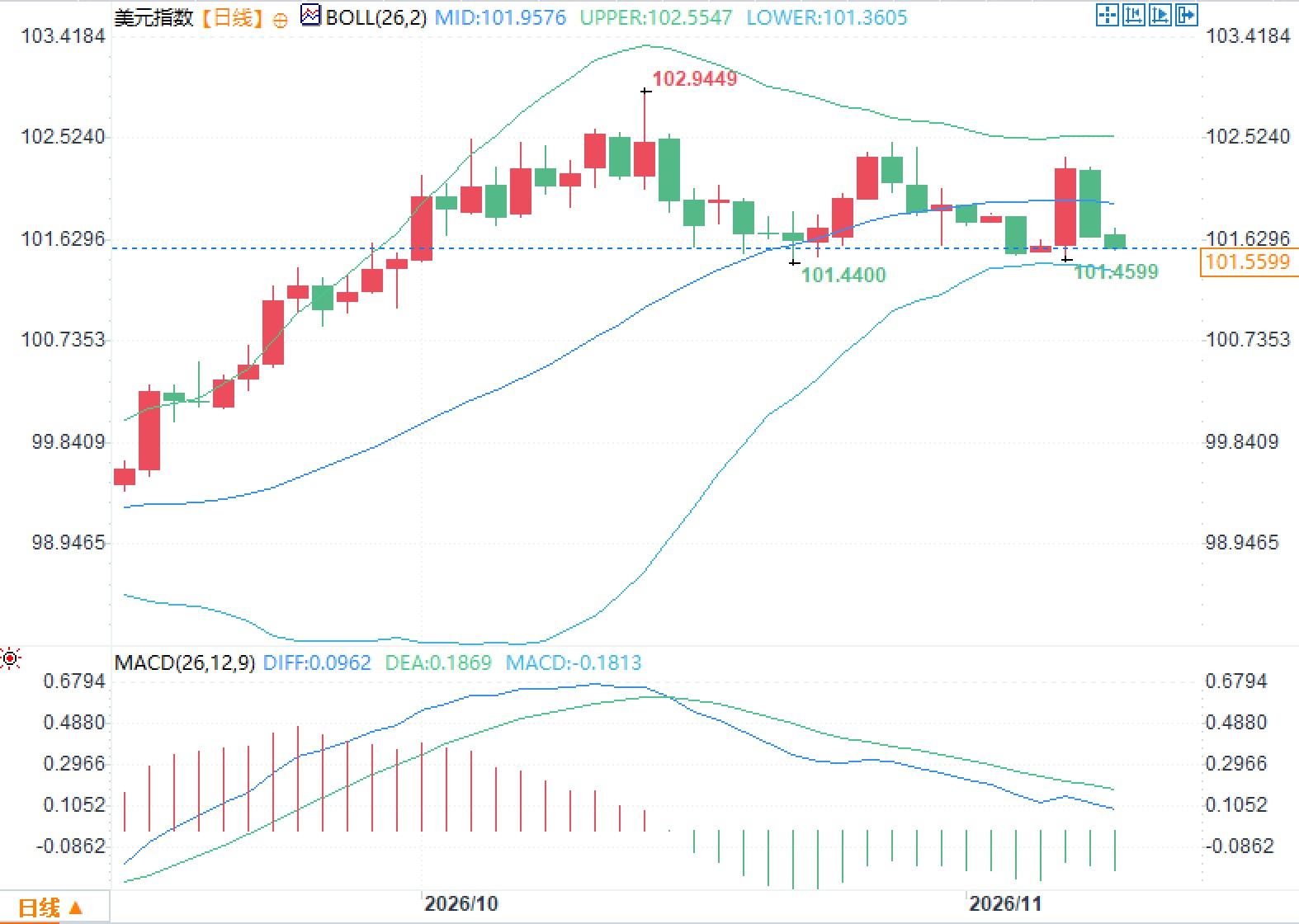
Federal funds futures currently price in an 82% to 84% probability of a 25 basis point rate hike in December, with the current effective federal funds rate at approximately 3.88%. Short-term yield spreads have already partially reflected tightening expectations. The dollar's exchange rate against major currencies has recently led the yield curve, and if the data only meets expectations, it may limit further appreciation. EUR/USD and USD/JPY are highly sensitive to data because they directly reflect differences in relative policy paths. The extent of the decline in housing and transportation service prices will affect the interpretation of the core reading, while the stickiness of service inflation relates to the longer-term path. Single-month data is unlikely to change the trend on its own, and historical experience shows that the policy threshold is high.Key points to observe after data release
Key areas of focus include whether housing costs continue to decline, whether transportation service prices have normalized, and whether core commodity prices are affected by changes in demand. If the month-on-month change meets or slightly falls short of expectations, the Fed may maintain its current path, as the threshold for reassessment is high. Softer data could trigger a re-evaluation of the pace of policy, but this needs to be considered in conjunction with subsequent personal consumption expenditures price indices and other indicators. The foreign exchange market will observe whether the deviation of the dollar from short-term interest rate differentials has narrowed. Whether overall inflationary pressures have truly cooled and are sufficient to influence the calculations at the December meeting remains crucial.Frequently Asked Questions
Question 1: Why wasn't the year-on-year CPI data released this time? Answer: Due to the lack of data collection for October during last year's government shutdown, a comparable base was missing. Therefore, the Bureau of Labor Statistics does not release annual comparisons; the month-on-month change is the primary indicator, and the market estimates the year-on-year level itself. Question 2: How has the market priced in the December Fed meeting? Answer: Federal funds futures indicate an approximately 82% to 84% probability of a 25 basis point rate hike. The current target range for the interest rate is 3.75% to 4%, with an effective interest rate of approximately 3.88%, indicating a relatively high price. Question 3: How do institutions view the impact of the data on policy? Answer: Bank of America believes that a core reading of 0.2% may still support action in December, with only a very soft 0.1% potentially requiring adjustments to the calculation. Other institutions emphasize that the normalization of sub-items such as housing may lead to a moderate slowdown, but the threshold is high.- Risk Warning and Disclaimer
- The market involves risk, and trading may not be suitable for all investors. This article is for reference only and does not constitute personal investment advice, nor does it take into account certain users’ specific investment objectives, financial situation, or other needs. Any investment decisions made based on this information are at your own risk.