Conflicting diplomatic signals from the US and Iran continue to fuel a consolidation pattern in crude oil prices at low levels.
2026-11-12 19:20:29
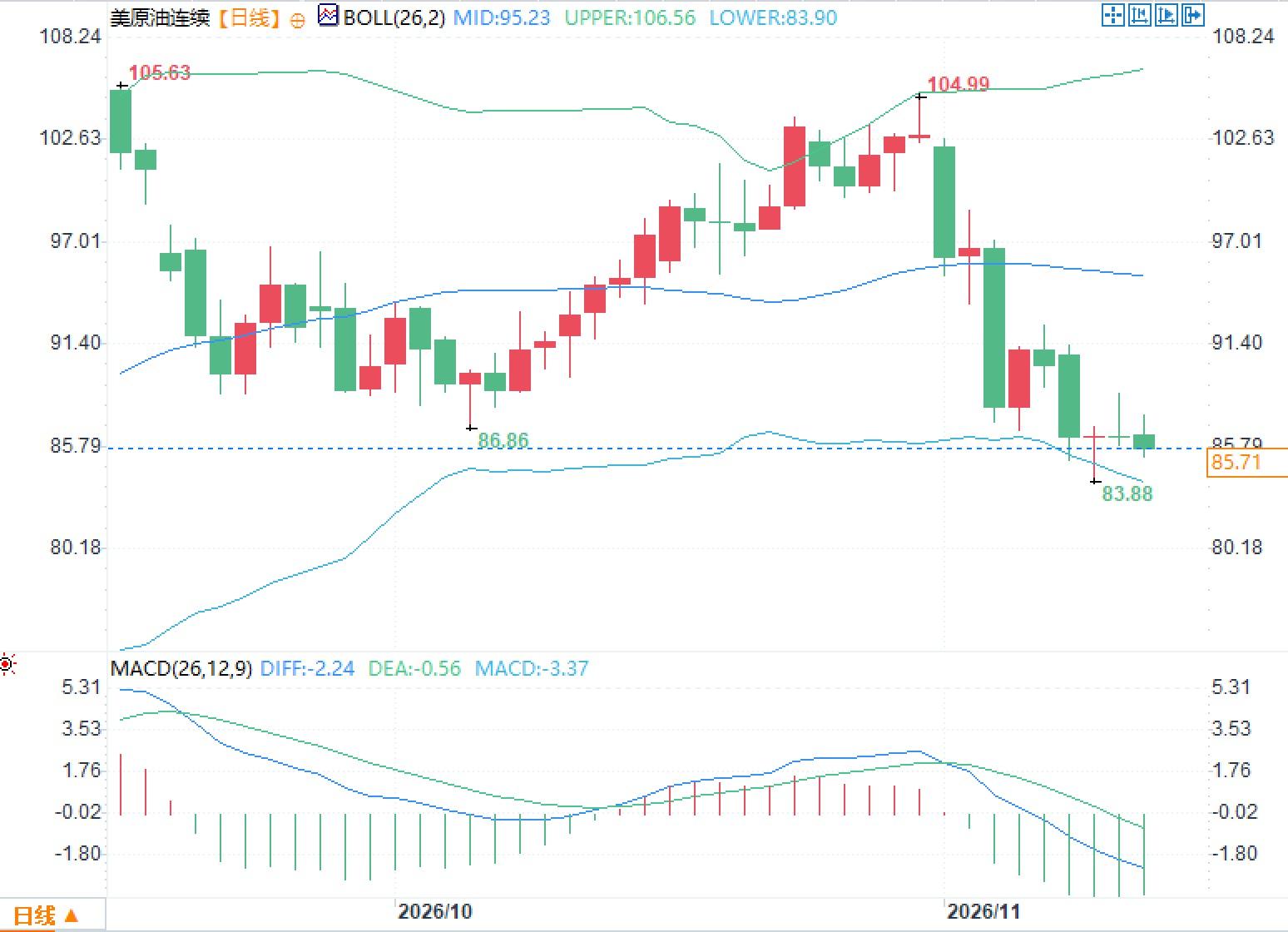
On Thursday, November 12th, the international crude oil market continued to fluctuate near recent lows. US crude oil prices hovered around $85 per barrel, while Brent crude remained around $92 per barrel. The core market driver was the interplay of signals of diplomatic progress between the US and Iran and the risk of potential escalation. Reports indicated that US Vice President Vance was considering face-to-face talks with senior Iranian security officials to push for an end to the current conflict; prices fell after this news was released. Mutual distrust remains significant, with Iran accusing Iran of preparing further military action or increasing economic pressure, and continuing to issue warnings, while reports also emerged regarding navigation systems near the Strait of Hormuz. The overall supply outlook is highly uncertain due to blockade measures and restricted passage through the strait, and prices remain sensitive to any developments that could either de-escalate or trigger an escalation. 
Diplomatic signals and price-sensitive responses
Diplomatic efforts have shown some signs of progress, but no concrete breakthrough has yet materialized. Reports indicate that US Vice President Vance is considering a meeting with Iranian security officials aimed at ending the conflict. Following this news, crude oil prices fell, reflecting the market's pricing in a potential downgrade path. However, Iranian officials continue to express concern about potential military action or increased pressure, warning of possible retaliation against related facilities. The two sides have significant differences in their positions: Iran demands the lifting of the blockade and the release of assets, while Iran emphasizes the need to include nuclear-related issues in the discussions. This contradictory signaling makes it difficult for the market to form stable expectations, with prices fluctuating within a low range; any new development could quickly alter the risk premium.Supply constraints and strait traffic conditions
Supply-side constraints form a crucial foundation for current price support. The US has stated that its blockade measures have prevented Iranian crude oil exports while simultaneously working to maintain the Strait of Hormuz's openness to commercial shipping. Strait traffic is significantly below pre-conflict levels, with some monitoring data indicating that recent visible traffic is only a fraction of normal levels. The disruption to Iranian exports, coupled with adjustments in other regional supplies, is impacting the global balance, resulting in continued tension in physical markets. The simultaneous approach of blockade and ensuring passage makes the supply recovery path highly uncertain. Substantial diplomatic progress could alleviate supply concerns and suppress prices; however, an escalation of the conflict could cause risk premiums to rise again.Price consolidation patterns and indicator characteristics
Prices are consolidating near recent lows, reflecting the tug-of-war between hopes for a downgrade and concerns about an upgrade. The Bollinger Bands show the middle band around $95, with the upper and lower bands defining the recent trading range. The MACD indicator's DIFF and DEA positions, as well as changes in the histogram, reflect a shift in momentum from strong to weak, indicating a period of adjustment. Prices are highly sensitive to news; a significant breakout could lead to a substantial correction, while limited action could result in a short-lived impact. Market participants are focused on balancing the risks of supply disruptions with potential easing measures; any new developments could alter the current consolidation pattern. The combined effect of technical indicators and fundamental news is causing prices to repeatedly test support and resistance levels at these lows.Market Logic Under Uncertainty
The overall market logic revolves around the fluctuations in geopolitical risk premiums. The possibility of diplomatic progress provides downward pressure, but a lack of confidence and persistent warnings limit further declines. Supply remains supported by blockades and strait restrictions, and physical balance has not yet fully recovered. Prices react directly and rapidly to hopes for downgrades and fears of escalation, reflecting crude oil's nature as a risk-sensitive commodity. Future developments depend on whether both sides reach verifiable concrete arrangements, rather than simply issuing signals. The market will continue to assess the speed of supply recovery and changes in the intensity of conflict to determine the sustainability of risk premiums.Frequently Asked Questions
Question 1: Why is crude oil price currently consolidating at low levels? Answer: Mainly due to uncertainty in diplomatic signals between the US and Iran. De-escalation hopes are putting downward pressure on prices, while escalation risks and supply constraints are providing support, leading to repeated price consolidation at low levels. Question 2: How does the situation in the Strait of Hormuz affect the supply outlook? Answer: Traffic volume is below normal levels. The US maintaining the blockade to prevent Iranian exports while ensuring other shipping routes complicates and makes the supply recovery path uncertain. Question 3: What is the market's reaction logic to potential news of talks? Answer: Related reports triggered a price decline, reflecting expectations of potential supply easing, but mutual distrust and differing conditions limit further reaction magnitude.- Risk Warning and Disclaimer
- The market involves risk, and trading may not be suitable for all investors. This article is for reference only and does not constitute personal investment advice, nor does it take into account certain users’ specific investment objectives, financial situation, or other needs. Any investment decisions made based on this information are at your own risk.