Gold's rebound momentum has faded, but market pricing in a 50-basis-point rate hike by the Federal Reserve remains uncertain.
2026-11-12 18:12:28
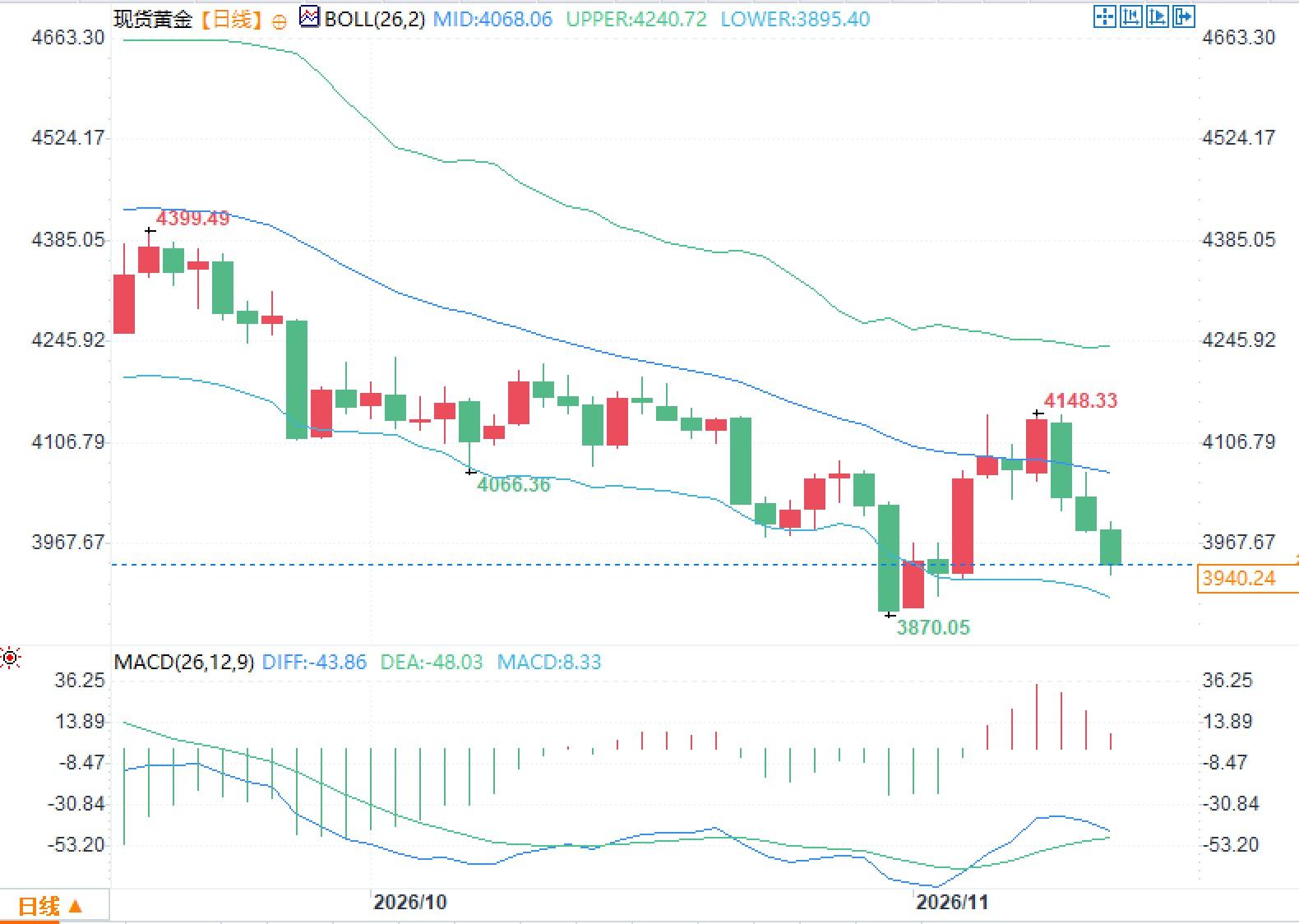
On Thursday, November 12th, the rebound momentum of spot gold following the US midterm elections had been completely wiped out, with prices fluctuating between $3,900 and $4,000 per ounce, and the latest quote near $3,940 per ounce. Rising real yields and a stronger dollar continued to exert dominant pressure, and the market's repricing of the Fed's December policy path is still unfolding. Better-than-expected inflation data coupled with hawkish statements from officials increased the holding costs of non-interest-bearing assets; meanwhile, negotiations on Middle East-related conflicts remained deadlocked, and the potential impact of both safe-haven and stagflation paths was still being reassessed by the market. Overall, the environment indicates that precious metals are simultaneously facing a dual test from interest rate and geopolitical factors. 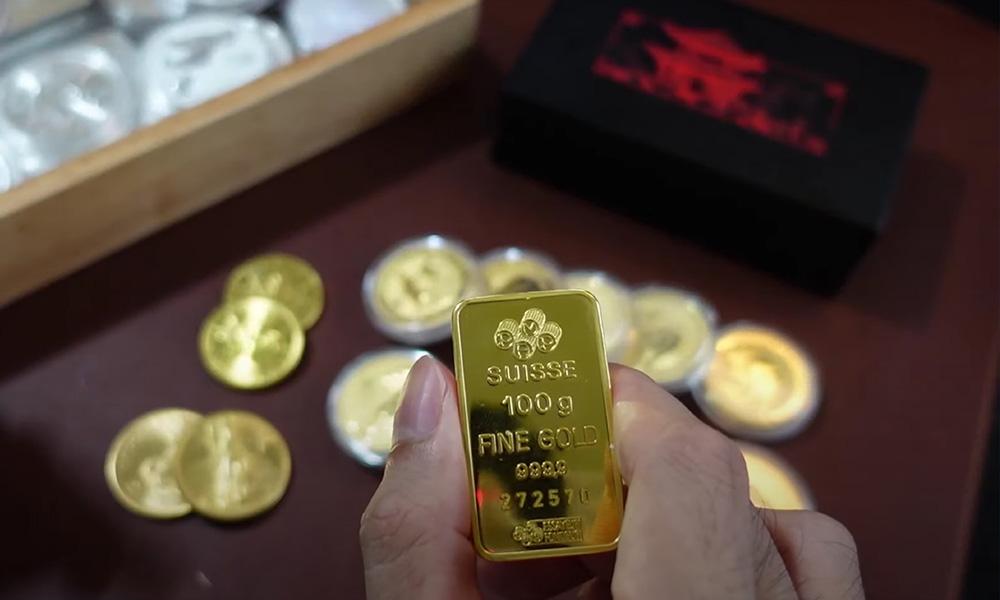
Fed policy repricing and real yield pressure
Federal Reserve Governor Christopher Waller recently stated that even if inflation data improves, he still favors supporting a rate hike at the December meeting; if the data becomes even more overheated, he would consider a larger 50-basis-point adjustment. This statement directly prompted the market to repric the need for a tighter policy. The subsequent release of the US October CPI showed an overall month-on-month increase of 0.4%, with core inflation remaining at 0.3% for the third consecutive month, both higher than market expectations, further strengthening the probability of a rate hike. Cleveland Fed President Beth Hammark also did not close the door to further adjustments after the data release, emphasizing that policy needs to shift to a restrictive stance to control inflation. Currently, the market is pricing in a 50-basis-point rate hike at around 12%, and this probability could be revised upwards if more officials follow suit. As a result, real yields have continued to rise, with the 10-year real yield now around 2.66%, increasing the opportunity cost of holding non-interest-bearing assets and directly suppressing gold valuations.Inflation stickiness on the transmission of cost structure of precious metals
The fact that US core inflation has remained at 0.3% month-on-month for three consecutive months indicates that price pressures are somewhat sticky, rather than simply driven by short-term energy fluctuations. With nominal and real yields rising in tandem, gold, as a zero-interest asset, has become less attractive. Historical experience shows that every increase in real yields often corresponds to a significant rise in the cost of holding gold, an effect amplified by the recent simultaneous strengthening of the US dollar. The brief rebound following the US midterm elections has been fully priced in, with prices retracing by more than $200/ounce. If inflation expectations continue to exceed the Fed's 2% target, it will prolong the high-interest-rate environment, thereby affecting the allocation pace of institutional and physical demand. In the current environment, precious metal prices reflect changes in opportunity costs more than simply a safe-haven premium.The potential impact of the Middle East conflict stalemate and the dual path
Negotiations regarding the conflict are currently at a standstill. US Vice President Vance is considering face-to-face meetings with senior Iranian security officials in an attempt to de-escalate the situation, but mutual trust is insufficient, and the market generally believes that an agreement is still far from being reached. Iranian officials believe the US may continue to exert pressure through military or economic means, further increasing uncertainty. If the conflict escalates, inflation expectations may coincide with a slowdown in growth, creating a stagflation environment; historically, such a combination has often supported gold prices. If a diplomatic breakthrough occurs, easing inflation concerns may lead the market to repric the easing path, which could also alleviate short-term pressure on gold. Neither path has a clear direction; the market is currently more focused on subsequent statements from Federal Reserve officials and marginal changes in the Middle East situation than on a single variable.Observation of Spot Gold Market Structure and Technical Indicators
From a daily chart perspective, spot gold prices are currently below the middle Bollinger Band (approximately $4068/oz), with the upper band around $4240/oz and the lower band around $3895/oz, indicating that prices are trading in the lower half of the range. The MACD indicator shows a DIFF of -43.86, a DEA of -48.03, and a histogram of +8.33. While the histogram has turned positive, the absolute value is still relatively small, reflecting weak short-term momentum.Frequently Asked Questions
Question 1: How does rising real yields specifically affect the holding cost of spot gold? Answer: Rising real yields directly increase the opportunity cost of holding non-interest-bearing assets. When the 10-year real yield rises to around 2.66%, investors forgo more real returns, and funds tend to shift towards interest-bearing assets, thus putting sustained pressure on gold valuations rather than simple price fluctuations. Question 2: Why did the statements from Waller and Hammark have a key impact on the probability of a December rate hike? Answer: Waller explicitly supported a rate hike and opened up a 50 basis point option, while Hammark emphasized restrictive policies. Their statements, coupled with higher-than-expected CPI, led the market to incorporate a larger adjustment into its pricing. The current probability of a 50 basis point hike (around 12%) still has room for change, depending on whether more officials follow suit. Question 3: Why might the two paths of conflict in the Middle East provide different support for gold? Answer: An escalation path could lead to a stagflation combination, with rising inflation expectations and growth concerns coexisting, historically favorable for gold; a détente path could trigger a repricing of easing, easing short-term interest rate pressures. The current stalemate means neither path has materialized, and the market remains on the sidelines.- Risk Warning and Disclaimer
- The market involves risk, and trading may not be suitable for all investors. This article is for reference only and does not constitute personal investment advice, nor does it take into account certain users’ specific investment objectives, financial situation, or other needs. Any investment decisions made based on this information are at your own risk.