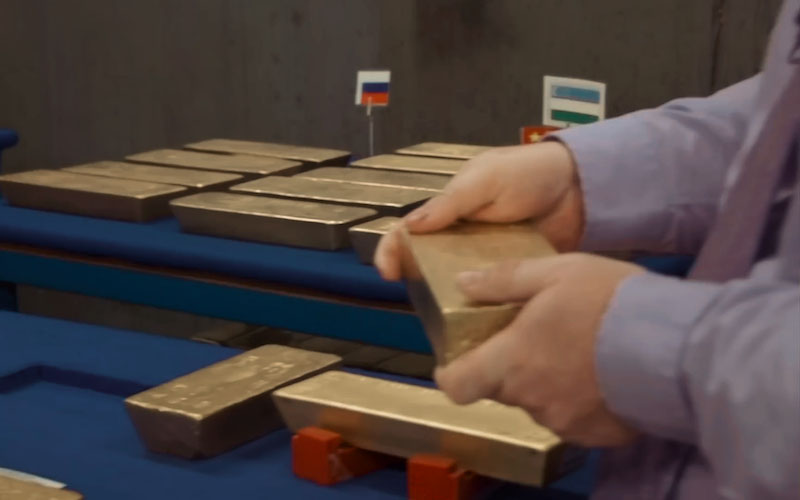
Gold prices may see $3.3 billion in buying after a nearly 10% drop? Index rebalancing could be the first positive factor for gold in 2027.
2026-11-13 09:52:31
The gold market has recently struggled to attract investor interest, with prices falling sharply below $4,000 per ounce. On Thursday (November 12), spot gold briefly touched $3,852 per ounce, while COMEX gold futures fell to $3,856 per ounce, reflecting overall weak market sentiment. However, a report released by Societe Generale on Thursday indicated that as funds rebalance commodity indices at the start of the new year, gold may receive over $3 billion in buying support, a move that could provide a temporary respite for the weak precious metals market. Overall, the current situation presents both downward pressure on gold prices and a correction in index weightings; short-term fund flows and changes in medium- to long-term allocation positions form the core clues for understanding this event. 
I. Market Background: Gold Prices Under Pressure as Rebalancing Window Approaches
The gold market has been weak this year, with prices falling by about 9.5% since the beginning of the year. Investor interest has failed to recover significantly, and gold prices have fallen below $4,000 per ounce. Societe Generale commodities analysts stated in a report on Thursday that this sharp decline could bring more than $3 billion in buying in the new year, as funds need to rebalance their exposure to broader commodity benchmarks, including the BCOM commodity index. Analysts expect gold to be the biggest beneficiary of this annual rebalancing, which is expected to take place from January 8th to 14th, 2027. Meanwhile, silver may also see inflows of approximately $2.5 billion. In other words, the price decline does not only bring negative sentiment but also translates into passive fund allocation demand through index weighting mechanisms.II. Where does the buying come from: Mechanical repair after the imbalance of index weights
Societe Generale explained that the anticipated buying was largely a mechanical consequence of this year's commodity market performance. While gold and silver prices were under pressure, the continued conflict in the Middle East led to a sharp rise in energy prices, resulting in a significant imbalance in commodity index weightings. Funds tracking these benchmarks needed to reduce their exposure to high-performing commodities and increase their allocation to underperforming assets to restore their portfolios to their target weights. The bank estimates that gold's weighting in the BCOM needs to increase by about 3 percentage points from its current level, while its weighting in the S&P GSCI will rise by about 1 percentage point. Therefore, the so-called buying was not entirely due to investors actively bullish on gold, but rather a passive correction of weighting deviations under the index rebalancing rules; this flow of funds is highly mechanical and phased.III. Fund Flow: Shifting and Concentration Pressure Between Futures Contracts
While the rebalancing is expected to generate significant buying interest, analysts point out that the impact will be concentrated on specific futures contracts. Societe Generale estimates that index funds will sell approximately $17.2 billion in February gold futures while buying approximately $20.5 billion in April futures, resulting in a net inflow of about $3.3 billion. The bank also expects April gold futures purchases to account for about 56% of typical daily trading volume during the rebalancing period, highlighting the potential for concentrated buying pressure. In other words, the market is not seeing evenly distributed buying across all gold assets, but rather a concentrated effect through futures contract rollovers and weighting adjustments; therefore, short-term trading volume and price volatility may be amplified around specific contracts.IV. Investor interest and index asset size remain resilient.
Despite gold's struggles, analysts point out that investor interest remains quite resilient. Societe Generale notes that while gold has received anticipated support, broader investor interest in commodities has increased significantly this year. According to analysts, assets tracking the two major commodity indices were approximately $147 billion at the beginning of 2026, rising to over $200 billion at one point during the year before falling back to around $160 billion in November. The bank estimates that assets linked to the BCOM index are currently around $112 billion, while those tracking the GSCI are around $47 billion. These figures suggest that while commodity index funding has fluctuated, it remains at a relatively high level overall, providing a solid financial foundation for rebalancing buying in gold and silver.V. Longer-Term Perspective: The Rise of Precious Metals in Commodity Portfolios
Looking ahead to the January rebalancing, analysts point out that precious metals have become a more important component of broader commodity portfolios. In the GSCI, the target weighting for precious metals has increased from 4.1% in 2023 to 10% in 2027, thanks to the long-term strength of gold prices and improved market liquidity. In September, Societe Generale released its updated fourth-quarter multi-asset portfolio strategy, stating that it would maintain a 10% position in gold and a 10% position in broader commodities, unchanged from the third quarter. Therefore, the $3.3 billion in buying resulting from index rebalancing is only a short-term clue; the deeper change is the rising strategic importance of precious metals in the commodity allocation framework. Overall, the Societe Generale report reveals a seemingly contradictory yet logically consistent with the index mechanism: gold's weighting decreases due to falling prices, but funds need to replenish their gold exposure during rebalancing, resulting in a net buying of approximately $3.3 billion, while silver may also receive approximately $2.5 billion in inflows. In the short term, funds will likely shift between February and April gold futures contracts, with the April contract potentially facing concentrated buying pressure. In the medium term, commodity index assets remain resilient. In the long term, the increased target weighting of precious metals in the GSCI indicates that their allocation value has not disappeared despite temporary price weakness. As of 09:48 Beijing time, spot gold is trading at $3908.35 per ounce.- Risk Warning and Disclaimer
- The market involves risk, and trading may not be suitable for all investors. This article is for reference only and does not constitute personal investment advice, nor does it take into account certain users’ specific investment objectives, financial situation, or other needs. Any investment decisions made based on this information are at your own risk.