November 16th Financial Breakfast: Markets repricing the Fed's path puts short-term pressure on gold prices; the US's third aircraft carrier is set to enter the Middle East, keeping the oil market on edge.
2026-11-16 07:16:29
On Monday (November 16, Beijing time) in early Asian trading, spot gold was trading around $3,887.75 per ounce. Rising oil prices triggered concerns about rising inflation and persistently high interest rates, and the market is still repricing the Fed's policy path and inflation risks, putting pressure on gold prices. US crude oil was trading around $88.23 per ounce. Although the market believes that the risk premium from the Middle East situation has subsided, the Houthi rebels claimed to have attacked Riyadh airport and Saudi oil pipeline pumping stations over the weekend, and the US military is still prepared to escalate its operations against Iraq, with a third aircraft carrier set to enter the Middle East and the option of striking nuclear facilities remaining. 
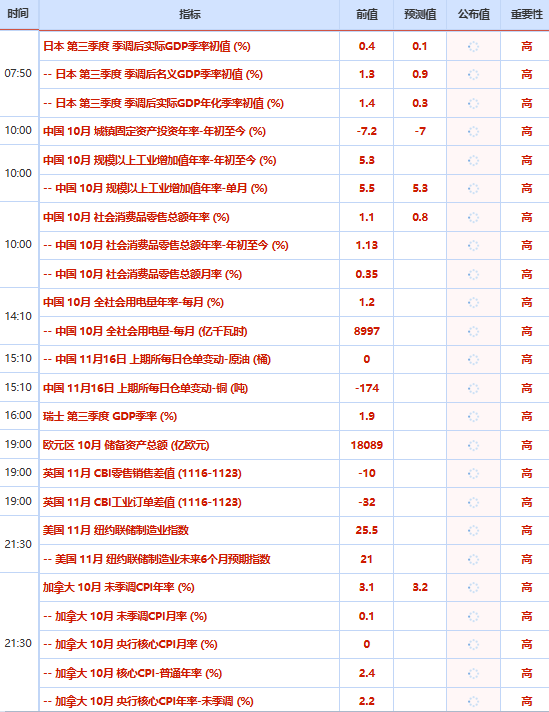
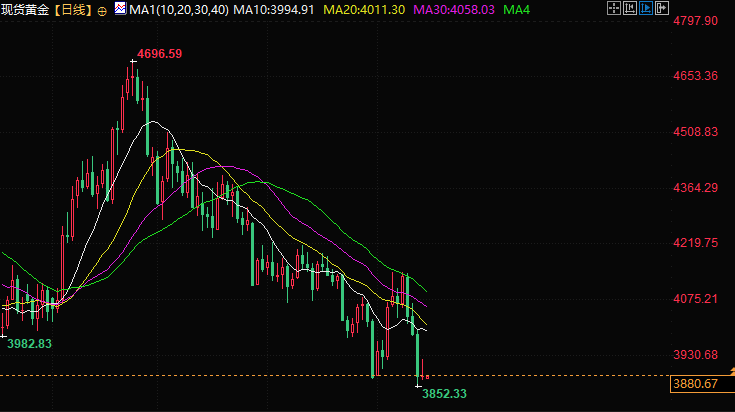 Data shows that the US final demand PPI rose 0.3% month-on-month in October, lower than the estimated 0.4%, while the September increase was revised upward to 1.4%. Independent analyst Tai Wong said that as the bond market continues to be under pressure under the Fed's hawkish stance, gold will find it difficult to hold onto the initial gains after the PPI was released. The core PPI rose 0.3% month-on-month, which is still too high for policymakers. With rising oil prices triggering further inflation and concerns about high interest rates, Wong also said that gold prices may find it difficult to return above $4,000 amid hawkish comments from Fed officials.
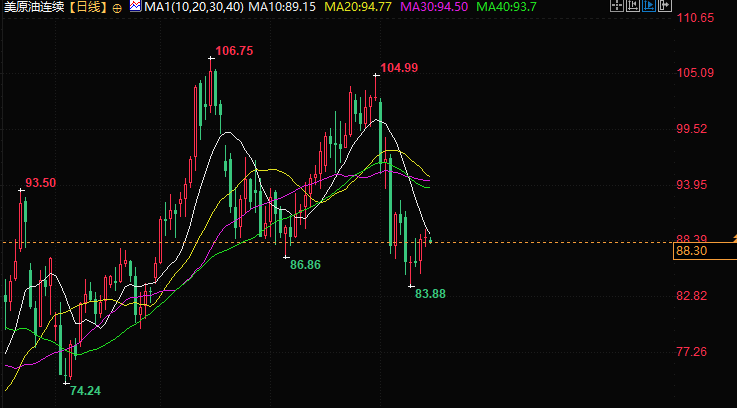 The International Energy Agency (IEA) predicts a widening global oil supply glut, and the market's perception that the US will continue to increase economic pressure on Iran has further diminished the risk premium associated with the Middle East situation. Price Futures Group senior analyst Flynn stated that a few months ago, the biggest concern in the market was a supply shortage, but now it has shifted to a supply glut. US President Trump has stated that ending the war does not require a deal with Iran. Lipow Oil Associates president Lipow noted that the market is being pulled by two forces: increased Middle Eastern supply on one hand, and unchanged US negotiating stance with Iran on the other, with Iran still refusing to allow inspectors into the country. Sachdwa, founder of research firm SS WealthStreet in New Delhi, stated that increased US crude oil and fuel inventories reflect signs of slowing demand, also putting pressure on oil prices.
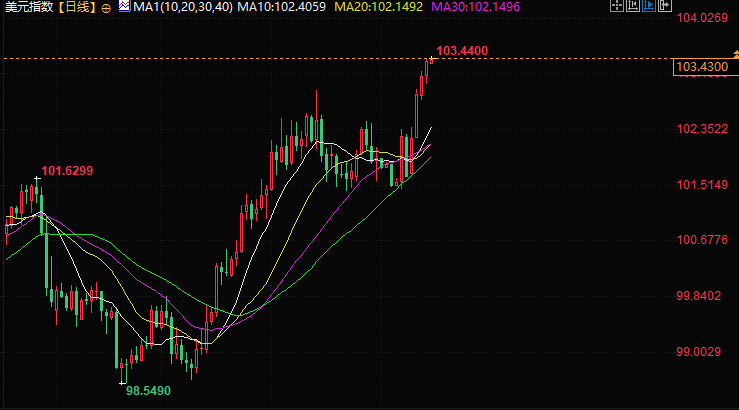 Marc Chandler, chief market strategist at Bannockburn Global Forex, said the dollar's continued strength was mainly due to a strong jobs report, faster CPI growth, and hawkish comments from Fed officials such as Williams and Waller. CME's FedWatch tool showed traders expected a roughly 90% probability of a 25 basis point rate hike next month. The dollar fell 0.08% against the yen on Friday, closing at 159.71, after hitting a two-month high of 160.18 during the session. Traders were closely watching for potential foreign exchange intervention from Tokyo, as the approaching 160 level would significantly increase the pressure on the Japanese Ministry of Finance. Japanese Finance Minister Satsuki Katayama stated on Friday that the government would respond appropriately to exchange rate fluctuations, a statement seen as a verbal warning against speculative devaluation. The euro fell 0.3% against the dollar on Friday, closing at 1.1021, after hitting its lowest level against the dollar since April 2025 at 1.1019, marking its fourth consecutive week of decline. The euro's weakness was influenced by both a stronger dollar and market repricing of the European Central Bank's rate hike path.
Key Focus Today
stock market
U.S. stocks closed mixed on Friday. The Dow Jones Industrial Average rose 0.10% to 52,347.55 points, the S&P 500 fell 0.40% to 7,561.67 points, and the Nasdaq Composite fell 0.91% to 25,136.27 points. However, the three major indexes still rose 2.07%, 2.51%, and 2.27% respectively for the week. The leadership uncertainty triggered by the resignation of Nvidia CEO Jensen Huang dragged down technology stocks. The S&P 500 Technology Index fell 1.7%, the worst performing of the 11 sectors. Nvidia fell 2%, marking its sixth consecutive week of declines, its longest weekly losing streak since October 2012. The Financial Times reported that Nvidia's board of directors had contacted Arm CEO Rene Haas as a potential successor. Market concerns arose about the sustainability of AI investment themes and the pillars of the current bull market after Huang's departure. The Democratic Party's landslide victory in the midterm elections also exacerbated regulatory concerns. The Philadelphia Semiconductor Index fell 3.4%, with AMD down 8.8%, Broadcom down 4.8%, CoreWeave and Nebius closing lower, IREN down 6.7%, and Applied Digital down 5.8%. Market focus is on Anthropic's IPO this week. Microsoft bucked the trend, rising 0.2%. Airline stocks fell in late trading after the FAA suspended all outbound flights nationwide due to special circumstances and safety reasons. Regarding inflation, October's PPI rose slightly less than expected month-on-month but increased by 6.5% year-on-year, the largest annual increase since November 2022. The market has fully priced in a Fed rate hike of at least 25 basis points in December, with a probability of about 10% for a 50 basis point hike. Fed officials such as Daly and Collins support further tightening.Gold Market
Spot gold rose slightly on Friday, closing at $3,879.92 per ounce, but fell 4.69% for the week. Gold prices also hit a one-year low of $3,852.33 per ounce last week, as rising oil prices fueled concerns about rising inflation and persistently high interest rates. The market is still repricing the Federal Reserve's policy path and inflation risks. Data shows that the US final demand PPI rose 0.3% month-on-month in October, lower than the estimated 0.4%, while the September increase was revised upward to 1.4%. Independent analyst Tai Wong said that as the bond market continues to be under pressure under the Fed's hawkish stance, gold will find it difficult to hold onto the initial gains after the PPI was released. The core PPI rose 0.3% month-on-month, which is still too high for policymakers. With rising oil prices triggering further inflation and concerns about high interest rates, Wong also said that gold prices may find it difficult to return above $4,000 amid hawkish comments from Fed officials.oil market
Oil prices rose on Friday, with WTI crude up 0.2% to settle at $88.92 a barrel and Brent crude up 0.39% to settle at $96.12 a barrel. However, both benchmarks fell on the weekly chart, with WTI crude down 1.57% and Brent crude down 1.91%. Market sentiment has clearly shifted from fears of supply disruptions to concerns about oversupply. The International Energy Agency (IEA) predicts a widening global oil supply glut, and the market's perception that the US will continue to increase economic pressure on Iran has further diminished the risk premium associated with the Middle East situation. Price Futures Group senior analyst Flynn stated that a few months ago, the biggest concern in the market was a supply shortage, but now it has shifted to a supply glut. US President Trump has stated that ending the war does not require a deal with Iran. Lipow Oil Associates president Lipow noted that the market is being pulled by two forces: increased Middle Eastern supply on one hand, and unchanged US negotiating stance with Iran on the other, with Iran still refusing to allow inspectors into the country. Sachdwa, founder of research firm SS WealthStreet in New Delhi, stated that increased US crude oil and fuel inventories reflect signs of slowing demand, also putting pressure on oil prices.Foreign exchange market
The US dollar index rose 0.22% on Friday to close at 103.40, a 19-month high of 103.43. It also rose 1.09% for the week, its biggest weekly gain in two months and its third consecutive week of increases. The main driver was rising market expectations of a significant interest rate hike by the Federal Reserve. Hawkish comments from Fed officials, coupled with stronger-than-expected US inflation data, led traders to weigh whether a larger-than-usual rate hike would be implemented next month. Marc Chandler, chief market strategist at Bannockburn Global Forex, said the dollar's continued strength was mainly due to a strong jobs report, faster CPI growth, and hawkish comments from Fed officials such as Williams and Waller. CME's FedWatch tool showed traders expected a roughly 90% probability of a 25 basis point rate hike next month. The dollar fell 0.08% against the yen on Friday, closing at 159.71, after hitting a two-month high of 160.18 during the session. Traders were closely watching for potential foreign exchange intervention from Tokyo, as the approaching 160 level would significantly increase the pressure on the Japanese Ministry of Finance. Japanese Finance Minister Satsuki Katayama stated on Friday that the government would respond appropriately to exchange rate fluctuations, a statement seen as a verbal warning against speculative devaluation. The euro fell 0.3% against the dollar on Friday, closing at 1.1021, after hitting its lowest level against the dollar since April 2025 at 1.1019, marking its fourth consecutive week of decline. The euro's weakness was influenced by both a stronger dollar and market repricing of the European Central Bank's rate hike path.International News
Iran: Agreement Reached with Two Coastal States on Strait of Hormuz Passage According to Iran's Tasnim News Agency on November 15, Qashqavi, spokesman for the Iranian Parliament's National Security and Foreign Policy Committee, stated that the committee has completed its professional review of the Strait of Hormuz proposal and reached an agreement with two coastal states regarding the passage route. The agreed-upon route will initially be implemented temporarily before becoming a permanent arrangement. It is currently awaiting inclusion on the plenary session agenda by the parliamentary presidium and a vote. Qashqavi also stated that Iran has never initiated aggression and is currently in a defensive posture; according to international law, Iran considers itself to be at war in both the Persian Gulf and the Gulf of Oman. (Xinhua) Iran Says Countries That Harm It Must Bear Responsibility Iranian Foreign Ministry spokesman Bagaei stated on November 15 that certain regional countries actively participated in the US-Israeli military aggression against Iran, including providing weapons, political support, sending personnel, and opening their airspace, territory, and territorial waters for their use—all of which are well-documented. For Iran, this has evolved into a legitimate historical and legal claim. Therefore, the claims by these countries to demand compensation from Iran are completely unfounded and untenable. According to established principles of international law, if a country provides its territory to another for use in acts of aggression against a third country, that country is directly considered an accomplice. Therefore, countries that cause harm to Iran must bear corresponding responsibility. (CCTV International News) Iranian Parliament Speaker Says He Doesn't Care Whether the US Chooses Negotiation or War; Scope of the Conflict Determined by the Iranian Armed Forces Iranian Parliament Speaker Ghalibaf stated on Sunday that Iran will not remain in a state of neither war nor peace. Ghalibaf said Tehran doesn't care whether Washington wants negotiations or war, but if the US accepts the seven conditions proposed by Iran, the path to an agreement will open. He stated that if the Americans make a mistake this time, the geographical scope of the conflict will be determined by the capabilities and will of the Iranian armed forces. He also stated that the disclosure of underground missile cities during the war is a valuable achievement and a sign that the strategic landscape in the region is changing. US Military Still Ready to Escalate Actions Against Iran: Third Aircraft Carrier to Enter the Middle East; Nuclear Facility Strike Option Remains Despite Trump considering postponing the attack, the US military remains prepared to escalate military operations if necessary. Three people familiar with U.S. military deployment plans revealed that a third aircraft carrier will enter the Middle East in the coming days. This carrier was originally intended to replace one of the two currently deployed in the region, and all three could remain in the Middle East simultaneously if necessary. Meanwhile, Trump retains the option to strike Iran's underground nuclear facilities; however, given the U.S. has previously attacked these facilities, the effectiveness of further strikes remains unclear. U.S. intelligence agencies also assess that a renewed military attack would not significantly alter Iran's demands in negotiations. Trump may postpone a military strike against Iran, provided that Iran and the Houthi rebels cease their provocations. Three sources familiar with the matter said that President Trump recently told senior advisors that he might postpone a military strike against Iran if Iran and its supported Houthi rebels in Yemen refrain from new provocative actions against the U.S. Trump has recently wavered between escalating the war, launching a new round of attacks, and gradually ending hostilities, and currently appears undecided on how to resolve the conflict initiated by the U.S. and Israel in February. After meeting with his national security advisor and receiving a series of intelligence briefings, Trump indicated he was considering a pause in military strikes; furthermore, he expressed some agreement with the position of his Middle Eastern allies urging them to avoid a renewed full-scale war. International Energy Agency: Member States to Accelerate Release of Emergency Oil Reserves by End of February, Totaling Approximately 420 Million Barrels The International Energy Agency (IEA) stated that member countries will release approximately 71 million barrels of emergency oil and petroleum product reserves by the end of February 2027, roughly double the pace of releases in September and October. This release includes approximately 15 million barrels of diesel, planned for market release by the end of February, almost entirely from French and German government reserves; the release pace in January was 4 to 5 million barrels, slowing down in February. This is part of a record reserve release plan. The plan was first announced in March after the Iran war disrupted Middle Eastern supplies and caused oil prices to surge; Europe is expected to release a total of 33 million barrels, mainly from Germany and France; the US Strategic Petroleum Reserve will release approximately 37 million barrels; government reserves will account for at least 85% of the total planned release. In March of this year, the IEA announced that it would release up to 400 million barrels of strategic reserves. Since then, member countries have released 349 million barrels. If the current plan is implemented as scheduled, the total amount of emergency reserves released by IEA member countries will reach approximately 420 million barrels, exceeding the 400 million barrels pledged in March.Domestic News
The People's Bank of China raised the reserve requirement ratio for foreign exchange deposits at financial institutions to 6% today. The ratio has increased from 4% to 6%. This increase will help promote a balance between supply and demand in the foreign exchange market and break the self-fulfilling prophecy of RMB appreciation expectations. (CCTV News) China and the US held their first meeting of the Trade Council under the China-US Economic and Trade Consultation Mechanism on November 13 via video conference. Guided by the important consensus reached at the meeting between the Chinese and US leaders, both sides conducted frank, in-depth, and constructive exchanges on tariffs, the "$30 billion for $30 billion" reciprocal tariff reduction arrangement, agricultural trade, and other issues of mutual concern, focusing on implementing the outcomes of previous China-US economic and trade consultations. Both sides will continue to strengthen communication through the Trade Council, promote the resolution of their respective economic and trade concerns, continuously expand the list of cooperation areas, reduce the list of issues, and help build a constructive strategic and stable China-US relationship based on respect, fairness, and reciprocity. (Ministry of Commerce)- Risk Warning and Disclaimer
- The market involves risk, and trading may not be suitable for all investors. This article is for reference only and does not constitute personal investment advice, nor does it take into account certain users’ specific investment objectives, financial situation, or other needs. Any investment decisions made based on this information are at your own risk.