Warsh issues a turning point warning: The AI revolution is forcing the Federal Reserve to re-answer the interest rate question.
2026-11-17 09:38:30
Artificial intelligence is encroaching on the core of the economy, and the Federal Reserve has begun preparing for the potential shocks. Federal Reserve Chairman Kevin Warsh convened a meeting in San Francisco on Monday (November 17th) to discuss the impact of AI on productivity, employment, inflation, and interest rates. He judged that the US economy is at a critical turning point, but there are still no clear answers as to when and how the economy will turn around. This meeting revealed both the Fed's sense of urgency in the face of new technologies and Warsh's desire to leverage external experts to help the Fed understand the AI revolution. Overall, this was not an ordinary discussion, but rather the Fed's attempt to clarify what AI truly means before it can fundamentally rewrite the economy. 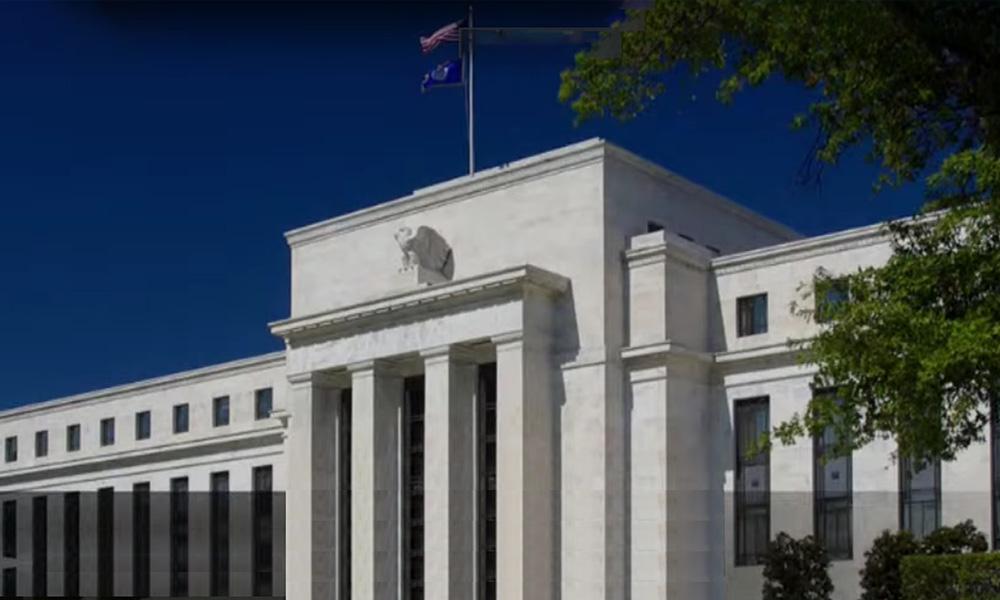
I. The Federal Reserve at a Turning Point: Warsh Brings the Issue Public
At the meeting, Warsh stated, "We are at a critical turning point for the U.S. economy." The weight of this statement lies in the fact that it came from the Federal Reserve Chairman, not from a tech company or think tank. The AI working group meeting allowed Warsh to publicly raise questions Americans would ultimately expect him to answer: Will AI cause mass white-collar unemployment and change how prices and interest rates operate? The article states that Warsh hinted at his direction on some private views but essentially left speculation to the expert panel. With technology advancing rapidly, he could no longer delay providing his answers for much longer. Meanwhile, AI lab Anthropic plans to price its initial public offering on Wednesday, potentially raising up to $64 billion based on a $1.4 trillion valuation. The massive spending by AI companies is prompting the Federal Reserve to consider raising interest rates in December to slow inflation as the tech sector fuels the economy. On the other hand, Americans are becoming increasingly averse to certain aspects of AI; in the November 3rd midterm elections, voters passed a series of state-level measures aimed at slowing the construction of data centers, which are crucial for powering AI.II. An Unusual Meeting: External Experts Enter the Federal Reserve's Vision
This event was unusual for the Federal Reserve. The Fed employs a small group of PhD economists who are typically quick to offer their opinions on anything. But Warsh, a longtime critic of the Fed's closed and outdated approach, chose to bring in expertise from outside the institution to help the Fed think about the impact of AI on productivity and employment. Warsh formed an AI task force, along with four other task forces responsible for different aspects of Fed policymaking. On Monday, Warsh chaired three of the four sessions and participated in speaker selection. Of the three formal members of the task forces, venture capitalist Marc Andreessen spoke; he and Warsh's wife were classmates at Stanford University and longtime friends. Stanford economist Chad Jones, currently on leave working at Anthropic, was unable to speak due to the company's pre-IPO quiet period. Xbox CEO Asha Sharma did not attend. The event also featured Gina Raimundo, one of the few prominent Democrats willing to publicly oppose the anti-datacenter trend. She is a former Commerce Secretary under Biden and former Governor of Rhode Island. Raimondo said the passage of so many anti-data center measures in the midterm elections was "a very disturbing sign," and that blocking AI "would be very bad for the U.S. and for those who voted for these measures." Warsh did not say whether he agreed with this view, nor how this would translate into monetary policy.III. The AI-Powered "China Shock": Service Sector Becomes the Focus
Anderson is extremely optimistic about the prospects of AI as a technology, but believes the government will not allow Americans to fully experience its full potential. He says that strict regulations in sectors like healthcare and education mean that technology cannot replace jobs in these industries. Anderson states that in a free market economy, we might see the extremely rapid job replacement scenario that people talk about, "but we've basically banned the kind of career transitions that visionaries and doomsday theorists are talking about." Walsh repeatedly returns to an economic scenario drawing on past experience, the so-called "China shock." After China joined the World Trade Organization in 2001 and entered the low-cost manufacturing market, Americans saw clothing and furniture prices plummet, but at the cost of severe unemployment. A widely cited estimate found that the U.S. lost 1 million manufacturing jobs and a total of 2.4 million jobs in the following years. Walsh suggests to the attendees that widespread AI adoption could create its own "China shock," this time focused on service sector workers. He says he doesn't want to be too definitive, but if the "China shock" has depressed U.S. prices for goods over the past generation or a generation and a half, then new technological ideas might do something to the service sector. In other words, AI may perform legal or administrative tasks at a lower cost than humans, which could lower prices but also cause many people to lose their jobs. Warsh asked attendees whether deflation should be expected in the medium term because AI could impact the service sector. Most believed it was possible, which could mean the Federal Reserve might eventually want to lower interest rates in the long run.IV. From the Conference Table to Monetary Policy: How Far Away is the Answer?
However, there are still many steps between the working group's discussions and changes in Federal Reserve policy. First, the three working group members need to compile their views into a report and submit it to Warsh in the coming months. Then, the Federal Reserve itself needs to debate these findings and decide whether and how to use them to shape monetary policy. But as AI grows stronger, the Federal Reserve may need to make a decision sooner rather than later. Ultimately, it requires Warsh and his Fed colleagues to be confident in the answer. In other words, while the impact of AI on the economy has entered the Federal Reserve's purview, there are still institutional procedures and internal consensus hurdles before it can truly change the path of interest rates.Summarize
Overall, the core of this report isn't "who will immediately lose their jobs due to AI," but rather that the Federal Reserve is being forced to answer a more fundamental question in advance: how should monetary policy assess inflation, employment, and interest rates when AI may lower service prices, replace some white-collar jobs, boost investment, and trigger social backlash? Warsh's meeting is a starting point; the real suspense lies in whether the Federal Reserve can arrive at an answer before the full impact of AI becomes apparent.Frequently Asked Questions
Q: Why did Warsh convene the AI Working Group meeting at this time? A: Because AI is rapidly entering the economy and could change the path of productivity, employment, prices, and interest rates. Warsh stated that the US economy is at a critical turning point, but the timing, manner, and policy implications of this shift remain unclear. He cannot postpone the answers indefinitely, so he used the San Francisco meeting to publicly ask questions and have external experts provide the Federal Reserve with some background information. Q: Why is this meeting considered "unusual"? A: The Federal Reserve typically has PhD economists who can quickly offer their opinions, but Warsh has long criticized them as closed and outdated. Therefore, he brought in external expertise to form the AI Working Group, with four additional working groups responsible for different aspects of policymaking. He personally chaired three of the four meetings and selected the speakers, indicating his intention to bring AI issues to the forefront of decision-making. Q: What is the connection between the Anthropic IPO and the December rate hike? A: The article considers the massive spending of AI companies as a factor driving up economic activity. Anthropic plans to price its IPO on Wednesday, with a valuation of $1.4 trillion and a maximum fundraising of $64 billion, demonstrating the enormous scale of the AI investment boom. The Federal Reserve is therefore considering a December rate hike to slow inflation. While not a direct causal relationship, both reflect the potential for AI capital expenditures to overheat the economy. Q: What do the anti-data center measures and Raymondo's statement indicate? A: In the November 3rd midterm elections, voters passed several state-level measures to slow the construction of data centers powering AI, showing that some Americans are averse to the energy and community costs of AI. Raymondo called this a "very disturbing sign," believing that blocking AI is detrimental to the US and voters. Warsh did not indicate whether he agreed or not, nor did he explain how this would translate into monetary policy. Q: What does the AI version of the "China shock" refer to? A: Warsh uses the experience of the impact of China's low-cost manufacturing on the US after its WTO accession in 2001: commodity prices fell, but the US lost a large number of manufacturing jobs. He speculates that if AI can complete legal, administrative, and other service tasks at a lower cost, it may lower service prices, but this could lead to unemployment in the service sector and potentially bring medium-term deflationary pressures, thus affecting the Fed's long-term interest rate choices.- Risk Warning and Disclaimer
- The market involves risk, and trading may not be suitable for all investors. This article is for reference only and does not constitute personal investment advice, nor does it take into account certain users’ specific investment objectives, financial situation, or other needs. Any investment decisions made based on this information are at your own risk.