Gold's consolidation range has narrowed; what kind of confirmation is the market waiting for?
2026-11-17 19:06:32
On Tuesday, November 17th, spot gold prices consolidated near $3,860 per ounce, having recently dipped to $3,832 before slightly recovering. This level is close to a more than one-year low. During the same period, the US dollar index hovered around 103.5, near a 19-month high. The fact that gold prices did not accelerate their decline despite a strengthening real yield and a strengthening dollar is sparking discussions about whether there is an early shift in momentum. Against this backdrop, the Federal Reserve's policy rate remained in the 3.75% to 4.00% range, with the market largely pricing in a December rate hike. Meanwhile, the conflict between the US and Iran remains in a stalemate without a full-scale escalation or substantial breakthrough, and growth concerns have intensified as technology-related sectors have given back their previous gains. 
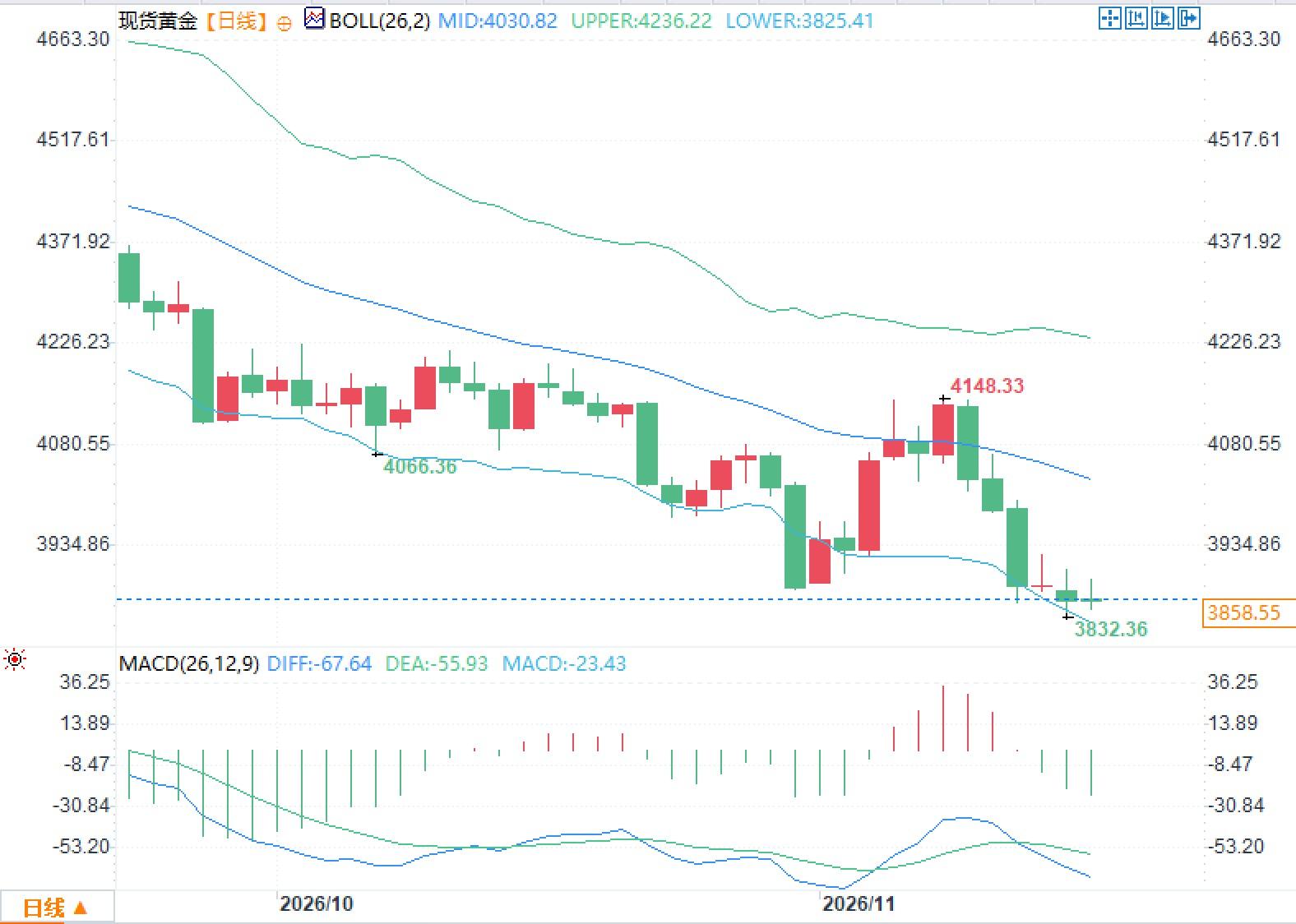
Gold prices consolidate at low levels and momentum observation
Spot gold has been consolidating below key resistance levels for several days, with its price trading range narrowing. Despite rising real yields and a strong dollar, gold prices have not simultaneously hit new lows, instead forming a narrow trading range above recent lows. This relative resilience occasionally occurs in historical cycles, often corresponding to periods of rising holding costs and a rebalancing of other macroeconomic factors. The current consolidation pattern suggests that the market is still absorbing further downward pressure, but fundamental headwinds have not yet subsided significantly. Technical confirmation still requires a valid breakout of key structures; otherwise, the consolidation may continue. Market participants are closely watching volatility changes to determine whether the current sideways movement is a pause in the downtrend or a sign of a rebalancing of bullish and bearish forces.The lasting impact of real yields and the trend of the US dollar
The US 10-year real yield is around 2.9%, a significant rise from its year-to-date low, directly increasing the opportunity cost of non-interest-bearing assets. The US dollar index is hovering around 103.5, putting downward pressure on dollar-denominated gold. When both the yield and dollar strengthen simultaneously, gold typically faces a valuation reassessment. However, the current gold price movement has not seen a fully synchronized accelerated adjustment with yields and the dollar, suggesting the market may be incorporating additional variables. Federal Reserve Governor Waller recently stated that even with a decline in inflation data, he still favors a rate hike of at least 25 basis points in December, noting that a larger adjustment would need to be considered if inflationary pressures intensify again. Most Fed members favor smaller policy steps, and the probability of a 50 basis point rate hike remains low. The hawkish repricing process is largely complete; further developments will depend more on the impact of data on the policy path.Geopolitical stalemate and macroeconomic scenario divergence
The conflict between the US and Iran has lasted for months, currently in a stalemate without a full-blown escalation or clear breakthrough. Shipping and sanctions pressures in the Strait of Hormuz persist, and negotiations continue but with limited progress. If the stalemate extends or a localized escalation occurs, inflation expectations may remain high, while growth prospects will be further pressured, potentially creating a stagflation environment. In this scenario, the demand for gold as a hedging tool remains valid. Conversely, if a substantial breakthrough occurs, easing inflation concerns could trigger a more dovish policy reassessment, opening up room for real yields to decline, which could also provide short-term support for gold prices. Both scenarios present potential support for gold, but current real yields and the pressure from the US dollar remain the main headwinds. Fundamental views need to resonate with the price structure to be validated.Rising US growth concerns and evolving market pricing
The US equity market recently nearly erased all of last week's gains, with significant corrections in technology-related sectors and a decline in the US 10-year nominal yield. Growth concerns are gaining more attention, with the market worried that if geopolitical tensions persist amid a continued hawkish stance by the Federal Reserve, economic momentum could slow further. While inflation is sticky, uncertainty on the growth side is being priced in. This environment could weaken the momentum for further significant increases in real yields, while altering the relative attractiveness between risk and safe-haven assets. Gold prices are consolidating at low levels, partly reflecting a market reassessment of the balance between growth path and policy response function. Subsequent retail sales data will provide further clues, but current price action suggests that the simple logic of yields and the dollar is insufficient to fully explain gold price movements.Frequently Asked Questions
Question 1: What does it mainly reflect that gold prices have been able to consolidate despite rising real yields and a stronger dollar? Answer: This suggests that the market may be pricing in growth concerns and geopolitical factors. The pressure of rising holding costs is partially offset by other macroeconomic variables, but this does not yet constitute a trend confirmation. Question 2: What impact does the stalemate between the US and Iran have on the gold price logic? Answer: A prolonged stalemate could maintain high inflation expectations and suppress growth, creating a stagflation environment; a breakout could trigger a more dovish revaluation. Both paths could support gold prices, but price confirmation is needed. Question 3: What does the Fed's December rate hike expectation mean for current gold prices? Answer: The rate hike has been largely priced in, with most members favoring a 25 basis point step. Further developments will depend more on whether data changes the policy path; the marginal impact of purely hawkish expectations is declining.- Risk Warning and Disclaimer
- The market involves risk, and trading may not be suitable for all investors. This article is for reference only and does not constitute personal investment advice, nor does it take into account certain users’ specific investment objectives, financial situation, or other needs. Any investment decisions made based on this information are at your own risk.