Geopolitical risks have resurfaced, but oil prices remain relatively stable.
2026-11-20 14:48:31
Iran continues to escalate its attacks on ships in the Strait of Hormuz, actively raising its bargaining chips, unwilling to see a significant drop in oil prices or a decline in its influence in the Middle East. The market is currently in a hedging pattern between a supply surplus and geopolitical supply concerns in the Middle East. From a trading perspective, it's necessary to distinguish between medium- to long-term supply and demand realities and short-term event-driven market movements. The safety of shipping in the Strait of Hormuz will be a key indicator to observe in short-term trading. This week, international crude oil experienced a volatile market, initially declining before rebounding. Multiple negative factors pressured oil prices throughout the week, but with the series of attacks in the Middle East, market concerns about supply disruptions quickly intensified, leading to a price rebound. As of press time, WTI crude oil was quoted at $82.89 per barrel. 
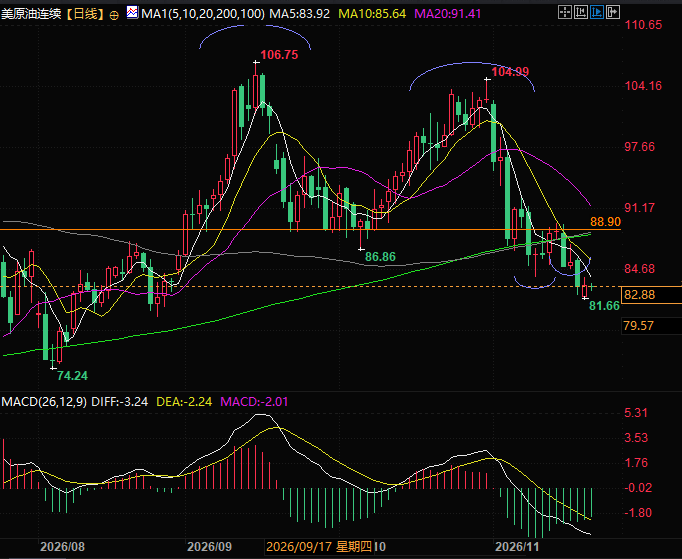 (WTI crude oil futures daily chart, source: EasyTrade) At 14:46 Beijing time, WTI crude oil futures are currently trading at $82.88 per barrel.
A series of attacks triggered a rebound in oil prices.
The immediate trigger for this resurgence was an attack launched by the Houthi rebels in Yemen against key targets within Saudi Arabia, including the headquarters of the Saudi sovereign wealth fund in Riyadh's financial district and a petrochemical facility in Jubail. Almost simultaneously, a shipping safety alert was issued for the Strait of Hormuz. The Iranian Revolutionary Guard stated that incidents of oil tankers striking mines in the strait have become commonplace this month, with many vessels still facing danger despite attempting to circumvent Iranian-controlled waterways. On Thursday alone, two oil tankers caught fire and exploded after striking mines. Iran also disclosed that a total of three oil tankers struck mines and caught fire on the eastern side of the Strait of Hormuz. It is important to note that the Iranian reports of attacks cannot be independently verified by third parties. The Joint Maritime Information Center has issued a warning that the probability of further attacks against commercial vessels is extremely high.Iran continues to escalate its bargaining chips, stubbornly maintaining the escalation of tensions.
Iran has intensified its attacks on ships in the Strait of Hormuz since October, maintaining a high frequency of attacks this month, essentially a proactive move to increase its bargaining power. Against the backdrop of weakening oil prices and a market that had downplayed the risks of the Middle East conflict, Iran is unwilling to accept a significant drop in oil prices, nor does it want its attention in this regional power struggle to cool down quickly. By continuously disrupting key global energy routes, it aims to maintain tensions. Data shows that at least two crew members are missing this week. The UK's Office for Maritime Trade Operations reports an average of daily attacks this month, with approximately 14 occurring in the Strait of Hormuz. The agency warns that many shipping companies choose to conceal incidents for safety reasons, and Gulf oil-producing countries also rarely disclose information about attacks, suggesting the true scale of the attacks is higher than publicly reported. A Saudi shipping official admitted that even with the continued attacks, Saudi oil exports remain highly dependent on the Strait of Hormuz, with no better alternative.The expectation of oversupply previously dominated the market, forming the main theme of the oil price decline.
This series of geopolitical shocks directly offset the prevailing market logic of "oil oversupply" this month. The International Energy Agency stated last week that oil supply has exceeded demand for the first time since the outbreak of this conflict. Several investment banks also pointed out that Persian Gulf oil exports have recovered, even exceeding pre-war levels, and the market has entered a phase of oversupply, with Brent crude falling by about 20% this month. This, coupled with market pricing in expectations of a December Fed rate hike and anticipated potential disruption to energy demand from the Middle East and Russia-Ukraine conflicts, constituted the core driving force behind the oil price decline at the beginning of this week.Export recovery remains uncertain, and there are discrepancies in the supply and demand narratives themselves.
However, data from oil and gas flow tracking agencies do not entirely agree with the assessment that "Gulf exports have fully recovered to pre-war levels." Although Persian Gulf exports rebounded significantly after the initial outbreak of the war, they actually declined after the September surge in exports in October and November due to Iran's tightening of controls on passage through the Strait of Hormuz. It is currently difficult to determine whether the decline in shipping volume is directly caused by the increased number of attacks on ships. Crude oil shipments are inherently volatile, and whether the attacks can substantially impact crude oil supply remains to be seen. In short, the recovery in Gulf crude oil exports is not as substantial as the market imagines. If shipping disruptions escalate further, the narrative of oversupply will be shaken.Trading perspective: Logic disconnected, focus on the Straits signal.
For crude oil traders, the current market presents a clear logical disconnect. In the medium to long term, the IEA's oversupply expectations remain, which will suppress the continued upward potential of oil prices. However, in the short term, the security risks associated with the Strait of Hormuz, a global energy choke point, could trigger price movements at any time. The spillover effects of the Middle East conflict extend beyond oil transportation; flights and shipping insurance costs in many Gulf countries are facing disruptions. Residents and businesses in Gulf countries such as the UAE have been officially advised to prepare for route changes and supply chain disruptions. Traders should be wary; even if the fundamentals haven't changed substantially, unforeseen events such as intermittent attacks on ships by Iran to maintain tensions and Houthi attacks on Saudi infrastructure could quickly increase geopolitical risk premiums. The focus should be on monitoring the frequency of attacks on merchant ships in the Strait and changes in actual crude oil shipments to determine whether the rebound is a short-term emotional impulse or the start of a new trend. Technically, the WTI crude oil futures contract has rebounded weakly, with moving averages still in a bearish alignment and the MACD indicator supporting this. The measured decline has not yet been reached, suggesting a continued downward bias in oil prices. (WTI crude oil futures daily chart, source: EasyTrade) At 14:46 Beijing time, WTI crude oil futures are currently trading at $82.88 per barrel.
- Risk Warning and Disclaimer
- The market involves risk, and trading may not be suitable for all investors. This article is for reference only and does not constitute personal investment advice, nor does it take into account certain users’ specific investment objectives, financial situation, or other needs. Any investment decisions made based on this information are at your own risk.