Gold Weekly Review: AI Stock Crash Coupled with Interest Rate Hike Expectations, Gold Prices Plunge Nearly 9% in a Week, Marking the Biggest Drop in Eight Months! Hitting a 14-Month Low
2026-11-21 09:42:31
Global gold markets experienced a sharp sell-off this week, with spot gold prices plunging to near the $3,500 mark, hitting a 14-month low and recording the worst weekly performance in eight months. Gold, along with other risk assets, came under pressure from the double whammy of a collapse in the artificial intelligence sector and a sharp rise in expectations of a Federal Reserve rate hike. Market sentiment quickly shifted from relatively optimistic to cautious and even pessimistic. This week's decline was not an isolated event, but rather the result of a confluence of multiple macroeconomic and microeconomic factors, reflecting both the real pressure of forced deleveraging among investors and the market's repricing of the US monetary policy path. 
 From a technical and positioning perspective, some professionals have offered more specific observations. Some analysts point out that if the support level around $3500 or the corresponding futures price is breached, gold prices could quickly fall another $300, with the next significant support level potentially pointing to the area around $3250, the summer low of 2025. Other traders emphasize that the current decline is not driven by a single factor, but rather by a combination of pressures including overweight long positions in the metals sector, the threat of interest rate hikes, liquidation demand triggered by the stock market crash, and unfavorable seasonal factors. Seasonally, November has historically been a poor month for gold, and this week's decline confirms this to some extent. Despite the bearish short-term sentiment, some argue that the gold sell-off has been excessive, and long-term fundamentals still provide support. Some analysts caution that structural factors such as central bank gold purchases may ultimately prevail, but the short-term trend should still be respected. There is also a view that if the Federal Reserve tightens excessively, it may be forced to reverse course in the second half of 2027, which would open up new upside potential for gold.
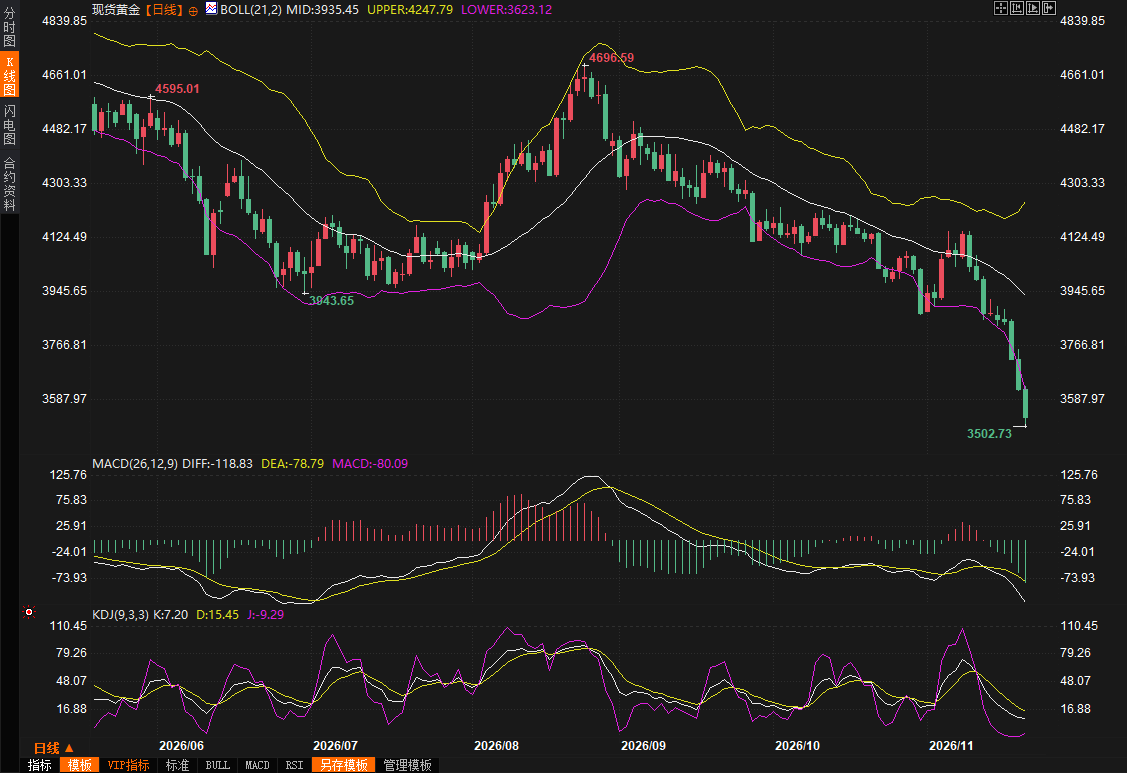 (Spot gold daily chart, source: FX678)
Gold prices accelerated their decline, posting their worst weekly performance in eight months.
On Friday (November 20), spot gold continued its decline, falling 2.5% to close at $3,534.64 per ounce, after hitting a low of $3,502.73 during the session, its lowest level since September 2025. For the entire trading week, gold prices fell by approximately 8.9%, marking the largest weekly drop since the week of March 20. US gold futures for December delivery performed even weaker, closing down 4.6% at $3,515.40. From a technical perspective, gold prices quickly broke through several key support levels in just a few days, indicating a significant deterioration in market sentiment. Previously, gold prices had hovered at higher levels, but this week's accelerated decline suggests that long positions were being liquidated under pressure. Some traders pointed out that current prices are approaching or even testing the short-term target range previously set by some institutions; if the psychological and technical level of $3,500 is breached, further downside potential could open up.The sell-off in AI stocks triggered a chain reaction, forcing gold to "collapse" as well.
One of the triggers for gold's downward pressure this week was the sharp correction in global artificial intelligence-related stocks. Anthropic's highly anticipated IPO underperformed expectations, with its share price falling 9.1% on its second day of trading, failing to restore investor confidence in the AI sector. Simultaneously, core technology stocks such as Nvidia suffered significant declines, and the Philadelphia Semiconductor Index quickly erased its previous substantial gains, with large-scale technology companies and cloud service-related stocks generally under pressure. Against this backdrop, some investors holding gold positions were forced to liquidate their gold holdings to offset losses in their stock accounts, creating a typical deleveraging chain reaction. David Meger, Director of Precious Metals Trading at High Ridge Futures, explicitly pointed out that the AI-related stock market sell-off is prompting some investors to sell gold to cover losses. Kyle Rodda, Senior Financial Markets Analyst at Capital, also emphasized that there appears to be some forced liquidation in the market, coupled with expectations of an impending US interest rate hike and potentially sustained inflation, with rising yields and a stronger dollar putting pressure on gold. The performance of the US stock market itself further amplified this negative feedback loop. On Friday, the Dow Jones Industrial Average fell 1.93%, the S&P 500 dropped 3.70%, and the Nasdaq Composite plunged 5.28%. Both the S&P 500 and the Dow confirmed they had entered correction territory (down more than 10% from their all-time closing highs), with the S&P 500 marking its seventh consecutive day of losses, its longest losing streak since February 2020. The Nasdaq's weekly decline was its largest since March 2020. The Chicago Board Options Exchange Volatility Index (VIX) rose to its highest closing level since April 2025, indicating a significant increase in market panic. Gold, traditionally a safe-haven asset, was not immune to this round of "risk asset deleveraging" and was instead dragged into the sell-off.Hawkish expectations are rising, making a rate hike almost a certainty.
Besides liquidity pressures in the stock market, a shift in macroeconomic interest rate expectations is another major factor suppressing gold prices. Recent comments from Federal Reserve policymakers have continued the hawkish tone of the October Federal Open Market Committee meeting. Philadelphia Federal Reserve President Paulson pointed out that inflation risks may require another rate hike, reinforcing market expectations of further increases in US borrowing costs. Federal Reserve Governor Cook also stated that current policy rates are insufficient to address existing inflation levels. According to the CME FedWatch tool, the market expects a 96% probability of a 25 basis point rate hike in December, almost a market consensus, with a remaining 4% probability of a 50 basis point hike. Higher Treasury yields and a stronger dollar directly increase the opportunity cost of holding gold, weakening its relative attractiveness. Several analysts pointed out that these factors, coupled with margin calls, have collectively led to the significant decline in gold prices this week. It is worth noting that some institutions and traders believe that the current sell-off may have been somewhat excessive. Commerzbank analyst Norman Libke is relatively bullish on gold for the coming week, believing that gold has the potential to rebound if interest rate expectations stabilize. Some argue that as the decline in stock and oil prices has somewhat suppressed interest rates, the market is looking for a reversal pattern to confirm whether a bottom has been formed.Market sentiment is bearish, and key support levels are attracting much attention.
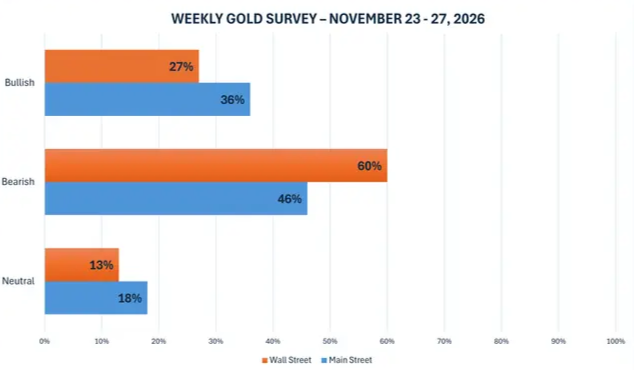
The latest Kitco News weekly gold survey shows that after gold fell to around $3,500, Wall Street sentiment remains deeply bearish. Of the 15 analysts surveyed, 60% expect gold prices to fall further in the coming week, only 27% are bullish, and the rest are neutral or neutral. Among retail investors, the bullish percentage further declined to 36%, while the bearish percentage rose to 46%, indicating a significant weakening of bullish sentiment. From a technical and positioning perspective, some professionals have offered more specific observations. Some analysts point out that if the support level around $3500 or the corresponding futures price is breached, gold prices could quickly fall another $300, with the next significant support level potentially pointing to the area around $3250, the summer low of 2025. Other traders emphasize that the current decline is not driven by a single factor, but rather by a combination of pressures including overweight long positions in the metals sector, the threat of interest rate hikes, liquidation demand triggered by the stock market crash, and unfavorable seasonal factors. Seasonally, November has historically been a poor month for gold, and this week's decline confirms this to some extent. Despite the bearish short-term sentiment, some argue that the gold sell-off has been excessive, and long-term fundamentals still provide support. Some analysts caution that structural factors such as central bank gold purchases may ultimately prevail, but the short-term trend should still be respected. There is also a view that if the Federal Reserve tightens excessively, it may be forced to reverse course in the second half of 2027, which would open up new upside potential for gold.Next week's focus: PCE data and short-term trading window
Next week's economic data releases will be concentrated in the three days leading up to the Thanksgiving holiday, becoming a crucial window for market observation. Monday will see the S&P Global Manufacturing Purchasing Managers' Index, Tuesday will focus on the US November Consumer Confidence Index, and Wednesday will feature the Personal Consumption Expenditures (PCE) Price Index, preliminary Q2 GDP, October durable goods orders, and weekly jobless claims. The US market will then be closed on Thursday for Thanksgiving. As the inflation indicator more closely watched by the Federal Reserve, the PCE result will directly impact market pricing in a December rate hike and subsequent policy expectations. If the data continues to be strong, it may further solidify hawkish expectations, putting new pressure on gold prices; conversely, signs of cooling could alleviate some interest rate pressure, providing breathing room for gold. During the shortened trading week due to the holiday, market liquidity may be relatively limited, potentially amplifying price volatility. In summary, this week's sharp decline in gold prices is the result of a confluence of factors: the deflating of the AI sector, deleveraging of risk assets, and a shift in monetary policy expectations. Whether the $3,500 level can be held, how next week's PCE data will affect interest rate expectations, and whether the stock market sell-off has come to an end will be key variables determining the short-term direction of gold prices. Given the current bearish sentiment, the market is more inclined to observe the effectiveness of support levels and data feedback before deciding whether to reassess the allocation value of gold. In the long term, gold's safe-haven and inflation-hedging attributes have not disappeared, but its short-term path will clearly continue to be dominated by interest rates and risk appetite. (Spot gold daily chart, source: FX678)
- Risk Warning and Disclaimer
- The market involves risk, and trading may not be suitable for all investors. This article is for reference only and does not constitute personal investment advice, nor does it take into account certain users’ specific investment objectives, financial situation, or other needs. Any investment decisions made based on this information are at your own risk.