Warehouse inventories have rebounded by 13%, what short-term supply and demand changes have occurred in copper?
2026-11-23 14:58:31
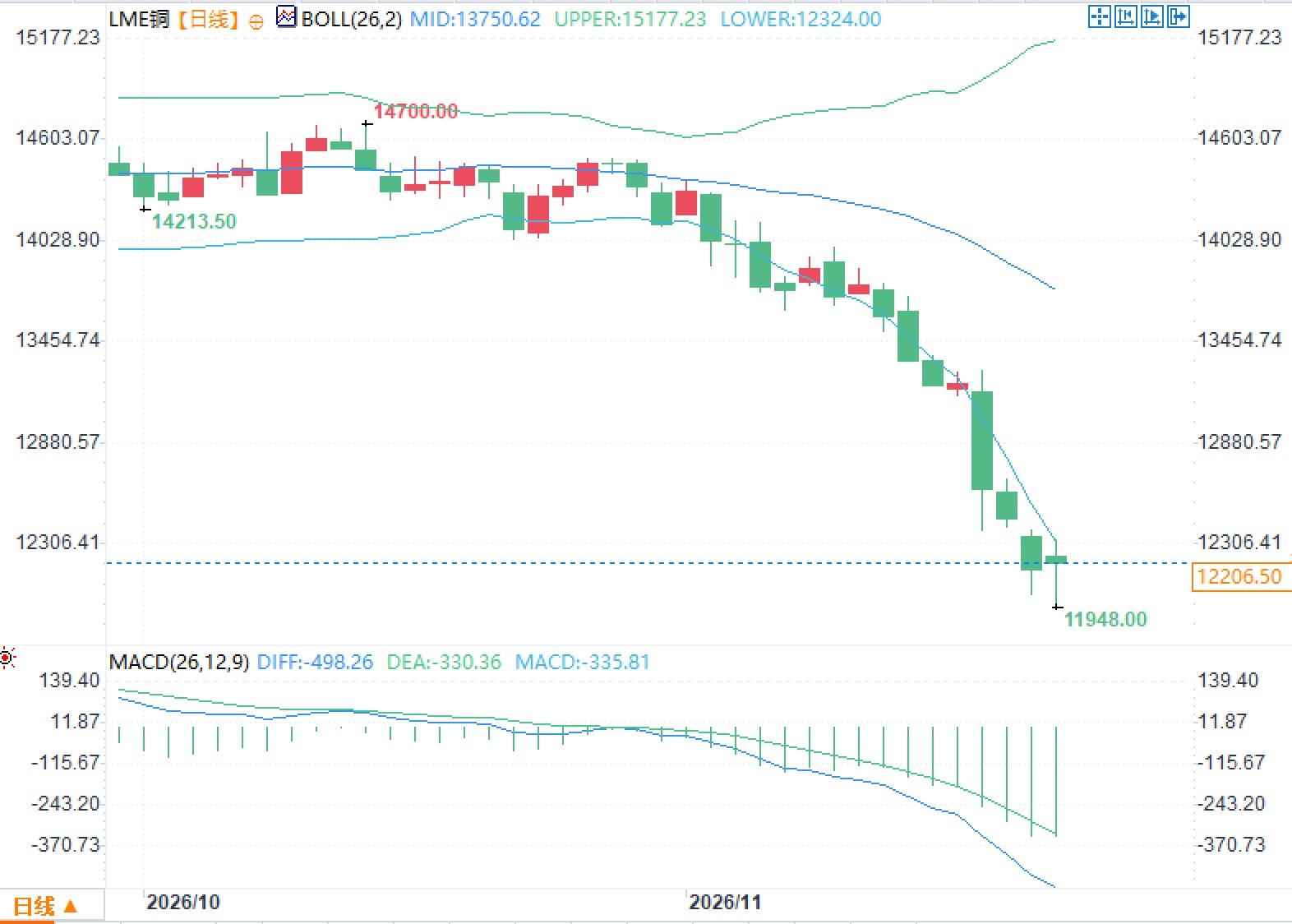
On Monday, November 23, copper prices on the London Metal Exchange were consolidating around $12,200 per tonne after a sharp drop of about 9% last week. The official cash settlement price was around $12,230 per tonne on November 20, roughly in line with the three-month contract price. Last week's decline was one of the largest weekly corrections in recent years, falling about 18% from the high of nearly $15,000 per tonne in September. Warehouse inventories rose to approximately 332,000 tons during the same period, a significant increase from the beginning of the month. The price adjustment mainly reflects rising concerns about the sustainability of AI-related capital expenditures, pricing pressure from a stronger dollar, and uncertainty surrounding the outlook for refined metal import tariffs. As a key material for power grids, renewable energy equipment, and data center cabling, copper's fundamentals remain supported by long-term electrification demand, but short-term trading sentiment has clearly weakened. 
Recent price fluctuations and changes in trading structure
Last week, copper prices experienced one of the largest weekly declines in a decade, a concentrated adjustment driven by declining risk appetite. Official cash settlement prices fell rapidly from around $13,700 per ton in mid-November to $12,230 per ton, with three-month contracts declining in tandem. Warehouse inventories rose from approximately 294,000 tons in early November to 332,000 tons on November 20, an increase of about 13%, indicating a looser supply of deliverable metal at the exchange level. Long positions were significantly reduced, with net long positions as a percentage of open interest falling from approximately 21% at the end of September to around 9% in early November. Market participants are reassessing the pricing weight of AI-related themes, with some short positions maintained while others reduced their holdings after the price decline, resulting in a divergent trading structure.Repricing of AI capital expenditure expectations
Copper prices surged in September primarily driven by expectations of data center construction and power infrastructure expansion. A single gigawatt-scale data center requires approximately 30,000 to 40,000 tons of copper, and this potential demand could rise further if grid upgrades are taken into account. However, recent corrections in the technology sector have raised questions about the return on large-scale capital expenditures. Analysts point out that AI is not the dominant long-term driver of copper demand; the power grid and renewable energy equipment remain the more fundamental sources of demand. Albert McKenzie, an analyst at Benchmark Minerals Intelligence, stated that the impact of AI on prices may have been overstated. Goldman Sachs research also indicates that the price decline is more due to position adjustments than a sudden deterioration in fundamentals. As some investors exit related thematic trading, the short-term correlation between copper prices and technology stocks has decreased, and the pricing logic is shifting from thematic premiums back to supply and demand fundamentals.The combined effects of macroeconomic factors and tariff uncertainty
A stronger dollar has increased cost pressures for buyers priced in other currencies, generally suppressing industrial metals. Kali Garner, senior commodities strategist at decalli trading, points out that the market is exiting previous currency devaluation trades, with copper lagging behind gold and silver due to AI factors. Changes in expectations regarding the Federal Reserve's policy path have further amplified this pressure. Meanwhile, uncertainty surrounding the prospect of refined copper import tariffs persists. Previously, market expectations of potential tariffs had driven metal flows to specific regions, creating regional supply mismatches. As expectations regarding the timing and scope of tariff implementation have cooled, related inventory redistribution has weakened, and the global deliverable supply distribution is becoming more balanced. These macroeconomic and policy variables have amplified price volatility but have not changed the long-term demand logic for copper in the electrification process.Inventory dynamics and long-term supply and demand observation
Exchange inventories rebounded to 332,000 tons, a significant improvement from previous lows, indicating some easing of short-term supply pressure. However, factors such as long development cycles for mining projects and declining ore grades continue to limit the speed of supply response. Max Layton, Global Head of Commodities Research at Citigroup, pointed out that new mine discoveries have been limited over the past five years, and demand for power infrastructure remains substantial on paper. In the long term, grid expansion, electrification equipment, and data center construction will continue to contribute to incremental demand, with some institutions predicting that global copper demand may grow by about 50% by 2040 compared to current levels. The current price decline reflects more of a shift in trading sentiment and positioning than a structural reversal in demand fundamentals.Frequently Asked Questions
Question 1: What were the main drivers behind the sharp decline in copper prices last week? Answer: Primarily, it stemmed from a decline in risk appetite caused by rising concerns about the sustainability of AI-related capital expenditures, coupled with a stronger dollar and uncertainty surrounding tariff prospects, leading to concentrated selling of long positions and a rapid price adjustment. Question 2: Does the rise in exchange inventories indicate oversupply? Answer: Inventories rose from approximately 294,000 tons to 332,000 tons, indicating a slight easing of short-term deliverable supply and a narrowing of the cash premium. However, the absolute level still needs to be considered in conjunction with global mine output and downstream consumption patterns, and does not equate to structural oversupply. Question 3: Has the long-term demand logic changed due to the recent price adjustment? Answer: Electrification demand related to power grids, renewable energy, and data centers remains. AI is only one of the incremental factors, not the dominant one. The long-term supply-demand gap expectation has not been reversed by short-term changes in trading sentiment.- Risk Warning and Disclaimer
- The market involves risk, and trading may not be suitable for all investors. This article is for reference only and does not constitute personal investment advice, nor does it take into account certain users’ specific investment objectives, financial situation, or other needs. Any investment decisions made based on this information are at your own risk.