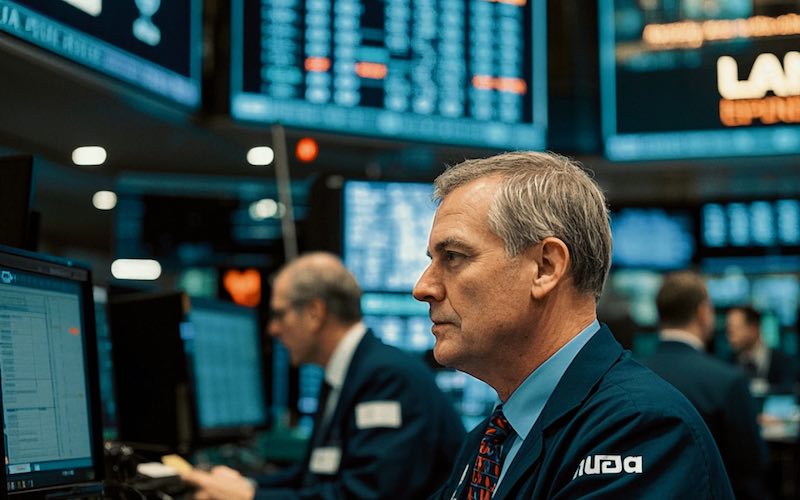
"A CEO too big to fire?" Jensen Huang's return sparks major questions about Nvidia's governance.
2026-11-25 09:38:35
Jensen Huang's return to the CEO position at Nvidia has been seen as both alleviating market concerns about the chipmaker's leadership stability and bringing Nvidia's corporate governance structure and heavy reliance on its founder back into the spotlight. Industry experts and analysts point out that the controversy surrounding Huang's departure and reinstatement is not merely a personnel change, but rather exposes deeper vulnerabilities within Nvidia, involving issues such as board oversight, succession planning, management expansion, and risks associated with key figures. In other words, while Huang's return may have temporarily stabilized the situation, it also provides a window for re-examining the quality of Nvidia's governance. 
I. Return to the Market and Soaring Market Value: The Founder Premium is Amplified Again
Nvidia's market capitalization surged from $3 trillion on Friday to nearly $4 trillion on Tuesday, a shift that occurred after Jensen Huang returned to the company. Counterpoint Research's chief analyst termed this phenomenon "founder premium," stating that the market reaction was "truly astonishing." This indicates that investors' trust in Huang's personal leadership has largely translated into a judgment of the company's value. However, the analyst also raised the question of "is this level of dependence healthy?" highlighting another aspect of the issue: when a company's market capitalization and confidence are highly tied to a single founder, the robustness of corporate governance is no longer merely a formality but a core variable influencing market expectations. While Huang's return certainly provides an opportunity to address governance issues, the soaring market capitalization itself reminds the outside world that Nvidia's dependence on its founder has not disappeared with his return; rather, it has become even more apparent.II. "CEOs Too Big to Fire": Governance Vulnerabilities Emerge
Angela Mancini, Head of Global Risk Insights at Dow Jones, raised a thought-provoking question on the program: "What does it mean if you have a company too big to fail, or a CEO too big to fire?" She further pointed out that Jensen Huang's unusually large number of direct reports is another sign of Nvidia's heavy reliance on its founder. When one person has 60 direct reports, and the company is in a situation where it "feels it can't fire them," this itself indicates that there may be special arrangements in the management hierarchy, authorization mechanisms, and board oversight. Industry experts point out that Huang's sudden departure and unexpected reinstatement exposed deep-seated vulnerabilities at Nvidia and raised questions about board oversight and succession planning. The focus here is not on denying Huang's personal abilities, but on whether the board has sufficient mechanisms to smoothly handle personnel changes when corporate governance revolves excessively around a founder, and whether management has clear boundaries of responsibility—all of which become the focus of external scrutiny.III. Opportunity Window Amidst the Crisis: Upgrading the Board of Directors and Succession Planning
Jeff Herbst, managing partner of GFT Ventures and a former Nvidia executive, said he wrote to the board late last week urging Jensen Huang to return. While initially disappointed by the allegations surrounding Huang, he now sees the situation as an opportunity for Nvidia to strengthen its governance, succession planning, and overall management. “While many see a crisis here, I see a potential opportunity,” he said. Herbst noted that as Nvidia has transformed from a relatively small tech company into one of the world’s largest, its management and oversight functions need to evolve accordingly. In his view, corporate governance, succession planning, legal functions, regulatory functions, and political functions must all expand simultaneously. He suggested that Nvidia add more experience to its board by bringing in individuals with experience managing large corporations and take a more formal approach to nurturing potential successors to Huang. Tom Hurlick, CEO of Strategic Asset Management, echoed this assessment, believing that the chip giant’s corporate governance “absolutely needs a overhaul.” Hulk stated that a president forcibly reinstating a company's CEO is "unheard of" and "unprecedented," adding that Huang is a natural leader who is currently experiencing immense pain, but whether he deserves to return to the CEO position is not for him to speculate on; whether he is the right person "maybe he is right now." However, Hulk also emphasized that the company still has "many things to worry about" in terms of corporate governance. These points collectively suggest that Huang's return is not the end of governance issues, but rather should be seen as the starting point for Nvidia to promote the supplementation of board experience, the expansion of management functions, and the formalization of succession mechanisms.IV. Succession Dilemmas: Risks Associated with Key Figures Can No Longer Be Ignored
Jensen Huang's departure also exposed how closely Nvidia's leadership and long-term strategy are linked to its founder, raising questions about how the company will handle future transitions. Stacey Rasgun, managing director and senior U.S. semiconductor analyst at Bernstein Research, said the event has rekindled a risk that investors have long ignored. He said, "We all know there's key person risk here. We all chose to, including myself. We all chose to ignore it." Rasgun believes that succession planning is an issue that both Huang and the board need to address and communicate clearly to investors. He added, "I think Jensen and the board both have to figure that out, and I think that needs to be communicated to investors." Herbst also noted that Huang played a personal role in driving technological innovation at Nvidia, including investing in businesses like artificial intelligence and high-performance computing before they were profitable. Herbst added that new markets like autonomous systems and robotics require significant investment and passionate, visionary leaders like Huang. This means that Nvidia's succession challenge is not simply about replacing one person, but about how to retain the founder's strategic vision while building organizational capabilities, board oversight, and a talent pipeline that do not rely on a single key figure.V. Conclusion: Nvidia needs more than just Huang Renxun's return.
Overall, Jensen Huang's return to the CEO position at Nvidia has indeed alleviated concerns about leadership in the short term and brought about a remarkable market capitalization response. However, the analysis presented in this article points to a deeper conclusion: what Nvidia truly needs to address is not just "whether Jensen Huang should return," but how to transform the founder's premium into sustainable corporate governance capabilities. Whether it's the dependency structure reflected by the 60 direct reports, the board oversight issues raised by the "too big to fire CEO," or the risks associated with key figures and succession planning, all indicate that Nvidia needs to expand simultaneously in areas such as board experience, legal and regulatory functions, political functions, succession planning, and investor communication. Jensen Huang's return can be an opportunity to repair governance, but if governance upgrades cannot keep pace with changes in company size and market position, similar vulnerabilities may reappear in the future.Frequently Asked Questions
Q: Why did Jensen Huang's return both alleviate concerns and trigger a governance review? A: His return stabilized leadership expectations in the short term and significantly boosted market capitalization, thus alleviating concerns about management turmoil at Nvidia. However, this event also exposed the company's high dependence on its founder, bringing board oversight, succession planning, and management empowerment mechanisms back into focus. Therefore, his return is not the end of governance issues, but rather the beginning of a review. Q: What specific risks does "a CEO too big to fire" refer to? A: This statement points to a potential weakening of corporate governance checks and balances. When the CEO's personal influence is too great and the board struggles to exercise its power to replace or constrain them, the company may lack a smooth transition mechanism should personnel changes occur. The article, using Mancini's question, emphasizes that Nvidia needs to answer not whether Jensen Huang is important, but whether the company's systems can function properly beyond key figures. Q: What does 60 direct reports indicate? A: The unusually large number of direct reports is one of the hallmarks of Nvidia's dependence on its founder. Too many direct reports may indicate a special management hierarchy and empowerment mechanism, or it may mean that the organization's operations revolve around an individual. Mancini then asks what governance structure truly means when a company feels it cannot fire these individuals. This suggests that Nvidia needs to clarify its management hierarchy and boundaries of responsibility. Q: What does the founder premium and soaring market capitalization mean? A: The market capitalization rising from $3 trillion to nearly $4 trillion reflects investors' high level of trust in Jensen Huang's leadership, which analysts call the "founder premium." However, the article also questions whether this dependence is healthy. It means that market confidence is closely tied to the founder, which is beneficial in the short term but requires Nvidia to use more mature governance and succession planning to reduce the risk associated with key figures in the long term. Q: How should Nvidia address its succession planning and board oversight? A: Analysts suggest directions including bringing in individuals with experience managing large companies to enhance board experience, cultivating potential successors in a more formal manner, and simultaneously expanding governance, legal, regulatory, and political functions. Rasgon also emphasizes that the succession plan needs to be clarified jointly by Jensen Huang and the board and clearly communicated to investors. The core is to shift Nvidia from relying on the founder to institutionalized operations.- Risk Warning and Disclaimer
- The market involves risk, and trading may not be suitable for all investors. This article is for reference only and does not constitute personal investment advice, nor does it take into account certain users’ specific investment objectives, financial situation, or other needs. Any investment decisions made based on this information are at your own risk.