The Australian dollar's rebound has stalled! A 97% probability of a Fed rate hike has locked in a 0.6700 ceiling.
2026-11-27 09:00:33
The Australian dollar, a risk-sensitive currency, received slight support, driven by gains in global stock markets. During Asian trading on Friday (November 27), the Australian dollar rose to 0.6636 against the US dollar, currently trading around 0.6630, almost unchanged for the day. With US markets closed for Thanksgiving, the lack of news catalysts kept overall volatility within a narrow range. However, high expectations of a December rate hike by the Federal Reserve acted as a ceiling, preventing the exchange rate from breaking through 0.6700. This resistance level failed to be overcome, and if rate hike expectations continue to intensify, the Australian dollar faces the risk of further weakening. Meanwhile, geopolitical tensions in the Middle East also created disturbances in the market. 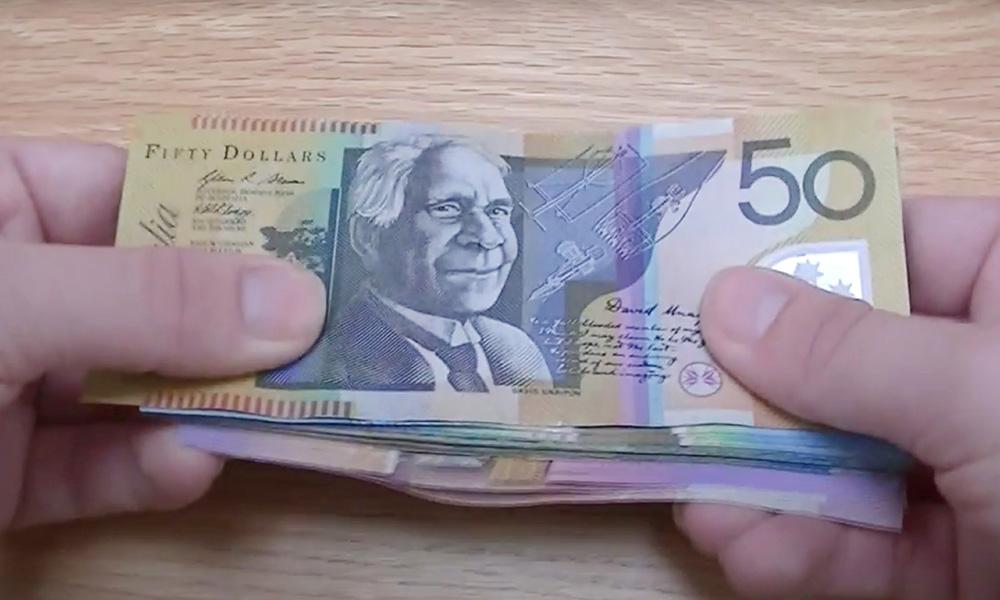
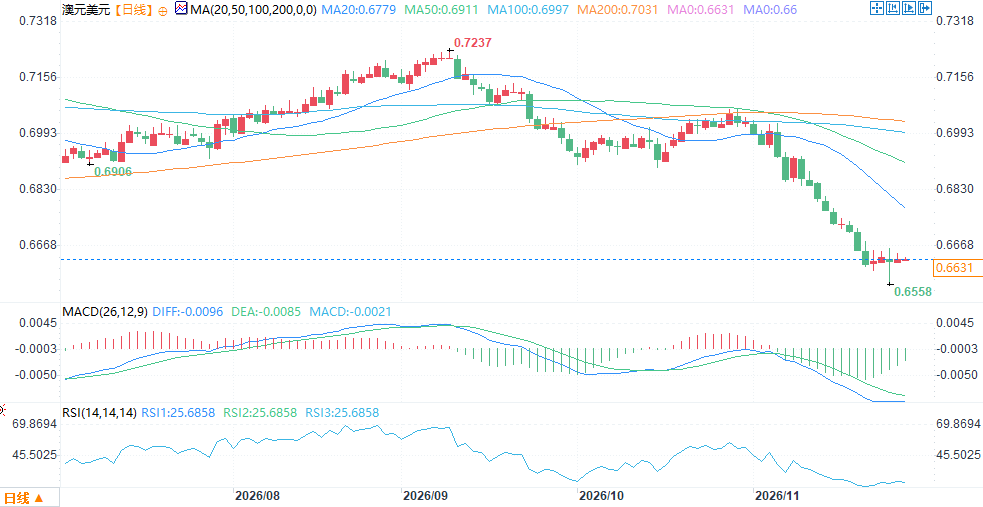 (Australian dollar to US dollar daily chart, source: EasyForex) At 8:56 Beijing time, the Australian dollar to US dollar exchange rate was 0.6630/31.
US data was generally strong, causing the probability of an interest rate hike to surge to 97%.
Recent US economic data has collectively signaled strong resilience, further solidifying market expectations for continued tightening by the Federal Reserve. The latest Beige Book shows that 8 of the 12 Fed districts reported economic growth, 4 reported no growth, the job market showed slight improvement, and prices remained moderately upward. October's PCE inflation rate reached 3.8% year-on-year, indicating persistently sticky inflation; meanwhile, annualized GDP growth exceeded 4.3%, significantly surpassing market expectations, and initial jobless claims fell from 200,000 to 189,000, suggesting no significant easing in the labor market. This coexistence of a robust economy and persistent inflation has directly pushed the probability of a 25 basis point rate hike by the Fed on December 8-9, as priced in by the CME FedWatch tool, to 97%. The US dollar's interest rate advantage has thus been strengthened, significantly suppressing risk-sensitive currencies, including the Australian dollar. With the US market closed for Thanksgiving and lacking additional catalysts from the US session, this high probability of a rate hike has become the main ceiling for the Australian dollar to break through 0.6700 against the US dollar. If this expectation continues to develop, the short-term rebound potential of the Australian dollar will be further limited.The Reserve Bank of Australia is caught in a policy dilemma as inflation and employment signals diverge.
Australia's fundamentals currently present a clear policy dilemma. High October CPI inflation data puts pressure on the Reserve Bank of Australia (RBA) to maintain its tightening stance or even further tighten; however, two consecutive dismal employment reports have weakened the job market, virtually eliminating the possibility of another rate hike in the short term. This tug-of-war between high inflation and weak employment has significantly increased uncertainty regarding the RBA's future policy path. Market pricing has clearly shifted towards easing expectations, with Prime Terminal data showing an 85% probability of a 25 basis point rate cut by the RBA in June 2027. This "high inflation but weak employment" dilemma weakens the medium-term fundamental support for the Australian dollar, limiting its potential for only limited, temporary rebounds even with improved global risk appetite. Investors need to closely monitor further developments in Australian inflation and employment data to determine whether the RBA prioritizes addressing inflation or shifts towards supporting employment; the timing of this policy shift will be a key variable influencing the medium-term trend of the Australian dollar against the US dollar.Summary of Market Trends
The core logic behind the current Australian dollar against the US dollar lies in the interplay between risk appetite and the divergence between expectations of US and Australian monetary policy. Global stock market gains provided slight support for risk-sensitive currencies, with the Australian dollar initially rising slightly against the US dollar. However, with US markets closed for Thanksgiving and overall volatility remaining narrow, the rebound was limited. The almost certain December rate hike by the Federal Reserve directly restricts the exchange rate's upward potential above 0.6700; meanwhile, the divergence between Australian domestic inflation and employment data has prompted the market to pre-price future rate cuts, further weakening the medium-term support for the Australian dollar. While Middle East geopolitical tensions have created some market disturbance, they are unlikely to reverse the dominant logic. Short-term risk appetite may lead to a technical rebound, but the interest rate expectation gap between the US and Australia remains the core factor determining the direction. Going forward, close attention should be paid to the release of key US and Australian inflation and employment data, as well as marginal changes in the policy statements of the Federal Reserve and the Reserve Bank of Australia. These will determine whether the Australian dollar continues to face pressure against the US dollar or experiences a trend reversal. (Australian dollar to US dollar daily chart, source: EasyForex) At 8:56 Beijing time, the Australian dollar to US dollar exchange rate was 0.6630/31.
- Risk Warning and Disclaimer
- The market involves risk, and trading may not be suitable for all investors. This article is for reference only and does not constitute personal investment advice, nor does it take into account certain users’ specific investment objectives, financial situation, or other needs. Any investment decisions made based on this information are at your own risk.