With bullish and bearish expectations offsetting each other, the USD/CAD pair maintained a high level of fluctuation.
2026-11-27 15:26:35
The dollar's pullback is likely a profit-taking move after a surge, and the medium- to long-term tightening narrative remains intact. Danske Bank, in interpreting US inflation and growth data, pointed out that both overall and core PCE rose 0.3% month-on-month in October, with core PCE rising to 3.3% year-on-year, higher than market expectations. While energy price increases slowed, core commodity inflation rebounded significantly, and core service inflation remained above the reasonable level corresponding to the 2% inflation target, indicating strong underlying inflation stickiness. On the economic growth front, the annualized GDP for the third quarter was revised significantly upward from 3.4% to 4.3%, with private consumption and investment being the main drivers. Domestic final sales also strengthened, coupled with a robust labor market, collectively painting a picture of strong US economic resilience. CME FedWatch shows that the market has already fully priced in a December rate hike by the Federal Reserve, providing underlying support for the dollar. 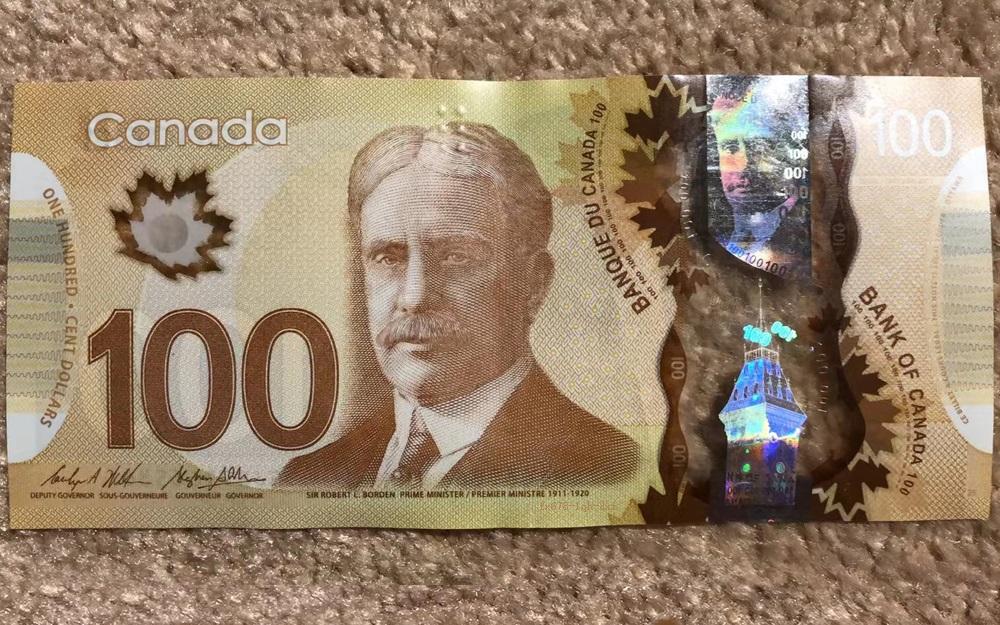 The Canadian dollar saw a marginal improvement in policy expectations. Bank of Canada Governor Macklem spoke on Tuesday, explicitly warning that further interest rate hikes would be necessary if inflation remains high for an extended period. BBH's strategy team analyzed that Macklem's statement leaned hawkish, clarifying that the central bank's target is overall CPI, and core inflation is only used as a reference tool for predicting overall inflation. Canada's overall CPI has been hovering around 3% since April of last year, and the central bank forecasts it will rise to 3.4% by the end of the year. In this environment, a 25 basis point rate hike to 2.75% in December becomes a realistic option, casting doubt on the foundation of the previous rapid rise in USD/CAD. The simultaneous possibility of rate hikes by both the US and Canadian central banks creates a hedging effect, which is the core reason for the current sideways movement in the exchange rate. On one hand, the Fed's high inflation and strong growth support the US dollar; on the other hand, expectations of a rebound in Canadian inflation are fueling tightening expectations from the Bank of Canada, suppressing USD/CAD bulls. With market liquidity not fully recovered after the Thanksgiving holiday, funds are unwilling to make one-way bets, and the market has entered a consolidation phase, awaiting further data to verify the policy paths of both central banks. On the daily chart, USD/CAD is currently at 1.4244, maintaining above the 20-day EMA at 1.4226, indicating a mildly bullish short-term bias. This confirms that buying support remains after the rally that started near 1.40. The 14-period RSI is at 54.5, having fallen from the previous overbought zone to a neutral-to-strong range, suggesting that upward momentum is consolidating and bearish forces have not yet taken control. The first support level is the 20-day exponential moving average at 1.4226, which is the first line of defense during any pullback. If the price continues to close below this level, it indicates a weakening of the short-term bullish structure, potentially triggering a deeper pullback to test previous lows. Conversely, if the price continues to hold above the moving average, the overall bullish trend remains intact, and the bulls still have a chance to launch another attack.
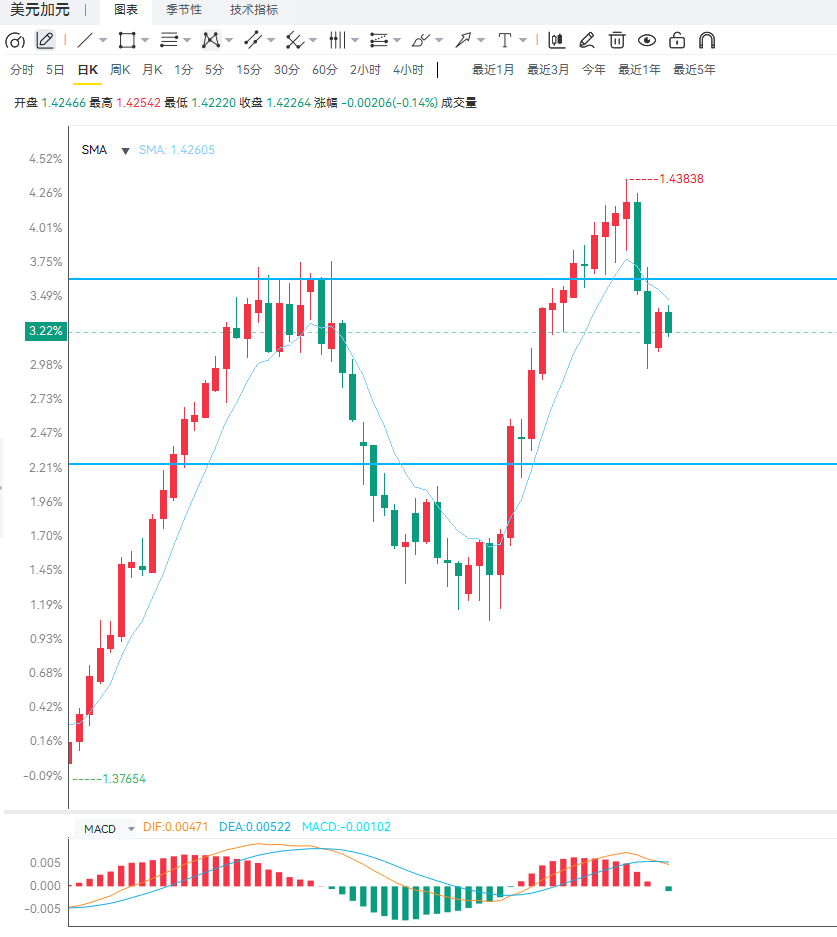 Editor's Summary: The USD/CAD pair is currently in a volatile phase, caught between conflicting expectations of interest rate hikes. The US dollar benefits from sticky US inflation and a resilient economy, but short-term profit-taking has emerged. Hawkish comments from the Bank of Canada have increased expectations of a December rate hike, supporting the Canadian dollar. Technically, the price has held above the 20-day moving average, indicating a short-term bullish bias but with slowing momentum. The RSI has returned to the neutral range, suggesting the market will primarily consolidate. Going forward, key focus will be on inflation data from both the US and Canada, as well as policy statements from officials of both central banks.
The Canadian dollar saw a marginal improvement in policy expectations. Bank of Canada Governor Macklem spoke on Tuesday, explicitly warning that further interest rate hikes would be necessary if inflation remains high for an extended period. BBH's strategy team analyzed that Macklem's statement leaned hawkish, clarifying that the central bank's target is overall CPI, and core inflation is only used as a reference tool for predicting overall inflation. Canada's overall CPI has been hovering around 3% since April of last year, and the central bank forecasts it will rise to 3.4% by the end of the year. In this environment, a 25 basis point rate hike to 2.75% in December becomes a realistic option, casting doubt on the foundation of the previous rapid rise in USD/CAD. The simultaneous possibility of rate hikes by both the US and Canadian central banks creates a hedging effect, which is the core reason for the current sideways movement in the exchange rate. On one hand, the Fed's high inflation and strong growth support the US dollar; on the other hand, expectations of a rebound in Canadian inflation are fueling tightening expectations from the Bank of Canada, suppressing USD/CAD bulls. With market liquidity not fully recovered after the Thanksgiving holiday, funds are unwilling to make one-way bets, and the market has entered a consolidation phase, awaiting further data to verify the policy paths of both central banks. On the daily chart, USD/CAD is currently at 1.4244, maintaining above the 20-day EMA at 1.4226, indicating a mildly bullish short-term bias. This confirms that buying support remains after the rally that started near 1.40. The 14-period RSI is at 54.5, having fallen from the previous overbought zone to a neutral-to-strong range, suggesting that upward momentum is consolidating and bearish forces have not yet taken control. The first support level is the 20-day exponential moving average at 1.4226, which is the first line of defense during any pullback. If the price continues to close below this level, it indicates a weakening of the short-term bullish structure, potentially triggering a deeper pullback to test previous lows. Conversely, if the price continues to hold above the moving average, the overall bullish trend remains intact, and the bulls still have a chance to launch another attack. Editor's Summary: The USD/CAD pair is currently in a volatile phase, caught between conflicting expectations of interest rate hikes. The US dollar benefits from sticky US inflation and a resilient economy, but short-term profit-taking has emerged. Hawkish comments from the Bank of Canada have increased expectations of a December rate hike, supporting the Canadian dollar. Technically, the price has held above the 20-day moving average, indicating a short-term bullish bias but with slowing momentum. The RSI has returned to the neutral range, suggesting the market will primarily consolidate. Going forward, key focus will be on inflation data from both the US and Canada, as well as policy statements from officials of both central banks.
- Risk Warning and Disclaimer
- The market involves risk, and trading may not be suitable for all investors. This article is for reference only and does not constitute personal investment advice, nor does it take into account certain users’ specific investment objectives, financial situation, or other needs. Any investment decisions made based on this information are at your own risk.