The core personal consumption expenditures price index hit 3.3%, putting the Federal Reserve's December interest rate path to a critical test.
2026-11-27 20:54:35
In late November, all US inflation data for October were released. The Personal Consumption Expenditures (PCE) price index rose 3.8% year-on-year, the core PCE price index rose 3.3% year-on-year, and the Producer Price Index (PPI) rose 6.5% year-on-year, all three indicators showing increases compared to the previous month. The Consumer Price Index (CPI) rose 0.4% month-on-month, and the core CPI rose 0.3% month-on-month. The Federal Reserve maintained its target range for the policy rate at 3.75% to 4%. The market has largely priced in a 25 basis point increase to the 4% to 4.25% range at the December meeting, but there is still some room for a 50 basis point adjustment. The yield on the 10-year US Treasury bond has recently hovered around 4.9%. 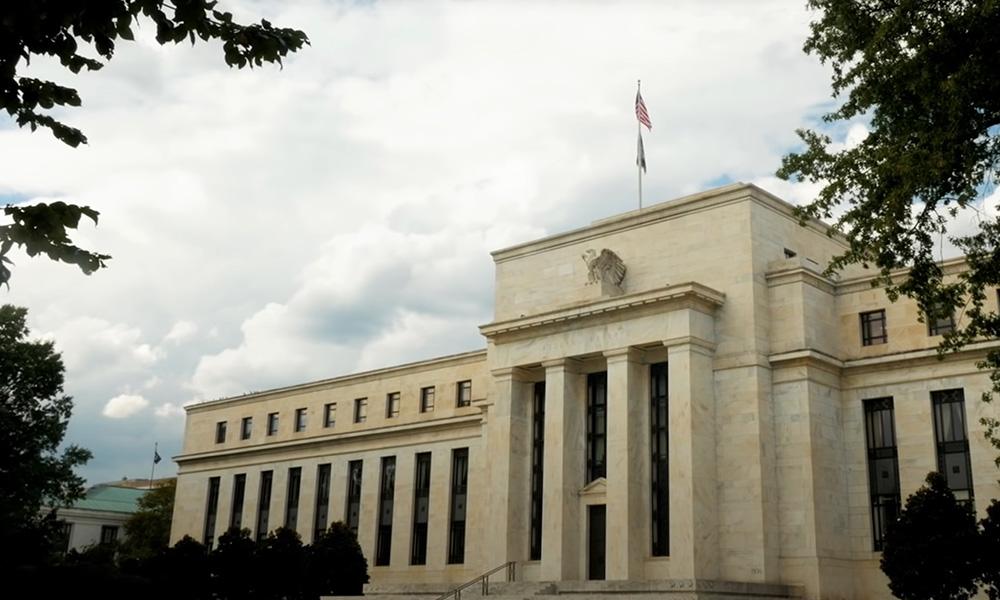
US inflation indicators continue to deviate from target.
The core personal consumption expenditures (PCE) price index, a key reference for the Federal Reserve's policy anchor, has remained above the 2% target for five consecutive years. The year-on-year increase in October was 3.3%, the highest level since November 2023, with the month-on-month increase remaining at 0.3% for the third consecutive month. The producer price index (PPI) rose 6.5% year-on-year, a near four-year high, with the goods sub-index showing double-digit year-on-year growth, indicating that upstream price pressures have not yet eased. The consumer price index (CPI) did not release official year-on-year figures due to statistical limitations, but the month-on-month data has consistently exceeded expectations. Housing, food, and energy sub-categories contributed significantly to the month-on-month increase, with gasoline prices fluctuating considerably due to the Middle East conflict. Although the month-on-month increase slowed compared to September, the annual cumulative level remains significantly above the target, and the breadth indicator shows that the scope of price increases has expanded.Distinguishing between temporary factors and persistent stress
Tariff adjustments and the Middle East conflict have driven up energy and some commodity prices; these shocks are theoretically one-off. If tariff policies and energy costs stabilize, inflation is expected to decline naturally; if tariffs are reduced or energy prices fall, the decline may be faster. However, interest rate transmission has a time lag; the effects of the current policy rate hike will not be seen for several quarters. By then, if demand has naturally slowed, it may result in excessive tightening. While core indicators have not accelerated month-on-month, after five years of continuous overshooting, the market's acceptance of a "temporary" explanation has decreased. The Federal Reserve acknowledged in its October meeting statement that inflation stickiness was higher than expected, yet still chose to hold rates steady, further limiting the scope for further observation.Federal Reserve Reputation and Policy Choices
Market pricing already reflects a high probability of a December rate hike, which in itself constitutes confidence in the Fed's commitment to its goals. Maintaining interest rates unchanged could undermine this confidence. Governor Waller stated before the October Consumer Price Index (CPI) release that even with improved data, a 25-basis-point increase was still supported; if the core month-over-month change was around 0.3% or higher, a 50-basis-point increase should be considered. The October core month-over-month change fell precisely within this range. The meeting minutes showed that the vast majority of officials expected further rate hikes in the coming months, with some explicitly mentioning the 50-basis-point option. Waller further pointed out that a mere 25-basis-point increase without a clear path forward could lead to a downward revision of long-term rate hike expectations, resulting in unexpectedly loose financial conditions.Adjustment space under the Fed's data-dependent framework
Market analysts believe that if inflation falls faster than currently expected in the coming months, the already implemented upward adjustments can be offset by subsequent downward adjustments, and this does not constitute a misjudgment. The data-dependent principle requires adjustments based on new information, albeit smaller in magnitude and more frequently, rather than waiting for major events before making significant shifts. Currently, the annual levels of the core personal consumption expenditure price index and the producer price index remain significantly above the target, and monthly data have not shown a clear inflection point. The high yield on the 10-year US Treasury bond has already partially reflected expectations of further tightening. The flexibility of future policy space depends on the actual evolution of the inflation path, rather than a pre-set single scenario.Frequently Asked Questions
Question 1: Why is the core personal consumption expenditures price index a primary reference for the Federal Reserve? Answer: This indicator excludes fluctuations in food and energy prices, better reflecting persistent demand-driven price pressures, and has a broader coverage than the consumer price index, thus becoming a policy anchor. The current year-on-year level of 3.3% has been higher than expected for several consecutive months. Question 2: Is the month-on-month slowdown in October sufficient to support maintaining the current interest rate? Answer: While the month-on-month inflation data has slowed, the annual level continues to rise, and after five years of continuous overshooting, single-month data is insufficient to provide sufficient confidence. The Federal Reserve has acknowledged stickiness, and holding rates steady will further test its credibility.- Risk Warning and Disclaimer
- The market involves risk, and trading may not be suitable for all investors. This article is for reference only and does not constitute personal investment advice, nor does it take into account certain users’ specific investment objectives, financial situation, or other needs. Any investment decisions made based on this information are at your own risk.