Crude oil trading alert: With geopolitical tensions easing, oil prices remain range-bound, awaiting stabilization.
2025-11-21 09:28:05
On Friday during Asian trading hours, US crude oil continued its decline, falling for the third consecutive day to test previous lows, currently trading around $58.40 per barrel. Overall volatility increased significantly after the Ukrainian president expressed willingness to work on a preliminary peace plan proposed by the US and Russia.
From the supply side, if future peace progress leads to a gradual easing of energy sanctions against Russia, crude oil from the world's third-largest oil producer may flow back into the market. The crude oil market already faces potential annual oversupply pressure, and increased production from OPEC+ and other oil-producing countries is further amplifying this sentiment.

Market research indicates that the US sanctions against two major Russian energy companies are about to take effect, causing some short-term tension in the global supply chain.
However, judging from past experience, Russia has repeatedly achieved exports through so-called "grey transport channels," which has prevented its energy revenue from experiencing a precipitous decline, despite the pressure on it.
"While Ukraine has shown a willingness to discuss ending the conflict, the real uncertainty lies in whether Russia truly intends to end the stalemate." — Rachel Ziemba, an international security studies expert
Market transactions have been even more cautious. With sanctions looming, some crude oil trade routes have been readjusted, particularly affecting import structures to India, and large energy companies have been forced to accelerate asset restructuring and resale processes.
However, investors remain relatively insensitive to these sanctions, viewing them more as short-term disturbances than structural factors.
"The market generally expects Russian fuel supplies to continue to enter the international market through covert channels, therefore the price reaction to sanctions has not been strong." — Rachel Ziemba
From the demand side, the recovery in global energy demand is uneven, and fluctuations in demand from Asian countries and other emerging markets have further weakened the upward momentum of crude oil prices. Given the weak supply and demand, any expectations of increased supply related to peace progress will be amplified by the market, thereby suppressing price rebounds.
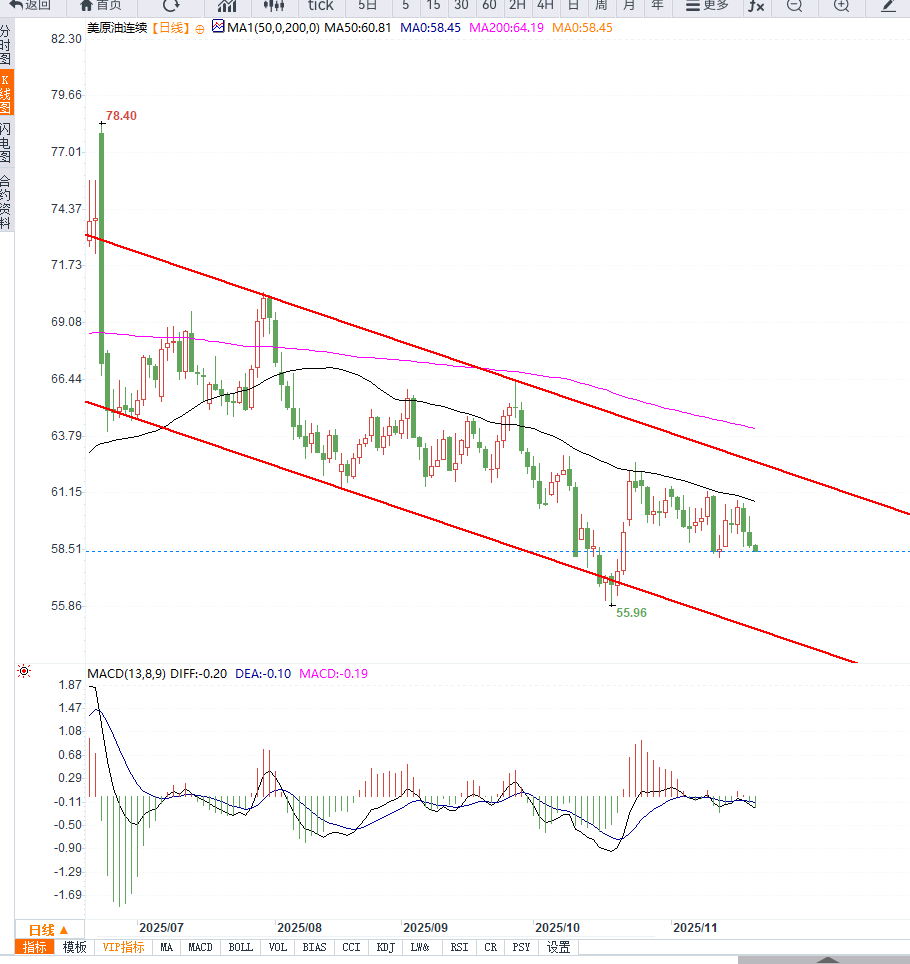
From a daily chart perspective, US crude oil prices have been consolidating in a weak range around $58 to $60 recently, with the candlestick pattern showing a typical downward trend. Short-term moving averages are providing downward pressure, and prices have repeatedly encountered resistance near the 9-day moving average, indicating limited short-term rebound potential.
Meanwhile, the 14-day RSI indicator remains in the neutral-to-weak zone, reflecting insufficient buying momentum and that the trend has not yet formed a valid reversal. If the price subsequently falls below the recent important support level of approximately $58.00, it may trigger further downward movement; conversely, if it unexpectedly breaks through the resistance zone above $60.8-$61, there is a chance to reverse the current bearish structure.
Editor's Note:
From the current situation, while news of peace progress has caused short-term sentiment fluctuations, the core market concern remains the potential for an unexpected increase in future supply and the uncertainty surrounding the enforcement of sanctions. Oil prices are likely to remain weak throughout the year, with the future trend of global inventory and the sustainability of oil-producing countries' policies being key factors.
If a peace plan achieves a substantial breakthrough in the future, the oil market may face a new round of pressure to rebalance supply and demand.
From the supply side, if future peace progress leads to a gradual easing of energy sanctions against Russia, crude oil from the world's third-largest oil producer may flow back into the market. The crude oil market already faces potential annual oversupply pressure, and increased production from OPEC+ and other oil-producing countries is further amplifying this sentiment.
Market research indicates that the US sanctions against two major Russian energy companies are about to take effect, causing some short-term tension in the global supply chain.
However, judging from past experience, Russia has repeatedly achieved exports through so-called "grey transport channels," which has prevented its energy revenue from experiencing a precipitous decline, despite the pressure on it.
"While Ukraine has shown a willingness to discuss ending the conflict, the real uncertainty lies in whether Russia truly intends to end the stalemate." — Rachel Ziemba, an international security studies expert
Market transactions have been even more cautious. With sanctions looming, some crude oil trade routes have been readjusted, particularly affecting import structures to India, and large energy companies have been forced to accelerate asset restructuring and resale processes.
However, investors remain relatively insensitive to these sanctions, viewing them more as short-term disturbances than structural factors.
"The market generally expects Russian fuel supplies to continue to enter the international market through covert channels, therefore the price reaction to sanctions has not been strong." — Rachel Ziemba
From the demand side, the recovery in global energy demand is uneven, and fluctuations in demand from Asian countries and other emerging markets have further weakened the upward momentum of crude oil prices. Given the weak supply and demand, any expectations of increased supply related to peace progress will be amplified by the market, thereby suppressing price rebounds.
From a daily chart perspective, US crude oil prices have been consolidating in a weak range around $58 to $60 recently, with the candlestick pattern showing a typical downward trend. Short-term moving averages are providing downward pressure, and prices have repeatedly encountered resistance near the 9-day moving average, indicating limited short-term rebound potential.
Meanwhile, the 14-day RSI indicator remains in the neutral-to-weak zone, reflecting insufficient buying momentum and that the trend has not yet formed a valid reversal. If the price subsequently falls below the recent important support level of approximately $58.00, it may trigger further downward movement; conversely, if it unexpectedly breaks through the resistance zone above $60.8-$61, there is a chance to reverse the current bearish structure.
Editor's Note:
From the current situation, while news of peace progress has caused short-term sentiment fluctuations, the core market concern remains the potential for an unexpected increase in future supply and the uncertainty surrounding the enforcement of sanctions. Oil prices are likely to remain weak throughout the year, with the future trend of global inventory and the sustainability of oil-producing countries' policies being key factors.
If a peace plan achieves a substantial breakthrough in the future, the oil market may face a new round of pressure to rebalance supply and demand.
- Risk Warning and Disclaimer
- The market involves risk, and trading may not be suitable for all investors. This article is for reference only and does not constitute personal investment advice, nor does it take into account certain users’ specific investment objectives, financial situation, or other needs. Any investment decisions made based on this information are at your own risk.