A super week for global central banks is here! The dollar fell to a five-week low as markets held their breath awaiting a crucial decision from the Federal Reserve amid disagreements.
2025-12-06 08:51:38
The dollar index came under pressure on Friday, closing at 98.98, down 0.5% for the week and near a five-week low. Market expectations for a Federal Reserve rate cut next week continued to rise, becoming the dominant factor in the foreign exchange market this week. Traders expect the probability of a rate cut on December 10 to be close to 90%.
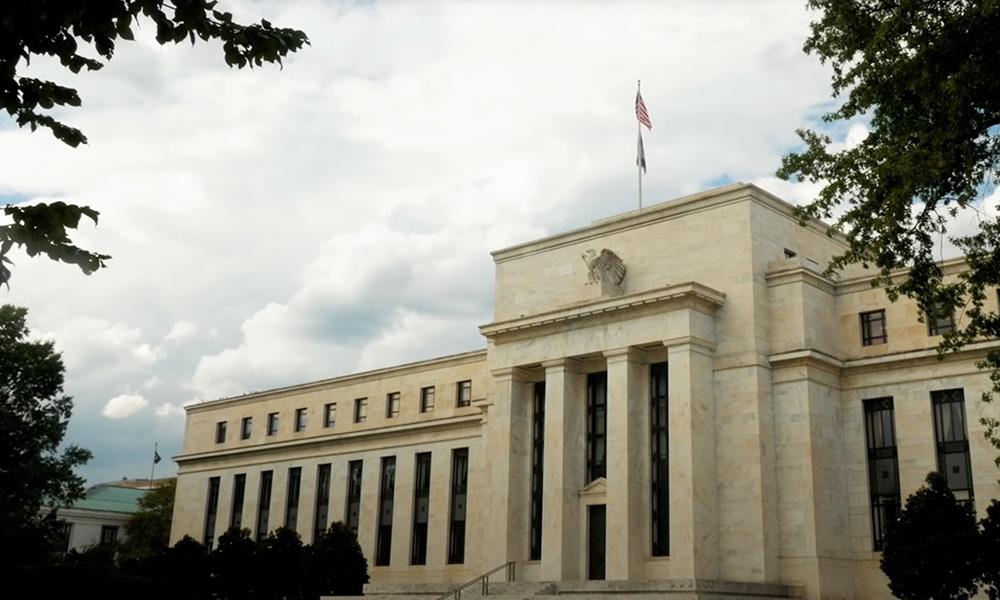
Thursday's economic data showed that the number of people filing for unemployment benefits last week fell to its lowest level in more than three years, easing concerns about a sharp deterioration in the labor market and fueling expectations of interest rate cuts. The Chicago Fed estimates that the unemployment rate remained around 4.4% in November.
The market is focusing on two key aspects of next week's Federal Reserve decision: significant internal divisions within the Fed regarding interest rate cuts. Of the 12 voting members, 5 expressed opposition or skepticism towards further easing. Since 1990, only nine meetings have seen three or more dissenting votes. The number of dissenting votes will be a key indicator of the degree of division within the Fed and future policy resistance.
Furthermore, attention should be paid to Powell's guidance: Chairman Powell stated after the October meeting that a December rate cut was "not a done deal," which triggered market volatility. His statement on the future path of interest rates this time will be more important than the rate cut itself. The market needs confirmation from him whether this is an "insurance" rate cut or the beginning of an easing cycle.
Some institutions, including Nomura Securities, have warned that the market is underestimating the risks of the Federal Reserve remaining on hold. Nomura economist David Seif believes that nothing is certain at this point. Therefore, the market is underestimating the risk that the Fed will choose not to cut rates at its December meeting. "Especially in the event of a rate cut, it will be interesting to see how much dissent there will be. With the rotation of the four regional presidents, their stance will reveal how much independence they intend to maintain and how much pressure they will put on the Fed. Because this actually shows not only what actions they are willing to take against Chairman Powell, but also what actions they are willing to take against his successor. We really want to figure out how much the Fed's model is changing, turning into a simple one-person-one-vote situation."
Market analysts believe the weakening of the US dollar is justified, as it remains overvalued relative to major currencies. Furthermore, the prospect of White House economic advisor Hassett potentially succeeding as Federal Reserve Chairman is interpreted by the market as a possible indication of a more dovish monetary policy.
The euro held steady at $1.1643, not far from a three-week high. Latest data showed that a rebound in investment spending propelled the eurozone economy to stronger-than-expected growth in the third quarter, providing the European Central Bank with valuable policy buffers amid inflation targets and an uncertain external environment.
Eurostat revised its third-quarter GDP growth forecast for the eurozone upward to 0.3% from 0.2% quarter-on-quarter, with a year-on-year growth of 1.4%. This acceleration was primarily driven by a strong rebound in investment spending, which, after declining 1.7% in the second quarter, saw a significant increase of 0.9% in the third quarter, successfully offsetting the negative impact of a slight slowdown in consumer spending and net exports.
The OECD has raised its 2026 growth forecast for the eurozone to 1.2% from 1.0%, and expects growth to rise to 1.4% in 2027. However, continued weakness in consumer spending and volatility in external demand remain major challenges for the economy's future.
With inflation nearing the 2% target, robust growth data has reduced the urgency for further easing by the central bank in the near term. The market believes that the likelihood of the European Central Bank cutting interest rates again at its December 18 meeting or in early 2026 is very low.
The yen rose 0.1% against the dollar to 155.295 yen as market expectations that the Bank of Japan might raise interest rates this month prompted some carry trades to be unwound.
Bank of America economist Takayasu Kudo expects the Bank of Japan to raise its target interest rate from 0.5% to 0.75% at its December 18-19 meeting, followed by rate hikes every six months thereafter. "Judging from recent developments in corporate earnings, wage negotiations, the yen's depreciation in the foreign exchange market, and dialogue with the government, the Bank of Japan's confidence in raising rates at its upcoming December meeting is clearly growing," the economist said. He anticipates a rate hike in June 2026, followed by further increases in January and July 2027.
Looking ahead to next week, several major central banks around the world will announce their interest rate decisions. In addition to the Federal Reserve, central banks from Australia, Canada, Switzerland, Japan, Europe, the UK, and Sweden will also be making their announcements, potentially ushering in a new round of market volatility driven by monetary policy.
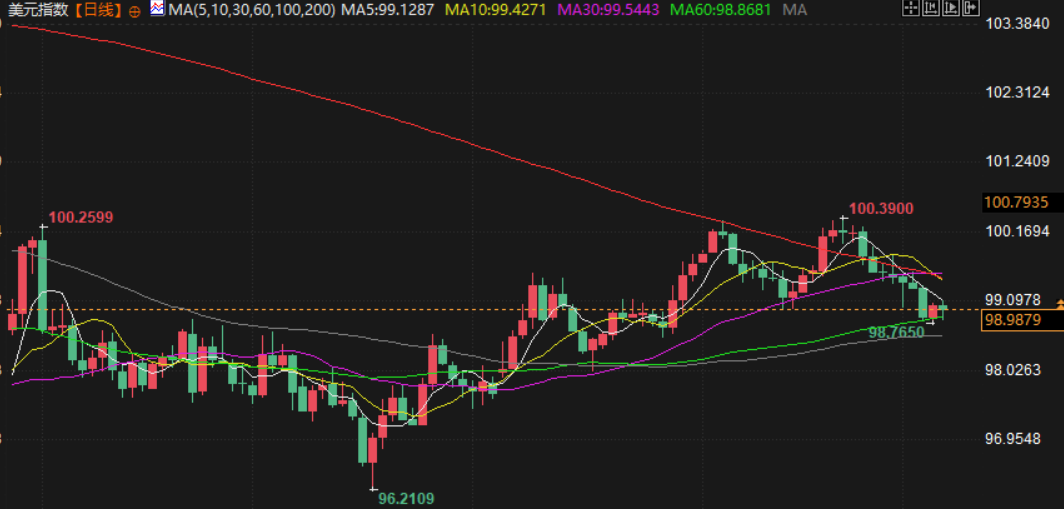
Thursday's economic data showed that the number of people filing for unemployment benefits last week fell to its lowest level in more than three years, easing concerns about a sharp deterioration in the labor market and fueling expectations of interest rate cuts. The Chicago Fed estimates that the unemployment rate remained around 4.4% in November.
The market is focusing on two key aspects of next week's Federal Reserve decision: significant internal divisions within the Fed regarding interest rate cuts. Of the 12 voting members, 5 expressed opposition or skepticism towards further easing. Since 1990, only nine meetings have seen three or more dissenting votes. The number of dissenting votes will be a key indicator of the degree of division within the Fed and future policy resistance.
Furthermore, attention should be paid to Powell's guidance: Chairman Powell stated after the October meeting that a December rate cut was "not a done deal," which triggered market volatility. His statement on the future path of interest rates this time will be more important than the rate cut itself. The market needs confirmation from him whether this is an "insurance" rate cut or the beginning of an easing cycle.
Some institutions, including Nomura Securities, have warned that the market is underestimating the risks of the Federal Reserve remaining on hold. Nomura economist David Seif believes that nothing is certain at this point. Therefore, the market is underestimating the risk that the Fed will choose not to cut rates at its December meeting. "Especially in the event of a rate cut, it will be interesting to see how much dissent there will be. With the rotation of the four regional presidents, their stance will reveal how much independence they intend to maintain and how much pressure they will put on the Fed. Because this actually shows not only what actions they are willing to take against Chairman Powell, but also what actions they are willing to take against his successor. We really want to figure out how much the Fed's model is changing, turning into a simple one-person-one-vote situation."
Market analysts believe the weakening of the US dollar is justified, as it remains overvalued relative to major currencies. Furthermore, the prospect of White House economic advisor Hassett potentially succeeding as Federal Reserve Chairman is interpreted by the market as a possible indication of a more dovish monetary policy.
The euro held steady at $1.1643, not far from a three-week high. Latest data showed that a rebound in investment spending propelled the eurozone economy to stronger-than-expected growth in the third quarter, providing the European Central Bank with valuable policy buffers amid inflation targets and an uncertain external environment.
Eurostat revised its third-quarter GDP growth forecast for the eurozone upward to 0.3% from 0.2% quarter-on-quarter, with a year-on-year growth of 1.4%. This acceleration was primarily driven by a strong rebound in investment spending, which, after declining 1.7% in the second quarter, saw a significant increase of 0.9% in the third quarter, successfully offsetting the negative impact of a slight slowdown in consumer spending and net exports.
The OECD has raised its 2026 growth forecast for the eurozone to 1.2% from 1.0%, and expects growth to rise to 1.4% in 2027. However, continued weakness in consumer spending and volatility in external demand remain major challenges for the economy's future.
With inflation nearing the 2% target, robust growth data has reduced the urgency for further easing by the central bank in the near term. The market believes that the likelihood of the European Central Bank cutting interest rates again at its December 18 meeting or in early 2026 is very low.
The yen rose 0.1% against the dollar to 155.295 yen as market expectations that the Bank of Japan might raise interest rates this month prompted some carry trades to be unwound.
Bank of America economist Takayasu Kudo expects the Bank of Japan to raise its target interest rate from 0.5% to 0.75% at its December 18-19 meeting, followed by rate hikes every six months thereafter. "Judging from recent developments in corporate earnings, wage negotiations, the yen's depreciation in the foreign exchange market, and dialogue with the government, the Bank of Japan's confidence in raising rates at its upcoming December meeting is clearly growing," the economist said. He anticipates a rate hike in June 2026, followed by further increases in January and July 2027.
Looking ahead to next week, several major central banks around the world will announce their interest rate decisions. In addition to the Federal Reserve, central banks from Australia, Canada, Switzerland, Japan, Europe, the UK, and Sweden will also be making their announcements, potentially ushering in a new round of market volatility driven by monetary policy.
- Risk Warning and Disclaimer
- The market involves risk, and trading may not be suitable for all investors. This article is for reference only and does not constitute personal investment advice, nor does it take into account certain users’ specific investment objectives, financial situation, or other needs. Any investment decisions made based on this information are at your own risk.