The pound rose modestly against the dollar, supported by a weaker dollar and a slight increase in the UK PMI.
2026-01-07 14:17:34
GBP/USD continued to consolidate its modest gains from the previous session during Wednesday's Asian trading session, with the pair fluctuating higher around 1.3510. The main driver of the pound's rise was the relative weakness of the US dollar in the short term, especially as the market awaited key US economic data, causing the dollar to lose some buying momentum.
Traders are currently focused on the US ISM Services PMI and JOLTs job openings data to be released today, while the more influential US non-farm payrolls report is scheduled for release later this week. These data could provide important clues to the future path of the Federal Reserve's interest rates, thereby affecting the dollar's performance and driving volatility in cross-currency pairs.
The internal disagreements within the Federal Reserve regarding monetary policy have also, to some extent, restrained the further strengthening of the US dollar.
Some Federal Reserve officials emphasized the need for more aggressive interest rate cuts to support the economy, while others advocated for fine-tuning interest rates within the framework of inflation and employment. This inconsistent information made it difficult for the market to form clear short-term directional expectations, and to some extent provided breathing room for risk-sensitive currencies such as the British pound.
Meanwhile, the UK's latest S&P Global Services PMI final reading was 51.4, a slight increase from November but lower than some market expectations, indicating that UK private sector activity is still mainly expanding moderately, remaining above the expansion/contraction threshold for the eighth consecutive month.
While the data suggests that the economy is still expanding, the expansion is limited, and factors such as rising input costs may influence the future direction of the Bank of England's interest rate policy.
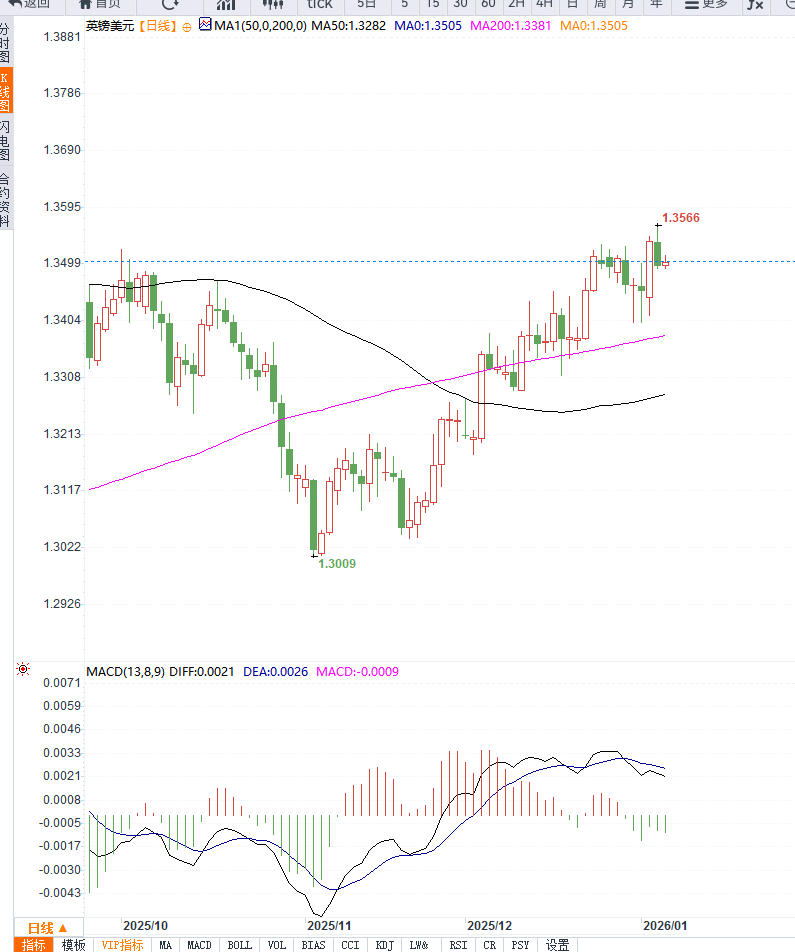
From a technical perspective, the daily chart of GBP/USD shows that the exchange rate has formed a key support zone around 1.3500 and continues to trade above multiple short-term moving averages, indicating that the overall bullish structure has not been broken.
The Relative Strength Index (RSI) remains in a neutral-to-upper position, indicating that there is no significant divergence between bullish and bearish forces. If the price can firmly break through the resistance in the 1.3560/1.3580 area, where the recent highs have been reached, it is expected to continue its upward momentum and test higher levels.
Conversely, if influenced by a rebound in the US dollar or weak UK economic data, it may fall back to test the 1.3500 or even lower moving average support zone. Overall, against the backdrop of increased uncertainty in macroeconomic data, the short-term trend of GBP/USD is more inclined towards range-bound trading, and the relative strength of the US dollar and the British pound may fluctuate repeatedly before data releases.
Meanwhile, while the UK PMI continued to expand, it was only moderate. These fundamental conditions made it difficult for the pound to surge unilaterally, leading the market to weigh interest rate expectations against economic growth. As the market gradually digests the upcoming core US and UK data, the battle between bulls and bears may intensify.
Editor's Note:
The current GBP/USD exchange rate reflects a delicate balance between fundamentals and expectations. On the one hand, US data and uncertainty surrounding Federal Reserve policy are putting pressure on the dollar, giving the pound room to move; on the other hand, the limited strength of the UK economic expansion, which has not fully met market expectations, is restricting the pound's upward momentum.
If future UK economic data shows clearer improvement, or if US data continues to weaken, the pound may receive further support; conversely, a strong rebound in the US dollar could cause GBP/USD to pull back to a more solid support level and fluctuate.
Traders are currently focused on the US ISM Services PMI and JOLTs job openings data to be released today, while the more influential US non-farm payrolls report is scheduled for release later this week. These data could provide important clues to the future path of the Federal Reserve's interest rates, thereby affecting the dollar's performance and driving volatility in cross-currency pairs.
The internal disagreements within the Federal Reserve regarding monetary policy have also, to some extent, restrained the further strengthening of the US dollar.
Some Federal Reserve officials emphasized the need for more aggressive interest rate cuts to support the economy, while others advocated for fine-tuning interest rates within the framework of inflation and employment. This inconsistent information made it difficult for the market to form clear short-term directional expectations, and to some extent provided breathing room for risk-sensitive currencies such as the British pound.
Meanwhile, the UK's latest S&P Global Services PMI final reading was 51.4, a slight increase from November but lower than some market expectations, indicating that UK private sector activity is still mainly expanding moderately, remaining above the expansion/contraction threshold for the eighth consecutive month.
While the data suggests that the economy is still expanding, the expansion is limited, and factors such as rising input costs may influence the future direction of the Bank of England's interest rate policy.
From a technical perspective, the daily chart of GBP/USD shows that the exchange rate has formed a key support zone around 1.3500 and continues to trade above multiple short-term moving averages, indicating that the overall bullish structure has not been broken.
The Relative Strength Index (RSI) remains in a neutral-to-upper position, indicating that there is no significant divergence between bullish and bearish forces. If the price can firmly break through the resistance in the 1.3560/1.3580 area, where the recent highs have been reached, it is expected to continue its upward momentum and test higher levels.
Conversely, if influenced by a rebound in the US dollar or weak UK economic data, it may fall back to test the 1.3500 or even lower moving average support zone. Overall, against the backdrop of increased uncertainty in macroeconomic data, the short-term trend of GBP/USD is more inclined towards range-bound trading, and the relative strength of the US dollar and the British pound may fluctuate repeatedly before data releases.
Meanwhile, while the UK PMI continued to expand, it was only moderate. These fundamental conditions made it difficult for the pound to surge unilaterally, leading the market to weigh interest rate expectations against economic growth. As the market gradually digests the upcoming core US and UK data, the battle between bulls and bears may intensify.
Editor's Note:
The current GBP/USD exchange rate reflects a delicate balance between fundamentals and expectations. On the one hand, US data and uncertainty surrounding Federal Reserve policy are putting pressure on the dollar, giving the pound room to move; on the other hand, the limited strength of the UK economic expansion, which has not fully met market expectations, is restricting the pound's upward momentum.
If future UK economic data shows clearer improvement, or if US data continues to weaken, the pound may receive further support; conversely, a strong rebound in the US dollar could cause GBP/USD to pull back to a more solid support level and fluctuate.
- Risk Warning and Disclaimer
- The market involves risk, and trading may not be suitable for all investors. This article is for reference only and does not constitute personal investment advice, nor does it take into account certain users’ specific investment objectives, financial situation, or other needs. Any investment decisions made based on this information are at your own risk.