Venezuelan oil game and the crude oil market landscape in 2026
2026-01-09 21:26:40
Venezuela possesses the world's largest proven crude oil reserves, but its oil wells operate like an old, neglected machine, never reaching full capacity. In December 2025, the country's daily crude oil production was only 830,000 barrels, a sharp drop of 130,000 barrels from the previous month. This number may sound substantial, but it pales in comparison to the hundreds of millions of barrels consumed globally each day. The problem lies not in the resources themselves, but in long-term underinvestment, aging infrastructure, and layers of external sanctions.
Despite recent conciliatory signals from the US—allowing commodity trader Vitol to negotiate Venezuelan oil imports and exports and planning to receive 30 to 50 million barrels of crude oil at market prices—this does not mean an immediate supply surge. Analysts point out that any substantial capacity recovery will require years and billions of dollars in investment. The crude oil currently stranded at sea, originally unable to reach port due to the export blockade implemented in mid-December 2024, may now potentially reach US Gulf Coast refineries, but this represents more of a revitalization of existing capacity than new production.
To complicate matters further, Venezuela produces heavy, sulfurous crude oil, which requires sophisticated refining facilities and can only be processed efficiently by specific types of refineries. This limits its buyer base, making it difficult to quickly fill the global market gap even after the lockdown is lifted. Therefore, despite possessing vast resources, Venezuela remains a potential variable that is "visible but intangible" in the short term.
In the global crude oil trade, an unseen fleet is quietly navigating the oceans—they are known as the "shadow fleet." Hundreds of oil tankers evade Western sanctions by frequently changing their flags, disabling their positioning systems, and engaging in anonymous transactions.
This situation makes oil price movements exceptionally delicate. Theoretically, sanctions should lead to reduced supply and higher prices; however, in reality, due to the existence of "shadow fleets," large quantities of crude oil are still flowing, albeit through more covert routes and at higher costs. This makes it difficult for the market to form clear price signals. Traders are worried about sudden escalations of geopolitical conflicts, yet they also have to face the reality that the total global crude oil volume has not actually shrunk, only its flow has changed.
If you only look at the news headlines, you might think that the crude oil market is about to face a storm: the United States intervened in Venezuelan oil sales, oil tankers were seized, sanctions were escalated... But if you look at the candlestick chart, you will find that the price of West Texas Intermediate (WTI) crude oil has not seen a panic surge. Why is that?
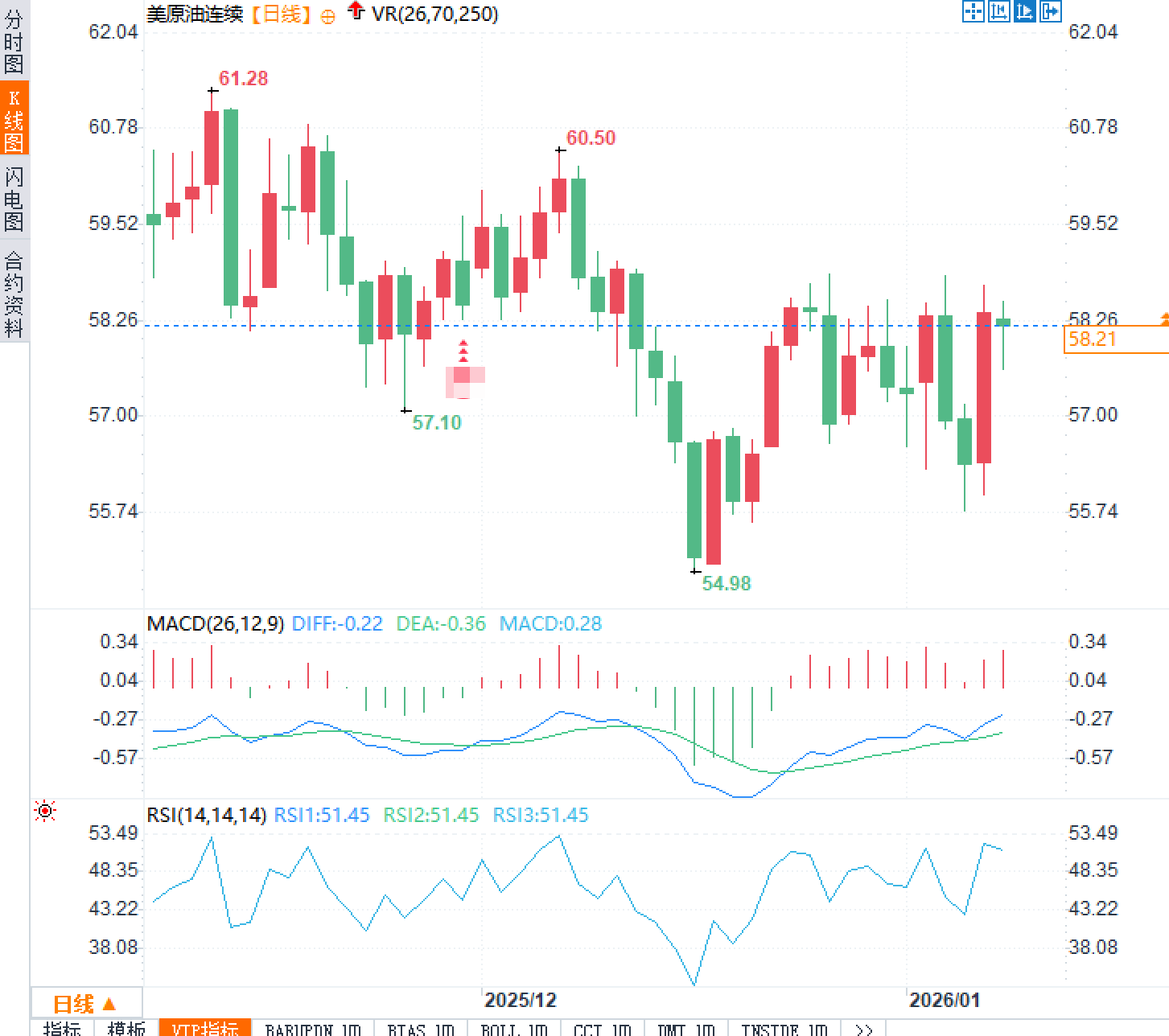
The answer lies in the fundamentals. Despite escalating geopolitical risks, analysts generally predict that the global oil market is likely to face a structural oversupply in 2026. OPEC's overall production has remained stable at around 29 million barrels per day, without significant fluctuations since September 2025. Saudi Arabia continues to implement production cuts, keeping its output below its quota; while Iraq has bucked the trend, increasing production and even exceeding its quota, offsetting the production cuts of other member countries.
More importantly, the US plan to receive 30 to 50 million barrels of Venezuelan crude oil essentially involves re-introducing previously frozen inventory into the market. This supply is not new, but rather a shift from a "frozen" to a "circulating" state. For the US domestic market, this means refineries will receive more heavy crude oil feedstock, freeing up more domestic light crude oil for export. The result is increased US exports and a rise in international light crude oil supply, which in turn suppresses the upward momentum of WTI prices.
In other words, the market hasn't seen a real "supply shock," but rather sensed a "supply redistribution." Analysts believe that under these circumstances, even with dramatic political maneuvering, oil prices are unlikely to sustain a strong upward trend.
Looking ahead to 2026, the core issue in the crude oil market will no longer be a simple supply-demand imbalance, but rather policy-driven supply control and trade route restructuring. Buyers who previously relied on their own refineries to purchase Venezuelan crude have significantly reduced imports under the pressure of blockades, turning instead to alternative sources—such as discounted Iranian or Russian crude, or Canadian heavy crude of similar quality. These adjustments, seemingly minor, are subtly altering the direction of global oil flows.
Analysts believe that the essence of this change is a "restructuring of routes rather than an expansion of total volume." Venezuelan crude oil has not disappeared; it has simply entered the market through a different route. Similarly, the US has not suddenly gained much more production capacity; rather, it has optimized its export structure by adjusting external resources. Therefore, the overall impact on global oil prices is limited, but the impact on regional markets and refining profit patterns cannot be ignored.
Future oil price trends may be driven more by "uncertainty" than by traditional shortages or surpluses. Geopolitical developments, the tightness of sanctions enforcement, and the activity level of shadow fleets will all become new price variables. WTI's performance has already demonstrated that the market is learning to price in "ambiguous risks" rather than waiting for clear outcomes.
In this new reality, classic supply and demand models are no longer sufficient to explain everything. Non-market factors such as policy intervention, energy security considerations, and control of transportation routes are gradually becoming the dominant forces. The calm oil prices at the beginning of 2026 may not be a sign of calm, but rather the whisper before a storm. While everyone thinks the oil war is taking place on the battlefield, it has already been quietly unfolding on every shipping route, in every tanker, and in every trading decision.
Despite recent conciliatory signals from the US—allowing commodity trader Vitol to negotiate Venezuelan oil imports and exports and planning to receive 30 to 50 million barrels of crude oil at market prices—this does not mean an immediate supply surge. Analysts point out that any substantial capacity recovery will require years and billions of dollars in investment. The crude oil currently stranded at sea, originally unable to reach port due to the export blockade implemented in mid-December 2024, may now potentially reach US Gulf Coast refineries, but this represents more of a revitalization of existing capacity than new production.
To complicate matters further, Venezuela produces heavy, sulfurous crude oil, which requires sophisticated refining facilities and can only be processed efficiently by specific types of refineries. This limits its buyer base, making it difficult to quickly fill the global market gap even after the lockdown is lifted. Therefore, despite possessing vast resources, Venezuela remains a potential variable that is "visible but intangible" in the short term.
Geopolitical rivalry escalates: A cat-and-mouse game between "shadow fleets" and sanctions enforcement.
In the global crude oil trade, an unseen fleet is quietly navigating the oceans—they are known as the "shadow fleet." Hundreds of oil tankers evade Western sanctions by frequently changing their flags, disabling their positioning systems, and engaging in anonymous transactions.
This situation makes oil price movements exceptionally delicate. Theoretically, sanctions should lead to reduced supply and higher prices; however, in reality, due to the existence of "shadow fleets," large quantities of crude oil are still flowing, albeit through more covert routes and at higher costs. This makes it difficult for the market to form clear price signals. Traders are worried about sudden escalations of geopolitical conflicts, yet they also have to face the reality that the total global crude oil volume has not actually shrunk, only its flow has changed.
Why are WTI prices so calm? Oversupply expectations outweigh risk premiums.
If you only look at the news headlines, you might think that the crude oil market is about to face a storm: the United States intervened in Venezuelan oil sales, oil tankers were seized, sanctions were escalated... But if you look at the candlestick chart, you will find that the price of West Texas Intermediate (WTI) crude oil has not seen a panic surge. Why is that?
The answer lies in the fundamentals. Despite escalating geopolitical risks, analysts generally predict that the global oil market is likely to face a structural oversupply in 2026. OPEC's overall production has remained stable at around 29 million barrels per day, without significant fluctuations since September 2025. Saudi Arabia continues to implement production cuts, keeping its output below its quota; while Iraq has bucked the trend, increasing production and even exceeding its quota, offsetting the production cuts of other member countries.
More importantly, the US plan to receive 30 to 50 million barrels of Venezuelan crude oil essentially involves re-introducing previously frozen inventory into the market. This supply is not new, but rather a shift from a "frozen" to a "circulating" state. For the US domestic market, this means refineries will receive more heavy crude oil feedstock, freeing up more domestic light crude oil for export. The result is increased US exports and a rise in international light crude oil supply, which in turn suppresses the upward momentum of WTI prices.
In other words, the market hasn't seen a real "supply shock," but rather sensed a "supply redistribution." Analysts believe that under these circumstances, even with dramatic political maneuvering, oil prices are unlikely to sustain a strong upward trend.
New Landscape in 2026: Reshaping Trade Flows and Changing Pricing Logic
Looking ahead to 2026, the core issue in the crude oil market will no longer be a simple supply-demand imbalance, but rather policy-driven supply control and trade route restructuring. Buyers who previously relied on their own refineries to purchase Venezuelan crude have significantly reduced imports under the pressure of blockades, turning instead to alternative sources—such as discounted Iranian or Russian crude, or Canadian heavy crude of similar quality. These adjustments, seemingly minor, are subtly altering the direction of global oil flows.
Analysts believe that the essence of this change is a "restructuring of routes rather than an expansion of total volume." Venezuelan crude oil has not disappeared; it has simply entered the market through a different route. Similarly, the US has not suddenly gained much more production capacity; rather, it has optimized its export structure by adjusting external resources. Therefore, the overall impact on global oil prices is limited, but the impact on regional markets and refining profit patterns cannot be ignored.
Future oil price trends may be driven more by "uncertainty" than by traditional shortages or surpluses. Geopolitical developments, the tightness of sanctions enforcement, and the activity level of shadow fleets will all become new price variables. WTI's performance has already demonstrated that the market is learning to price in "ambiguous risks" rather than waiting for clear outcomes.
In this new reality, classic supply and demand models are no longer sufficient to explain everything. Non-market factors such as policy intervention, energy security considerations, and control of transportation routes are gradually becoming the dominant forces. The calm oil prices at the beginning of 2026 may not be a sign of calm, but rather the whisper before a storm. While everyone thinks the oil war is taking place on the battlefield, it has already been quietly unfolding on every shipping route, in every tanker, and in every trading decision.
- Risk Warning and Disclaimer
- The market involves risk, and trading may not be suitable for all investors. This article is for reference only and does not constitute personal investment advice, nor does it take into account certain users’ specific investment objectives, financial situation, or other needs. Any investment decisions made based on this information are at your own risk.