Behind the surge and subsequent pullback in oil prices: The looming conflict between the US and Iran has ignited the oil market, but supply ceilings remain.
2026-01-12 16:18:30
On Monday (January 12), during the European session, US crude oil prices retreated after hitting a near one-month high of $59.80 per barrel, and are currently fluctuating around $58.95 per barrel. The core driver that once propelled prices upward was the escalating geopolitical risks between the US and Iran: the possibility of US military intervention in Iran's internal turmoil has triggered extreme market concerns about a retaliatory blockade of the Strait of Hormuz by Iran.
However, multiple constraints have limited the disorderly surge in oil prices. The risk of oversupply continues to act as a ceiling for oil prices, and the market may enter a highly volatile phase where geopolitical risks and supply and demand fundamentals interact.
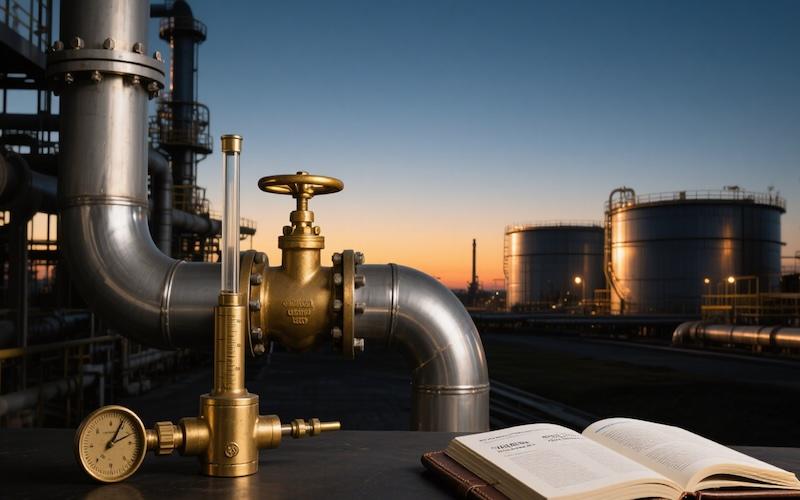
The Strait of Hormuz has once again become a global focal point due to the possibility of US intervention in the situation with Iran. According to multiple media reports last Sunday, US President Trump is considering a range of action options against Iran.
Industry experts warn that military confrontation could provoke Iran to block the Strait of Hormuz, a narrow waterway connecting the Persian Gulf and the Arabian Sea that carries nearly a third of the world's seaborne crude oil traffic.
Saul Kavonik, head of energy research at MST Marquee, pointed out that "a disruption in the Strait of Hormuz could trigger a global oil and gas crisis," especially considering that "the current Iranian regime, if it feels its power and survival are threatened and it is driven to a corner, may resort to extreme measures without regard for the consequences."
According to data from market intelligence firm Kpler, the Strait of Hormuz is projected to handle approximately 13 million barrels of crude oil per day in 2025, accounting for about 31% of global seaborne crude oil traffic. The risk of the waterway being blocked emerged during the height of tensions between the US and Iran in June 2025.
Kpler's senior oil analyst pointed out that because Iran's production and exports far exceed those of Venezuela, the global market will inevitably suffer a stronger ripple effect.
Bob McNally, president of Rapidan Energy, stated that any military action against Iran would carry a "significantly higher risk" given the volume of crude oil and refined product supply and transportation involved. He believes there is a 70% chance that the United States will carry out selective strikes against Iran.
Analysts point out that oil prices could surge by double digits in the event of an extreme escalation of the situation, impassable tankers, or damage to energy infrastructure.
"Market panic over the closure of the strait could push oil prices up by several dollars per barrel, but a complete closure of the strait would trigger a surge of $10 to $20 per barrel," said Andy Lippo, president of Lippo Oil Consulting.
Kavonik believes that a US attack on Iran would trigger an "instant surge in oil prices," but any indication that the disruption is temporary would ease the rise.
Most analysts emphasize that the probability of any catastrophic outcome remains low.
Although Iran can always threaten to close the Strait of Hormuz, given the complex power dynamics in the region, Tehran may not actually be willing to implement a blockade; and given the US naval patrols in the area, Iran may not have the capability to completely block the strait.
Even if Iran attempts to carry out short-term disruptions, such as attacking oil tankers or temporarily blocking shipping lanes, its physical impact on actual supplies will be limited.
Kpler estimates that the oil market is currently trending towards oversupply, with an oversupply of about 2.5 million barrels per day in January and exceeding 3 million barrels per day in February and March.
Kavonik added that any blockade could provoke a show of force from the United States and its allies in an effort to restore passage through the waterway.
However, experts warn against directly comparing Iran to Venezuela. The Trump administration previously pressured the Venezuelan regime through sanctions and asset seizures, ultimately leading to the arrest of President Nicolás Maduro.
Analysts point out that the United States will find it difficult to adopt a similar strategy towards Iran as it did with Venezuela, because Iran is far from the US mainland, and the geopolitical situation in the Middle East is far more complex than in Latin America. "Furthermore, Trump's current priority appears to be consolidating US power in the Western Hemisphere."
Libbo also agrees with this view, believing that the "Venezuela model" against Iran is more likely to involve sanctions and law enforcement measures than military occupation or infrastructure attacks.
The current tensions between the US and Iran have a complex and non-linear impact on the crude oil market. Its core characteristics are: the event itself injects a significant risk premium into oil prices, but its actual impact is highly dependent on the evolution and intensity of the conflict, while the market is subject to multiple hedging and constraint factors .
The crude oil market is constrained by geopolitical risks, ensuring a higher price floor and persistently high volatility . However, how high and how long oil prices can rise depends not only on the power struggle between Washington and Tehran, but also on when the fundamental ceilings of global crude oil inventories, OPEC+ production capacity, and demand growth will come into play. Trading logic will involve a repeated interplay between risk events and supply-demand fundamentals.
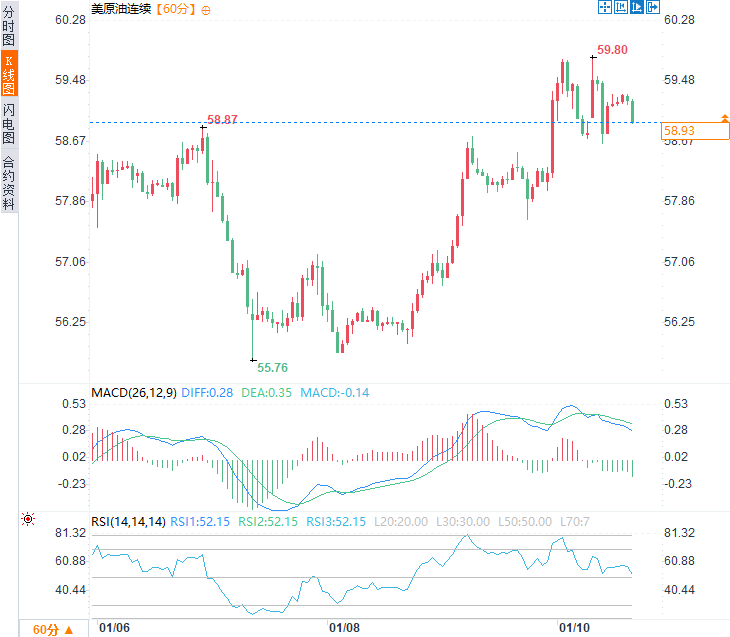
(US crude oil hourly chart, source: FX678)
At 16:03 Beijing time, US crude oil futures were trading at $58.96 per barrel.
However, multiple constraints have limited the disorderly surge in oil prices. The risk of oversupply continues to act as a ceiling for oil prices, and the market may enter a highly volatile phase where geopolitical risks and supply and demand fundamentals interact.
The US-Iran conflict is aimed at the world's oil choke point.
The Strait of Hormuz has once again become a global focal point due to the possibility of US intervention in the situation with Iran. According to multiple media reports last Sunday, US President Trump is considering a range of action options against Iran.
Industry experts warn that military confrontation could provoke Iran to block the Strait of Hormuz, a narrow waterway connecting the Persian Gulf and the Arabian Sea that carries nearly a third of the world's seaborne crude oil traffic.
Saul Kavonik, head of energy research at MST Marquee, pointed out that "a disruption in the Strait of Hormuz could trigger a global oil and gas crisis," especially considering that "the current Iranian regime, if it feels its power and survival are threatened and it is driven to a corner, may resort to extreme measures without regard for the consequences."
The crude oil market faces a double shock
According to data from market intelligence firm Kpler, the Strait of Hormuz is projected to handle approximately 13 million barrels of crude oil per day in 2025, accounting for about 31% of global seaborne crude oil traffic. The risk of the waterway being blocked emerged during the height of tensions between the US and Iran in June 2025.
Kpler's senior oil analyst pointed out that because Iran's production and exports far exceed those of Venezuela, the global market will inevitably suffer a stronger ripple effect.
Bob McNally, president of Rapidan Energy, stated that any military action against Iran would carry a "significantly higher risk" given the volume of crude oil and refined product supply and transportation involved. He believes there is a 70% chance that the United States will carry out selective strikes against Iran.
Analysts point out that oil prices could surge by double digits in the event of an extreme escalation of the situation, impassable tankers, or damage to energy infrastructure.
"Market panic over the closure of the strait could push oil prices up by several dollars per barrel, but a complete closure of the strait would trigger a surge of $10 to $20 per barrel," said Andy Lippo, president of Lippo Oil Consulting.
Kavonik believes that a US attack on Iran would trigger an "instant surge in oil prices," but any indication that the disruption is temporary would ease the rise.
Multiple factors limit the extremism of the situation
Most analysts emphasize that the probability of any catastrophic outcome remains low.
Although Iran can always threaten to close the Strait of Hormuz, given the complex power dynamics in the region, Tehran may not actually be willing to implement a blockade; and given the US naval patrols in the area, Iran may not have the capability to completely block the strait.
Even if Iran attempts to carry out short-term disruptions, such as attacking oil tankers or temporarily blocking shipping lanes, its physical impact on actual supplies will be limited.
Kpler estimates that the oil market is currently trending towards oversupply, with an oversupply of about 2.5 million barrels per day in January and exceeding 3 million barrels per day in February and March.
Kavonik added that any blockade could provoke a show of force from the United States and its allies in an effort to restore passage through the waterway.
The Iranian script is different from the Venezuelan script.
However, experts warn against directly comparing Iran to Venezuela. The Trump administration previously pressured the Venezuelan regime through sanctions and asset seizures, ultimately leading to the arrest of President Nicolás Maduro.
Analysts point out that the United States will find it difficult to adopt a similar strategy towards Iran as it did with Venezuela, because Iran is far from the US mainland, and the geopolitical situation in the Middle East is far more complex than in Latin America. "Furthermore, Trump's current priority appears to be consolidating US power in the Western Hemisphere."
Libbo also agrees with this view, believing that the "Venezuela model" against Iran is more likely to involve sanctions and law enforcement measures than military occupation or infrastructure attacks.
High volatility risk in the oil market
The current tensions between the US and Iran have a complex and non-linear impact on the crude oil market. Its core characteristics are: the event itself injects a significant risk premium into oil prices, but its actual impact is highly dependent on the evolution and intensity of the conflict, while the market is subject to multiple hedging and constraint factors .
The crude oil market is constrained by geopolitical risks, ensuring a higher price floor and persistently high volatility . However, how high and how long oil prices can rise depends not only on the power struggle between Washington and Tehran, but also on when the fundamental ceilings of global crude oil inventories, OPEC+ production capacity, and demand growth will come into play. Trading logic will involve a repeated interplay between risk events and supply-demand fundamentals.
(US crude oil hourly chart, source: FX678)
At 16:03 Beijing time, US crude oil futures were trading at $58.96 per barrel.
- Risk Warning and Disclaimer
- The market involves risk, and trading may not be suitable for all investors. This article is for reference only and does not constitute personal investment advice, nor does it take into account certain users’ specific investment objectives, financial situation, or other needs. Any investment decisions made based on this information are at your own risk.