Can an election really cause the yen to collapse? The underlying financial logic is astonishing!
2026-01-13 16:36:26
On Tuesday (January 13), the USD/JPY pair traded around 158.90 during the European session, up about 0.5% on the day, just shy of the psychologically important 160.00 level. This is not just an ordinary number, but a "warning line" that has long been considered a policy-sensitive zone. Historically, whenever the exchange rate approaches or breaks through 160, Japanese authorities often send signals through verbal intervention, and may even take actual foreign exchange operations to stabilize the market. Therefore, market tensions are currently quietly rising.

The closer the exchange rate gets to 160, the stronger the market's expectations for a policy response become. Especially when the exchange rate rises rapidly, traders quickly speculate whether the central bank or the Ministry of Finance will intervene. This expectation itself amplifies price volatility—even without concrete action, a mere statement can trigger a sharp short-term drop. Currently, liquidity and interest rate differentials remain the main factors supporting the dollar's strength, but what continues to put pressure on the yen is no longer just traditional economic variables, but more importantly, the uncertainty premium brought about by changes in Japan's domestic political landscape.
Recent political developments in Japan have become a significant variable influencing exchange rates. On the 13th, Chief Cabinet Secretary Minoru Kihara informed all political parties that a regular Diet session would be held on the 23rd. Meanwhile, Prime Minister Sanae Takaichi has revealed to sources within the Liberal Democratic Party that she is considering dissolving the House of Representatives on the opening day of the Diet and holding an early general election. This news immediately sparked strong opposition from the opposition parties and prompted the market to reassess the policy pace and fiscal path for the coming months.
If the parliament is dissolved as scheduled, the election schedule may fall between two options: "announcement on January 27, vote on February 8" or "announcement on February 3, vote on February 15." Either way, it will disrupt the original budget review process. Originally, if the current parliament is not dissolved, it will last 150 days until June 21, with the core task being to pass the 2026 budget and ensure its legislative process is completed by the end of March. If an early election is held, budget reviews will be forced to stop, the policy window will be prolonged, and the market will have to price in this uncertainty.
Analysts point out that the current controversy centers on whether to prioritize the budget or the election. Some government officials believe that ensuring the fiscal plan is implemented first should be prioritized to avoid impacting people's livelihoods; while the opposition criticizes that insisting on an election at this time would be a betrayal of Sanae Takaichi's previous commitment to "addressing high prices as the top priority." Although the Prime Minister herself has not yet publicly responded, her movements are being closely watched by global foreign exchange traders. While political differences do not directly change economic fundamentals, they profoundly affect market judgments on fiscal discipline, policy continuity, and the independence of the Bank of Japan.
Meanwhile, statements from high-ranking Japanese government officials are subtly shaping market expectations. The Minister of Economy recently stated explicitly that the current fiscal policy is characterized by "responsibility and proactiveness," emphasizing the need to maintain fiscal discipline while stimulating the economy and avoiding unrestrained spending. He also specifically reminded that exchange rate trends and long-term interest rates are not solely determined by fiscal policy, but rather are the result of the combined effects of various market forces.
This statement has been interpreted as a form of "expectation management"—an attempt to alleviate market concerns that large-scale fiscal expansion could lead to runaway debt, a rebound in inflation, and even forced tightening of central bank policy. More importantly, he mentioned that "we are not yet at a point where we can declare ourselves out of deflation," implying that even with wage growth, the Bank of Japan will remain highly cautious about raising interest rates. For the exchange rate, this means that the upside potential for short-term interest rates is limited, making it difficult to effectively support a stronger yen.
However, this also exposes another deep-seated contradiction: governments, hoping to boost the economy through fiscal stimulus, tend to maintain a loose monetary environment; while the Bank of Japan, if it truly wants to achieve its sustainable inflation target, may ultimately need to raise interest rates further. This difference in pace is particularly pronounced during periods of political instability. When the market cannot clearly predict policy coordination, the easiest option is to sell its own currency and pursue overseas gains—this is one of the underlying reasons for the current weakness of the yen.
More complexly, expectations of fiscal expansion themselves can push up long-term interest rate expectations, attracting some international capital inflows. However, since most overseas traders hedge their currency positions when buying Japanese assets, this inflow of funds may actually exacerbate selling pressure on the yen. In other words, the more optimistic the prospects of Japanese policy are, the more likely they are to suppress the yen's performance in their operations, creating a peculiar cycle that is "good for the stock market and bad for the currency market."
Faced with the current situation, analysts generally believe it is unwise to simply bet on a one-sided market trend, but rather to construct scenario analyses based on different political development paths. The first possibility is that the House of Representatives is dissolved as scheduled on the 23rd, officially launching the election campaign. In this scenario, the market will enter an "election narrative" mode, expectations of policy continuity will rise, short-term risk appetite will improve, and the USD/JPY exchange rate may continue to approach 160.00. However, the closer it gets to this level, the greater the possibility of official verbal intervention, and the exchange rate may experience sharp fluctuations with "rapid rises and rapid falls."
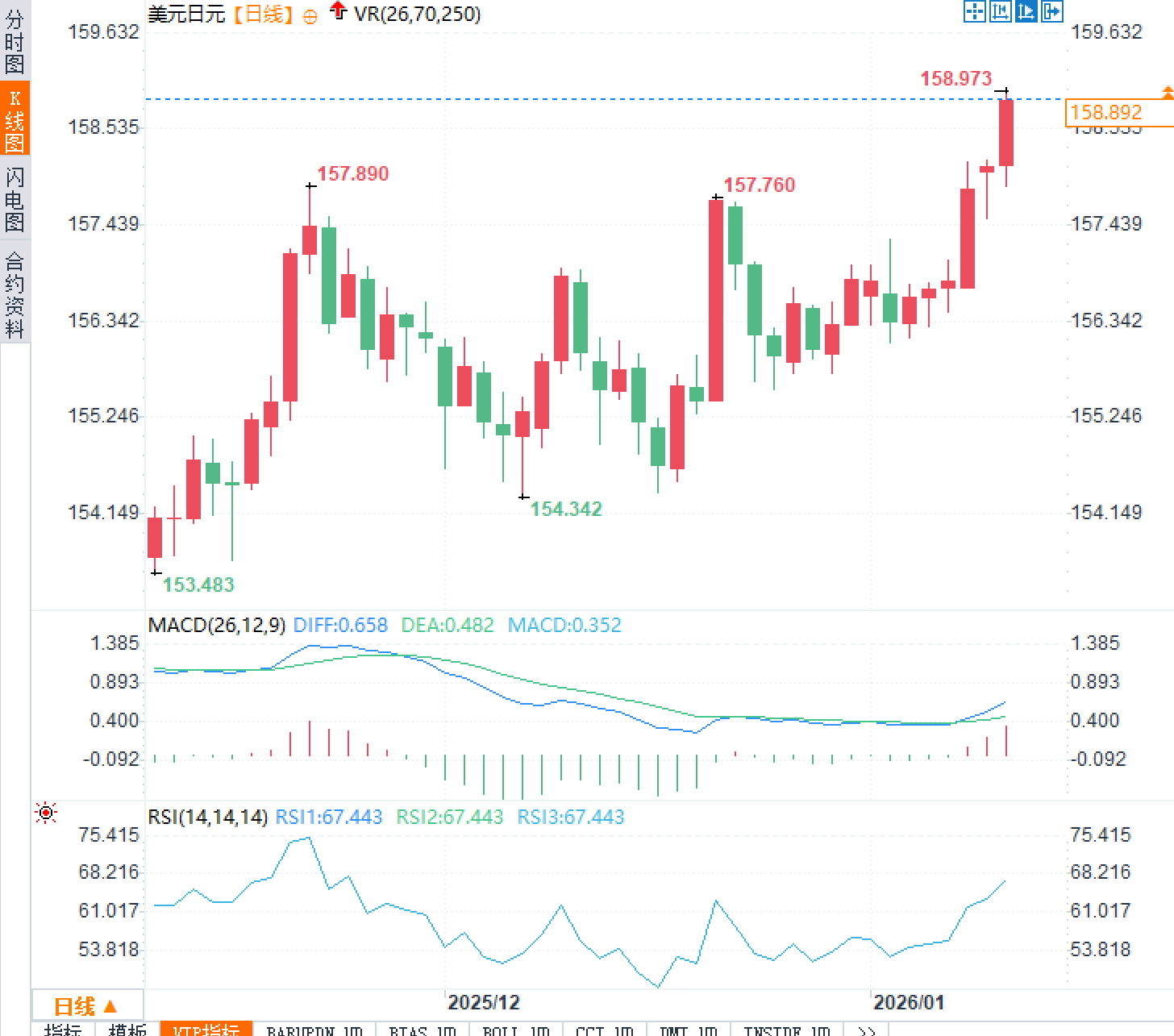
The second scenario is that the Diet remains undissolved and proceeds with its planned 150-day session, prioritizing the budget bill. This implies a temporary decrease in political uncertainty, and market focus will refocus on the Bank of Japan's future interest rate decisions, the actions of major overseas central banks, and the global economic outlook. In this context, the upward slope of the USD/JPY exchange rate may slow, entering a range-bound trading pattern.
The third and most unstable scenario is that the ruling party experiences internal divisions, leading to a tug-of-war over whether to dissolve itself, with budget reviews and election arrangements mutually hindering each other. This political deadlock will significantly increase policy communication costs, weaken market confidence, and make capital flows more sensitive. In this case, exchange rates will not only struggle to establish a trend but may also experience frequent gaps due to fluctuating news, exhibiting high volatility.
Overall, the USD/JPY exchange rate is currently in a "high-sensitive zone," where any slight disturbance could be amplified. Changes in Japan's domestic political agenda are injecting additional variables into this exchange rate movement. In the short term, the market will repeatedly switch between three main themes: first, whether the election will derail the budget process; second, whether the government and central bank's policy orientations can be coordinated; and third, whether the exchange rate at 160.00 will trigger a stronger policy response.
The closer the exchange rate gets to 160, the stronger the market's expectations for a policy response become. Especially when the exchange rate rises rapidly, traders quickly speculate whether the central bank or the Ministry of Finance will intervene. This expectation itself amplifies price volatility—even without concrete action, a mere statement can trigger a sharp short-term drop. Currently, liquidity and interest rate differentials remain the main factors supporting the dollar's strength, but what continues to put pressure on the yen is no longer just traditional economic variables, but more importantly, the uncertainty premium brought about by changes in Japan's domestic political landscape.
Political upheaval sparks market speculation
Recent political developments in Japan have become a significant variable influencing exchange rates. On the 13th, Chief Cabinet Secretary Minoru Kihara informed all political parties that a regular Diet session would be held on the 23rd. Meanwhile, Prime Minister Sanae Takaichi has revealed to sources within the Liberal Democratic Party that she is considering dissolving the House of Representatives on the opening day of the Diet and holding an early general election. This news immediately sparked strong opposition from the opposition parties and prompted the market to reassess the policy pace and fiscal path for the coming months.
If the parliament is dissolved as scheduled, the election schedule may fall between two options: "announcement on January 27, vote on February 8" or "announcement on February 3, vote on February 15." Either way, it will disrupt the original budget review process. Originally, if the current parliament is not dissolved, it will last 150 days until June 21, with the core task being to pass the 2026 budget and ensure its legislative process is completed by the end of March. If an early election is held, budget reviews will be forced to stop, the policy window will be prolonged, and the market will have to price in this uncertainty.
Analysts point out that the current controversy centers on whether to prioritize the budget or the election. Some government officials believe that ensuring the fiscal plan is implemented first should be prioritized to avoid impacting people's livelihoods; while the opposition criticizes that insisting on an election at this time would be a betrayal of Sanae Takaichi's previous commitment to "addressing high prices as the top priority." Although the Prime Minister herself has not yet publicly responded, her movements are being closely watched by global foreign exchange traders. While political differences do not directly change economic fundamentals, they profoundly affect market judgments on fiscal discipline, policy continuity, and the independence of the Bank of Japan.
The covert struggle between fiscal and monetary policies
Meanwhile, statements from high-ranking Japanese government officials are subtly shaping market expectations. The Minister of Economy recently stated explicitly that the current fiscal policy is characterized by "responsibility and proactiveness," emphasizing the need to maintain fiscal discipline while stimulating the economy and avoiding unrestrained spending. He also specifically reminded that exchange rate trends and long-term interest rates are not solely determined by fiscal policy, but rather are the result of the combined effects of various market forces.
This statement has been interpreted as a form of "expectation management"—an attempt to alleviate market concerns that large-scale fiscal expansion could lead to runaway debt, a rebound in inflation, and even forced tightening of central bank policy. More importantly, he mentioned that "we are not yet at a point where we can declare ourselves out of deflation," implying that even with wage growth, the Bank of Japan will remain highly cautious about raising interest rates. For the exchange rate, this means that the upside potential for short-term interest rates is limited, making it difficult to effectively support a stronger yen.
However, this also exposes another deep-seated contradiction: governments, hoping to boost the economy through fiscal stimulus, tend to maintain a loose monetary environment; while the Bank of Japan, if it truly wants to achieve its sustainable inflation target, may ultimately need to raise interest rates further. This difference in pace is particularly pronounced during periods of political instability. When the market cannot clearly predict policy coordination, the easiest option is to sell its own currency and pursue overseas gains—this is one of the underlying reasons for the current weakness of the yen.
More complexly, expectations of fiscal expansion themselves can push up long-term interest rate expectations, attracting some international capital inflows. However, since most overseas traders hedge their currency positions when buying Japanese assets, this inflow of funds may actually exacerbate selling pressure on the yen. In other words, the more optimistic the prospects of Japanese policy are, the more likely they are to suppress the yen's performance in their operations, creating a peculiar cycle that is "good for the stock market and bad for the currency market."
Three scenarios for game theory, volatility may intensify.
Faced with the current situation, analysts generally believe it is unwise to simply bet on a one-sided market trend, but rather to construct scenario analyses based on different political development paths. The first possibility is that the House of Representatives is dissolved as scheduled on the 23rd, officially launching the election campaign. In this scenario, the market will enter an "election narrative" mode, expectations of policy continuity will rise, short-term risk appetite will improve, and the USD/JPY exchange rate may continue to approach 160.00. However, the closer it gets to this level, the greater the possibility of official verbal intervention, and the exchange rate may experience sharp fluctuations with "rapid rises and rapid falls."
The second scenario is that the Diet remains undissolved and proceeds with its planned 150-day session, prioritizing the budget bill. This implies a temporary decrease in political uncertainty, and market focus will refocus on the Bank of Japan's future interest rate decisions, the actions of major overseas central banks, and the global economic outlook. In this context, the upward slope of the USD/JPY exchange rate may slow, entering a range-bound trading pattern.
The third and most unstable scenario is that the ruling party experiences internal divisions, leading to a tug-of-war over whether to dissolve itself, with budget reviews and election arrangements mutually hindering each other. This political deadlock will significantly increase policy communication costs, weaken market confidence, and make capital flows more sensitive. In this case, exchange rates will not only struggle to establish a trend but may also experience frequent gaps due to fluctuating news, exhibiting high volatility.
Overall, the USD/JPY exchange rate is currently in a "high-sensitive zone," where any slight disturbance could be amplified. Changes in Japan's domestic political agenda are injecting additional variables into this exchange rate movement. In the short term, the market will repeatedly switch between three main themes: first, whether the election will derail the budget process; second, whether the government and central bank's policy orientations can be coordinated; and third, whether the exchange rate at 160.00 will trigger a stronger policy response.
- Risk Warning and Disclaimer
- The market involves risk, and trading may not be suitable for all investors. This article is for reference only and does not constitute personal investment advice, nor does it take into account certain users’ specific investment objectives, financial situation, or other needs. Any investment decisions made based on this information are at your own risk.