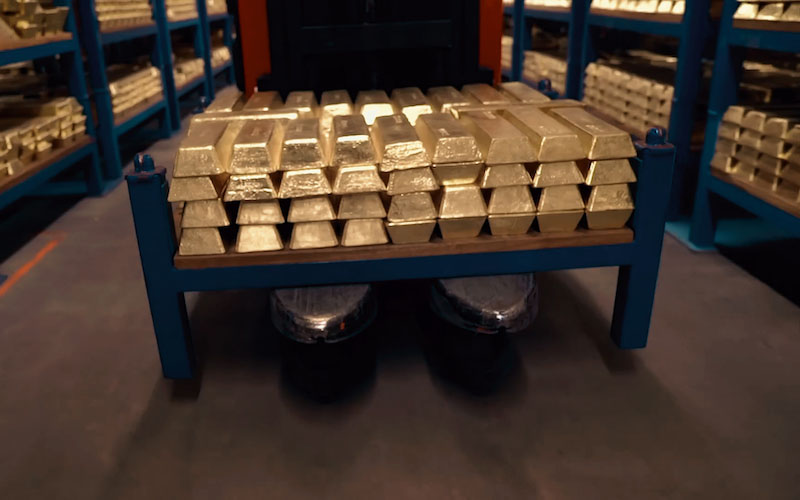
Gold prices may take off again under the new regulations as it faces a triple game of competition.
2026-01-13 19:22:26
On Tuesday (January 13), spot gold saw a slight pullback during the Asian and European sessions, holding onto most of Monday's gains and currently trading around 4586, down 0.23%.
After a previous correction, the US dollar regained some upward momentum, and the recent slight pullback in the stock market became the core factor suppressing gold prices from breaking through key levels. However, market concerns about the independence of the Federal Reserve limited the actual appreciation potential of the US dollar, and coupled with the fermentation of geopolitical uncertainties, the downside potential of gold was effectively locked in.

Multiple positive factors are supporting gold prices to remain at high levels, forming a medium- to long-term upward trend:
First, the crisis of the Federal Reserve's independence has triggered market concerns.
The Trump administration's criminal investigation into Federal Reserve Chairman Jerome Powell, reportedly stemming from Trump's dissatisfaction with the Fed's refusal to heed his pressure to cut interest rates, has shaken market confidence in the objectivity of the Fed's policies. Coupled with market expectations of two more rate cuts this year, this has continued to weaken the dollar's appeal and provided strong support for gold, a non-interest-bearing asset.
Secondly, escalating geopolitical tensions are driving up demand for safe-haven assets.
The Trump administration not only assessed potential military action against Iran, but also announced a 25% tariff on exports to the United States from countries that do business with Iran, attempting to expand the gains of its global tariff strategy by creating a pretext. The geopolitical conflict risk premium continued to inject into gold prices, becoming an important driver of their upward movement.
Third, the limited rise of the US dollar strengthens the value of gold as an investment.
Despite the dollar's temporary strengthening, concerns about the Fed's independence and expectations of interest rate cuts have constrained its growth. In addition, while Friday's non-farm payroll report supported policy stability in the first quarter, it failed to attract substantial buying interest in the dollar, further strengthening gold's safe-haven appeal.
In response to the continued surge in gold and silver prices, the CME Group, the world's leading commodity trading exchange, has officially restructured its precious metals margin pricing mechanism to adapt to the highly volatile market environment.
The core of this adjustment is to abandon the traditional fixed-amount pricing model and fully switch to a percentage-based pricing system anchored to the nominal value of the contract, covering four major assets: gold, silver, platinum, and palladium. It officially took effect after the market closed on Tuesday.
The old system has shown signs of fatigue in this round of market activity – gold prices broke through $4,568/ounce and entered the price discovery phase, silver prices rose by 20% in the first two weeks of the year, and speculative funds poured in, forcing the CME Group to raise margin requirements at least three times in the fourth quarter of 2025. The new mechanism can automatically adjust according to real-time price fluctuations, fundamentally reducing high-frequency manual adjustments.
Specifically, the maintenance margin ratio for standard account gold futures is 5%, and 5.5% for high-risk positions; silver and platinum are both 9% (standard) and 9.9% (high-risk); while palladium, with even higher volatility, reaches 11% and 12.1%. The CME also retains policy flexibility, allowing for direct increases in the margin ratios should volatility exceed historical ranges or a black swan event occur.
Christopher Wong, senior strategist at OCBC Bank, pointed out that the current high margin requirements may suppress precious metal prices in the short term, but in the long run, the new mechanism is more suitable for risk hedging needs under extreme market conditions.
It is worth noting that the simultaneous outage of the Australian Securities Exchange system exposed operational vulnerabilities, raising concerns about the stability of trading infrastructure. Meanwhile, the CME Group's launch of a predictive trading application (covering the S&P 500, crude oil, and sports events) in partnership with Van Daller, as well as the establishment of its Dubai regional office, demonstrate its efforts to expand its business boundaries and improve its global layout in order to cope with the market changes caused by the rising trading activity across time zones.
Recent geopolitical crises and discussions about the independence of the Federal Reserve have given gold a greater certainty of rising prices. The strong gold market, facing passive selling caused by CME leverage adjustments and disturbances from technology stock corrections, presents a rare opportunity for gold bulls to buy on dips.
Meanwhile, the US CPI will also be released tonight. Since the market has already bet that the Fed's rate cut will be influenced by the White House, we only need to consider the impact of CPI on real interest rates. If CPI is higher than expected, the decline in real interest rates will be beneficial to gold, and vice versa.
Technically, spot gold broke through the upper rail of the upward channel and then began to pull back. Currently, it is far from the 5-day moving average, indicating that there is a need for adjustment.
The upper resistance level is at 4700, while the support levels are at the upper rail of the ascending channel and around 4550.
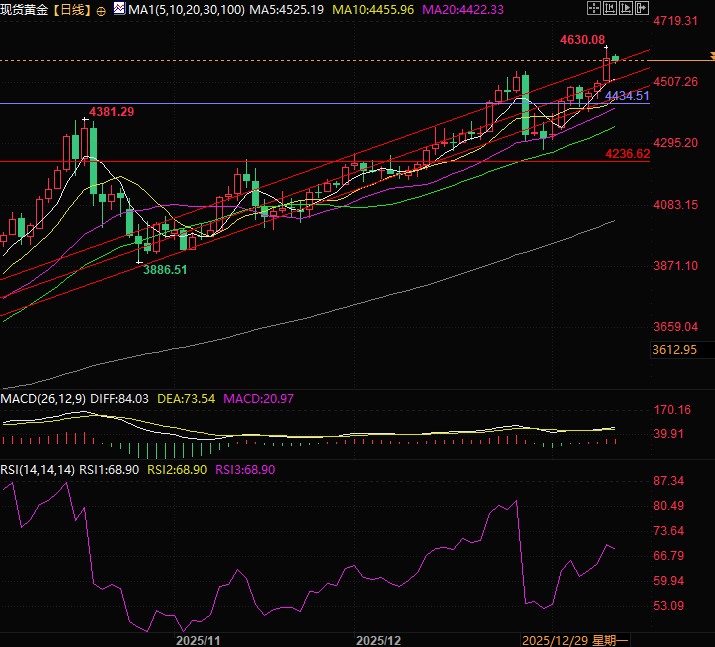
(Spot gold daily chart, source: FX678)
At 19:11 Beijing time, spot gold was trading at $4,585 per ounce.
After a previous correction, the US dollar regained some upward momentum, and the recent slight pullback in the stock market became the core factor suppressing gold prices from breaking through key levels. However, market concerns about the independence of the Federal Reserve limited the actual appreciation potential of the US dollar, and coupled with the fermentation of geopolitical uncertainties, the downside potential of gold was effectively locked in.
Core drivers: Supported by both risk aversion and expectations of interest rate cuts, with geopolitical risks adding a premium.
Multiple positive factors are supporting gold prices to remain at high levels, forming a medium- to long-term upward trend:
First, the crisis of the Federal Reserve's independence has triggered market concerns.
The Trump administration's criminal investigation into Federal Reserve Chairman Jerome Powell, reportedly stemming from Trump's dissatisfaction with the Fed's refusal to heed his pressure to cut interest rates, has shaken market confidence in the objectivity of the Fed's policies. Coupled with market expectations of two more rate cuts this year, this has continued to weaken the dollar's appeal and provided strong support for gold, a non-interest-bearing asset.
Secondly, escalating geopolitical tensions are driving up demand for safe-haven assets.
The Trump administration not only assessed potential military action against Iran, but also announced a 25% tariff on exports to the United States from countries that do business with Iran, attempting to expand the gains of its global tariff strategy by creating a pretext. The geopolitical conflict risk premium continued to inject into gold prices, becoming an important driver of their upward movement.
Third, the limited rise of the US dollar strengthens the value of gold as an investment.
Despite the dollar's temporary strengthening, concerns about the Fed's independence and expectations of interest rate cuts have constrained its growth. In addition, while Friday's non-farm payroll report supported policy stability in the first quarter, it failed to attract substantial buying interest in the dollar, further strengthening gold's safe-haven appeal.
Rule Changes: CME Group's New Margin Rules Take Effect, Cooling Down the Soaring Precious Metals Market
In response to the continued surge in gold and silver prices, the CME Group, the world's leading commodity trading exchange, has officially restructured its precious metals margin pricing mechanism to adapt to the highly volatile market environment.
The core of this adjustment is to abandon the traditional fixed-amount pricing model and fully switch to a percentage-based pricing system anchored to the nominal value of the contract, covering four major assets: gold, silver, platinum, and palladium. It officially took effect after the market closed on Tuesday.
The old system has shown signs of fatigue in this round of market activity – gold prices broke through $4,568/ounce and entered the price discovery phase, silver prices rose by 20% in the first two weeks of the year, and speculative funds poured in, forcing the CME Group to raise margin requirements at least three times in the fourth quarter of 2025. The new mechanism can automatically adjust according to real-time price fluctuations, fundamentally reducing high-frequency manual adjustments.
Specifically, the maintenance margin ratio for standard account gold futures is 5%, and 5.5% for high-risk positions; silver and platinum are both 9% (standard) and 9.9% (high-risk); while palladium, with even higher volatility, reaches 11% and 12.1%. The CME also retains policy flexibility, allowing for direct increases in the margin ratios should volatility exceed historical ranges or a black swan event occur.
Christopher Wong, senior strategist at OCBC Bank, pointed out that the current high margin requirements may suppress precious metal prices in the short term, but in the long run, the new mechanism is more suitable for risk hedging needs under extreme market conditions.
It is worth noting that the simultaneous outage of the Australian Securities Exchange system exposed operational vulnerabilities, raising concerns about the stability of trading infrastructure. Meanwhile, the CME Group's launch of a predictive trading application (covering the S&P 500, crude oil, and sports events) in partnership with Van Daller, as well as the establishment of its Dubai regional office, demonstrate its efforts to expand its business boundaries and improve its global layout in order to cope with the market changes caused by the rising trading activity across time zones.
Summary and Technical Analysis:
Recent geopolitical crises and discussions about the independence of the Federal Reserve have given gold a greater certainty of rising prices. The strong gold market, facing passive selling caused by CME leverage adjustments and disturbances from technology stock corrections, presents a rare opportunity for gold bulls to buy on dips.
Meanwhile, the US CPI will also be released tonight. Since the market has already bet that the Fed's rate cut will be influenced by the White House, we only need to consider the impact of CPI on real interest rates. If CPI is higher than expected, the decline in real interest rates will be beneficial to gold, and vice versa.
Technically, spot gold broke through the upper rail of the upward channel and then began to pull back. Currently, it is far from the 5-day moving average, indicating that there is a need for adjustment.
The upper resistance level is at 4700, while the support levels are at the upper rail of the ascending channel and around 4550.
(Spot gold daily chart, source: FX678)
At 19:11 Beijing time, spot gold was trading at $4,585 per ounce.
- Risk Warning and Disclaimer
- The market involves risk, and trading may not be suitable for all investors. This article is for reference only and does not constitute personal investment advice, nor does it take into account certain users’ specific investment objectives, financial situation, or other needs. Any investment decisions made based on this information are at your own risk.