The US Congress's easing of restrictions on Trump's military actions has sown the seeds of a Venezuelan powder keg in the oil market.
2026-01-15 10:37:56
On Wednesday (January 14), local time, U.S. Senate Republicans successfully blocked a resolution aimed at preventing President Donald Trump from taking further military action against Venezuela without congressional approval in a narrow 51-50 vote. This move came after the president exerted significant pressure on members of his administration, with Vice President JD Vance casting a vote to break the deadlock and veto the measure.
This vote highlights the growing divisions over presidential power and foreign policy, while also demonstrating Trump's influence on the Republican Party.

The rejection of the resolution marks a dramatic reversal from just six days earlier. On January 8, the measure was able to proceed after five Republican senators joined the Democrats in a rare condemnation of the president.
In response, Trump publicly condemned the five Republicans—Rand Paul, Susan Collins, Josh Hawley, Lisa Murkowski, and Todd Young—saying they should never be re-elected. The administration subsequently launched a vigorous lobbying campaign, including phone calls between Trump and Secretary of State Marco Rubio, urging the senators to change their stance.
This effort proved effective. On Wednesday, Hawley and Young overturned their votes, allowing Republicans to veto the resolution. Only three Republicans—Paul, Collins, and Murkowski—voted alongside Democrats to push the measure forward.
The debate centers on whether the U.S. actions in Venezuela constitute military operations that require congressional oversight.
Opponents of the resolution argue that it is superfluous since the United States has no ground troops in the country. They characterize the January 3 arrest of Venezuelan President Nicolás Maduro as a judicial action aimed at bringing charges against him in the United States, rather than a military operation.
Senate Majority Leader John Thune, a Republican, said, “We are not currently conducting military operations there,” accusing Democrats of being driven by “anti-Trump fervor.”
Supporters of the resolution countered that this view ignored the reality. They pointed to the fact that a large U.S. naval fleet had been blockading Venezuela for months and firing on ships. They also cited Trump's public threats of further military action.
Democratic Senator Tim Kaine, a key sponsor of the resolution, argued that "the view that the Venezuelan action is not an imminent hostile act as defined in the War Powers Resolution is a violation of all the reasonable meanings of that term."
The shift in positions by Senators Hawley and Young was crucial to the outcome. In a statement explaining his reversal, Young said he had received assurances from senior national security officials that the United States had no troops stationed in Venezuela.
He added, "I also received a commitment that if President Trump determines that the U.S. military needs to be involved in a major military operation in Venezuela, the administration will seek authorization from Congress to use force in advance."
Even if the resolution passes the Senate, it still faces numerous obstacles. It needs to pass the Republican-controlled House of Representatives and obtain a two-thirds majority in both houses to overturn the president's anticipated veto.
The close vote reflects Congress’s growing unease about Trump’s foreign policy and his constitutional power to declare war. Lawmakers are increasingly asserting their authority in decisions regarding the deployment of U.S. troops to war.
This anxiety has spread beyond Venezuela. Recent remarks by Trump, including telling Iranian protesters that "aid is coming soon" and threatening military action to seize Greenland, have exacerbated these concerns.
Following Maduro's arrest, some lawmakers accused the government of misleading them by insisting it had no plans to force regime change in Venezuela. Subsequently, Trump posted a satirical image of himself as the "acting president of Venezuela" and told the media that U.S. involvement there would last for years.
This vote does not mark the end of the risks, but rather formally confirms that the U.S. administration has virtually unlimited military options in Venezuela.
For the crude oil market, this means a persistent and potentially escalating supply threat has been embedded in the pricing system. The Venezuelan risk has become a significant "powder keg" for oil price increases, and its evolution will be linked to the situations in Iran and the Middle East, jointly forming the core geopolitical axis of oil price volatility in 2024. Given the continued fundamental supply pressures, crude oil price volatility is expected to intensify further.
On Thursday during Asian trading hours, crude oil prices fluctuated downwards, falling more than 3% to $59.93 per barrel at one point; on Wednesday, oil prices rose to a three-month high of $62.20 per barrel, with a daily range of more than 5.11%, showing significant volatility.
Traders should be wary of any news regarding escalating US military operations or the collapse of the Maduro regime, as these could trigger a sharp short-term rise in oil prices.
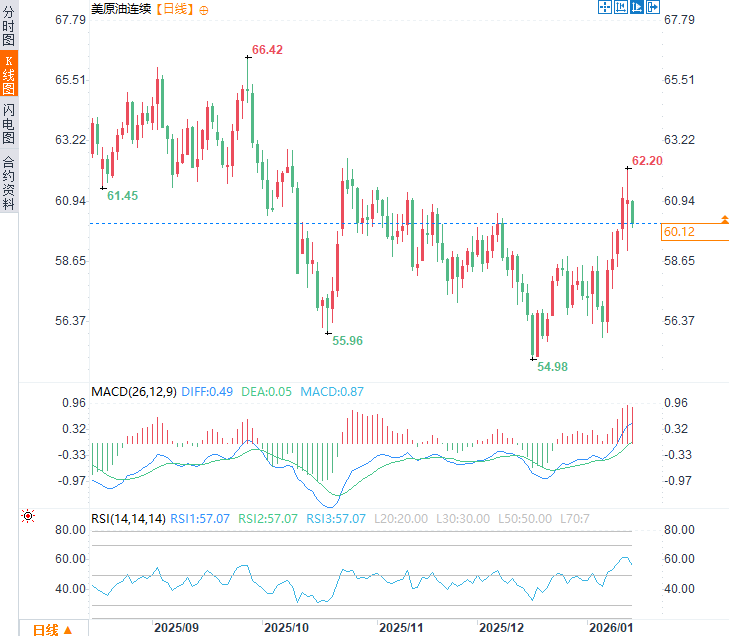
(US crude oil daily chart, source: FX678)
At 10:37 Beijing time, US crude oil futures were trading at $60.03 per barrel.
This vote highlights the growing divisions over presidential power and foreign policy, while also demonstrating Trump's influence on the Republican Party.
Republicans rejected the resolution after intense lobbying.
The rejection of the resolution marks a dramatic reversal from just six days earlier. On January 8, the measure was able to proceed after five Republican senators joined the Democrats in a rare condemnation of the president.
In response, Trump publicly condemned the five Republicans—Rand Paul, Susan Collins, Josh Hawley, Lisa Murkowski, and Todd Young—saying they should never be re-elected. The administration subsequently launched a vigorous lobbying campaign, including phone calls between Trump and Secretary of State Marco Rubio, urging the senators to change their stance.
This effort proved effective. On Wednesday, Hawley and Young overturned their votes, allowing Republicans to veto the resolution. Only three Republicans—Paul, Collins, and Murkowski—voted alongside Democrats to push the measure forward.
Defining Military Operations: The Core Controversy
The debate centers on whether the U.S. actions in Venezuela constitute military operations that require congressional oversight.
Opponents of the resolution argue that it is superfluous since the United States has no ground troops in the country. They characterize the January 3 arrest of Venezuelan President Nicolás Maduro as a judicial action aimed at bringing charges against him in the United States, rather than a military operation.
Senate Majority Leader John Thune, a Republican, said, “We are not currently conducting military operations there,” accusing Democrats of being driven by “anti-Trump fervor.”
Supporters of the resolution countered that this view ignored the reality. They pointed to the fact that a large U.S. naval fleet had been blockading Venezuela for months and firing on ships. They also cited Trump's public threats of further military action.
Democratic Senator Tim Kaine, a key sponsor of the resolution, argued that "the view that the Venezuelan action is not an imminent hostile act as defined in the War Powers Resolution is a violation of all the reasonable meanings of that term."
Why did two Republicans change their voting stance?
The shift in positions by Senators Hawley and Young was crucial to the outcome. In a statement explaining his reversal, Young said he had received assurances from senior national security officials that the United States had no troops stationed in Venezuela.
He added, "I also received a commitment that if President Trump determines that the U.S. military needs to be involved in a major military operation in Venezuela, the administration will seek authorization from Congress to use force in advance."
Even if the resolution passes the Senate, it still faces numerous obstacles. It needs to pass the Republican-controlled House of Representatives and obtain a two-thirds majority in both houses to overturn the president's anticipated veto.
Broader concerns about Trump's foreign policy
The close vote reflects Congress’s growing unease about Trump’s foreign policy and his constitutional power to declare war. Lawmakers are increasingly asserting their authority in decisions regarding the deployment of U.S. troops to war.
This anxiety has spread beyond Venezuela. Recent remarks by Trump, including telling Iranian protesters that "aid is coming soon" and threatening military action to seize Greenland, have exacerbated these concerns.
Following Maduro's arrest, some lawmakers accused the government of misleading them by insisting it had no plans to force regime change in Venezuela. Subsequently, Trump posted a satirical image of himself as the "acting president of Venezuela" and told the media that U.S. involvement there would last for years.
Impact analysis on the crude oil market
This vote does not mark the end of the risks, but rather formally confirms that the U.S. administration has virtually unlimited military options in Venezuela.
For the crude oil market, this means a persistent and potentially escalating supply threat has been embedded in the pricing system. The Venezuelan risk has become a significant "powder keg" for oil price increases, and its evolution will be linked to the situations in Iran and the Middle East, jointly forming the core geopolitical axis of oil price volatility in 2024. Given the continued fundamental supply pressures, crude oil price volatility is expected to intensify further.
On Thursday during Asian trading hours, crude oil prices fluctuated downwards, falling more than 3% to $59.93 per barrel at one point; on Wednesday, oil prices rose to a three-month high of $62.20 per barrel, with a daily range of more than 5.11%, showing significant volatility.
Traders should be wary of any news regarding escalating US military operations or the collapse of the Maduro regime, as these could trigger a sharp short-term rise in oil prices.
(US crude oil daily chart, source: FX678)
At 10:37 Beijing time, US crude oil futures were trading at $60.03 per barrel.
- Risk Warning and Disclaimer
- The market involves risk, and trading may not be suitable for all investors. This article is for reference only and does not constitute personal investment advice, nor does it take into account certain users’ specific investment objectives, financial situation, or other needs. Any investment decisions made based on this information are at your own risk.