Crude oil trading alert: Extreme winter storms rage in the United States, posing a threat to millions of people's lives and posing a risk of power outages.
2026-01-26 11:33:28
A powerful winter storm sweeping across the United States is impacting multiple regions nationwide with astonishing destructive force. The storm has not only left millions without power, but has also triggered massive flight cancellations, road closures, and numerous cold-related deaths. From southern Texas to the northeastern New England region, blizzards, freezing rain, and extreme cold are creating a complex web of conditions, threatening the lives and daily lives of more than half the U.S. population. According to meteorologists, this extreme weather is caused by the abnormal southward shift of the polar vortex, which may be related to global climate change.
The destructive power of this winter storm manifested itself on multiple levels, primarily in crippling the power supply system. Data as of Sunday afternoon (January 25) showed that more than one million homes and businesses across the United States had lost power, mainly concentrated in the severely affected southern and midwestern regions. Freezing rain and ice brought by the storm caused power poles to collapse and trees to break high-voltage lines, posing a significant challenge to restoration efforts. National Weather Service meteorologist Allison Santorelli pointed out that the extremely slow melting of this ice and snow will further delay power restoration, and power outages in some areas are expected to last for several days or even longer.
Meanwhile, the transportation system was also severely impacted. More than 10,000 flights were canceled, affecting the travel plans of millions of passengers. On the roads, many states reported severe icy road conditions; for example, Virginia saw more than 200 car accidents in a short period after the storm entered. Schools and government agencies implemented preventative measures, and nearly half of the states declared a state of emergency, including Washington, D.C., where Mayor Muriel Bowser described it as the worst snowstorm in a decade. The Senate even canceled its scheduled vote on Monday evening to ensure the safety of senators.
The storm's lethality has been demonstrated by multiple deaths. In Louisiana, health officials confirmed the deaths of two men from hypothermia in the Cardo Parish, including the area surrounding Shreveport. These victims were exposed to extreme cold and were unable to receive timely shelter. Austin, Texas Mayor Kirk Watson revealed on social media that the city had its first storm-related death, also linked to exposure to cold. Furthermore, New York City Mayor Zoran Mandani reported at least five deaths on Saturday (January 24), although the cause of death is pending, emphasizing that this serves as a reminder that residents die from cold every year.
New York Governor Kathy Hozul described the storm as an "Arctic siege," the coldest winter weather in recent years. She warned residents to stay indoors and avoid going outside to protect themselves from the "bitter and dangerous" temperatures. Kentucky Governor Andy Beshear stated that the actual freezing conditions in the state were worse than predicted, which was certainly not good news for local residents. Overall, these deaths highlight the threat the storm poses to vulnerable groups, especially those lacking heating or shelter. The National Weather Service emphasized that the ice formed by the freezing rain is one of the biggest hazards, not only damaging infrastructure but also increasing the risk of slips and falls and car accidents.
The root cause of this storm lies in the unusual behavior of the polar vortex. The polar vortex is a powerful westerly circulation that forms over the Arctic during winter, typically locking extremely cold air in high latitudes. However, when the winds weaken, the vortex extends southward, flooding the south-central United States with cold air. In this event, the cold air collided with warm, moist air from the south, creating a large-scale storm front that resulted in blizzards, sleet, and freezing rain across a wide area from Texas to New England.
Regional differences are noteworthy. Northern states like the Dakotas and Minnesota are accustomed to sub-zero temperatures, but southern states like Texas, Louisiana, and Tennessee are facing unprecedented cold, with temperatures 15 to 20 degrees Celsius below seasonal average. These areas could see ice build-up up to an inch thick, further amplifying the damage. The storm's path is moving north and east, expected to leave Canada's eastern coast on Tuesday, but leaving behind persistent low temperatures until early February. Some experts believe that global climate change, by altering sea surface temperatures, could exacerbate the instability of the polar vortex, thereby increasing the frequency of such extreme events.
This winter storm not only tested America's emergency response capabilities but also exposed the vulnerabilities exposed by climate change. It has already affected approximately 180 million Americans, causing economic losses and humanitarian challenges. Looking ahead, recovery efforts will face even greater pressure as cold temperatures persist. The public should pay close attention to weather warnings and take necessary precautions to reduce potential risks. This event also serves as a reminder to the global community that international cooperation and preventative strategies are crucial in the face of climate change.
Storms caused well-freezes and production disruptions in oil and gas producing regions in the south-central and northern United States (such as Texas and North Dakota), leading to a short-term decline in crude oil and natural gas production and tightening supply. This pushed prices higher, and coupled with geopolitical concerns, both WTI and Brent crude surged nearly 3% on Friday. A surge in heating demand also supported natural gas and electricity prices. However, traffic disruptions and reduced residential travel led to a decline in gasoline demand, partially offsetting the gains. On Monday (January 26) during Asian trading hours, international oil prices fell slightly, with WTI crude down about 0.36% and currently trading around $61.04 per barrel; Brent crude is currently trading around $65.84 per barrel, down about 0.47%.
U.S. natural gas futures opened sharply higher in early Asian trading on Monday, with the February futures contract jumping nearly 2% to a more than three-year high of $6.288 per million British thermal units (MMBtu), and is currently trading around $6.078 per MMBtu.
Market focus remains on the escalating tensions between the US and Iran—Trump recently claimed that US fleets are moving toward Iran, while senior Iranian officials responded by saying they would consider any attack a “full-scale war.” Such confrontational statements have significantly increased risk premiums in the oil market, with investor concerns about potential supply disruptions continuing to grow.
Although the Caspian Pipeline Union in Kazakhstan has resumed full-capacity operation at its Black Sea terminal, the impact of winter storms in the United States on energy production is gradually becoming apparent. According to JPMorgan Chase analysis, severe weather has led to a reduction of approximately 250,000 barrels per day in US crude oil production, primarily concentrated in the Bakken, Oklahoma, and Texas production areas. Meanwhile, declining natural gas production and soaring spot electricity prices in many regions further highlight the disruptive effects of extreme weather on the energy supply chain.
Current oil price movements are driven by a combination of factors: geopolitics, extreme weather, and supply and demand fundamentals. The impending arrival of a US carrier strike group in the Middle East, Iran's strong response, and the ongoing impact of the Northern Hemisphere cold wave on production and transportation are all likely to amplify market volatility in the coming week. Although some infrastructure issues have eased, the fragility of the global energy market has been highlighted again by this confluence of risks, and oil prices are expected to remain volatile at high levels in the short term.
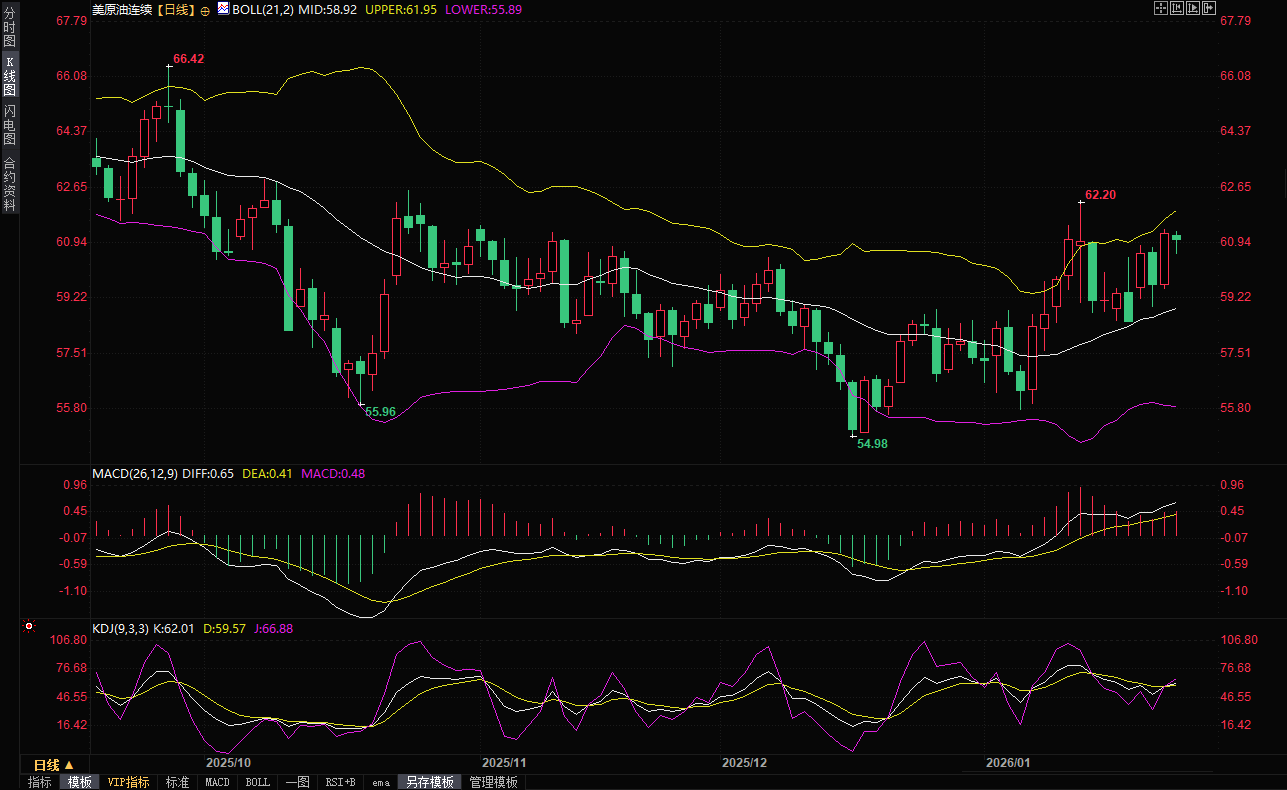
(US crude oil daily chart, source: FX678)
At 11:32 Beijing time, US crude oil is currently trading at $61.07 per barrel.
Widespread damage and immediate impact of the storm
The destructive power of this winter storm manifested itself on multiple levels, primarily in crippling the power supply system. Data as of Sunday afternoon (January 25) showed that more than one million homes and businesses across the United States had lost power, mainly concentrated in the severely affected southern and midwestern regions. Freezing rain and ice brought by the storm caused power poles to collapse and trees to break high-voltage lines, posing a significant challenge to restoration efforts. National Weather Service meteorologist Allison Santorelli pointed out that the extremely slow melting of this ice and snow will further delay power restoration, and power outages in some areas are expected to last for several days or even longer.
Meanwhile, the transportation system was also severely impacted. More than 10,000 flights were canceled, affecting the travel plans of millions of passengers. On the roads, many states reported severe icy road conditions; for example, Virginia saw more than 200 car accidents in a short period after the storm entered. Schools and government agencies implemented preventative measures, and nearly half of the states declared a state of emergency, including Washington, D.C., where Mayor Muriel Bowser described it as the worst snowstorm in a decade. The Senate even canceled its scheduled vote on Monday evening to ensure the safety of senators.
The grim reality of loss of life and health risks
The storm's lethality has been demonstrated by multiple deaths. In Louisiana, health officials confirmed the deaths of two men from hypothermia in the Cardo Parish, including the area surrounding Shreveport. These victims were exposed to extreme cold and were unable to receive timely shelter. Austin, Texas Mayor Kirk Watson revealed on social media that the city had its first storm-related death, also linked to exposure to cold. Furthermore, New York City Mayor Zoran Mandani reported at least five deaths on Saturday (January 24), although the cause of death is pending, emphasizing that this serves as a reminder that residents die from cold every year.
New York Governor Kathy Hozul described the storm as an "Arctic siege," the coldest winter weather in recent years. She warned residents to stay indoors and avoid going outside to protect themselves from the "bitter and dangerous" temperatures. Kentucky Governor Andy Beshear stated that the actual freezing conditions in the state were worse than predicted, which was certainly not good news for local residents. Overall, these deaths highlight the threat the storm poses to vulnerable groups, especially those lacking heating or shelter. The National Weather Service emphasized that the ice formed by the freezing rain is one of the biggest hazards, not only damaging infrastructure but also increasing the risk of slips and falls and car accidents.
Analysis of meteorological causes and regional differences
The root cause of this storm lies in the unusual behavior of the polar vortex. The polar vortex is a powerful westerly circulation that forms over the Arctic during winter, typically locking extremely cold air in high latitudes. However, when the winds weaken, the vortex extends southward, flooding the south-central United States with cold air. In this event, the cold air collided with warm, moist air from the south, creating a large-scale storm front that resulted in blizzards, sleet, and freezing rain across a wide area from Texas to New England.
Regional differences are noteworthy. Northern states like the Dakotas and Minnesota are accustomed to sub-zero temperatures, but southern states like Texas, Louisiana, and Tennessee are facing unprecedented cold, with temperatures 15 to 20 degrees Celsius below seasonal average. These areas could see ice build-up up to an inch thick, further amplifying the damage. The storm's path is moving north and east, expected to leave Canada's eastern coast on Tuesday, but leaving behind persistent low temperatures until early February. Some experts believe that global climate change, by altering sea surface temperatures, could exacerbate the instability of the polar vortex, thereby increasing the frequency of such extreme events.
This winter storm not only tested America's emergency response capabilities but also exposed the vulnerabilities exposed by climate change. It has already affected approximately 180 million Americans, causing economic losses and humanitarian challenges. Looking ahead, recovery efforts will face even greater pressure as cold temperatures persist. The public should pay close attention to weather warnings and take necessary precautions to reduce potential risks. This event also serves as a reminder to the global community that international cooperation and preventative strategies are crucial in the face of climate change.
Analysis of the impact on oil prices
Storms caused well-freezes and production disruptions in oil and gas producing regions in the south-central and northern United States (such as Texas and North Dakota), leading to a short-term decline in crude oil and natural gas production and tightening supply. This pushed prices higher, and coupled with geopolitical concerns, both WTI and Brent crude surged nearly 3% on Friday. A surge in heating demand also supported natural gas and electricity prices. However, traffic disruptions and reduced residential travel led to a decline in gasoline demand, partially offsetting the gains. On Monday (January 26) during Asian trading hours, international oil prices fell slightly, with WTI crude down about 0.36% and currently trading around $61.04 per barrel; Brent crude is currently trading around $65.84 per barrel, down about 0.47%.
U.S. natural gas futures opened sharply higher in early Asian trading on Monday, with the February futures contract jumping nearly 2% to a more than three-year high of $6.288 per million British thermal units (MMBtu), and is currently trading around $6.078 per MMBtu.
Market focus remains on the escalating tensions between the US and Iran—Trump recently claimed that US fleets are moving toward Iran, while senior Iranian officials responded by saying they would consider any attack a “full-scale war.” Such confrontational statements have significantly increased risk premiums in the oil market, with investor concerns about potential supply disruptions continuing to grow.
Although the Caspian Pipeline Union in Kazakhstan has resumed full-capacity operation at its Black Sea terminal, the impact of winter storms in the United States on energy production is gradually becoming apparent. According to JPMorgan Chase analysis, severe weather has led to a reduction of approximately 250,000 barrels per day in US crude oil production, primarily concentrated in the Bakken, Oklahoma, and Texas production areas. Meanwhile, declining natural gas production and soaring spot electricity prices in many regions further highlight the disruptive effects of extreme weather on the energy supply chain.
Current oil price movements are driven by a combination of factors: geopolitics, extreme weather, and supply and demand fundamentals. The impending arrival of a US carrier strike group in the Middle East, Iran's strong response, and the ongoing impact of the Northern Hemisphere cold wave on production and transportation are all likely to amplify market volatility in the coming week. Although some infrastructure issues have eased, the fragility of the global energy market has been highlighted again by this confluence of risks, and oil prices are expected to remain volatile at high levels in the short term.
(US crude oil daily chart, source: FX678)
At 11:32 Beijing time, US crude oil is currently trading at $61.07 per barrel.
- Risk Warning and Disclaimer
- The market involves risk, and trading may not be suitable for all investors. This article is for reference only and does not constitute personal investment advice, nor does it take into account certain users’ specific investment objectives, financial situation, or other needs. Any investment decisions made based on this information are at your own risk.