Can the US dollar hold its ground amidst the storm? Is the yen's plunge just the beginning? Two "nuclear-level" events are approaching!
2026-02-07 20:25:51
During the week of February 2nd-6th, the global foreign exchange market exhibited a significantly divergent pattern amidst a tug-of-war of multiple factors. The US dollar index rose strongly mid-week, and although it retreated somewhat on Friday, it still recorded a considerable weekly gain. This was driven by the market's repricing of the Federal Reserve's policy path and its deep focus on US economic data, particularly the labor market. Meanwhile, non-US currencies showed mixed performance: the euro and pound sterling were pressured by their respective central banks' dovish stances; the yen suffered a sharp decline ahead of the Japanese general election, becoming the weakest performing major currency this week. Geopolitical uncertainty, policy signals from major central banks, and upcoming key economic data collectively constituted the main theme of this week's volatile foreign exchange market.

Weekly Market Review <br/>The US dollar index trended upwards with fluctuations this week. It strengthened at the beginning of the week on the back of news regarding the nominee for Federal Reserve Chair, but subsequently came under pressure due to weak labor market data, though it remained resilient overall. On Friday, as risk sentiment improved, the dollar index retreated from a two-week high, ultimately closing lower. For the week, the dollar index rose by 0.54%.
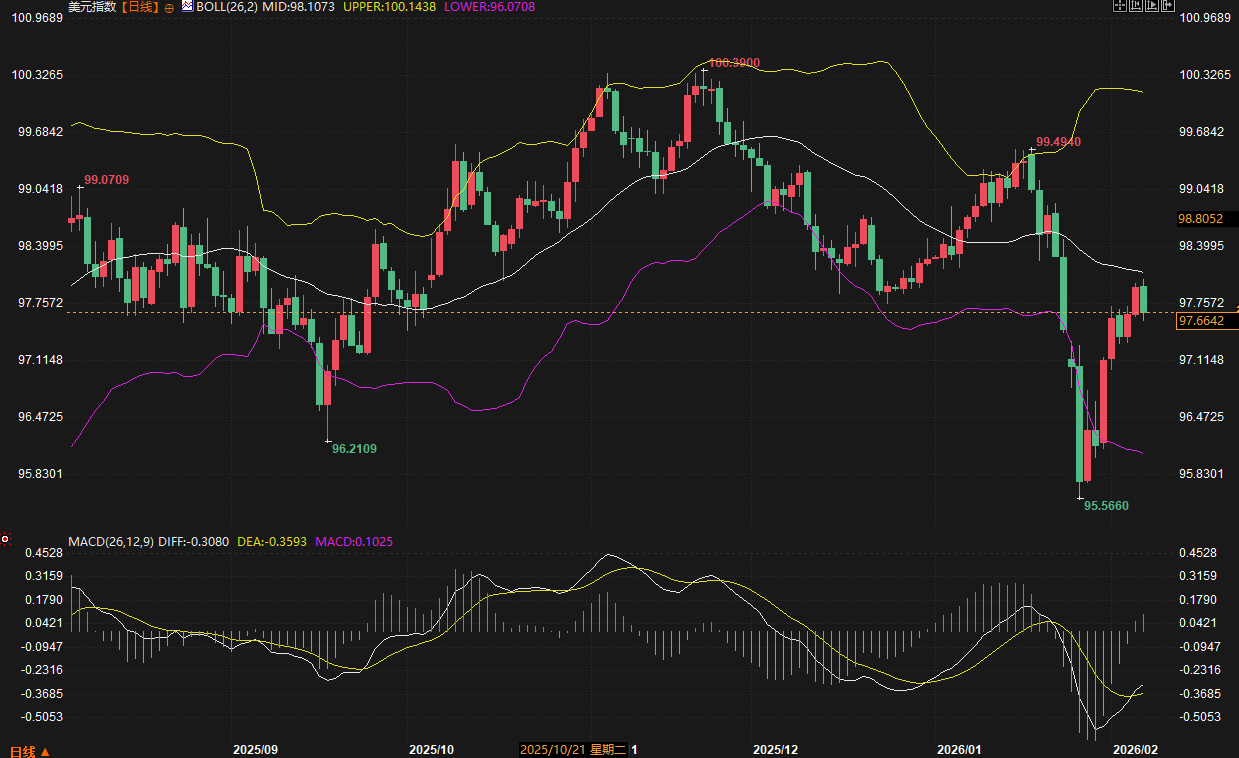
Key Data and Events <br/>Federal Reserve Leadership Changes: The previous week, President Trump nominated former Federal Reserve Governor Kevin Warsh to be the next Federal Reserve Chairman, a move that continues to influence markets this week. Warsh is historically known for his hawkish stance, but recently advocated for interest rate cuts. His views on reducing the balance sheet have been interpreted by the market as potentially leading to tighter financial conditions, initially providing support for the US dollar.
Labor market signals are mixed: This week's U.S. employment data triggered market volatility. Thursday's data showed a larger-than-expected increase in initial jobless claims last week, and job openings in December fell to their lowest level in over five years. These figures exacerbated market concerns about a cooling job market, briefly putting downward pressure on the dollar and U.S. Treasury yields.
Federal Reserve officials made statements: Vice Chairman Thomas Jefferson expressed "cautious optimism" about the economy on Friday, believing the current policy stance is sufficient to handle changes. San Francisco Fed President Tom Daly, however, described the economy as being in a "volatile" state. These cautious comments from officials have shifted market focus more towards the economic data itself.
Shifting Market Expectations: Federal funds futures markets indicate that traders' expectations for a Fed rate cut this year have strengthened, with current pricing in a larger cut than earlier this week. Market focus has shifted entirely to the January non-farm payroll report, originally scheduled for release next week but postponed due to the government shutdown.
Institutional and Analyst Views
Scott Pike of Income Research + Management points out that the market is "highly focused" on labor market developments, and if data shows genuine signs of continued weakness, it could become a reason for the Federal Reserve to cut interest rates again. He believes that the "most likely catalyst" to significantly change market perceptions of the Fed's path is an unexpectedly strong non-farm payroll data.
StoneX's Matt Weller believes that if next week's non-farm payroll report confirms a weak labor market, the Federal Reserve is highly likely to cut interest rates in March. He also noted that traders are still assessing the potential policy changes that Warsh might bring after taking office.
Citigroup's Dan Tobon analyzed the market correlation from the perspective of market linkages, pointing out that Friday's weakening dollar was related to "some reversals in correlations" caused by the stock market rebound.
Weekly Market Review <br />The euro/dollar pair experienced a decline followed by a rebound this week. It recorded a significant drop of 0.51% on Monday, maintained a volatile pattern throughout the week, and rebounded on Friday as market risk sentiment improved. However, due to the large drop at the beginning of the week, the euro/dollar pair still fell by a cumulative 0.31% for the week, failing to recover its losses.
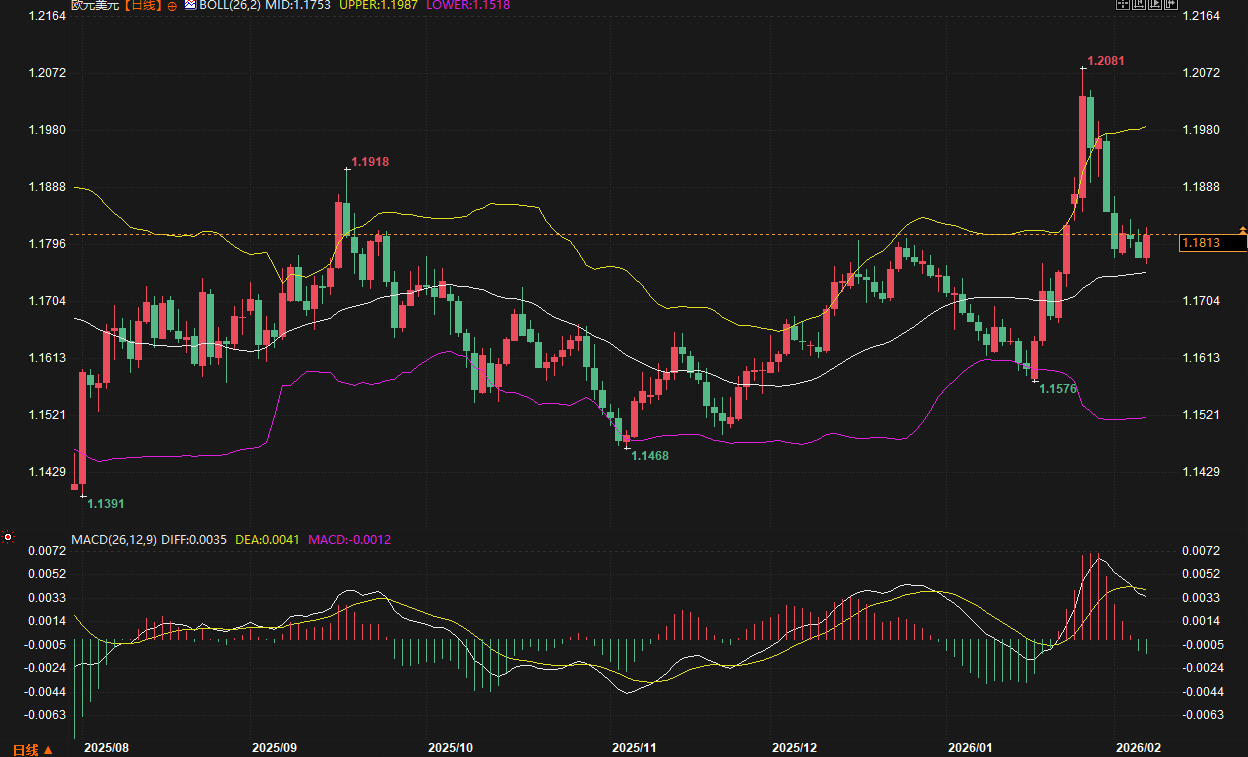
Key Data and Events <br/>ECB Interest Rate Decision: On Thursday, the European Central Bank (ECB) kept interest rates unchanged as expected. Its policy statement downplayed the impact of exchange rate fluctuations on future decisions, a statement interpreted by the market as a dovish signal that did not provide upward support for the euro.
Overall market sentiment drove the euro's movements this week largely due to the overall strength of the US dollar and changes in global risk appetite. When the dollar strengthened due to US data or Federal Reserve-related news, the euro came under pressure; conversely, when market risk aversion eased, the euro gained some breathing room.
Institutional and Analyst Views : Market analysts generally believe that the European Central Bank's stance at this meeting was dovish, and it did not signal any eagerness to change policy. Given the fluctuating expectations of a Federal Reserve rate cut and the still weak economic growth momentum in the Eurozone, the euro is unlikely to gain sustained independent upward momentum in the short term, and its trend will continue to show a high negative correlation with the US dollar index.
Weekly Market Recap: The British pound experienced a volatile week against the US dollar, exhibiting a clear "V-shaped" reversal. On Thursday, following the Bank of England's interest rate decision, the pound plunged 0.82% in a single day. On Friday, driven by short covering and a general decline in the US dollar, the pound rebounded by 0.60%. Nevertheless, due to Thursday's sharp drop, the pound still recorded a weekly decline of 0.55% against the US dollar.
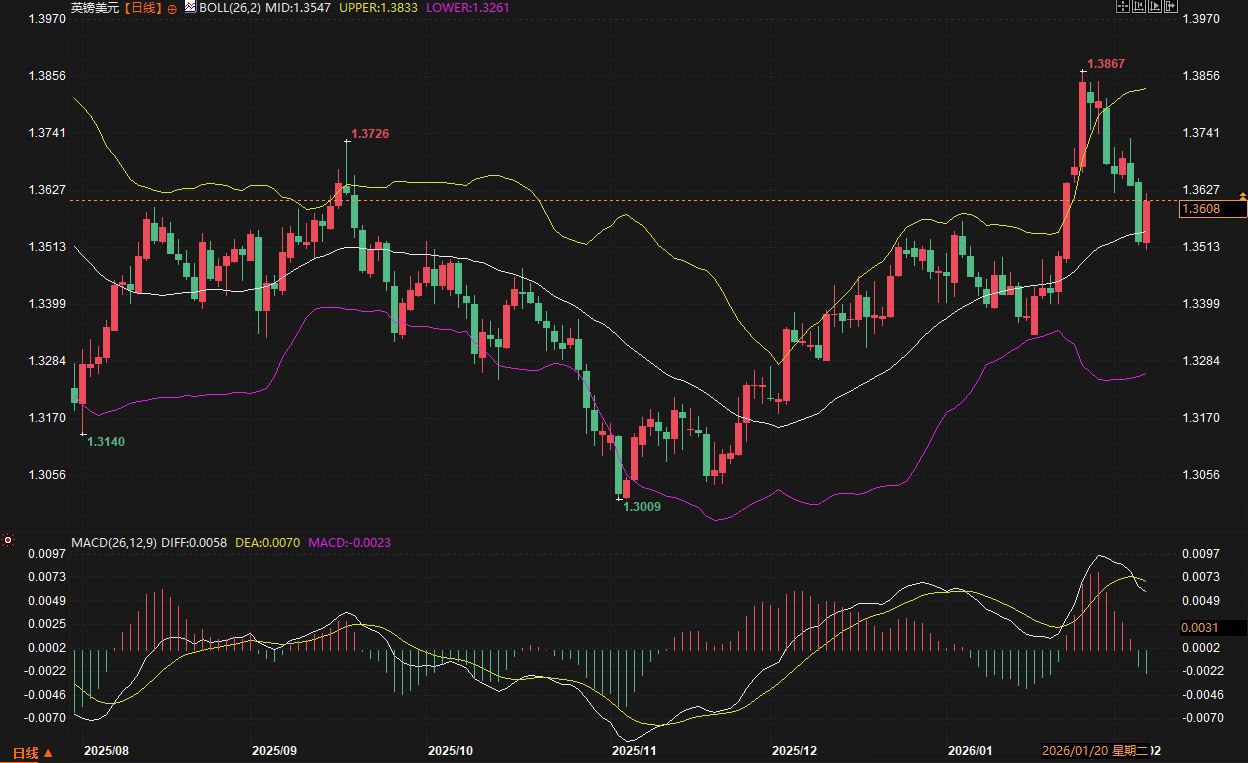
Key Data and Events <br/>Bank of England Interest Rate Decision: On Thursday, the Bank of England surprisingly decided to keep interest rates unchanged by a narrow majority. Even more surprising to the market was its policy statement, which mentioned that if the recent downward trend in inflation expectations continues, the central bank may consider lowering borrowing costs. This clear dovish shift was the direct cause of the pound's sharp drop on Thursday.
Policy Path Divergence Expectations: The Bank of England's statements have significantly accelerated market expectations for its interest rate cuts, contrasting with the market's speculation on the Federal Reserve's rate cut path during the same period. This potential divergence in monetary policy between the Bank of England and the US will put pressure on the pound in the short term.
Institutional and Analyst Views : Market participants generally view the Bank of England's decision as a key turning point. Analysts believe that although UK inflation remains high, the central bank's focus on declining inflation expectations indicates that its policy focus may be shifting more from combating inflation to preventing an excessive economic downturn. This suggests that the pound's interest rate advantage may weaken in the near future.
Weekly Market Review <br />The USD/JPY pair was undoubtedly the most eye-catching currency pair in the foreign exchange market this week. The pair rose for five consecutive trading days, achieving a five-day winning streak, and accumulating a weekly gain of 1.60%.
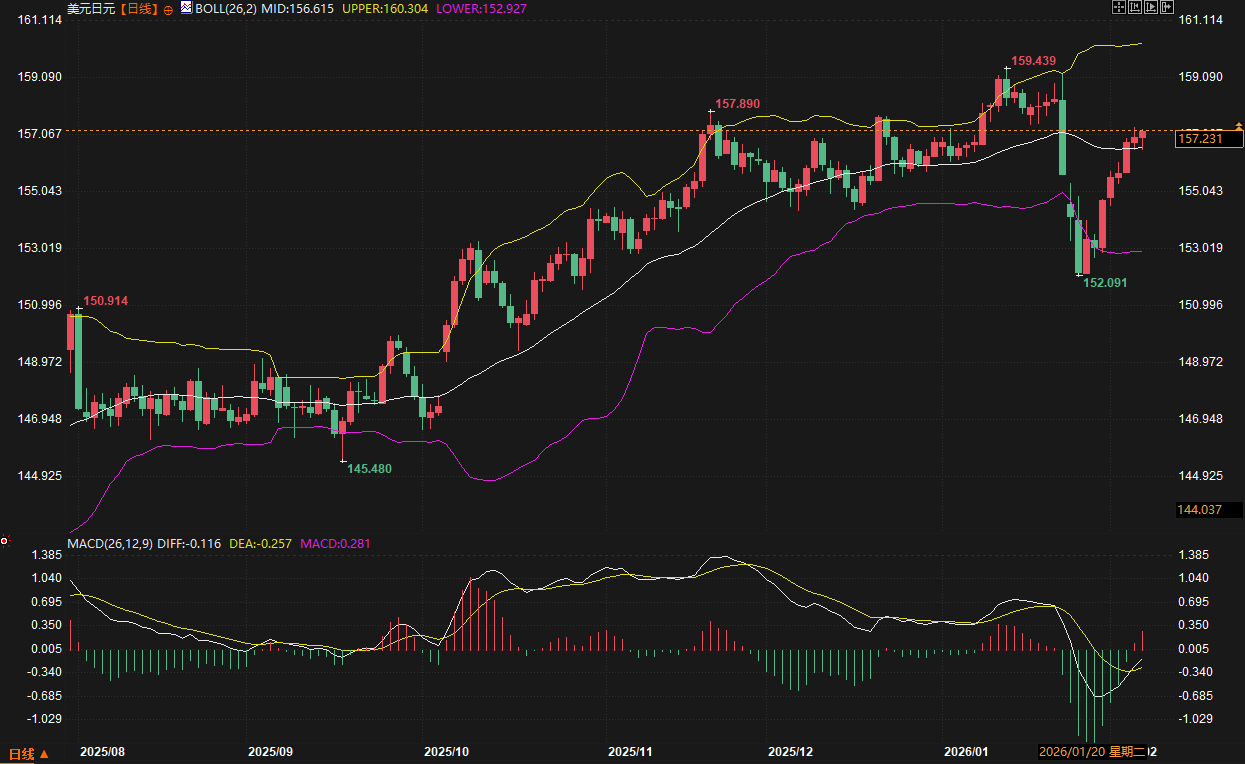
Key Data and Events <br/> Tensions Ahead of the Japanese Election: The core focus of the market this week is the Japanese general election to be held on Sunday (February 9). Incumbent Prime Minister Sanae Takaichi is expected to be re-elected, but the market is concerned that if she wins, she may further push forward with aggressive fiscal spending plans.
Fiscal Concerns and Intervention Risks: Concerns about fiscal discipline in Japan have triggered sharp fluctuations in the Japanese government bond and foreign exchange markets. Markets worry that if the election results are interpreted as an authorization for unrestrained fiscal spending, it will exacerbate the yen's depreciation and lead to a sell-off in government bonds. The sharp weakening of the yen has also sparked widespread discussion in the market about potential intervention by Japanese authorities in the foreign exchange market.
Institutional and Analyst Views
StoneX's Matt Weller explicitly points out that the key to this election lies in whether the market will interpret the outcome as an authorization for "aggressive fiscal spending." If so, he believes the Nikkei index may continue to rise, while the yen will continue to weaken. He further warns: "The relative weakness of the dollar in recent weeks has masked the more serious weakness of the yen. This trend may accelerate next week and thereafter. I think the authorities may eventually be forced to take direct intervention measures to buy time."
Most analysts agree that the market remains highly cautious about the yen until the election results become clear. The recent sharp depreciation of the yen reflects not only interest rate differentials and a stronger dollar, but also, more profoundly, deep concerns about the direction of Japan's fiscal policy and its potential impact on the yen's credit foundation.
Looking back at the week of February 2-6, the pattern in the foreign exchange market is clear: the interplay of monetary policy expectations and political event risks were the dominant forces. The US dollar gained the upper hand due to its relative interest rate advantage and resilience to key data; the euro and pound sterling were overshadowed by their central banks' dovish stance; and the yen became the hardest hit due to the high degree of uncertainty surrounding Japan's domestic political and economic policies.
Looking ahead to next week, the market will face a series of decisive moments: the official results of the Japanese general election will determine whether the yen continues its decline or finds a respite; the delayed release of the US January non-farm payroll report will serve as a litmus test for the momentum of the US economy, and consequently, its impact on expectations of a Federal Reserve rate cut. Furthermore, subsequent speeches by major central bank officials and developments in the geopolitical situation will continue to unsettle the market.
US Dollar Index: Economic data fuels expectations of interest rate cuts, leading to a weekly gain for the dollar.
Weekly Market Review <br/>The US dollar index trended upwards with fluctuations this week. It strengthened at the beginning of the week on the back of news regarding the nominee for Federal Reserve Chair, but subsequently came under pressure due to weak labor market data, though it remained resilient overall. On Friday, as risk sentiment improved, the dollar index retreated from a two-week high, ultimately closing lower. For the week, the dollar index rose by 0.54%.
Key Data and Events <br/>Federal Reserve Leadership Changes: The previous week, President Trump nominated former Federal Reserve Governor Kevin Warsh to be the next Federal Reserve Chairman, a move that continues to influence markets this week. Warsh is historically known for his hawkish stance, but recently advocated for interest rate cuts. His views on reducing the balance sheet have been interpreted by the market as potentially leading to tighter financial conditions, initially providing support for the US dollar.
Labor market signals are mixed: This week's U.S. employment data triggered market volatility. Thursday's data showed a larger-than-expected increase in initial jobless claims last week, and job openings in December fell to their lowest level in over five years. These figures exacerbated market concerns about a cooling job market, briefly putting downward pressure on the dollar and U.S. Treasury yields.
Federal Reserve officials made statements: Vice Chairman Thomas Jefferson expressed "cautious optimism" about the economy on Friday, believing the current policy stance is sufficient to handle changes. San Francisco Fed President Tom Daly, however, described the economy as being in a "volatile" state. These cautious comments from officials have shifted market focus more towards the economic data itself.
Shifting Market Expectations: Federal funds futures markets indicate that traders' expectations for a Fed rate cut this year have strengthened, with current pricing in a larger cut than earlier this week. Market focus has shifted entirely to the January non-farm payroll report, originally scheduled for release next week but postponed due to the government shutdown.
Institutional and Analyst Views
Scott Pike of Income Research + Management points out that the market is "highly focused" on labor market developments, and if data shows genuine signs of continued weakness, it could become a reason for the Federal Reserve to cut interest rates again. He believes that the "most likely catalyst" to significantly change market perceptions of the Fed's path is an unexpectedly strong non-farm payroll data.
StoneX's Matt Weller believes that if next week's non-farm payroll report confirms a weak labor market, the Federal Reserve is highly likely to cut interest rates in March. He also noted that traders are still assessing the potential policy changes that Warsh might bring after taking office.
Citigroup's Dan Tobon analyzed the market correlation from the perspective of market linkages, pointing out that Friday's weakening dollar was related to "some reversals in correlations" caused by the stock market rebound.
EUR/USD: ECB downplays exchange rate impact, euro fluctuates and closes lower.
Weekly Market Review <br />The euro/dollar pair experienced a decline followed by a rebound this week. It recorded a significant drop of 0.51% on Monday, maintained a volatile pattern throughout the week, and rebounded on Friday as market risk sentiment improved. However, due to the large drop at the beginning of the week, the euro/dollar pair still fell by a cumulative 0.31% for the week, failing to recover its losses.
Key Data and Events <br/>ECB Interest Rate Decision: On Thursday, the European Central Bank (ECB) kept interest rates unchanged as expected. Its policy statement downplayed the impact of exchange rate fluctuations on future decisions, a statement interpreted by the market as a dovish signal that did not provide upward support for the euro.
Overall market sentiment drove the euro's movements this week largely due to the overall strength of the US dollar and changes in global risk appetite. When the dollar strengthened due to US data or Federal Reserve-related news, the euro came under pressure; conversely, when market risk aversion eased, the euro gained some breathing room.
Institutional and Analyst Views : Market analysts generally believe that the European Central Bank's stance at this meeting was dovish, and it did not signal any eagerness to change policy. Given the fluctuating expectations of a Federal Reserve rate cut and the still weak economic growth momentum in the Eurozone, the euro is unlikely to gain sustained independent upward momentum in the short term, and its trend will continue to show a high negative correlation with the US dollar index.
GBP/USD: The Bank of England unexpectedly held rates steady, causing the pound to plummet.
Weekly Market Recap: The British pound experienced a volatile week against the US dollar, exhibiting a clear "V-shaped" reversal. On Thursday, following the Bank of England's interest rate decision, the pound plunged 0.82% in a single day. On Friday, driven by short covering and a general decline in the US dollar, the pound rebounded by 0.60%. Nevertheless, due to Thursday's sharp drop, the pound still recorded a weekly decline of 0.55% against the US dollar.
Key Data and Events <br/>Bank of England Interest Rate Decision: On Thursday, the Bank of England surprisingly decided to keep interest rates unchanged by a narrow majority. Even more surprising to the market was its policy statement, which mentioned that if the recent downward trend in inflation expectations continues, the central bank may consider lowering borrowing costs. This clear dovish shift was the direct cause of the pound's sharp drop on Thursday.
Policy Path Divergence Expectations: The Bank of England's statements have significantly accelerated market expectations for its interest rate cuts, contrasting with the market's speculation on the Federal Reserve's rate cut path during the same period. This potential divergence in monetary policy between the Bank of England and the US will put pressure on the pound in the short term.
Institutional and Analyst Views : Market participants generally view the Bank of England's decision as a key turning point. Analysts believe that although UK inflation remains high, the central bank's focus on declining inflation expectations indicates that its policy focus may be shifting more from combating inflation to preventing an excessive economic downturn. This suggests that the pound's interest rate advantage may weaken in the near future.
USD/JPY: Yen plunges amid election uncertainty.
Weekly Market Review <br />The USD/JPY pair was undoubtedly the most eye-catching currency pair in the foreign exchange market this week. The pair rose for five consecutive trading days, achieving a five-day winning streak, and accumulating a weekly gain of 1.60%.
Key Data and Events <br/> Tensions Ahead of the Japanese Election: The core focus of the market this week is the Japanese general election to be held on Sunday (February 9). Incumbent Prime Minister Sanae Takaichi is expected to be re-elected, but the market is concerned that if she wins, she may further push forward with aggressive fiscal spending plans.
Fiscal Concerns and Intervention Risks: Concerns about fiscal discipline in Japan have triggered sharp fluctuations in the Japanese government bond and foreign exchange markets. Markets worry that if the election results are interpreted as an authorization for unrestrained fiscal spending, it will exacerbate the yen's depreciation and lead to a sell-off in government bonds. The sharp weakening of the yen has also sparked widespread discussion in the market about potential intervention by Japanese authorities in the foreign exchange market.
Institutional and Analyst Views
StoneX's Matt Weller explicitly points out that the key to this election lies in whether the market will interpret the outcome as an authorization for "aggressive fiscal spending." If so, he believes the Nikkei index may continue to rise, while the yen will continue to weaken. He further warns: "The relative weakness of the dollar in recent weeks has masked the more serious weakness of the yen. This trend may accelerate next week and thereafter. I think the authorities may eventually be forced to take direct intervention measures to buy time."
Most analysts agree that the market remains highly cautious about the yen until the election results become clear. The recent sharp depreciation of the yen reflects not only interest rate differentials and a stronger dollar, but also, more profoundly, deep concerns about the direction of Japan's fiscal policy and its potential impact on the yen's credit foundation.
Weekly Summary and Outlook
Looking back at the week of February 2-6, the pattern in the foreign exchange market is clear: the interplay of monetary policy expectations and political event risks were the dominant forces. The US dollar gained the upper hand due to its relative interest rate advantage and resilience to key data; the euro and pound sterling were overshadowed by their central banks' dovish stance; and the yen became the hardest hit due to the high degree of uncertainty surrounding Japan's domestic political and economic policies.
Looking ahead to next week, the market will face a series of decisive moments: the official results of the Japanese general election will determine whether the yen continues its decline or finds a respite; the delayed release of the US January non-farm payroll report will serve as a litmus test for the momentum of the US economy, and consequently, its impact on expectations of a Federal Reserve rate cut. Furthermore, subsequent speeches by major central bank officials and developments in the geopolitical situation will continue to unsettle the market.
- Risk Warning and Disclaimer
- The market involves risk, and trading may not be suitable for all investors. This article is for reference only and does not constitute personal investment advice, nor does it take into account certain users’ specific investment objectives, financial situation, or other needs. Any investment decisions made based on this information are at your own risk.