













Why didn't the market panic when ADP data was halved?
2026-02-04 21:40:18
On Wednesday (February 4th), at 21:15 Beijing time, the highly anticipated US ADP private sector employment report was officially released. Data showed that US private sector employment increased by only 22,000 jobs in January 2026, far below the market consensus of approximately 46,000, and the previous figure was also revised down to 37,000. This significantly weaker-than-expected result, against the backdrop of fluctuating economic data and macroeconomic policy uncertainty, quickly became the focus of global markets, highlighting the reinforcing effect of the cooling labor market signal on expectations of a Federal Reserve interest rate cut.

Prior to the data release, the market generally expected private sector employment to see a modest increase of approximately 45,000 to 48,000 jobs in January. This expectation echoed recent signs of a recovery in the manufacturing PMI and a rebound in the ISM index, supporting to some extent the bullish logic of the US dollar under the "higher and longer interest rates" perspective. Previously, some institutions believed that the continued resilience of the job market might make the Federal Reserve more cautious in its interest rate cut decisions, thus keeping the US dollar index fluctuating at a relatively high level and US Treasury yields consolidating.
The financial markets reacted immediately and swiftly after the data was released:
Interest rate market: The yield on the policy-sensitive 2-year U.S. Treasury note remained flat at 3.574%, while the yield on the 10-year Treasury note fell slightly by 0.7 basis points to 4.266%. The 2-year and 10-year Treasury yield curve was last quoted at positive 69.0 basis points.
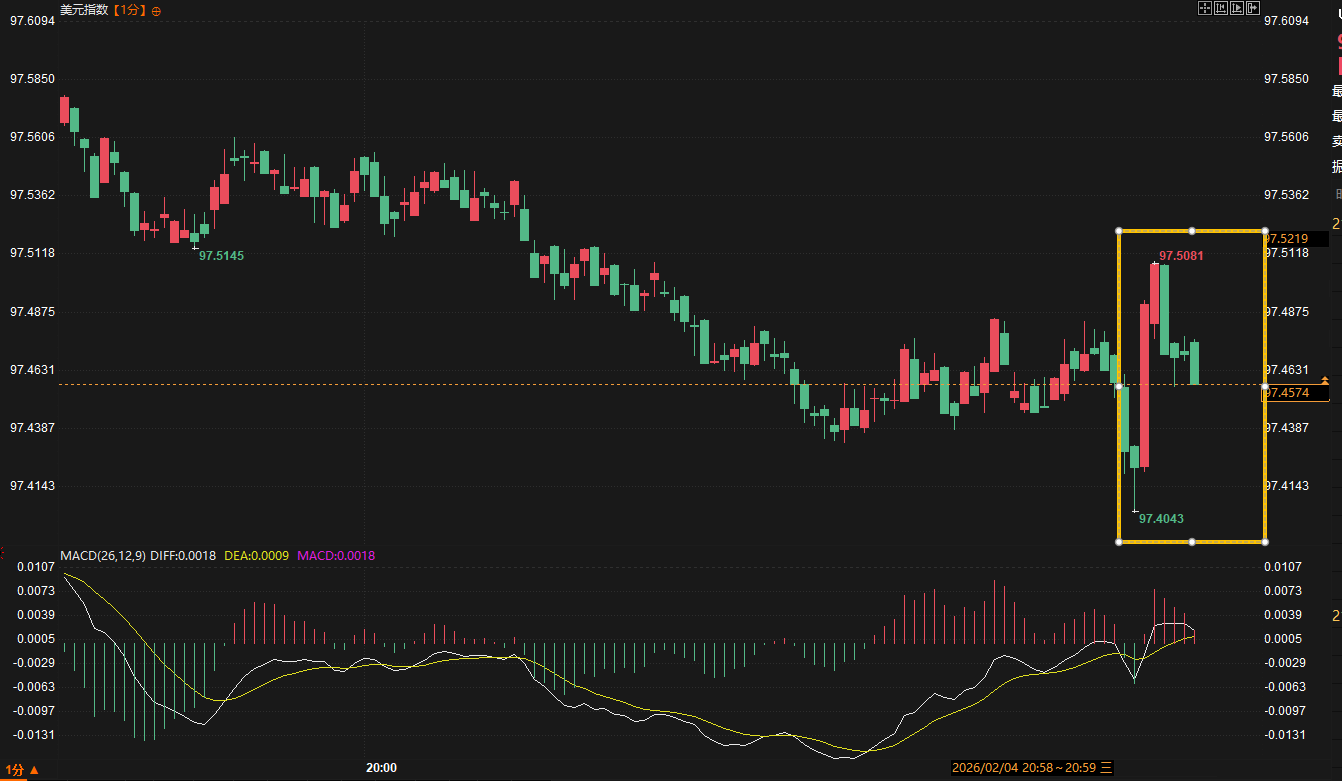
Foreign exchange market: The US dollar index fell by about 6 points in the short term, hitting a low of 97.4043, but then rebounded technically by about 10 points, reaching a high of 97.5081. This initial decline followed by a rise reflects the complex sentiment in the market after digesting the data.
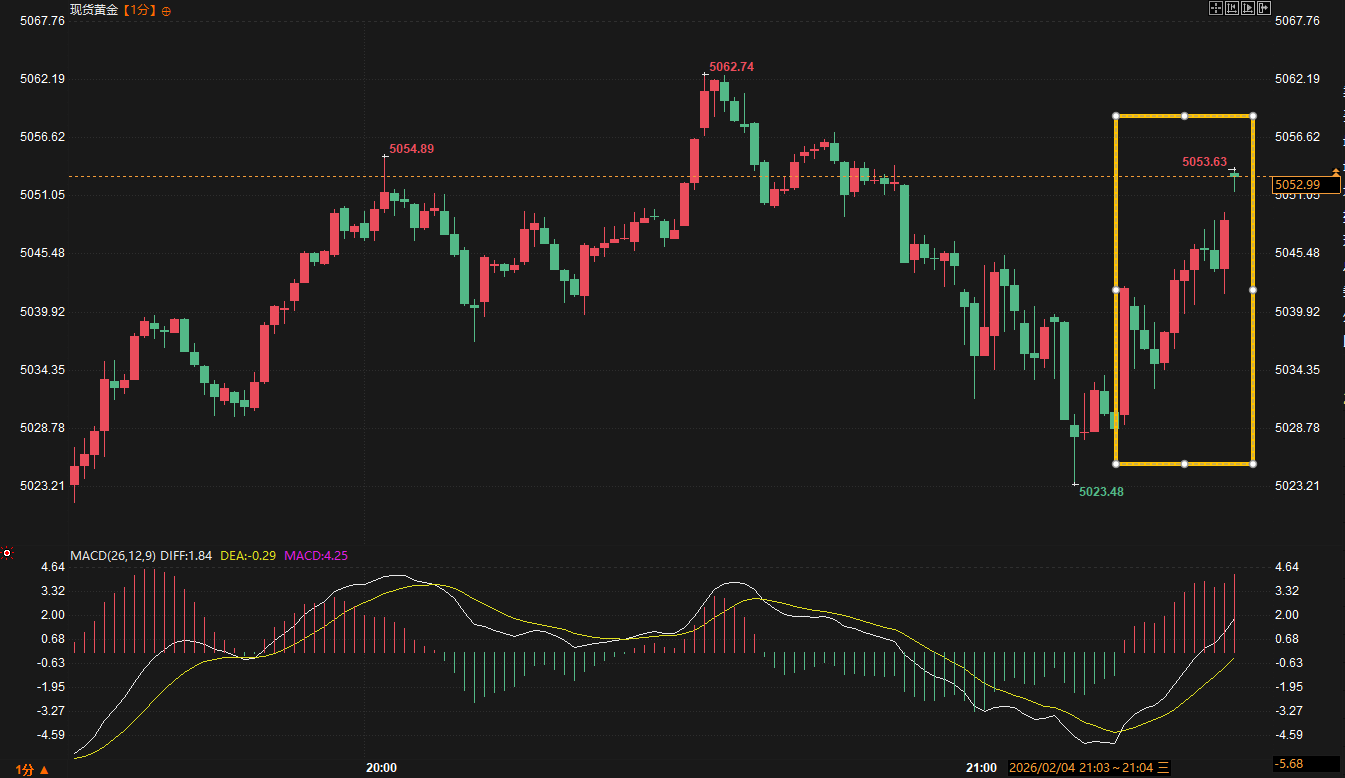
Precious metals market: Spot gold rose sharply by about $20 in the short term, reaching a high of $5,053.63 per ounce, boosted by both safe-haven demand and expectations of interest rate cuts.
Following the release of the data, interpretations by institutional and retail investors quickly gained momentum, with a strong focus on the data's impact on the Federal Reserve's policy path.
Analysts generally agree that the data confirms a slowdown in the growth momentum of the job market. Several analysts pointed out that the report's details show the manufacturing sector has experienced net job losses for several consecutive months, and hiring activity at large companies has also weakened, with only a few sectors such as education and healthcare showing bright spots. Regarding wages, the annual salary growth rate for those remaining in their positions remained stable at 4.5%, while the salary growth rate for those changing jobs slowed to 6.4%. While overall wage pressure remains stable, companies' hiring intentions have become more cautious. Some analysts summarized that this report paints a picture of "cooling rather than collapse," providing more data support for the Federal Reserve's shift towards a more accommodative policy.
Retail traders were more direct in their discussions, generally describing the data as "significantly below expectations." Many users noted that job growth in small businesses (with 20-49 employees) had fallen to its lowest point since 2022, pointing out that while there were still hiring increases in the southern United States, it was insufficient to offset the overall weakness across the country. Many retail traders directly linked this data to the timing of a Federal Reserve rate cut, believing that if Friday's non-farm payroll data confirms this trend, market expectations for the first rate cut this year will be brought forward further.
Market sentiment reversed significantly compared to before the data release. Previously, dovish expectations for the ADP report could have solidified the dollar's rebound and increased upward pressure on US Treasury yields. However, the unexpectedly weak data quickly led to a surge in risk aversion and expectations of monetary easing, benefiting gold while the dollar's rebound proved weak and short-lived. This clearly demonstrates the immediate impact of fundamental data on market sentiment.
From the perspective of expectations for a Federal Reserve rate cut, this ADP report undoubtedly reinforces market bets on a policy shift towards easing. The continued slowdown in job growth, combined with stable wage growth but declining hiring intentions, suggests that the labor market is in the process of marginal cooling, rather than a sudden deterioration. This provides the Federal Reserve with more policy flexibility in the face of economic uncertainty.
Market sentiment has shifted accordingly: risk assets may find short-term support due to rising expectations of interest rate cuts, but caution is warranted as a continued weak employment trend could trigger deeper doubts about the economy's inherent resilience. Regarding the specific impact on various asset classes:
The slight decline in U.S. Treasury yields reflects some safe-haven inflows and a repricing of the interest rate outlook.
The volatile trend of the US dollar index, which first fell and then rebounded, shows a situation where short sellers took profits while long sellers tentatively entered the market.
The strong upward surge in gold prices directly benefits from the dual positive factors of expectations of interest rate cuts (reducing the opportunity cost of holding gold) and increased demand for safe-haven assets.
While the ADP employment report is only a high-frequency leading indicator, its unexpectedly weak performance provides an important reference for the upcoming official non-farm payroll data. If the non-farm payroll data also shows similar signs of cooling, the signal of slowing labor market growth will be further solidified, and market expectations for the Federal Reserve's interest rate cut path will become clearer and more aggressive.
However, the report also reveals some noteworthy signs of resilience, such as relatively stable wage growth, continued hiring activity in some regions, and companies exhibiting more cautious hiring than large-scale layoffs. These characteristics suggest that the US economy is not facing systemic risks and its inherent resilience remains.
In the short term, market sentiment will lean dovish, and safe-haven assets such as gold and Treasury bonds are expected to receive continued support. In the medium term, investors will need to find a new balance between employment market data, inflation trends, and the Federal Reserve's policy response, and closely monitor the cross-effects of geopolitical situations and the policy moves of major central banks around the world on the US dollar and US Treasury yields.
In conclusion, the ADP data reinforces the room for adjustment in the US economy under the narrative of a "soft landing," but the market still needs to remain cautious and wait for more data to confirm whether this is a temporary fluctuation or the beginning of a trend reversal.
Before the data release: Market expectations were moderate, and the logic of a stronger dollar prevailed.
Prior to the data release, the market generally expected private sector employment to see a modest increase of approximately 45,000 to 48,000 jobs in January. This expectation echoed recent signs of a recovery in the manufacturing PMI and a rebound in the ISM index, supporting to some extent the bullish logic of the US dollar under the "higher and longer interest rates" perspective. Previously, some institutions believed that the continued resilience of the job market might make the Federal Reserve more cautious in its interest rate cut decisions, thus keeping the US dollar index fluctuating at a relatively high level and US Treasury yields consolidating.
Immediate Market Reaction: Risk Aversion and Easing Logic Dominate
The financial markets reacted immediately and swiftly after the data was released:
Interest rate market: The yield on the policy-sensitive 2-year U.S. Treasury note remained flat at 3.574%, while the yield on the 10-year Treasury note fell slightly by 0.7 basis points to 4.266%. The 2-year and 10-year Treasury yield curve was last quoted at positive 69.0 basis points.
Foreign exchange market: The US dollar index fell by about 6 points in the short term, hitting a low of 97.4043, but then rebounded technically by about 10 points, reaching a high of 97.5081. This initial decline followed by a rise reflects the complex sentiment in the market after digesting the data.
Precious metals market: Spot gold rose sharply by about $20 in the short term, reaching a high of $5,053.63 per ounce, boosted by both safe-haven demand and expectations of interest rate cuts.
Analysis: The consensus points to "slowing employment and rising interest rate cuts."
Following the release of the data, interpretations by institutional and retail investors quickly gained momentum, with a strong focus on the data's impact on the Federal Reserve's policy path.
Analysts generally agree that the data confirms a slowdown in the growth momentum of the job market. Several analysts pointed out that the report's details show the manufacturing sector has experienced net job losses for several consecutive months, and hiring activity at large companies has also weakened, with only a few sectors such as education and healthcare showing bright spots. Regarding wages, the annual salary growth rate for those remaining in their positions remained stable at 4.5%, while the salary growth rate for those changing jobs slowed to 6.4%. While overall wage pressure remains stable, companies' hiring intentions have become more cautious. Some analysts summarized that this report paints a picture of "cooling rather than collapse," providing more data support for the Federal Reserve's shift towards a more accommodative policy.
Retail traders were more direct in their discussions, generally describing the data as "significantly below expectations." Many users noted that job growth in small businesses (with 20-49 employees) had fallen to its lowest point since 2022, pointing out that while there were still hiring increases in the southern United States, it was insufficient to offset the overall weakness across the country. Many retail traders directly linked this data to the timing of a Federal Reserve rate cut, believing that if Friday's non-farm payroll data confirms this trend, market expectations for the first rate cut this year will be brought forward further.
Market sentiment reversed significantly compared to before the data release. Previously, dovish expectations for the ADP report could have solidified the dollar's rebound and increased upward pressure on US Treasury yields. However, the unexpectedly weak data quickly led to a surge in risk aversion and expectations of monetary easing, benefiting gold while the dollar's rebound proved weak and short-lived. This clearly demonstrates the immediate impact of fundamental data on market sentiment.
Fundamental Analysis: Expectations of Interest Rate Cuts Strengthen, Market Sentiment Shifts
From the perspective of expectations for a Federal Reserve rate cut, this ADP report undoubtedly reinforces market bets on a policy shift towards easing. The continued slowdown in job growth, combined with stable wage growth but declining hiring intentions, suggests that the labor market is in the process of marginal cooling, rather than a sudden deterioration. This provides the Federal Reserve with more policy flexibility in the face of economic uncertainty.
Market sentiment has shifted accordingly: risk assets may find short-term support due to rising expectations of interest rate cuts, but caution is warranted as a continued weak employment trend could trigger deeper doubts about the economy's inherent resilience. Regarding the specific impact on various asset classes:
The slight decline in U.S. Treasury yields reflects some safe-haven inflows and a repricing of the interest rate outlook.
The volatile trend of the US dollar index, which first fell and then rebounded, shows a situation where short sellers took profits while long sellers tentatively entered the market.
The strong upward surge in gold prices directly benefits from the dual positive factors of expectations of interest rate cuts (reducing the opportunity cost of holding gold) and increased demand for safe-haven assets.
Future Trend Outlook
While the ADP employment report is only a high-frequency leading indicator, its unexpectedly weak performance provides an important reference for the upcoming official non-farm payroll data. If the non-farm payroll data also shows similar signs of cooling, the signal of slowing labor market growth will be further solidified, and market expectations for the Federal Reserve's interest rate cut path will become clearer and more aggressive.
However, the report also reveals some noteworthy signs of resilience, such as relatively stable wage growth, continued hiring activity in some regions, and companies exhibiting more cautious hiring than large-scale layoffs. These characteristics suggest that the US economy is not facing systemic risks and its inherent resilience remains.
In the short term, market sentiment will lean dovish, and safe-haven assets such as gold and Treasury bonds are expected to receive continued support. In the medium term, investors will need to find a new balance between employment market data, inflation trends, and the Federal Reserve's policy response, and closely monitor the cross-effects of geopolitical situations and the policy moves of major central banks around the world on the US dollar and US Treasury yields.
In conclusion, the ADP data reinforces the room for adjustment in the US economy under the narrative of a "soft landing," but the market still needs to remain cautious and wait for more data to confirm whether this is a temporary fluctuation or the beginning of a trend reversal.
- Risk Warning and Disclaimer
- The market involves risk, and trading may not be suitable for all investors. This article is for reference only and does not constitute personal investment advice, nor does it take into account certain users’ specific investment objectives, financial situation, or other needs. Any investment decisions made based on this information are at your own risk.

