Oil giants warn of a harsh winter: BP suspends buybacks to protect cash flow, low oil prices force industry-wide contraction.
2026-02-11 11:41:07
BP, one of the world’s largest privately held oil companies, announced its fourth-quarter 2025 results on Tuesday (February 10), with profits in line with market expectations. It also announced a suspension of its share buyback program to strengthen its balance sheet in response to the pressure from persistently low oil prices.
On Wednesday during Asian trading hours, influenced by ongoing geopolitical risks between the US and Iran, US crude oil prices fluctuated and strengthened, currently trading around $64.50 per barrel, with a daily increase of about 0.8%. In the previous trading day, oil prices fluctuated and fell, closing down 0.34%.
BP reported underlying replacement cost profit (often used as a proxy for net profit) of $1.54 billion for the fourth quarter of 2025, perfectly in line with the analyst consensus estimate of $1.54 billion compiled by LSEG. The company's full-year net profit was $7.49 billion, slightly below analysts' expectations of $7.58 billion, and a significant decline from nearly $9 billion in 2024.
Faced with a softening commodity price environment, BP's board of directors decided to suspend share buybacks and allocate all excess cash to "accelerate the strengthening" of its balance sheet. The company had previously announced a $750 million buyback program in its third-quarter results released in November. This suspension of buybacks is seen as a prudent measure to prioritize financial stability during a period of low oil prices.
Nevertheless, BP maintained its stable dividend policy, announcing a fourth-quarter dividend of 8.320 cents per common stock.
In a statement, BP interim CEO Carol Howle said, “2025 is a year of strong underlying financial performance, excellent operating results, and significant strategic progress. We have made progress on our four core objectives—improving cash flow and returns, reducing costs, and strengthening our balance sheet—but we are clear that there is still more work to be done and a deep understanding of the urgency to accelerate delivery.”
Howle emphasized that the company is in a critical period of transformation, and the new CEO, Meg O'Neill, will officially take over on April 1. The previous CEO left the company at the end of 2025.
Net debt: $22.18 billion at the end of the fourth quarter, down from approximately $23 billion in the same period last year.
Operating cash flow: $7.6 billion in the fourth quarter, up from $7.43 billion in the same period last year.
Capital expenditure budget for 2026: set in the range of US$13 billion to US$13.5 billion, at the lower end of the previous guidance.
BP shares fell nearly 4% on Tuesday, partially erasing intraday losses. The market reaction to the suspension of share buybacks reflected some disappointment among short-term investors, but analysts generally considered the move reasonable.
The European oil and gas industry is facing severe challenges. Oil prices are expected to record their biggest annual drop since the pandemic in 2025, mainly dragged down by concerns about oversupply, which has increased pressure on the shareholder return commitments of major oil companies.
Last week, peers Equinor and Shell both reported quarterly profit declines, attributing them to factors such as lower oil prices. Equinor announced it would drastically reduce its 2026 share buyback program from $5 billion last year to $1.5 billion, while also scaling back investments in renewable energy and low-carbon projects. Shell, on the other hand, maintained its buyback program at $3.5 billion, marking the 17th consecutive quarter it has maintained a buyback level of $3 billion or more.
A global energy analyst said on Tuesday, "Following Auchincloss's strategic reset in April 2025, share buybacks had decreased from $1.75 billion per quarter to $750 million. This complete cancellation of buybacks indicates a more cautious stance and a clear focus on financial resilience. While the market wasn't entirely surprised (especially after other oil giants took similar action), short-term investor disappointment put pressure on the share price today. However, in an environment of weak commodity prices, prioritizing balance sheet strengthening is undoubtedly a wise move."
Overall, BP's performance reflects the defensive adjustments made by major oil companies during periods of low oil prices: preserving cash, strengthening balance sheets, and delaying shareholder returns in anticipation of better opportunities . With a new CEO in charge, the company is expected to further focus on its upstream oil and gas business, achieving more sustainable value growth.
BP's suspension of share buybacks to mitigate the impact of low oil prices reflects the general caution among oil giants in the current macroeconomic environment. While short-term market sentiment has been dampened, this financial defensive measure may provide support for the industry's medium- to long-term resilience, with limited direct impact on crude oil prices, highlighting more the market's continued concerns about supply and demand fundamentals.
The collective contraction of capital returns by oil giants may exacerbate market concerns about weak demand and declining industry profits, indirectly suppressing the upside potential of oil prices.
Cuts in corporate investment could impact medium- to long-term supply, while a recovery in demand or geopolitical tensions could provide potential support for oil prices.
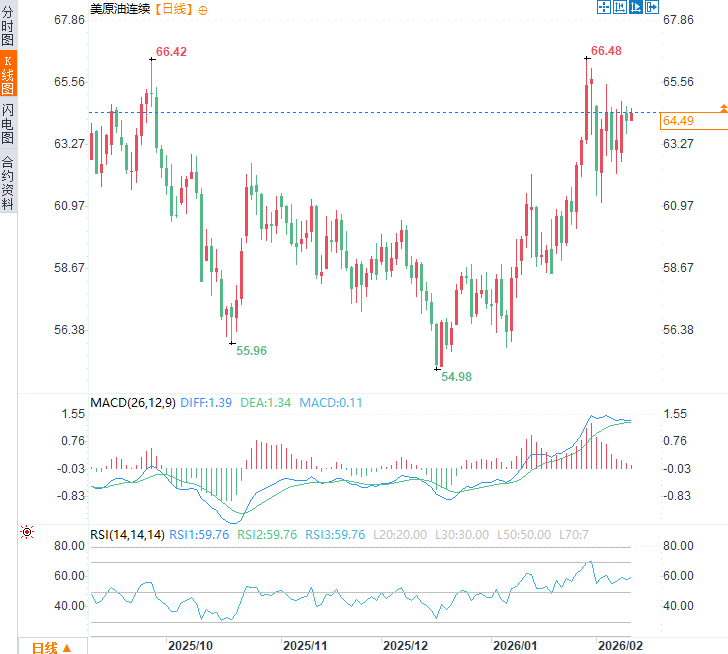
(US crude oil daily chart, source: FX678)
At 11:40 Beijing time, US crude oil futures were trading at $64.50 per barrel.
On Wednesday during Asian trading hours, influenced by ongoing geopolitical risks between the US and Iran, US crude oil prices fluctuated and strengthened, currently trading around $64.50 per barrel, with a daily increase of about 0.8%. In the previous trading day, oil prices fluctuated and fell, closing down 0.34%.
BP reported underlying replacement cost profit (often used as a proxy for net profit) of $1.54 billion for the fourth quarter of 2025, perfectly in line with the analyst consensus estimate of $1.54 billion compiled by LSEG. The company's full-year net profit was $7.49 billion, slightly below analysts' expectations of $7.58 billion, and a significant decline from nearly $9 billion in 2024.
Faced with a softening commodity price environment, BP's board of directors decided to suspend share buybacks and allocate all excess cash to "accelerate the strengthening" of its balance sheet. The company had previously announced a $750 million buyback program in its third-quarter results released in November. This suspension of buybacks is seen as a prudent measure to prioritize financial stability during a period of low oil prices.
Nevertheless, BP maintained its stable dividend policy, announcing a fourth-quarter dividend of 8.320 cents per common stock.
In a statement, BP interim CEO Carol Howle said, “2025 is a year of strong underlying financial performance, excellent operating results, and significant strategic progress. We have made progress on our four core objectives—improving cash flow and returns, reducing costs, and strengthening our balance sheet—but we are clear that there is still more work to be done and a deep understanding of the urgency to accelerate delivery.”
Howle emphasized that the company is in a critical period of transformation, and the new CEO, Meg O'Neill, will officially take over on April 1. The previous CEO left the company at the end of 2025.
Key Financial Highlights
Net debt: $22.18 billion at the end of the fourth quarter, down from approximately $23 billion in the same period last year.
Operating cash flow: $7.6 billion in the fourth quarter, up from $7.43 billion in the same period last year.
Capital expenditure budget for 2026: set in the range of US$13 billion to US$13.5 billion, at the lower end of the previous guidance.
BP shares fell nearly 4% on Tuesday, partially erasing intraday losses. The market reaction to the suspension of share buybacks reflected some disappointment among short-term investors, but analysts generally considered the move reasonable.
Industry background and comparison with peers
The European oil and gas industry is facing severe challenges. Oil prices are expected to record their biggest annual drop since the pandemic in 2025, mainly dragged down by concerns about oversupply, which has increased pressure on the shareholder return commitments of major oil companies.
Last week, peers Equinor and Shell both reported quarterly profit declines, attributing them to factors such as lower oil prices. Equinor announced it would drastically reduce its 2026 share buyback program from $5 billion last year to $1.5 billion, while also scaling back investments in renewable energy and low-carbon projects. Shell, on the other hand, maintained its buyback program at $3.5 billion, marking the 17th consecutive quarter it has maintained a buyback level of $3 billion or more.
A global energy analyst said on Tuesday, "Following Auchincloss's strategic reset in April 2025, share buybacks had decreased from $1.75 billion per quarter to $750 million. This complete cancellation of buybacks indicates a more cautious stance and a clear focus on financial resilience. While the market wasn't entirely surprised (especially after other oil giants took similar action), short-term investor disappointment put pressure on the share price today. However, in an environment of weak commodity prices, prioritizing balance sheet strengthening is undoubtedly a wise move."
Overall, BP's performance reflects the defensive adjustments made by major oil companies during periods of low oil prices: preserving cash, strengthening balance sheets, and delaying shareholder returns in anticipation of better opportunities . With a new CEO in charge, the company is expected to further focus on its upstream oil and gas business, achieving more sustainable value growth.
Analysis of the impact on crude oil prices
BP's suspension of share buybacks to mitigate the impact of low oil prices reflects the general caution among oil giants in the current macroeconomic environment. While short-term market sentiment has been dampened, this financial defensive measure may provide support for the industry's medium- to long-term resilience, with limited direct impact on crude oil prices, highlighting more the market's continued concerns about supply and demand fundamentals.
The collective contraction of capital returns by oil giants may exacerbate market concerns about weak demand and declining industry profits, indirectly suppressing the upside potential of oil prices.
Cuts in corporate investment could impact medium- to long-term supply, while a recovery in demand or geopolitical tensions could provide potential support for oil prices.
(US crude oil daily chart, source: FX678)
At 11:40 Beijing time, US crude oil futures were trading at $64.50 per barrel.
- Risk Warning and Disclaimer
- The market involves risk, and trading may not be suitable for all investors. This article is for reference only and does not constitute personal investment advice, nor does it take into account certain users’ specific investment objectives, financial situation, or other needs. Any investment decisions made based on this information are at your own risk.