Employment crisis and looming interest rate cuts! The pound sterling stands on the brink of collapse, awaiting its final verdict.
2026-02-17 16:48:11
On Tuesday (February 17), during the Asian and European sessions, the pound fell more than 0.5% against the dollar as the UK's December unemployment rate unexpectedly rose higher than expected and wage inflation fell short of expectations. It is currently trading at 1.3578, down 0.37%.
The UK is currently facing a situation of stagnant wages and rising unemployment, putting its labor market to the severe test. The pound has quickly fallen below a key level, and short-term downside risks are focused on four key data points.
UK employment data released on Tuesday fell short of expectations across the board, confirming a cooling labor market.
The ILO unemployment rate rose to 5.2% in the three months to January, a near five-year high, higher than the expected 5.1%.
The number of people filing for unemployment benefits jumped from 27,000 to 286,000 in January, while the growth rate of employment slowed significantly.
In the fourth quarter of 2025, the year-on-year growth rate of average wages excluding bonuses slowed to 4.2% from 4.6%, with wage inflation cooling in tandem. Weak employment and wages provide solid data support for the Bank of England to cut interest rates.
The pound sterling accelerated its decline against the dollar, falling below the 1.3600 level and hitting a 10-day low of 1.3570, after being hit by both weak fourth-quarter GDP data and disappointing new employment figures. The short-term downtrend is now clear.
The pound's performance last week lagged behind a basket of currencies due to weaker-than-expected GDP data, and the employment data further amplified the decline.
Brown Brothers Harriman (BBH) analyst Elias Haddad emphasized that weak UK economic data directly reinforced expectations of a Bank of England rate cut, becoming the core logic behind the pound's weakness.
Judging from the swap market pricing, the probability of the Bank of England cutting interest rates by 25 basis points to 3.50% at its policy meeting on March 19 has climbed to 74%, and the expectation of a cumulative interest rate cut of 50 basis points over the next twelve months has been largely realized, with the countdown to the start of the easing cycle beginning.
Haddad pointed out that the four upcoming data releases will determine the Bank of England's policy path and become the core catalyst for pound volatility:
Labor force data: The unemployment rate is expected to remain stable at 5.1%, and private sector wage growth may hit a multi-year low. Inflation data: Affected by utility prices, the overall and core CPI are expected to fall to 3.0% in tandem. Retail sales: January data will reflect the actual vitality of consumption. PMI data: February manufacturing and service sector PMIs will verify the strength of the economic recovery.
With both GDP and employment data showing negative impacts, the UK's economic recovery is clearly weak, inflation is declining, and the labor market is cooling down, making a rate cut by the Bank of England in March highly probable.
If CPI, retail, and PMI data continue to be weak this week, expectations for interest rate cuts will be further strengthened, and the pound will continue to face downward pressure against the dollar and other major currencies. Short-term fluctuations will revolve entirely around policy expectations and data releases.
Technical Analysis: GBP/USD broke below the original resistance line and found support at the lower trendline of a triangle consolidation pattern. Recently, GBP/USD has formed a triangle consolidation pattern. The key focus in the near term is whether the triangle will be broken. If the exchange rate does not break down here, there is a chance that the exchange rate will quickly reverse and break upwards, which is a common trend when the exchange rate is in a triangle consolidation pattern.
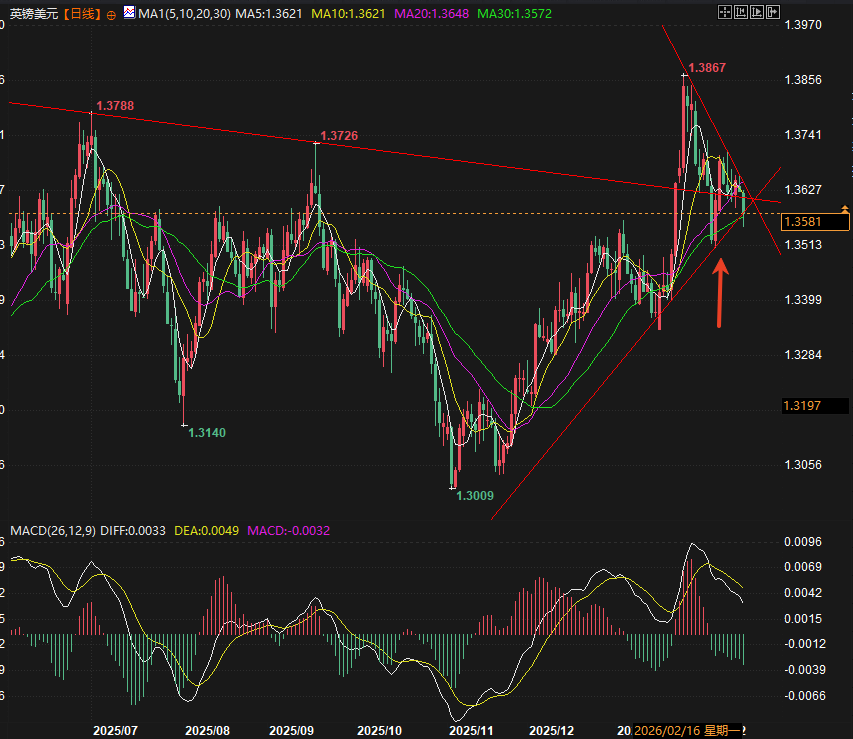
(GBP/USD daily chart, source: FX678)
At 16:42 Beijing time, the British pound was trading at 1.3581/82 against the US dollar.
The UK is currently facing a situation of stagnant wages and rising unemployment, putting its labor market to the severe test. The pound has quickly fallen below a key level, and short-term downside risks are focused on four key data points.
Key negative factor: A broad-based cooling of the job market confirms an economic slowdown.
UK employment data released on Tuesday fell short of expectations across the board, confirming a cooling labor market.
The ILO unemployment rate rose to 5.2% in the three months to January, a near five-year high, higher than the expected 5.1%.
The number of people filing for unemployment benefits jumped from 27,000 to 286,000 in January, while the growth rate of employment slowed significantly.
In the fourth quarter of 2025, the year-on-year growth rate of average wages excluding bonuses slowed to 4.2% from 4.6%, with wage inflation cooling in tandem. Weak employment and wages provide solid data support for the Bank of England to cut interest rates.
A series of negative data caused the pound to fall below the 1.3600 level.
The pound sterling accelerated its decline against the dollar, falling below the 1.3600 level and hitting a 10-day low of 1.3570, after being hit by both weak fourth-quarter GDP data and disappointing new employment figures. The short-term downtrend is now clear.
The pound's performance last week lagged behind a basket of currencies due to weaker-than-expected GDP data, and the employment data further amplified the decline.
Institutional pricing: 74% probability of a rate cut in March, one-year easing path taking shape.
Brown Brothers Harriman (BBH) analyst Elias Haddad emphasized that weak UK economic data directly reinforced expectations of a Bank of England rate cut, becoming the core logic behind the pound's weakness.
Judging from the swap market pricing, the probability of the Bank of England cutting interest rates by 25 basis points to 3.50% at its policy meeting on March 19 has climbed to 74%, and the expectation of a cumulative interest rate cut of 50 basis points over the next twelve months has been largely realized, with the countdown to the start of the easing cycle beginning.
Key Outlook: Thursday's Big Data Releases Will Determine the Short-Term Direction of the Pound Sterling
Haddad pointed out that the four upcoming data releases will determine the Bank of England's policy path and become the core catalyst for pound volatility:
Labor force data: The unemployment rate is expected to remain stable at 5.1%, and private sector wage growth may hit a multi-year low. Inflation data: Affected by utility prices, the overall and core CPI are expected to fall to 3.0% in tandem. Retail sales: January data will reflect the actual vitality of consumption. PMI data: February manufacturing and service sector PMIs will verify the strength of the economic recovery.
Summary and Technical Analysis:
With both GDP and employment data showing negative impacts, the UK's economic recovery is clearly weak, inflation is declining, and the labor market is cooling down, making a rate cut by the Bank of England in March highly probable.
If CPI, retail, and PMI data continue to be weak this week, expectations for interest rate cuts will be further strengthened, and the pound will continue to face downward pressure against the dollar and other major currencies. Short-term fluctuations will revolve entirely around policy expectations and data releases.
Technical Analysis: GBP/USD broke below the original resistance line and found support at the lower trendline of a triangle consolidation pattern. Recently, GBP/USD has formed a triangle consolidation pattern. The key focus in the near term is whether the triangle will be broken. If the exchange rate does not break down here, there is a chance that the exchange rate will quickly reverse and break upwards, which is a common trend when the exchange rate is in a triangle consolidation pattern.
(GBP/USD daily chart, source: FX678)
At 16:42 Beijing time, the British pound was trading at 1.3581/82 against the US dollar.
- Risk Warning and Disclaimer
- The market involves risk, and trading may not be suitable for all investors. This article is for reference only and does not constitute personal investment advice, nor does it take into account certain users’ specific investment objectives, financial situation, or other needs. Any investment decisions made based on this information are at your own risk.