A chart shows that the Baltic Dry Index continued to decline, with weak Capesize freight rates dragging down the market.
2026-02-26 23:41:14
Latest data shows that the Baltic Dry Index (BDI) was 2117 points on February 26, 2026, a three-day low, down 0.19% from the previous day, marking the second consecutive day of decline (including zero growth). Looking at the short-term charts, the recent 11 BDI data points show: 5 positive increases, 6 negative increases, and 0 zero increases. Specifically, the Panamax Freight Index (BPI) was 1916 points, up 1.38% from the previous day; the Capesize Freight Index (BCI) was 3051 points, down 2.46%; and the Supramax Freight Index (BSI) was 1299 points, up 3.51%. For detailed 720-day and 10-year trend charts of the Baltic Dry Index and its three main sub-indices, please refer to the specially designed charts.
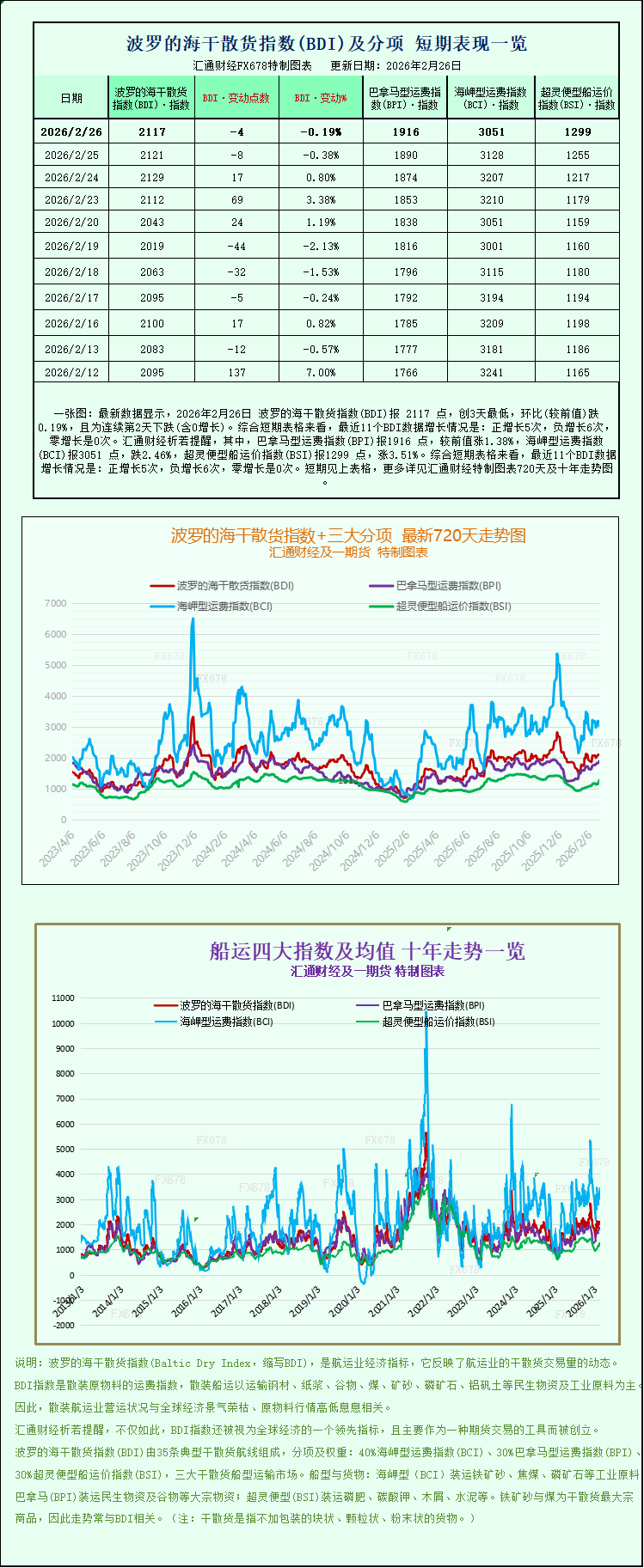
The Baltic Dry Index fell for the second consecutive trading day on Thursday, mainly dragged down by continued weakness in Capesize freight rates. This index measures the ocean freight prices of various dry bulk commodities and is a key indicator of the global dry bulk shipping market.
The Baltic Dry Index, which covers freight rates for Capesize, Panamax, and Supramax vessels, fell 4 points, or 0.2%, to close at 2117 points.
The Capesize freight index fell sharply by 77 points, or 2.5%, to close at 3051 points.
Capesize vessels saw their average daily earnings decline by $694 to $24,169. These vessels typically carry bulk commodities such as iron ore and coal, with a single ship carrying up to 150,000 tons of cargo, making them the mainstay of global bulk raw material shipping.
Iron ore futures prices have entered a period of consolidation, with intensified competition between bulls and bears. Traders are weighing the anticipated decline in raw material demand due to impending production cuts by Chinese steel mills, while also paying attention to potential further stimulus policies from the Chinese government for the real estate sector. This interplay of factors has left iron ore prices uncertain in terms of direction.
Meanwhile, the Panamax freight index bucked the trend, rising 26 points, or 1.4%, to close at 1916 points.
Panamax vessels saw their average daily earnings rise by $233 to $17,247. These vessels primarily transport coal, grain, and other goods, with a single ship carrying between 60,000 and 70,000 tons of cargo, making them a crucial carrier for global food and energy transport.
In terms of small and medium-sized vessels, the Supramax freight rate index rose 44 points, or 3.5%, to close at 1299 points.
The Baltic Dry Index fell for the second consecutive trading day on Thursday, mainly dragged down by continued weakness in Capesize freight rates. This index measures the ocean freight prices of various dry bulk commodities and is a key indicator of the global dry bulk shipping market.
The Baltic Dry Index, which covers freight rates for Capesize, Panamax, and Supramax vessels, fell 4 points, or 0.2%, to close at 2117 points.
The Capesize freight index fell sharply by 77 points, or 2.5%, to close at 3051 points.
Capesize vessels saw their average daily earnings decline by $694 to $24,169. These vessels typically carry bulk commodities such as iron ore and coal, with a single ship carrying up to 150,000 tons of cargo, making them the mainstay of global bulk raw material shipping.
Iron ore futures prices have entered a period of consolidation, with intensified competition between bulls and bears. Traders are weighing the anticipated decline in raw material demand due to impending production cuts by Chinese steel mills, while also paying attention to potential further stimulus policies from the Chinese government for the real estate sector. This interplay of factors has left iron ore prices uncertain in terms of direction.
Meanwhile, the Panamax freight index bucked the trend, rising 26 points, or 1.4%, to close at 1916 points.
Panamax vessels saw their average daily earnings rise by $233 to $17,247. These vessels primarily transport coal, grain, and other goods, with a single ship carrying between 60,000 and 70,000 tons of cargo, making them a crucial carrier for global food and energy transport.
In terms of small and medium-sized vessels, the Supramax freight rate index rose 44 points, or 3.5%, to close at 1299 points.
- Risk Warning and Disclaimer
- The market involves risk, and trading may not be suitable for all investors. This article is for reference only and does not constitute personal investment advice, nor does it take into account certain users’ specific investment objectives, financial situation, or other needs. Any investment decisions made based on this information are at your own risk.