Escalating geopolitical conflicts and risk aversion weighed on the pound; be wary of a potential breakdown.
2026-03-02 14:05:37
The pound continued its weakness against the dollar in Asian trading on Monday, falling more than 0.4% to around 1.3400. The pound was the weakest performer among major currencies, mainly due to increased risk aversion in the market.
The US and Israel launched military action against Iran over the weekend, further escalating tensions in the Middle East. Iran subsequently vowed retaliation and launched attacks on Israeli and US military bases in the Middle East, putting pressure on global risk assets.
Escalating geopolitical conflicts typically drive capital flows to highly liquid safe-haven assets such as the US dollar, thus putting pressure on the pound. From a macroeconomic policy perspective, the Bank of England's monetary policy outlook also limits the pound's upside potential.
Bank of England Chief Economist Huw Pill stated that UK inflation has fallen slower than expected, and the central bank has relied too heavily on inflation returning to its target while neglecting forward-looking inflation risks. This statement suggests that uncertainty remains regarding UK inflationary pressures, but the market has not significantly strengthened its expectations for interest rate hikes; instead, it is concerned about economic growth pressures and limited room for monetary policy.
On the other hand, US economic data continues to support the dollar. Although the US Dollar Index (DXY) gave back some of its gains in the morning session, it remained around 97.85, indicating that safe-haven demand still dominates market sentiment.
The market is currently awaiting the US ISM Manufacturing Purchasing Managers' Index (PMI) data, which is expected to decline slightly to 52.3. A higher-than-expected figure could further support the US dollar. This week, the market's main focus will be on US employment data, particularly the non-farm payroll report.
The strength of the job market will directly influence expectations regarding the Federal Reserve's interest rate policy, and consequently affect the exchange rate trends of the US dollar and the British pound. In the current risk environment, the short-term movement of the pound is more susceptible to the combined impact of sentiment and data.
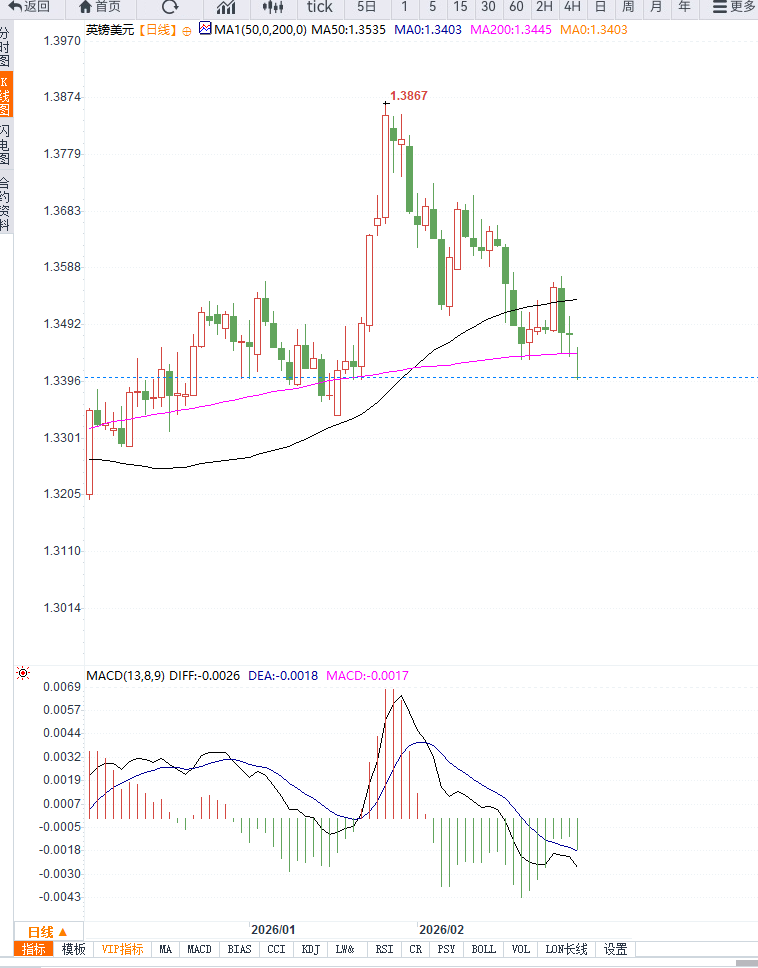
From a technical perspective, the GBP/USD daily chart remains in a high-level pullback structure. The exchange rate has previously encountered resistance above 1.3600 multiple times before falling back, forming a temporary top. Currently, the price has retreated to around 1.3400, approaching a short-term support area.
The daily RSI has fallen back to around 45, indicating that bullish momentum is gradually weakening but has not yet entered the oversold zone. The MACD indicator is near the zero line and shows a convergence of momentum, suggesting that the market is shifting from a trending market to a consolidation phase.
The first resistance level to watch is the 1.3450 area, followed by the psychological level of 1.3500. If the price can break through 1.3500 again, it may test the 1.3560 area. On the downside, 1.3380 is a key short-term support level; a break below this level could lead to a further test of the 1.3300 area.
From the 4-hour chart, the exchange rate is trading within a descending channel, with short-term moving averages arranged in a bearish pattern, indicating that short-term selling pressure remains. The RSI is hovering around 40, suggesting that the market is still in a weak zone but has not yet experienced panic selling.
The MACD indicator remains below the zero line, indicating that bearish momentum still dominates. If prices rebound, the first resistance level to watch is 1.3450; if this level is not broken, the price may continue to decline.
Editor's Note:
The current performance of the pound sterling is primarily influenced by both global safe-haven flows and uncertainty surrounding UK monetary policy. Geopolitical conflicts typically strengthen the dollar's advantage in the short term, but the pound's medium- to long-term trajectory still depends on the UK's economic growth and inflation path.
If US employment data continues to be strong, the US dollar may remain strong; however, if risk sentiment eases, the pound may experience a technical correction. Overall, the pound is more likely to maintain a weak and volatile pattern in the short term.
The US and Israel launched military action against Iran over the weekend, further escalating tensions in the Middle East. Iran subsequently vowed retaliation and launched attacks on Israeli and US military bases in the Middle East, putting pressure on global risk assets.
Escalating geopolitical conflicts typically drive capital flows to highly liquid safe-haven assets such as the US dollar, thus putting pressure on the pound. From a macroeconomic policy perspective, the Bank of England's monetary policy outlook also limits the pound's upside potential.
Bank of England Chief Economist Huw Pill stated that UK inflation has fallen slower than expected, and the central bank has relied too heavily on inflation returning to its target while neglecting forward-looking inflation risks. This statement suggests that uncertainty remains regarding UK inflationary pressures, but the market has not significantly strengthened its expectations for interest rate hikes; instead, it is concerned about economic growth pressures and limited room for monetary policy.
On the other hand, US economic data continues to support the dollar. Although the US Dollar Index (DXY) gave back some of its gains in the morning session, it remained around 97.85, indicating that safe-haven demand still dominates market sentiment.
The market is currently awaiting the US ISM Manufacturing Purchasing Managers' Index (PMI) data, which is expected to decline slightly to 52.3. A higher-than-expected figure could further support the US dollar. This week, the market's main focus will be on US employment data, particularly the non-farm payroll report.
The strength of the job market will directly influence expectations regarding the Federal Reserve's interest rate policy, and consequently affect the exchange rate trends of the US dollar and the British pound. In the current risk environment, the short-term movement of the pound is more susceptible to the combined impact of sentiment and data.
From a technical perspective, the GBP/USD daily chart remains in a high-level pullback structure. The exchange rate has previously encountered resistance above 1.3600 multiple times before falling back, forming a temporary top. Currently, the price has retreated to around 1.3400, approaching a short-term support area.
The daily RSI has fallen back to around 45, indicating that bullish momentum is gradually weakening but has not yet entered the oversold zone. The MACD indicator is near the zero line and shows a convergence of momentum, suggesting that the market is shifting from a trending market to a consolidation phase.
The first resistance level to watch is the 1.3450 area, followed by the psychological level of 1.3500. If the price can break through 1.3500 again, it may test the 1.3560 area. On the downside, 1.3380 is a key short-term support level; a break below this level could lead to a further test of the 1.3300 area.
From the 4-hour chart, the exchange rate is trading within a descending channel, with short-term moving averages arranged in a bearish pattern, indicating that short-term selling pressure remains. The RSI is hovering around 40, suggesting that the market is still in a weak zone but has not yet experienced panic selling.
The MACD indicator remains below the zero line, indicating that bearish momentum still dominates. If prices rebound, the first resistance level to watch is 1.3450; if this level is not broken, the price may continue to decline.
Editor's Note:
The current performance of the pound sterling is primarily influenced by both global safe-haven flows and uncertainty surrounding UK monetary policy. Geopolitical conflicts typically strengthen the dollar's advantage in the short term, but the pound's medium- to long-term trajectory still depends on the UK's economic growth and inflation path.
If US employment data continues to be strong, the US dollar may remain strong; however, if risk sentiment eases, the pound may experience a technical correction. Overall, the pound is more likely to maintain a weak and volatile pattern in the short term.
- Risk Warning and Disclaimer
- The market involves risk, and trading may not be suitable for all investors. This article is for reference only and does not constitute personal investment advice, nor does it take into account certain users’ specific investment objectives, financial situation, or other needs. Any investment decisions made based on this information are at your own risk.