Escalating conflict with Iran: Global aviation paralyzed, shipping routes diverted, oil prices poised to hit $100 mark.
2026-03-02 15:20:04
The renewed conflict between Iran and Israel in the Middle East is sweeping across the global economy and transportation system like a storm. This conflict not only led to the assassination of Iran's Supreme Leader Ayatollah Khamenei, but also triggered a chain reaction: the closure of major Middle Eastern airports, the cancellation of thousands of flights, shipping companies urgently rerouting via African routes, and a sharp rise in oil prices to $80 per barrel, with the potential risk of further increases to $100. Global travel disruptions, trade interruptions, and soaring energy costs have had far-reaching impacts beyond the Middle East, affecting aviation, shipping, and energy markets worldwide. The following analysis will dissect the profound impact of this event from multiple perspectives, revealing its potential reshaping of the international landscape.
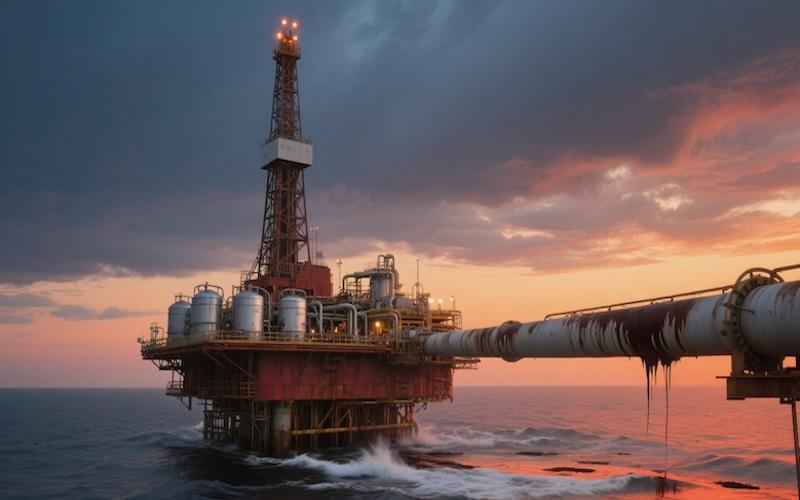
As the airstrikes by Iran and Israel enter their third day, air hubs across the Middle East remain closed or under strict restrictions. This is not merely a localized disruption, but one of the most severe blows to the aviation industry in recent years. Key airports, including Dubai, Abu Dhabi, and Doha, have been forced to shut down; these locations are typically crucial transit points for long-haul flights connecting Eurasia. With widespread airspace closures, airlines worldwide have been forced to divert or cancel flights, causing complete disruption to flight schedules. Data from flight tracking platform FlightAware shows that thousands of flights in the Middle East have been directly affected, while Flightradar24 maps clearly depict the near-total closure of airspace in countries such as Iran, Iraq, Kuwait, Israel, Bahrain, the UAE, and Qatar—a rare airspace vacuum that has persisted for over 24 hours.
The ripple effects of the conflict quickly spread globally. Tens of thousands of travelers were stranded in remote locations, such as airports in Bali, Kathmandu, and Frankfurt, who relied on the transit network of Middle Eastern hubs but were now stranded due to the unforeseen events. Following a new round of Israeli airstrikes on Sunday (March 1), Iran retaliated with attacks, damaging Dubai International Airport and affecting airports in Abu Dhabi and Kuwait. Explosions echoed in the skies near Dubai and over Doha, further escalating tensions in the region. Emirates, the world's largest international airline, announced the suspension of all flights to and from Dubai Airport until Monday; Qatar Airways suspended all flights and planned to issue further notice on Monday; Lufthansa extended its suspension of Middle Eastern flights until March 8. These measures reflect the aviation industry's cautious assessment of the security situation and also expose the real challenges of crews and pilots being scattered around the world, making the recovery process after airspace reopening exceptionally complex.
Furthermore, rising oil prices have dealt a double blow to airlines. On Monday (March 2), Brent crude futures rose as much as 13% to $82.37, a new high since January 2025; analysts predict that if the conflict continues, oil prices may break through the $100 mark. Aviation consultant Bertrand Grabowski emphasized that the main impact will stem from the sharp rise in oil prices, which will further push up fuel costs. To avoid restricted airspace, airlines in Europe, Asia, and the Middle East are opting for longer routes, leading to longer journeys and increased expenses. Flightradar24 Communications Director Ian Petchenik pointed out that the closure of Middle Eastern airspace forces flights into narrow route corridors, while the conflict between Pakistan and Afghanistan adds additional risks. This global disruption not only affects passenger traffic but also air cargo hubs, putting trade routes under greater pressure in addition to the disruption of maritime transport. Analysts believe that although Gulf airlines are accustomed to frequent disruptions, the simultaneous closure of three major transit hubs is unprecedented and will have a lasting impact on the global aviation system.
Similar to the aviation industry, the shipping sector has also been plunged into a state of emergency due to the conflict with Iran. The closure of the Strait of Hormuz directly disrupted a shipping route carrying approximately one-fifth of the world's oil consumption, causing major shipping companies such as Maersk, Hapag-Lloyd, and CMA CGM to arrange for their vessels to circumnavigate the Cape of Good Hope in Africa, avoiding the Suez Canal and the Bab el-Mandeb Strait. This rerouting decision stemmed from the US and Israeli strikes against Iran, which drastically deteriorated the security situation in the strait. In a statement on Sunday, the Danish container shipping group Maersk announced that due to the escalating military conflict, they had decided to temporarily suspend future routes through the Bab el-Mandeb Strait and the Suez Canal, emphasizing that they would prioritize resuming this service once the situation stabilizes. Affected services include the Middle East-India to Mediterranean route and the Middle East-India to the US East Coast route, which will extend transit times and increase costs.
German shipping group Hapag-Lloyd also took action, diverting its IMX container route connecting India, the Middle East, and the Mediterranean to waters near South Africa, and promising to resume the original route when safety permits. Simultaneously, the company announced a war risk surcharge on cargo traveling to and from the Upper Gulf, the Arabian Gulf, and the Persian Gulf, effective March 2nd, to address potential losses. French shipping group CMA CGM followed suit, imposing an emergency conflict surcharge on cargo traveling to and from Iraq, Bahrain, Kuwait, Yemen, Qatar, Oman, the UAE, Saudi Arabia, Jordan, Djibouti, Sudan, Eritrea, and the Red Sea port of Ain Sukhna. The implementation of these surcharges reflects the shipping industry's sensitive response to geopolitical risks. Maersk and Hapag-Lloyd further stated that they would suspend all vessel traffic through the Strait of Hormuz until further notice.
Mediterranean Shipping Company (MSC) took a more radical approach, announcing on Sunday the suspension of all Middle East freight bookings and instructing vessels in and bound for the Persian Gulf to seek safe harbors. The company emphasized that booking services would resume immediately once the security situation improved. CMA CGM also instructed its vessels in or bound for the Gulf region on Saturday (February 28) to divert to safe harbors and suspended its Suez Canal route, opting instead for the Cape of Good Hope route. These adjustments not only affect oil and fuel transport but also impact energy trade, including liquefied natural gas. Iran's warning on Saturday further exacerbated the situation, with most tanker owners, oil giants, and trading companies suspending transport through the Strait of Hormuz, which will cause a chain reaction of disruptions to global supply chains.
The impact of the conflict with Iran has been particularly pronounced in the oil market. Several oil traders and analysts predict that if the Strait of Hormuz is permanently blocked following the US and Israeli attacks, oil prices could climb to $100. Ajay Parmar, Director of Energy and Refining at ICIS, points out that the military strikes themselves have already provided support for oil prices, but the key factor is a blockade of the strait, which would reduce daily crude oil supply by 8 to 10 million barrels, even if alternative infrastructure such as the Saudi East-West Pipeline and the Abu Dhabi Pipeline is used to bypass it.
Jorge Leon, an energy economist at Rezidor, predicts that Brent crude will rise $20 to around $92 a barrel on Monday, while Helima Croft, an analyst at RBC Capital Markets, and Barclays agree that oil prices could reach above $100. This prediction, made after Middle Eastern leaders warned Washington that war with Iran could trigger a surge in oil prices, is now gradually becoming a reality.
OPEC+ oil-producing nations reached an agreement on Sunday to increase production by 206,000 barrels per day starting in April. While this increase is small, accounting for less than 0.2% of global demand, it aims to alleviate supply pressures. Sources revealed that Saudi Arabia and the UAE are increasing exports to fill potential gaps. However, a research report from CLSA offers another perspective, arguing that the likelihood of oil prices surging above $100 is low, at least for now, as tensions are primarily confined to Iran and have not spread to other Middle Eastern oil-producing countries. Compared to the $138 oil price surge during the Russia-Ukraine conflict in 2022, Iran's daily crude oil production is only about 3 million barrels, far lower than Russia's 11 million barrels, thus the impact of supply disruptions is relatively limited. The bank's analysts emphasized that the short-term rise in oil prices mainly reflects a geopolitical risk premium; actual supply disruptions are currently negligible, but this will still increase crude oil costs and squeeze refining margins. Asian governments and refiners are assessing oil reserves, alternative shipping routes, and supply sources to cope with potential crises.
In conclusion, the escalation of the conflict in Iran has evolved into a global crisis, paralyzing Middle Eastern aviation and shipping hubs and pushing oil prices into a period of high volatility. This domino effect highlights the amplifying effect of geopolitical risks on the global economy. If the conflict continues, a complex recovery of aviation, rising shipping costs, and high energy prices will become the new normal. The international community needs to closely monitor developments and strive to mitigate this threat through diplomatic means to stabilize and rebuild supply chains.
At 15:18 Beijing time, Brent crude oil was trading at $79.36 per barrel.
The air transport system is facing an unprecedented crisis.
As the airstrikes by Iran and Israel enter their third day, air hubs across the Middle East remain closed or under strict restrictions. This is not merely a localized disruption, but one of the most severe blows to the aviation industry in recent years. Key airports, including Dubai, Abu Dhabi, and Doha, have been forced to shut down; these locations are typically crucial transit points for long-haul flights connecting Eurasia. With widespread airspace closures, airlines worldwide have been forced to divert or cancel flights, causing complete disruption to flight schedules. Data from flight tracking platform FlightAware shows that thousands of flights in the Middle East have been directly affected, while Flightradar24 maps clearly depict the near-total closure of airspace in countries such as Iran, Iraq, Kuwait, Israel, Bahrain, the UAE, and Qatar—a rare airspace vacuum that has persisted for over 24 hours.
The ripple effects of the conflict quickly spread globally. Tens of thousands of travelers were stranded in remote locations, such as airports in Bali, Kathmandu, and Frankfurt, who relied on the transit network of Middle Eastern hubs but were now stranded due to the unforeseen events. Following a new round of Israeli airstrikes on Sunday (March 1), Iran retaliated with attacks, damaging Dubai International Airport and affecting airports in Abu Dhabi and Kuwait. Explosions echoed in the skies near Dubai and over Doha, further escalating tensions in the region. Emirates, the world's largest international airline, announced the suspension of all flights to and from Dubai Airport until Monday; Qatar Airways suspended all flights and planned to issue further notice on Monday; Lufthansa extended its suspension of Middle Eastern flights until March 8. These measures reflect the aviation industry's cautious assessment of the security situation and also expose the real challenges of crews and pilots being scattered around the world, making the recovery process after airspace reopening exceptionally complex.
Furthermore, rising oil prices have dealt a double blow to airlines. On Monday (March 2), Brent crude futures rose as much as 13% to $82.37, a new high since January 2025; analysts predict that if the conflict continues, oil prices may break through the $100 mark. Aviation consultant Bertrand Grabowski emphasized that the main impact will stem from the sharp rise in oil prices, which will further push up fuel costs. To avoid restricted airspace, airlines in Europe, Asia, and the Middle East are opting for longer routes, leading to longer journeys and increased expenses. Flightradar24 Communications Director Ian Petchenik pointed out that the closure of Middle Eastern airspace forces flights into narrow route corridors, while the conflict between Pakistan and Afghanistan adds additional risks. This global disruption not only affects passenger traffic but also air cargo hubs, putting trade routes under greater pressure in addition to the disruption of maritime transport. Analysts believe that although Gulf airlines are accustomed to frequent disruptions, the simultaneous closure of three major transit hubs is unprecedented and will have a lasting impact on the global aviation system.
The shipping industry hastily shifted to African routes to mitigate risks.
Similar to the aviation industry, the shipping sector has also been plunged into a state of emergency due to the conflict with Iran. The closure of the Strait of Hormuz directly disrupted a shipping route carrying approximately one-fifth of the world's oil consumption, causing major shipping companies such as Maersk, Hapag-Lloyd, and CMA CGM to arrange for their vessels to circumnavigate the Cape of Good Hope in Africa, avoiding the Suez Canal and the Bab el-Mandeb Strait. This rerouting decision stemmed from the US and Israeli strikes against Iran, which drastically deteriorated the security situation in the strait. In a statement on Sunday, the Danish container shipping group Maersk announced that due to the escalating military conflict, they had decided to temporarily suspend future routes through the Bab el-Mandeb Strait and the Suez Canal, emphasizing that they would prioritize resuming this service once the situation stabilizes. Affected services include the Middle East-India to Mediterranean route and the Middle East-India to the US East Coast route, which will extend transit times and increase costs.
German shipping group Hapag-Lloyd also took action, diverting its IMX container route connecting India, the Middle East, and the Mediterranean to waters near South Africa, and promising to resume the original route when safety permits. Simultaneously, the company announced a war risk surcharge on cargo traveling to and from the Upper Gulf, the Arabian Gulf, and the Persian Gulf, effective March 2nd, to address potential losses. French shipping group CMA CGM followed suit, imposing an emergency conflict surcharge on cargo traveling to and from Iraq, Bahrain, Kuwait, Yemen, Qatar, Oman, the UAE, Saudi Arabia, Jordan, Djibouti, Sudan, Eritrea, and the Red Sea port of Ain Sukhna. The implementation of these surcharges reflects the shipping industry's sensitive response to geopolitical risks. Maersk and Hapag-Lloyd further stated that they would suspend all vessel traffic through the Strait of Hormuz until further notice.
Mediterranean Shipping Company (MSC) took a more radical approach, announcing on Sunday the suspension of all Middle East freight bookings and instructing vessels in and bound for the Persian Gulf to seek safe harbors. The company emphasized that booking services would resume immediately once the security situation improved. CMA CGM also instructed its vessels in or bound for the Gulf region on Saturday (February 28) to divert to safe harbors and suspended its Suez Canal route, opting instead for the Cape of Good Hope route. These adjustments not only affect oil and fuel transport but also impact energy trade, including liquefied natural gas. Iran's warning on Saturday further exacerbated the situation, with most tanker owners, oil giants, and trading companies suspending transport through the Strait of Hormuz, which will cause a chain reaction of disruptions to global supply chains.
Oil Market Volatility and Future Outlook
The impact of the conflict with Iran has been particularly pronounced in the oil market. Several oil traders and analysts predict that if the Strait of Hormuz is permanently blocked following the US and Israeli attacks, oil prices could climb to $100. Ajay Parmar, Director of Energy and Refining at ICIS, points out that the military strikes themselves have already provided support for oil prices, but the key factor is a blockade of the strait, which would reduce daily crude oil supply by 8 to 10 million barrels, even if alternative infrastructure such as the Saudi East-West Pipeline and the Abu Dhabi Pipeline is used to bypass it.
Jorge Leon, an energy economist at Rezidor, predicts that Brent crude will rise $20 to around $92 a barrel on Monday, while Helima Croft, an analyst at RBC Capital Markets, and Barclays agree that oil prices could reach above $100. This prediction, made after Middle Eastern leaders warned Washington that war with Iran could trigger a surge in oil prices, is now gradually becoming a reality.
OPEC+ oil-producing nations reached an agreement on Sunday to increase production by 206,000 barrels per day starting in April. While this increase is small, accounting for less than 0.2% of global demand, it aims to alleviate supply pressures. Sources revealed that Saudi Arabia and the UAE are increasing exports to fill potential gaps. However, a research report from CLSA offers another perspective, arguing that the likelihood of oil prices surging above $100 is low, at least for now, as tensions are primarily confined to Iran and have not spread to other Middle Eastern oil-producing countries. Compared to the $138 oil price surge during the Russia-Ukraine conflict in 2022, Iran's daily crude oil production is only about 3 million barrels, far lower than Russia's 11 million barrels, thus the impact of supply disruptions is relatively limited. The bank's analysts emphasized that the short-term rise in oil prices mainly reflects a geopolitical risk premium; actual supply disruptions are currently negligible, but this will still increase crude oil costs and squeeze refining margins. Asian governments and refiners are assessing oil reserves, alternative shipping routes, and supply sources to cope with potential crises.
In conclusion, the escalation of the conflict in Iran has evolved into a global crisis, paralyzing Middle Eastern aviation and shipping hubs and pushing oil prices into a period of high volatility. This domino effect highlights the amplifying effect of geopolitical risks on the global economy. If the conflict continues, a complex recovery of aviation, rising shipping costs, and high energy prices will become the new normal. The international community needs to closely monitor developments and strive to mitigate this threat through diplomatic means to stabilize and rebuild supply chains.
At 15:18 Beijing time, Brent crude oil was trading at $79.36 per barrel.
- Risk Warning and Disclaimer
- The market involves risk, and trading may not be suitable for all investors. This article is for reference only and does not constitute personal investment advice, nor does it take into account certain users’ specific investment objectives, financial situation, or other needs. Any investment decisions made based on this information are at your own risk.