The Swiss National Bank suddenly "flipped the table," causing Swiss franc bulls to be wiped out overnight.
2026-03-02 21:54:22
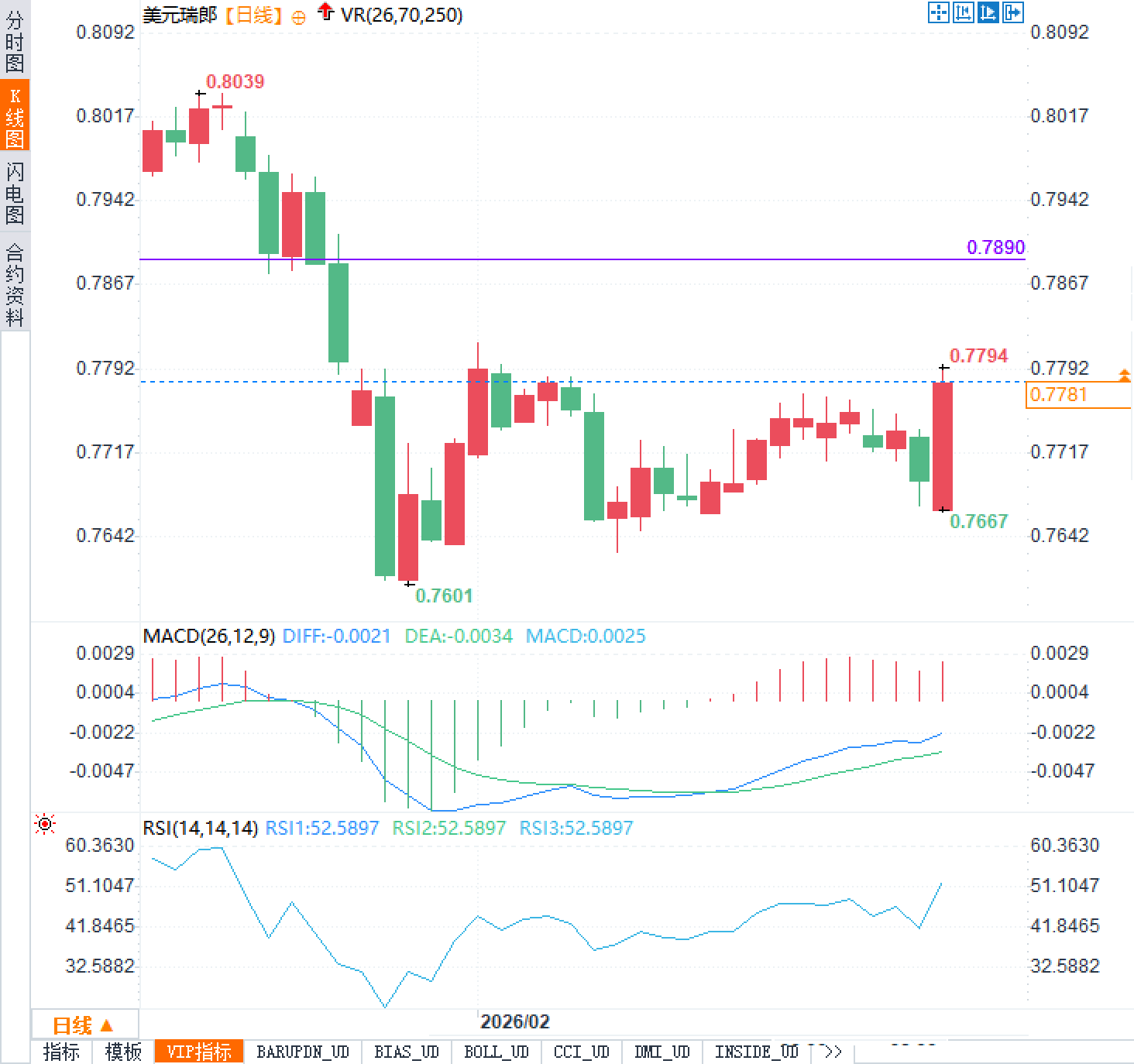
The foreign exchange market witnessed a dramatic reversal today. Just as traders were still basking in the expectation that the Swiss franc would continue to strengthen as a safe-haven currency, the Swiss National Bank suddenly intervened, sending a very clear signal of intervention. This move was like throwing a boulder into a calm lake, instantly creating ripples and causing the Swiss franc to plummet across the board, while the USD/CHF pair rebounded strongly. On Monday, March 2nd, during the North American session, the USD/CHF pair traded around 0.7780, with a strong bullish candlestick appearing on the daily chart, reversing the previous downward trend.
The speed and magnitude of this market reversal caught many traders who had bet on a Swiss franc rise based on geopolitical risks off guard. Normally, when market panic intensifies, funds flow into the Swiss franc seeking refuge, but the Swiss National Bank's decisive action clearly demonstrates that even amidst global turmoil, they will not allow their currency to appreciate arbitrarily. For the entire foreign exchange market, this means that strategies relying solely on hedging to trade the Swiss franc have become ineffective; policy risk has become a Damocles' sword hanging over the heads of all bullish investors.
Market analysts generally believe that the Swiss franc's weakness today was no accident, driven by the latest actions of the Swiss National Bank (SNB). In early trading, the euro/Swiss franc pair briefly fell to a new intraday low of 0.9020, almost testing the psychological level of 0.90. However, at this crucial moment, the SNB issued a statement, and the pair quickly rebounded above 0.9100. Simultaneously, the dollar/Swiss franc pair also surged from its flat position in early European trading, rising by more than one percent. This synchronized and dramatic reversal across currency pairs strongly suggests that the SNB either intervened directly or successfully altered market expectations through strong verbal intervention.
Since the beginning of this year, the market has been speculating about the Swiss National Bank's (SNB) limits. Discussions intensified after the euro fell below the key psychological level of 0.9200 against the Swiss franc. Today's dramatic intraday events provided the answer: the SNB is clearly drawing a line, unwilling to see its currency appreciate uncontrollably. For the export-dependent Swiss economy, excessive currency appreciation would severely damage competitiveness and exacerbate deflationary pressures, thus giving the central bank ample incentive to defend at key levels. This move shows that even amid geopolitical tensions and developments in the Middle East that should have supported a stronger Swiss franc, the SNB prioritized maintaining exchange rate stability. This contrasts sharply with the yen's gradual loss of its safe-haven appeal since last October, making the Swiss franc a primary alternative for safe-haven flows and thus a key target for policy adjustments.
Looking ahead, the USD/CHF exchange rate will increasingly depend on the tug-of-war between central bank policy and geopolitical risks. Technically, the key resistance level to watch is 0.7890, a level previously broken. A decisive break above this level could lead to a further challenge of the 0.8000 psychological level. Support, on the other hand, is around the recent low of 0.7667. However, technical charts are merely a surface indicator; the real key variable lies in the Swiss National Bank's (SNB) subsequent actions. If tensions in the Middle East continue to escalate, safe-haven funds may again attempt to flow into the Swiss franc, forcing the SNB to continue its intense battle with market sentiment.
The current market environment is quite complex. Supported by the recovery of the petrodollar trade, the US dollar has remained relatively strong, which has to some extent offset the pressure of safe-haven inflows into the Swiss franc. However, policy uncertainty remains the biggest variable. This event has provided all market participants with a vivid lesson in risk: when central banks make clear statements, positions built solely on fundamentals or safe-haven logic are extremely vulnerable to severe losses.
The speed and magnitude of this market reversal caught many traders who had bet on a Swiss franc rise based on geopolitical risks off guard. Normally, when market panic intensifies, funds flow into the Swiss franc seeking refuge, but the Swiss National Bank's decisive action clearly demonstrates that even amidst global turmoil, they will not allow their currency to appreciate arbitrarily. For the entire foreign exchange market, this means that strategies relying solely on hedging to trade the Swiss franc have become ineffective; policy risk has become a Damocles' sword hanging over the heads of all bullish investors.
The central bank's bottom line emerges: a game between verbal intervention and substantive defense.
Market analysts generally believe that the Swiss franc's weakness today was no accident, driven by the latest actions of the Swiss National Bank (SNB). In early trading, the euro/Swiss franc pair briefly fell to a new intraday low of 0.9020, almost testing the psychological level of 0.90. However, at this crucial moment, the SNB issued a statement, and the pair quickly rebounded above 0.9100. Simultaneously, the dollar/Swiss franc pair also surged from its flat position in early European trading, rising by more than one percent. This synchronized and dramatic reversal across currency pairs strongly suggests that the SNB either intervened directly or successfully altered market expectations through strong verbal intervention.
Since the beginning of this year, the market has been speculating about the Swiss National Bank's (SNB) limits. Discussions intensified after the euro fell below the key psychological level of 0.9200 against the Swiss franc. Today's dramatic intraday events provided the answer: the SNB is clearly drawing a line, unwilling to see its currency appreciate uncontrollably. For the export-dependent Swiss economy, excessive currency appreciation would severely damage competitiveness and exacerbate deflationary pressures, thus giving the central bank ample incentive to defend at key levels. This move shows that even amid geopolitical tensions and developments in the Middle East that should have supported a stronger Swiss franc, the SNB prioritized maintaining exchange rate stability. This contrasts sharply with the yen's gradual loss of its safe-haven appeal since last October, making the Swiss franc a primary alternative for safe-haven flows and thus a key target for policy adjustments.
Future Outlook: A Tug-of-War Between Policy and Geopolitics
Looking ahead, the USD/CHF exchange rate will increasingly depend on the tug-of-war between central bank policy and geopolitical risks. Technically, the key resistance level to watch is 0.7890, a level previously broken. A decisive break above this level could lead to a further challenge of the 0.8000 psychological level. Support, on the other hand, is around the recent low of 0.7667. However, technical charts are merely a surface indicator; the real key variable lies in the Swiss National Bank's (SNB) subsequent actions. If tensions in the Middle East continue to escalate, safe-haven funds may again attempt to flow into the Swiss franc, forcing the SNB to continue its intense battle with market sentiment.
The current market environment is quite complex. Supported by the recovery of the petrodollar trade, the US dollar has remained relatively strong, which has to some extent offset the pressure of safe-haven inflows into the Swiss franc. However, policy uncertainty remains the biggest variable. This event has provided all market participants with a vivid lesson in risk: when central banks make clear statements, positions built solely on fundamentals or safe-haven logic are extremely vulnerable to severe losses.
- Risk Warning and Disclaimer
- The market involves risk, and trading may not be suitable for all investors. This article is for reference only and does not constitute personal investment advice, nor does it take into account certain users’ specific investment objectives, financial situation, or other needs. Any investment decisions made based on this information are at your own risk.