March 3rd Financial Breakfast: Gold prices weighed on by profit-taking, a larger offensive is on the horizon; oil prices focus on developments regarding shipping disruptions in the Strait of Hormuz.
2026-03-03 07:28:28
On Tuesday (March 3, Beijing time) in early Asian trading, spot gold was trading around $5,336 per ounce. Gold prices rose on Monday, briefly approaching $5,420 per ounce, as tensions between the US and Iran increased and safe-haven demand rebounded. However, profit-taking by investors pushed prices back below $5,340 per ounce. The further spread of the US-Iran conflict to Lebanon, with no signs of easing, and Trump's statement that a "bigger wave of offensive" was imminent, continued to support gold prices due to geopolitical tensions. US crude oil was trading around $70.78 per barrel. Oil and natural gas prices surged on Monday, with the market focusing on the progress of shipping disruptions in the Strait of Hormuz.

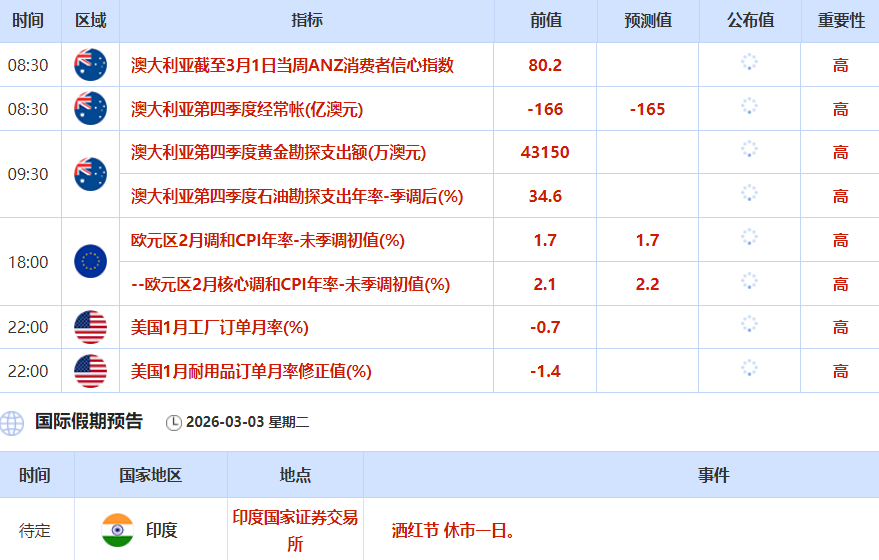
U.S. stocks closed largely steady on Monday, as investors recovered early losses on bargain hunting after the market experienced sharp trading volatility following the U.S.-Israeli airstrikes against Iran.
Gains in technology and defense stocks offset losses across the broader market, with strong buying in artificial intelligence-related stocks. Nvidia rose 3% and Microsoft gained 1.5%, helping the S&P 500 and Nasdaq recover from losses that had briefly hit two-week lows.
Energy stocks also outperformed the broader market due to rising oil prices. Ultimately, the Dow Jones Industrial Average fell 0.15%, the S&P 500 rose slightly by 0.04%, and the Nasdaq Composite rose 0.36%.
Market analysts pointed out that investor confidence in the US market and optimism about AI-driven productivity offset concerns about soaring oil prices and geopolitics, with a general consensus that the impact of the conflict would be limited. However, airline and cruise stocks suffered heavy losses, with Delta Air Lines and United Airlines both falling more than 2%, Carnival Corporation plunging 7.6%, and Norwegian Cruise Line crashing more than 10%, due to flight cancellations, rising fuel costs, and airspace closures.
In addition, AES Corp's stock price plummeted 17.8% after a consortium led by BlackRock agreed to acquire the company at a price lower than its latest closing price.
Gold rose on Monday, supported by investor concerns about a protracted conflict in the Middle East. Following the US-Israeli strikes against Iran, the fighting has spread further to Lebanon with no signs of abating, and President Trump has stated that a "bigger wave of offensive" is on the horizon.
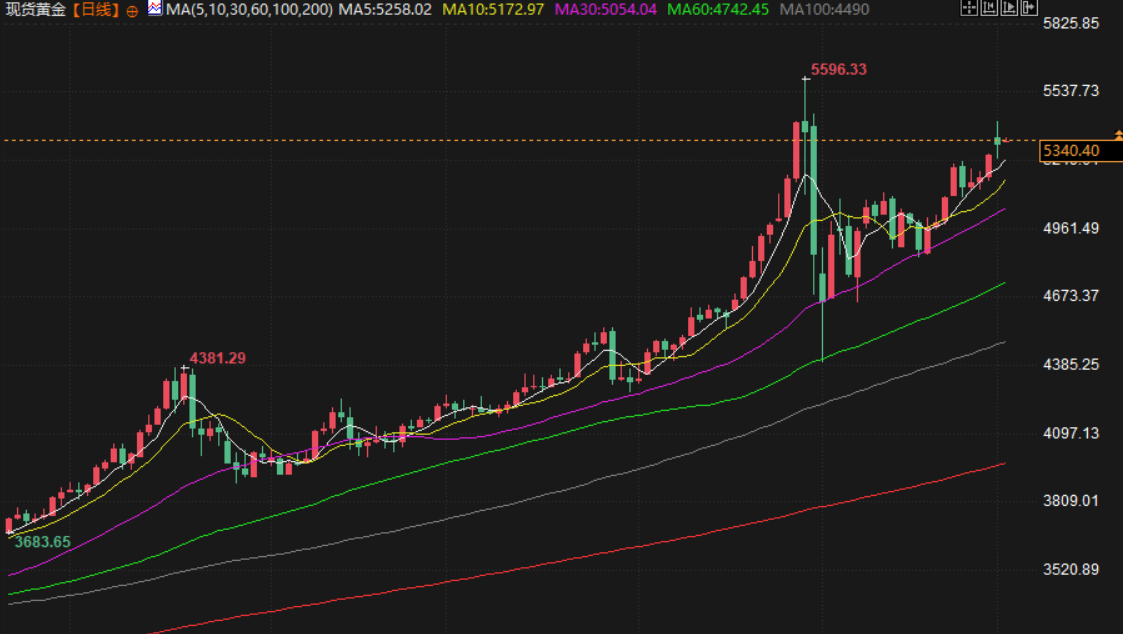
Spot gold closed at $5,297.31 per ounce, up 0.4%, after giving back some of its gains earlier in the session due to profit-taking; U.S. gold futures closed up 1.2% at $5,311.60.
Market analysts point out that geopolitical uncertainty is a key support for gold prices. Due to flight cancellations caused by the attacks, three sources say that the flow of physical gold through the Dubai gold trading hub will be severely restricted in the coming days. Gold prices have risen approximately 23% so far this year and are projected to record a staggering 64% increase by 2025, driven by strong central bank gold purchases, net inflows into ETFs, and expectations of loose monetary policy.
In other precious metals, spot silver fell 5.7% to $88.46; spot platinum fell 2.7% to $2,300.50; and palladium fell 0.9% to $1,770.66.
International oil and natural gas prices surged on Monday as attacks on Iran by Israel and the United States and retaliatory actions by Tehran forced the closure of numerous oil and gas facilities in the Middle East and disrupted shipping in the crucial Strait of Hormuz.
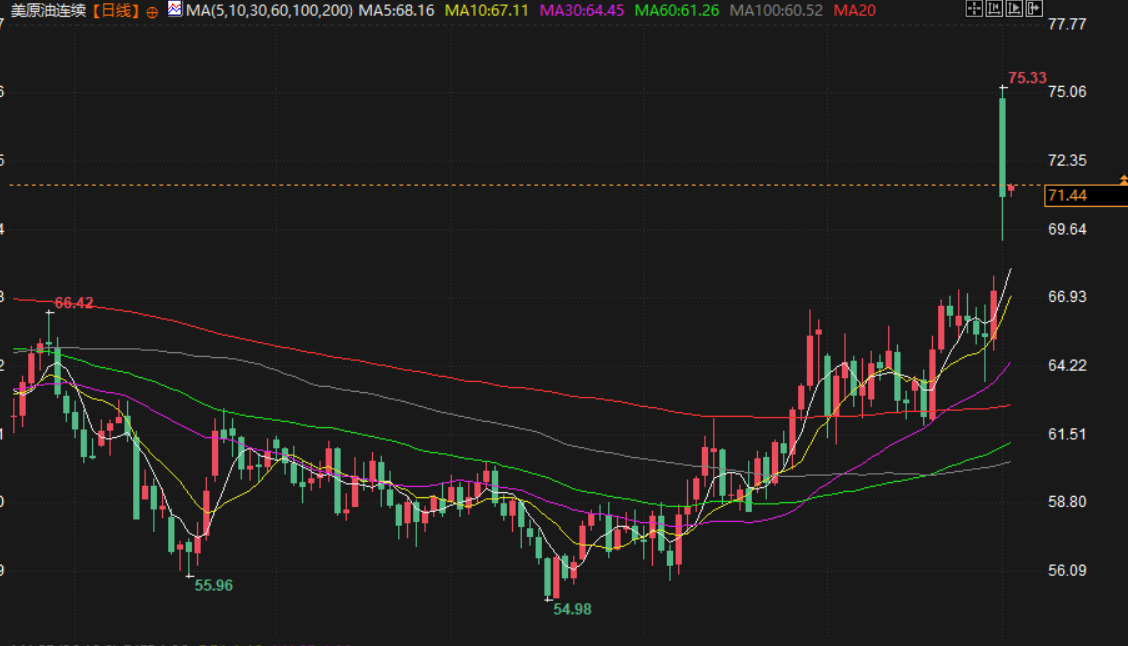
Iran's Revolutionary Guard further threatened to burn any ships attempting to cross the Strait of Hormuz, exacerbating market concerns. Brent crude futures surged as much as 13% to $82.37 a barrel, a new high since January 2025, before ultimately closing up 6.7% at $77.74; U.S. crude futures closed up 6.3% at $71.23, having risen more than 12% at one point during the session.
Saudi Arabia's largest domestic oil refinery was shut down due to a drone attack, Qatar suspended liquefied natural gas production and prepared to declare force majeure on shipments, and the escalating conflict has also left 150 ships anchored and stranded near the Strait of Hormuz, which carries about one-fifth of the world's crude oil and 20% of its liquefied natural gas.
JPMorgan Chase warned that if shipping through the Straits is disrupted for three to four weeks, it could force Gulf oil-producing countries to halt production and push Brent crude prices above $100 per barrel. As a result, US retail gasoline prices have broken through $3 per gallon, and ultra-low sulfur diesel futures have risen to a two-year high. Although OPEC+ reached an agreement to increase production in April, analysts point out that, except for Saudi Arabia, oil-producing countries are already operating near full capacity.
The euro and yen fell on Monday, mainly as escalating conflict in the Middle East triggered a surge in oil prices, exacerbating market concerns about currencies of energy-cost-sensitive countries; meanwhile, the dollar strengthened due to safe-haven demand and inflation expectations.
On Monday, clashes between Israel and Iran and its supported armed forces escalated, raising market concerns about potential disruptions to oil supplies in the Gulf region. Qatar also suspended liquefied natural gas production on Monday, prompting preventative shutdowns of oil and gas facilities across the Middle East.
"This is primarily about oil exposure," said Steve Englander, Global Head of G10 FX Research at Standard Chartered. "The biggest volatility in the dollar occurred after news broke of attacks on oil facilities in the Gulf region." Compared to net energy exporters like the United States, Europe and Japan are more sensitive to rising energy costs, putting pressure on their currencies.
The euro fell 0.85% against the dollar to $1.1712. The dollar rose 0.7% against the yen to 157.13 yen. Bank of Japan Deputy Governor Yoshiaki Himino stated that market volatility would not hinder interest rate hikes, but this failed to reverse the yen's decline.
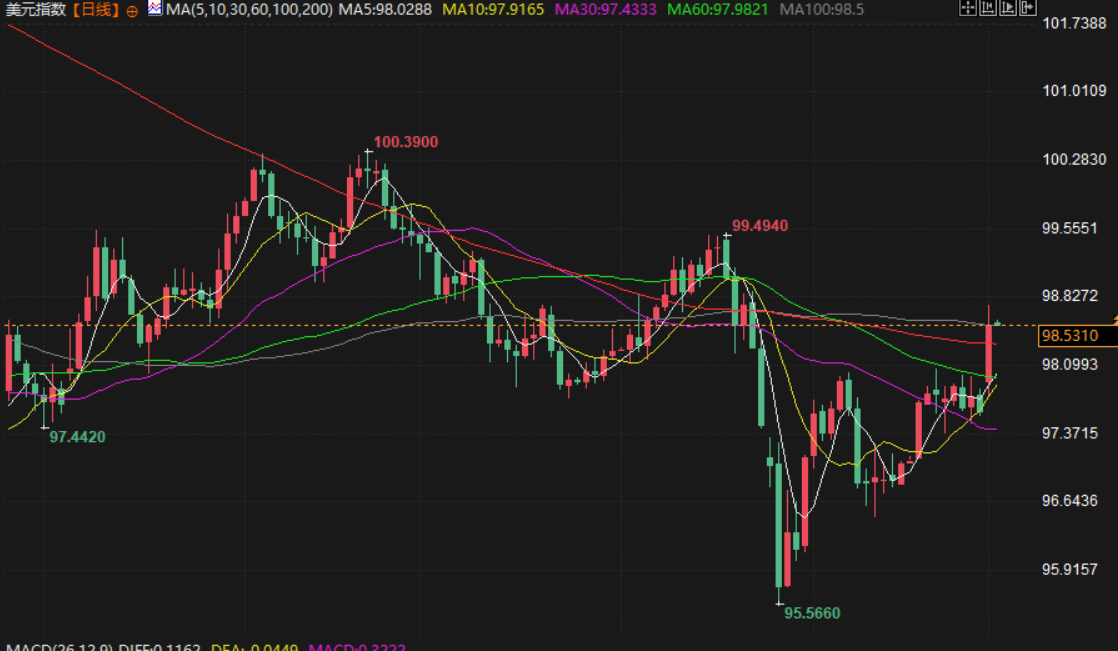
The dollar index rose 0.31% to 98.37 on Monday. The dollar's rise was also driven by safe-haven buying and market repricing of Federal Reserve policy. Market concerns that oil price-driven inflationary pressures would delay a Fed rate cut, with federal funds futures indicating that the market's full pricing in of the first rate cut has been pushed back from July to September.
Among other currencies, the Swiss franc was in focus. Although the Middle East conflict briefly pushed the franc to a more than ten-year high against the euro, the Swiss National Bank subsequently indicated it would intervene more actively in the foreign exchange market, causing the US dollar to rebound 1.2% against the Swiss franc, reaching 0.778 francs. The risk currency, the Australian dollar, edged down 0.14% against the US dollar, reaching 0.7103 US dollars.
The U.S. State Department urged its citizens to leave more than a dozen Middle Eastern countries immediately.
U.S. State Department officials have urged Americans to "leave immediately" from more than a dozen countries and regions in the Middle East. The list includes Bahrain, Egypt, Iran, Iraq, Israel, the West Bank and Gaza Strip, Jordan, Kuwait, Lebanon, Oman, Qatar, Saudi Arabia, Syria, the United Arab Emirates, and Yemen. This is the most extensive evacuation warning issued by the U.S. government since the major U.S.-Israeli military action against Iran and the sharp escalation of regional conflict. Iran had previously announced the closure of the Strait of Hormuz and warned it would attack any ships attempting to pass through, further deteriorating the regional security situation. The State Department's urging of U.S. citizens in the region to evacuate as soon as possible reflects serious official concern about further escalation. Currently, many countries have closed their airspace, and numerous commercial flights have been canceled, posing a significant challenge to evacuation routes.
The US government's illegal tariffs may require expedited refunds.
On March 2, local time, a U.S. appeals court remanded several lawsuits that led to the invalidation of President Trump's massive tariffs to the U.S. Court of International Trade. The U.S. Court of International Trade has the power to order refunds of taxes paid by importers. Importers had previously requested the Court of International Trade to order the Trump administration to immediately begin the refund process once the cases were returned to its jurisdiction. The U.S. Court of Appeals for the Federal Circuit granted the importers' motion to remand the cases to the U.S. Court of International Trade. The Trump administration opposed the motion, stating it wanted to postpone the cases for up to four months to allow time to consider its response. On February 20, the U.S. Supreme Court ruled that the massive tariffs imposed by Trump under the International Emergency Economic Powers Act were invalid. More than 300,000 importers paid these tariffs, but the Supreme Court did not provide guidance on how the government should refund these funds. Trump had stated that the refund process could trigger legal battles lasting up to five years. Currently, approximately 2,000 importers have filed lawsuits demanding refunds, many of whom are large multinational corporations such as FedEx. (CCTV International News)
Iran says the Strait of Hormuz is closed and it will strike any ships attempting to pass through.
Late on March 2nd local time, an advisor to the commander of Iran's Islamic Revolutionary Guard Corps stated that the Strait of Hormuz had been closed and that Iran would crack down on all vessels attempting to pass through it. The Islamic Revolutionary Guard Corps has not yet issued an official statement. (CCTV News)
The International Transport Workers' Federation has declared the Strait of Hormuz a high-risk area.
The International Transport Workers' Federation (ITF) and the Joint Negotiation Team (JN) issued a statement on the ITF's website stating that the Strait of Hormuz and its surrounding waters have been designated a "high-risk area" following the escalation of military conflict in the region. This designation means that ship owners and operators must ensure enhanced protection for seafarers, including pre-transit risk assessments, contractual insurance, and the right of seafarers to refuse entry into the area. The ITF represents 16.5 million transport workers worldwide, while the JN brings together employers in the maritime industry.
Trump says military action against Iran could last four to five weeks.
On March 2, local time, US President Trump stated that a nuclear-armed Iran is intolerable to the United States. The US continues its large-scale military operations in Iran. The US and Iran's objectives are very clear, including destroying Iran's missile capabilities and ensuring that Iran cannot acquire nuclear weapons. Trump stated that the military operation against Iran could last four to five weeks, but he indicated that he is prepared for the operation to last "far longer than that." Trump also claimed that the US aims to completely destroy the Iranian navy and has already sunk 10 of its ships. (CCTV News)
The US Defense Secretary declared that military action against Iran "would not last long."
U.S. Defense Secretary John Hergsays said on February 2 that military action against Iran would not last as long as it did against Iraq. Hergsays and Chairman of the Joint Chiefs of Staff General John Kaine held a joint press conference at the Pentagon that day. Hergsays said the U.S. military's objective was very clear: to destroy Iran's offensive missiles, missile production facilities, and its navy and other security infrastructure, "so that they will never be able to possess nuclear weapons." (Xinhua)
NATO says it will not participate in US-Israeli military operations in Iran.
On March 2, local time, NATO Secretary General Mark Rutte stated in a media interview that the US-Israel military operation in Iran is still in its initial stages and could last for several weeks. He also announced that NATO will not participate in the US-Israel military operation in Iran. (CCTV News)
The probability of the Federal Reserve keeping interest rates unchanged in March has risen to 97.5%, while expectations for a rate cut continue to shift backward.
According to the latest data from CME's "FedWatch," the market expects a 97.5% probability that the Federal Reserve will keep interest rates unchanged at its March meeting, while the probability of a 25 basis point rate cut has fallen to 2.5%. The market has largely priced in a rate cut in March. For subsequent meetings: by April, the probability of a cumulative 25 basis point rate cut is 16.3%, the probability of keeping rates unchanged is 83.4%, and the probability of a cumulative 50 basis point rate cut is only 0.4%. By June, the probability of a cumulative 25 basis point rate cut is 40.3%, further narrowing compared to previous levels, indicating that market expectations for a mid-year rate cut are also weakening.
The nation's first "pre-positioned supervision warehouse" for cross-border e-commerce exports has been put into operation.
On March 2nd, the nation's first "pre-shipment bonded warehouse" for cross-border e-commerce retail exports, embedded in the production and operation of e-commerce platforms, officially launched in Weihai, Shandong Province. On the morning of March 2nd, at a logistics warehouse of an e-commerce platform in the Weihai Lingang District, Shandong, staff were packing and sorting cross-border e-commerce export parcels. These packaged parcels then entered the customs "pre-shipment bonded warehouse" for customs clearance. In just a few seconds, the goods can complete the declaration and release process, then be packed on-site and shipped overseas by international liner that same evening. (CCTV)
Huawei showcases its fully liquid-cooled AI supernode overseas for the first time.
On March 3rd, during MWC 2026 in Barcelona, Huawei showcased its fully liquid-cooled AI supernode, the Atlas 950 SuperPoD, and the industry's first all-in-one computing supernode, the TaiShan 950 SuperPoD, for the first time overseas. A supernode is a computing system composed of computing nodes connected via high-speed interconnect protocols to form a larger memory space. In March 2025, Huawei launched the Atlas 900 supernode, fully configured to support 384 cards. Based on Lingqu 1.0, the Atlas 900 supernode began delivery in March 2025, and hundreds of units have been commercially deployed to date, covering multiple industries including internet, telecommunications, and manufacturing.
Key Focus Today
stock market
U.S. stocks closed largely steady on Monday, as investors recovered early losses on bargain hunting after the market experienced sharp trading volatility following the U.S.-Israeli airstrikes against Iran.
Gains in technology and defense stocks offset losses across the broader market, with strong buying in artificial intelligence-related stocks. Nvidia rose 3% and Microsoft gained 1.5%, helping the S&P 500 and Nasdaq recover from losses that had briefly hit two-week lows.
Energy stocks also outperformed the broader market due to rising oil prices. Ultimately, the Dow Jones Industrial Average fell 0.15%, the S&P 500 rose slightly by 0.04%, and the Nasdaq Composite rose 0.36%.
Market analysts pointed out that investor confidence in the US market and optimism about AI-driven productivity offset concerns about soaring oil prices and geopolitics, with a general consensus that the impact of the conflict would be limited. However, airline and cruise stocks suffered heavy losses, with Delta Air Lines and United Airlines both falling more than 2%, Carnival Corporation plunging 7.6%, and Norwegian Cruise Line crashing more than 10%, due to flight cancellations, rising fuel costs, and airspace closures.
In addition, AES Corp's stock price plummeted 17.8% after a consortium led by BlackRock agreed to acquire the company at a price lower than its latest closing price.
Gold Market
Gold rose on Monday, supported by investor concerns about a protracted conflict in the Middle East. Following the US-Israeli strikes against Iran, the fighting has spread further to Lebanon with no signs of abating, and President Trump has stated that a "bigger wave of offensive" is on the horizon.
Spot gold closed at $5,297.31 per ounce, up 0.4%, after giving back some of its gains earlier in the session due to profit-taking; U.S. gold futures closed up 1.2% at $5,311.60.
Market analysts point out that geopolitical uncertainty is a key support for gold prices. Due to flight cancellations caused by the attacks, three sources say that the flow of physical gold through the Dubai gold trading hub will be severely restricted in the coming days. Gold prices have risen approximately 23% so far this year and are projected to record a staggering 64% increase by 2025, driven by strong central bank gold purchases, net inflows into ETFs, and expectations of loose monetary policy.
In other precious metals, spot silver fell 5.7% to $88.46; spot platinum fell 2.7% to $2,300.50; and palladium fell 0.9% to $1,770.66.
oil market
International oil and natural gas prices surged on Monday as attacks on Iran by Israel and the United States and retaliatory actions by Tehran forced the closure of numerous oil and gas facilities in the Middle East and disrupted shipping in the crucial Strait of Hormuz.
Iran's Revolutionary Guard further threatened to burn any ships attempting to cross the Strait of Hormuz, exacerbating market concerns. Brent crude futures surged as much as 13% to $82.37 a barrel, a new high since January 2025, before ultimately closing up 6.7% at $77.74; U.S. crude futures closed up 6.3% at $71.23, having risen more than 12% at one point during the session.
Saudi Arabia's largest domestic oil refinery was shut down due to a drone attack, Qatar suspended liquefied natural gas production and prepared to declare force majeure on shipments, and the escalating conflict has also left 150 ships anchored and stranded near the Strait of Hormuz, which carries about one-fifth of the world's crude oil and 20% of its liquefied natural gas.
JPMorgan Chase warned that if shipping through the Straits is disrupted for three to four weeks, it could force Gulf oil-producing countries to halt production and push Brent crude prices above $100 per barrel. As a result, US retail gasoline prices have broken through $3 per gallon, and ultra-low sulfur diesel futures have risen to a two-year high. Although OPEC+ reached an agreement to increase production in April, analysts point out that, except for Saudi Arabia, oil-producing countries are already operating near full capacity.
Foreign exchange market
The euro and yen fell on Monday, mainly as escalating conflict in the Middle East triggered a surge in oil prices, exacerbating market concerns about currencies of energy-cost-sensitive countries; meanwhile, the dollar strengthened due to safe-haven demand and inflation expectations.
On Monday, clashes between Israel and Iran and its supported armed forces escalated, raising market concerns about potential disruptions to oil supplies in the Gulf region. Qatar also suspended liquefied natural gas production on Monday, prompting preventative shutdowns of oil and gas facilities across the Middle East.
"This is primarily about oil exposure," said Steve Englander, Global Head of G10 FX Research at Standard Chartered. "The biggest volatility in the dollar occurred after news broke of attacks on oil facilities in the Gulf region." Compared to net energy exporters like the United States, Europe and Japan are more sensitive to rising energy costs, putting pressure on their currencies.
The euro fell 0.85% against the dollar to $1.1712. The dollar rose 0.7% against the yen to 157.13 yen. Bank of Japan Deputy Governor Yoshiaki Himino stated that market volatility would not hinder interest rate hikes, but this failed to reverse the yen's decline.
The dollar index rose 0.31% to 98.37 on Monday. The dollar's rise was also driven by safe-haven buying and market repricing of Federal Reserve policy. Market concerns that oil price-driven inflationary pressures would delay a Fed rate cut, with federal funds futures indicating that the market's full pricing in of the first rate cut has been pushed back from July to September.
Among other currencies, the Swiss franc was in focus. Although the Middle East conflict briefly pushed the franc to a more than ten-year high against the euro, the Swiss National Bank subsequently indicated it would intervene more actively in the foreign exchange market, causing the US dollar to rebound 1.2% against the Swiss franc, reaching 0.778 francs. The risk currency, the Australian dollar, edged down 0.14% against the US dollar, reaching 0.7103 US dollars.
International News
The U.S. State Department urged its citizens to leave more than a dozen Middle Eastern countries immediately.
U.S. State Department officials have urged Americans to "leave immediately" from more than a dozen countries and regions in the Middle East. The list includes Bahrain, Egypt, Iran, Iraq, Israel, the West Bank and Gaza Strip, Jordan, Kuwait, Lebanon, Oman, Qatar, Saudi Arabia, Syria, the United Arab Emirates, and Yemen. This is the most extensive evacuation warning issued by the U.S. government since the major U.S.-Israeli military action against Iran and the sharp escalation of regional conflict. Iran had previously announced the closure of the Strait of Hormuz and warned it would attack any ships attempting to pass through, further deteriorating the regional security situation. The State Department's urging of U.S. citizens in the region to evacuate as soon as possible reflects serious official concern about further escalation. Currently, many countries have closed their airspace, and numerous commercial flights have been canceled, posing a significant challenge to evacuation routes.
The US government's illegal tariffs may require expedited refunds.
On March 2, local time, a U.S. appeals court remanded several lawsuits that led to the invalidation of President Trump's massive tariffs to the U.S. Court of International Trade. The U.S. Court of International Trade has the power to order refunds of taxes paid by importers. Importers had previously requested the Court of International Trade to order the Trump administration to immediately begin the refund process once the cases were returned to its jurisdiction. The U.S. Court of Appeals for the Federal Circuit granted the importers' motion to remand the cases to the U.S. Court of International Trade. The Trump administration opposed the motion, stating it wanted to postpone the cases for up to four months to allow time to consider its response. On February 20, the U.S. Supreme Court ruled that the massive tariffs imposed by Trump under the International Emergency Economic Powers Act were invalid. More than 300,000 importers paid these tariffs, but the Supreme Court did not provide guidance on how the government should refund these funds. Trump had stated that the refund process could trigger legal battles lasting up to five years. Currently, approximately 2,000 importers have filed lawsuits demanding refunds, many of whom are large multinational corporations such as FedEx. (CCTV International News)
Iran says the Strait of Hormuz is closed and it will strike any ships attempting to pass through.
Late on March 2nd local time, an advisor to the commander of Iran's Islamic Revolutionary Guard Corps stated that the Strait of Hormuz had been closed and that Iran would crack down on all vessels attempting to pass through it. The Islamic Revolutionary Guard Corps has not yet issued an official statement. (CCTV News)
The International Transport Workers' Federation has declared the Strait of Hormuz a high-risk area.
The International Transport Workers' Federation (ITF) and the Joint Negotiation Team (JN) issued a statement on the ITF's website stating that the Strait of Hormuz and its surrounding waters have been designated a "high-risk area" following the escalation of military conflict in the region. This designation means that ship owners and operators must ensure enhanced protection for seafarers, including pre-transit risk assessments, contractual insurance, and the right of seafarers to refuse entry into the area. The ITF represents 16.5 million transport workers worldwide, while the JN brings together employers in the maritime industry.
Trump says military action against Iran could last four to five weeks.
On March 2, local time, US President Trump stated that a nuclear-armed Iran is intolerable to the United States. The US continues its large-scale military operations in Iran. The US and Iran's objectives are very clear, including destroying Iran's missile capabilities and ensuring that Iran cannot acquire nuclear weapons. Trump stated that the military operation against Iran could last four to five weeks, but he indicated that he is prepared for the operation to last "far longer than that." Trump also claimed that the US aims to completely destroy the Iranian navy and has already sunk 10 of its ships. (CCTV News)
The US Defense Secretary declared that military action against Iran "would not last long."
U.S. Defense Secretary John Hergsays said on February 2 that military action against Iran would not last as long as it did against Iraq. Hergsays and Chairman of the Joint Chiefs of Staff General John Kaine held a joint press conference at the Pentagon that day. Hergsays said the U.S. military's objective was very clear: to destroy Iran's offensive missiles, missile production facilities, and its navy and other security infrastructure, "so that they will never be able to possess nuclear weapons." (Xinhua)
NATO says it will not participate in US-Israeli military operations in Iran.
On March 2, local time, NATO Secretary General Mark Rutte stated in a media interview that the US-Israel military operation in Iran is still in its initial stages and could last for several weeks. He also announced that NATO will not participate in the US-Israel military operation in Iran. (CCTV News)
The probability of the Federal Reserve keeping interest rates unchanged in March has risen to 97.5%, while expectations for a rate cut continue to shift backward.
According to the latest data from CME's "FedWatch," the market expects a 97.5% probability that the Federal Reserve will keep interest rates unchanged at its March meeting, while the probability of a 25 basis point rate cut has fallen to 2.5%. The market has largely priced in a rate cut in March. For subsequent meetings: by April, the probability of a cumulative 25 basis point rate cut is 16.3%, the probability of keeping rates unchanged is 83.4%, and the probability of a cumulative 50 basis point rate cut is only 0.4%. By June, the probability of a cumulative 25 basis point rate cut is 40.3%, further narrowing compared to previous levels, indicating that market expectations for a mid-year rate cut are also weakening.
Domestic News
The nation's first "pre-positioned supervision warehouse" for cross-border e-commerce exports has been put into operation.
On March 2nd, the nation's first "pre-shipment bonded warehouse" for cross-border e-commerce retail exports, embedded in the production and operation of e-commerce platforms, officially launched in Weihai, Shandong Province. On the morning of March 2nd, at a logistics warehouse of an e-commerce platform in the Weihai Lingang District, Shandong, staff were packing and sorting cross-border e-commerce export parcels. These packaged parcels then entered the customs "pre-shipment bonded warehouse" for customs clearance. In just a few seconds, the goods can complete the declaration and release process, then be packed on-site and shipped overseas by international liner that same evening. (CCTV)
Huawei showcases its fully liquid-cooled AI supernode overseas for the first time.
On March 3rd, during MWC 2026 in Barcelona, Huawei showcased its fully liquid-cooled AI supernode, the Atlas 950 SuperPoD, and the industry's first all-in-one computing supernode, the TaiShan 950 SuperPoD, for the first time overseas. A supernode is a computing system composed of computing nodes connected via high-speed interconnect protocols to form a larger memory space. In March 2025, Huawei launched the Atlas 900 supernode, fully configured to support 384 cards. Based on Lingqu 1.0, the Atlas 900 supernode began delivery in March 2025, and hundreds of units have been commercially deployed to date, covering multiple industries including internet, telecommunications, and manufacturing.
- Risk Warning and Disclaimer
- The market involves risk, and trading may not be suitable for all investors. This article is for reference only and does not constitute personal investment advice, nor does it take into account certain users’ specific investment objectives, financial situation, or other needs. Any investment decisions made based on this information are at your own risk.